🔄 Updated 21 Jun 2026
If you've ever eaten Thai sweets in Ratchaburi and felt the flavour was rounder and more fragrant than elsewhere, most of the reason is the coconut sugar. Damnoen Saduak is an old coconut-grove area, where villagers have long tapped the flower stalks for the sweet sap and simmered it down into block sugar and pail sugar. Fresh coconut sugar has a soft caramel scent, a mellow sweetness that doesn't scratch the throat, and when it goes into a dessert it gives a flavour that white granulated sugar simply can't. This article runs from the source (the sugar-simmering fire) all the way to the end (sweets on the plate and in the boat).
Damnoen Saduak coconut sugar — the source of the sweetness
Before you start eating your way through the sweets, it helps to understand the main ingredient. Real coconut sugar is made from sap tapped off the coconut flower stalk, then simmered over a wood fire for several hours until thick, leaving a golden-brown block sugar with its own distinctive scent. The real thing is soft and sweet rather than sharp, often with a faint sourness at the tip of the tongue — different from the blended pail sugar sold in ordinary markets.
Bang Le Sugar Farm / Coconut Sugar Grove
A demonstration spot where fresh coconut sugar is simmered over a fire in a Thai-style house at 88 Moo 10, Damnoen Saduak. Watch everything from tapping the coconut stalk to simmering it into block sugar, and grab fresh sugar to take home. Call ahead to check, 032-345162.
Fresh sugar stalls along Khlong Damnoen
On the way to the floating market there are stalls selling block sugar, pail sugar and cups of fresh sugar scattered along the canal. Fresh from the groves around here, and cheaper than buying in town.
How to tell real coconut sugar
The real thing is smooth and soft, doesn't harden into a lump when you press it, has a natural golden-brown colour (not pale white) and a caramel scent. If it's sharply sweet like granulated sugar or has no scent, it's usually been cut with a lot of white sugar. Taste before you buy a whole block — the sellers around here are happy to let you try.
Want to taste deeper? Try a Ratchaburi food tour or cooking class
Half a day with a local who knows the lanes — or cooking a dish yourself — teaches you more than just eating. Book ahead on Klook or GetYourGuide.
Local sweets you have to try
With good coconut sugar, the sweets stand out too. These are the desserts tied to Damnoen coconut sugar, ordered roughly by what locals think of first.
Thong yot – foi thong – thong yip
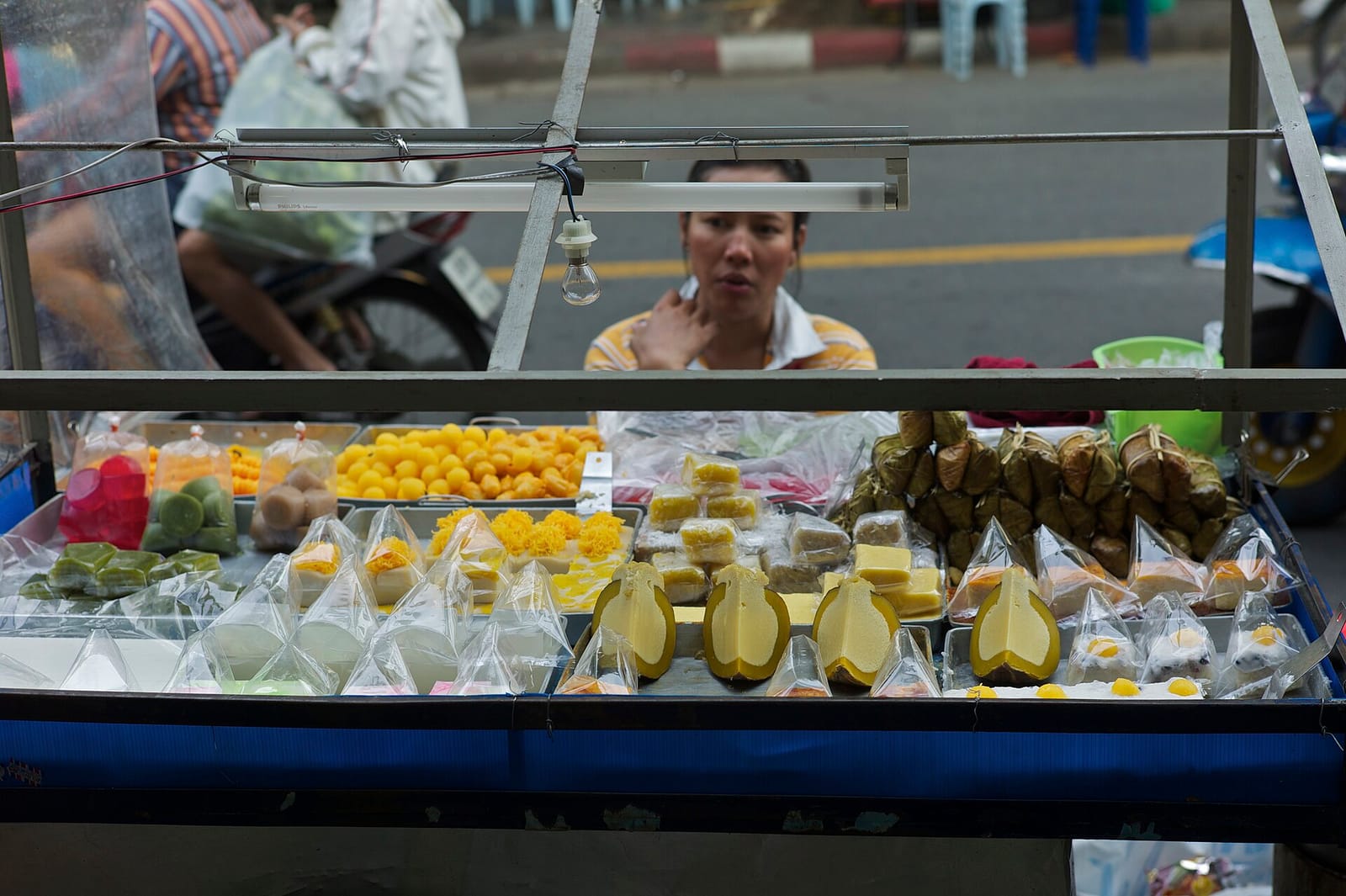
The golden-egg family of sweets made from egg yolk and syrup. With coconut sugar in the mix they get a deeper scent and a richer golden colour. You'll find them at Thai sweet and souvenir shops in Ratchaburi town and Bang Phae, usually sold in gift boxes.
Mor kaeng (baked custard)
Baked custard with egg, taro or mung bean. Made with coconut sugar it turns out fragrant and soft, with a top that isn't cloyingly sweet. It's been a signature souvenir of the Phetchaburi–Ratchaburi area for ages, sold at souvenir shops and homemaker groups in Bang Phae.
Sticky rice with mango / various toppings
Coconut sticky rice sweetened with coconut sugar comes out rounded and rich, eaten with ripe mango, sangkhaya custard or shrimp topping. Find it both in Ratchaburi's morning market and in the boats at Damnoen Saduak floating market.
Khanom thuay (wood-fire steamed cups)
Chewy, fragrant rice-flour cups with a salty-rich coconut top. The famous makers around Bang Phae mill their own flour and use their regular coconut sugar, steamed fresh over charcoal. Sold by the cup or by the box.
Khanom chan (layer cake)
Coconut layer cake made with coconut sugar gets a natural brown colour and a lovely scent, no food colouring needed. Soft and chewy, the kind you peel one layer at a time. Found at Thai sweet-making groups and souvenir shops.
Kalamae / steamed sticky rice paste
A chewy paste simmered from coconut milk and coconut sugar over a long time until it shines. It's a merit-making sweet and a souvenir that keeps well, found with vendors in the floating market and at souvenir shops.
Sampanni
A light, fluffy flour sweet that melts in your mouth, sweet and fragrant. Found alongside layer cake and custard at Thai sweet shops in Ratchaburi town, such as Pan Kham Hom.
Krayasart with cane sugar & coconut
An old-school krayasart from around Ban Pong (such as Chor Mali, making it since 1995) simmered with cane sugar and coconut — fragrant, sweet and chewy. It's a well-known OTOP product and easy to buy as a souvenir.
Tips for buying sweets at their freshest
Coconut-milk sweets like sticky rice with coconut, khanom thuay and mor kaeng are best right after they're made. Go between morning and noon for the freshest pick and the widest choice — by late afternoon many vendors start to sell out. If you're carrying things a long way, choose the simmered sweets (kalamae, krayasart) as they keep longer.
Local makers still doing it by hand
We picked makers that locals still actually go to and who make things fresh rather than reselling. To be honest, several are family homes with unpredictable hours, so it's worth calling or checking their page before you set off.
Khanom Thuay Je Pae (Bang Phae)
An old wood-fire khanom thuay maker, open since 1983, milling their own flour and using specially selected coconut sugar with no preservatives. ฿5 a cup, buy 4 get 1 free; a box of 7 is ฿30. In Bang Phae district — follow the 'good things of Bang Phae' signs.
Ban Mai Thai Sweets Group (Wat Kaeo, Bang Phae)
A homemaker group making khanom chan, mor kaeng and foi thong fresh, supplying souvenir shops. They focus on real ingredients at local prices — good for buying a full set as gifts.
Pan Kham Hom (Ratchaburi town)
A Thai sweet shop with a range — khanom chan, sampanni, mor kaeng — fragrant and sweet, with prices from ฿20. A handy stop when passing through town.
Chor Mali Krayasart (Ban Pong)
An old Ban Pong maker of cane-sugar-and-coconut krayasart, selling since 1995 and recognised as an OTOP product. Easy to carry home and keeps well.
Chasing sweets at Damnoen Saduak floating market
If you want the atmosphere, Damnoen Saduak floating market (about 80 km from Bangkok) is where you can eat sweets straight from the boats. Vendors paddle around selling sticky rice with coconut, kalamae, khanom krok and hot Thai sweets, along with cool fresh sugar. Early morning is when everything's freshest and the crowds haven't built up yet.
- Sticky rice with coconut from the boat — sweetened with coconut-sugar coconut milk, eaten with sangkhaya custard or mango, a properly Thai canal-side breakfast
- Khanom krok – khanom buang — made fresh in the boat, fragrant with coconut milk and best eaten hot
- Fresh sugar / blended coconut juice — to cool off while you wander the market, made with real grove coconuts around here
- Kalamae – steamed sticky rice paste — chewy simmered sweets, good to carry home as souvenirs
Make the floating market worth it
Go before 9am to catch the real boat-trading life, before the sun gets harsh and while the sweets are still fresh. Come later and it's more of a tourist zone. Prices in the floating market tend to run a little higher than outside it because of the setting — you can bargain a touch, politely.
A one-day sweets route
If you only have one day and want to follow the coconut sugar from source to finish, here's a plan that works. Driving yourself is easiest since the spots are spread across Damnoen Saduak and Bang Phae.
Following the sweetness through Damnoen–Bang Phae
Plan a full eating trip through Ratchaburi, savoury and sweet
See the Ratchaburi travel guide →