🔄 Updated 21 Jun 2026
Ratchaburi is a town plenty of people drive straight past on their way south without stopping. But once you walk through the old quarter by the Mae Klong River, you'll see there's far more to look at than you'd expect: old shophouses still trading as shops, a market that has done business since your grandparents' day, old temples facing the water, and a new wave of coffee shops bringing the old streets back to life. We've laid this route out as a loop so you don't have to keep backtracking.
Koh Yi Kee Old Market — the heart of the quarter
If you start anywhere, start at the Koh Yi Kee Old Market on Woradet Road, on the market side of the Mae Klong River. The name 'Koh Yi Kee' comes from Teochew Chinese and means 'by the water', which fits exactly, since this was once a row of timber houses pressed right up against the river. It has been a trading street alongside Ratchaburi for generations. These days it turns into an evening walking street lined with food stalls, snacks, old-fashioned sweets, and handmade goods.
Opening hours matter
Koh Yi Kee Old Market only opens Friday to Sunday and public holidays, in the evening from roughly 4 pm to 10 pm. It's busiest from about 7 to 8 pm. Come on a weekday afternoon and the quarter is quiet with nearly everything shut, so plan your day around it before you set off.
Want more out of Ratchaburi? Book tours & activities
Booking online ahead on Klook or GetYourGuide is usually cheaper than the gate and skips the queue. Pick only the experiences you actually want — prices and availability are shown live on each site.
The Old Town Ratchaburi — old warehouses turned community space
A few steps from the Koh Yi Kee market is The Old Town Ratchaburi, the new landmark that has breathed life back into the old quarter. It's a cluster of buildings and warehouses over a hundred years old, renovated with the original frames and walls kept intact, now opened up as cafes, restaurants, and shops. The mood is vintage: bare concrete walls, old timber, warm light, and the whole zone is fun to photograph as you wander. It opens daily from late morning, so it's a spot you can visit even on a weekday when the market isn't running yet.
sao.home.matcha
A matcha shop inside an old building, with rich green-tea drinks. A good place to rest after walking in the heat.
Khacha Craft Bar
A small drinks bar in the quarter with a raw, old-warehouse feel.
Odeng Ya
Korean-style snacks: odeng fishcake skewers served in a warm broth.
Lao Tong Nee
A shop in the quarter that keeps the old Chinese character of the community alive.
Century-old shophouses and the stories along the street
The real charm of Ratchaburi's old town isn't any single check-in spot. It's walking along Woradet Road and the lanes around it, looking at the old shophouses still standing. Some belong to the Crown Property Bureau and keep their original character almost unchanged: timber doors, old shop signs, moulded plasterwork above the windows. Many still trade as pharmacies, gold shops, and grocery stores run for generations. Walk slowly and look up at the upper floors now and then, and you'll catch details that anyone driving past will never see.
- Woradet Road — the main street of the old quarter, with shophouses lining both sides, running continuously to the market and cafes.
- The Mae Klong riverside embankment — there's a walkway along the water with views of the boats and the far bank, breezy and cool in the evening.
- The small community lanes — try turning into a side lane and you'll find old timber houses and the real daily life of the neighbourhood.
Riverside temples worth stopping for
Ratchaburi's old town has always sat along the river, so its important temples face the water. They're all a short walk from the market quarter.
Wat Mahathat Worawihan
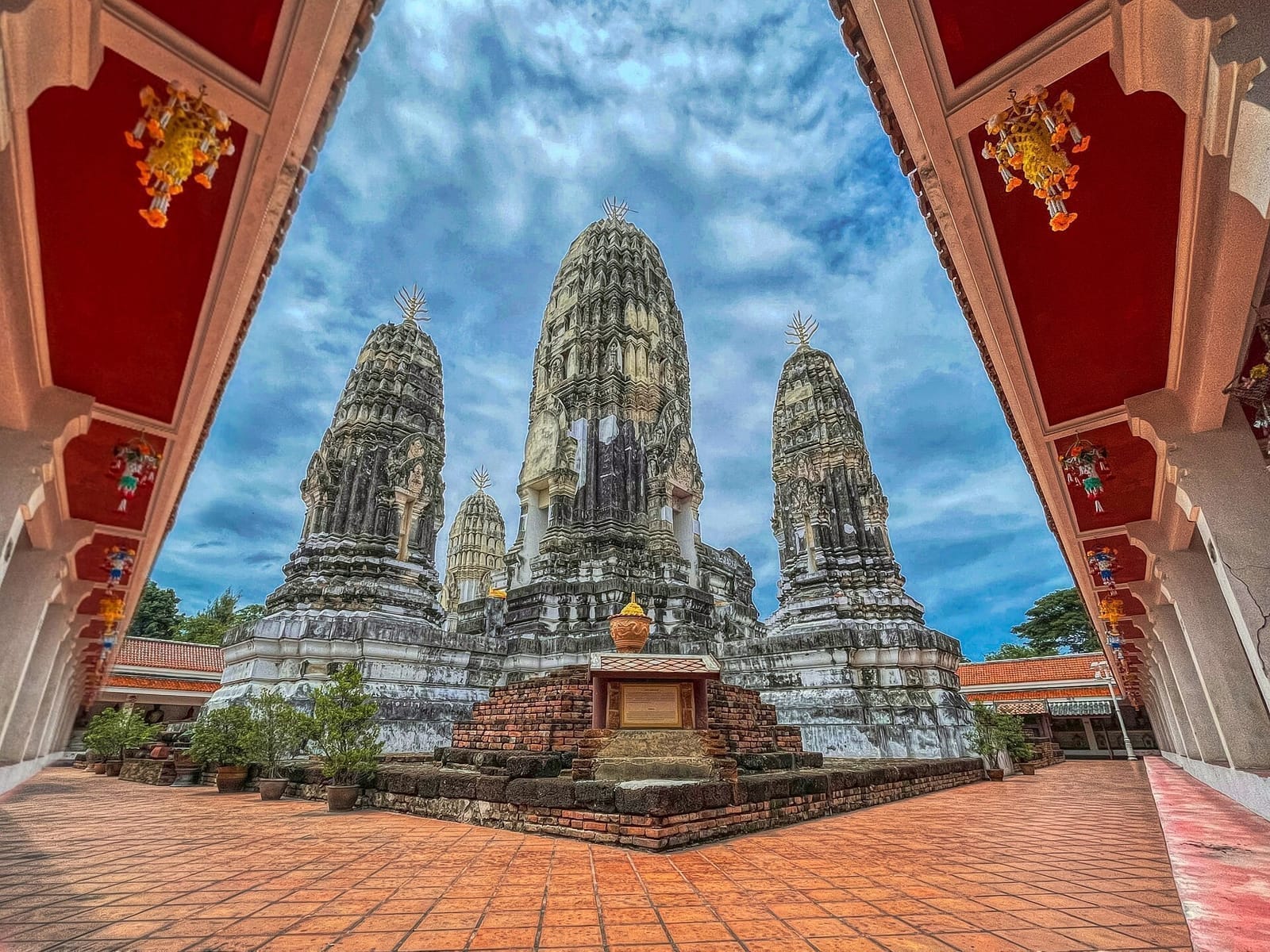
A royal temple with evidence dating it back to the Dvaravati period. It sits near the centre of town on the west bank of the river. The highlight is the old prang and a rare back-to-back throne hall arrangement you don't often see.
Wat Sattanat Pariwat Worawihan
Built in the reign of King Rama V, around 1871, it sits on the bank of the Mae Klong River. The ordination hall is handsome and peaceful, a good place to stop and pay respects while walking along the water.
Wat Chong Lom
Another riverside temple within the town, near the pumping station, with shady grounds. It's one of the old Mae Klong-side temples the locals hold in high regard.
Dressing for the temples
All three are working temples used by locals. Wear sleeved tops and trousers or skirts that cover the knee, take your shoes off before entering the hall, and keep things quiet out of respect for people who've come to make merit.
Cafes on the Mae Klong — watch the river drift by
Ratchaburi is a cafe town Bangkokians love driving out to, especially the spots right on the Mae Klong River where you can sip coffee and watch the water slide slowly past. Several are within walking distance of the old quarter.
Tara Coffee
At 84 Woradet Road in the middle of the old quarter, an easy walk from the market. Good coffee and a relaxed mood.
SOP Cafe
A cafe on the Mae Klong River. The standout is the tunnel entrance, which is fun to photograph, and the riverside zone has a good view.
Thanks Cafe & Bistro
A riverside cafe in town with both an outdoor riverside zone and an air-conditioned room. Good for escaping the afternoon heat.
Coffee around here mostly runs about 60–90 THB a cup, and cake slices about 70–120 THB, no more than a Bangkok cafe, but with a river view and old-town atmosphere thrown in.
The dragon-jar city — the story that makes Ratchaburi, Ratchaburi
Say Ratchaburi and people picture the dragon jars — the brown-glazed water jars with dragon patterns that have been part of the town for nearly a century. It began around 1933 when Chinese craftsmen who'd migrated and settled here found that Ratchaburi's clay resembled the clay of their homeland and was well suited to pottery. They set up jar kilns that grew into the province's signature product. As you walk through town you'll see dragon jars set out as photo-friendly landmarks in several corners.
Want to see a real jar kiln
If you're curious about where the jars come from, there's a learning centre called 'Rueang Khong Ong' (The Story of the Jar) in Don Tako sub-district on Phetkasem Road, telling the story of jar-making from past to present. It's a little outside the old quarter, so you'll need to take a ride out, but if you like crafts it's worth it.
Ratchaburi National Museum
Within the old quarter is the Ratchaburi National Museum, housed in the former provincial hall. The building itself is fine old architecture worth a look. Inside it tells the story of Ratchaburi from the Dvaravati era, its pottery, and the way of life of the Thai Song Dam people and other ethnic groups in the province. Entry is cheap, and it makes a good stop before or after the market to understand the town a little more.
A real half-day on foot — the route we'd take
Ratchaburi old-town walking route
Getting there and walking it comfortably
- Private car — from Bangkok take Phetkasem Road, about 100 km, an hour and a half. Park near the old provincial hall or by the market and walk from there.
- Van / coach — vans run from the Southern (Sai Tai Mai) terminal to Ratchaburi all day. Get off in town and walk, or take a motorcycle taxi into the old quarter.
- Train — the Southern Line passes Ratchaburi station. Get off and take a short ride into town. Good for anyone who enjoys the train atmosphere.
- All on foot in the old quarter — the market, cafes, and temples are all within walking distance. Wear comfortable shoes and bring an umbrella or hat for the afternoon sun.
Make the most of your day
If you only have one day, pick a Saturday or Sunday so you get both the old market in the evening and the cafes during the day. If you can stay overnight, the next morning you can carry on to Damnoen Saduak floating market or Suan Phueng, since they're in the same province.
Want a full-day Ratchaburi plan with hotels and food included?
See the Ratchaburi travel guide →