🔄 Updated 21 Jun 2026
Ratchaburi is a year-round destination, but each corner of it shows its best in a different season. Damnoen Saduak floating market is a morning thing, Suan Phueng looks its prettiest in late rainy season into early winter, and the forest waterfalls run fullest and greenest during the rains. Time it right and a single trip can cover the market, the mountains, and a waterfall all at once.
Best season to visit Ratchaburi
Ratchaburi's weather is much like the rest of central Thailand — hot and humid most of the year — but each zone has its own peak. Read through these and pick based on what you actually want to see.
- November–February (winter) — the best window for Suan Phueng. The air cools down, some mornings bring mist, and the sheep and alpaca farms plus the mountain-view cafés are comfortable to wander. This is the high season for the mountain zone, and rooms fill fast, especially on weekends.
- June–October (rainy season) — waterfalls run full and the forest is deep green. Nine-Tier Waterfall (Kao Chon) at Suan Phueng is at its best now, and the rain-mist atmosphere is lovely. Just keep a backup plan, because heavy rain on some days makes the mountain roads slick.
- March–May (hot season) — the mountain zone is harsh and dry, not ideal for Suan Phueng. But Damnoen Saduak floating market, Tao Hong Tai ceramics, and city sightseeing still work well, since most of it is indoors or done in the early morning.
Timing the seasons
If you want both a good-looking Suan Phueng and full waterfalls, late October to early December is the sweet spot where they overlap — the rain is easing, the air is turning cool, and the waterfalls still have plenty of water.
The floating market is a morning trip
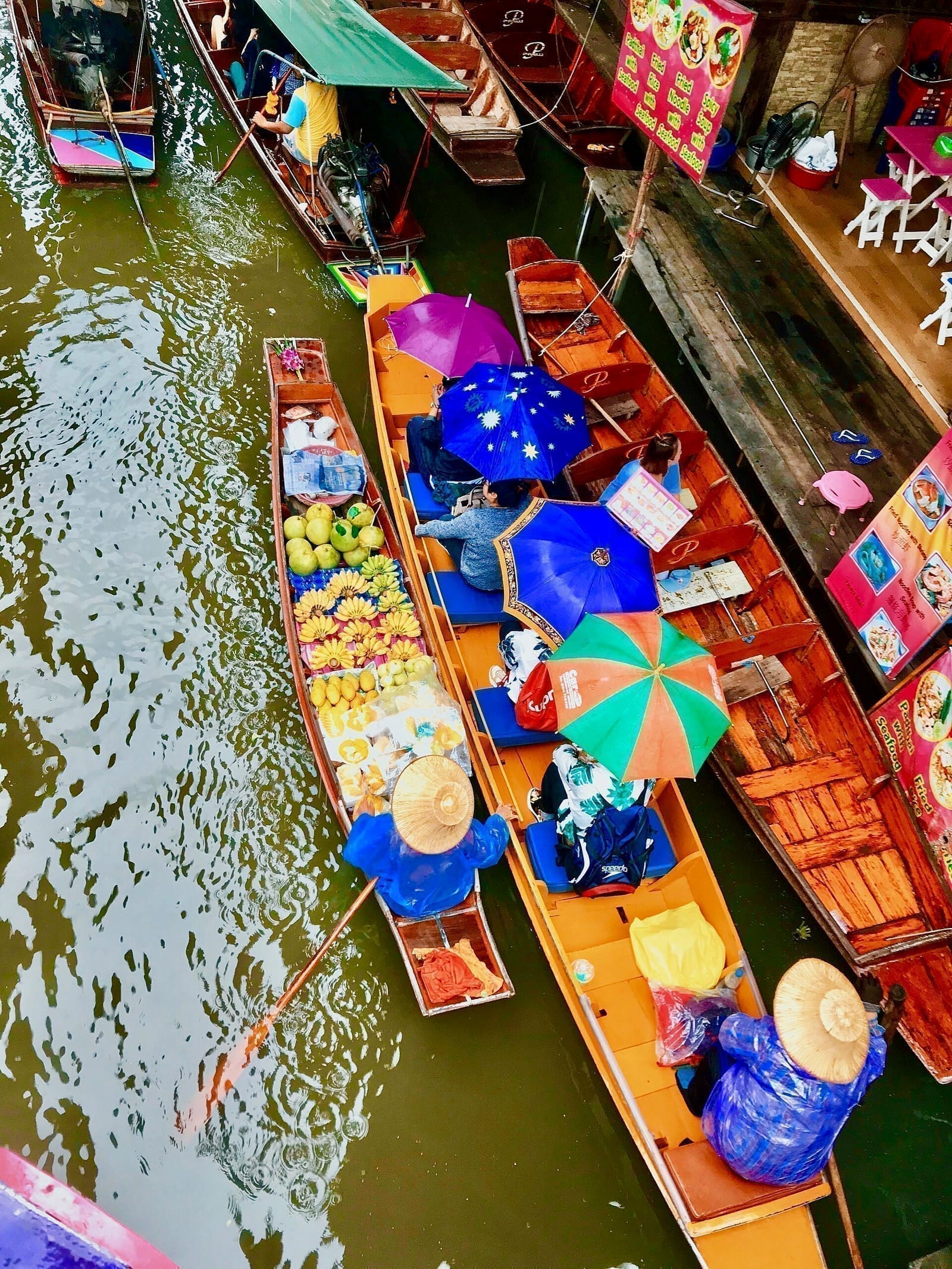
Damnoen Saduak floating market is open daily around 09:00–16:00, but the real action is roughly 8:30–13:00. After that the vendor boats start packing up and the crowds get thick enough to make walking a hassle. Arrive before nine and you'll catch both the good light and the feel of a real market, not just a photo backdrop.
- Entry is free — the boat ride is a separate cost. A chartered motorboat runs about ฿1,600 for 4 people and is negotiable; check the posted rate board at the pier before you agree.
- You can park and walk in — not everyone needs to take a boat. If you just want to stroll and snack along the canal, the walkways follow the water.
- Dodge the big tours — tour buses tend to arrive around ten, so getting there before then is far more pleasant.
Suan Phueng and the waterfalls — how to do it
Suan Phueng is on the western edge of the province, near the border — a mountain zone that packs animal farms, view cafés, and waterfalls into one area. It's about 60 km from Ratchaburi town, and driving yourself is by far the easiest way, since the sights are spread out and public transport is thin.
The Scenery Vintage Farm
A vintage-style sheep farm with sheep-shearing shows and an animal parade on weekends. Admission starts around ฿150 — good for kids and photos.
Alpaca Hill
An alpaca farm on a wide property with a view tower, zipline, and bamboo rafting. Plan on about half a day here.
Nine-Tier Waterfall (Kao Chon)
A 9-tier waterfall set in a valley. It runs year-round but is fullest in the rainy season. Entry around ฿20, parking ฿30, and you can hike up to the higher tiers.
Bo Khlueng Hot Spring
A natural hot spring about 1 km from Nine-Tier Waterfall. Stop for a relaxing foot soak before heading home.
About the waterfall
From the parking lot, it's about 500 m to the lowest tier of Nine-Tier Waterfall. Going all the way to the top is about 2 km round trip and takes 2–3 hours. Wear non-slip shoes — in the rainy season the wet granite gets very slippery.
How much to budget
Ratchaburi is a budget-friendly province — most admission fees run from a few tens to low hundreds of baht. The main variables are lodging in the Suan Phueng zone and fuel. Here's a rough per-person picture.
- Day trip from Bangkok — about ฿800–1,500 per person, including shared fuel, admission, and meals. Good for a floating-market or in-town trip.
- Overnight, 2 days 1 night in Suan Phueng — about ฿1,800–3,500 per person depending on lodging. Mountain-view resorts cost more in winter, so book ahead.
- Farm and café entry — sheep and alpaca farms run about ฿100–250 per person, and view cafés usually have a minimum drink spend per head.
- Floating-market boat fee — a chartered motorboat is about ฿1,600 for 4 people, cheaper per head with a bigger group.
Getting there from Bangkok
Ratchaburi town is about 100 km from Bangkok — an hour and a half to two hours by car depending on traffic. You can take Phetkasem Road (Highway 4) or Rama II (Highway 35). If Suan Phueng is your destination, add about another hour from town. A private car is the easiest option since the sights are spread out, while vans and tour buses suit people sticking to just the floating market or the town.
Pottery-town souvenirs
Ratchaburi earned the nickname "pottery town" because the local clay is well suited to earthenware. The Ratchaburi dragon jar is the province's GI product. Beyond the big jars, there are miniatures and edible treats that are easy to carry home. Here are the popular souvenirs, ranked by how easy they are to pack.
Tao Hong Tai ceramics
A long-running ceramics workshop in the Chedi Hak area with contemporary designs — small pieces like cups, plates, and pots all the way up to dragon-pattern jars. It's photogenic to walk through and easy to shop.
Mini dragon jar
A scaled-down, desk-sized version of the dragon-pattern jar — a symbol of Ratchaburi and far easier to carry home than the real thing. Found at pottery kilns and souvenir shops.
Khu Bua jok-woven cloth
Jok-pattern woven cloth handmade by the Tai Yuan community of Ban Khu Bua — fine detail, vivid colors, and a local weaving tradition with a real story behind it. A special-occasion gift.
Salted-egg lava mooncake
A popular edible souvenir from Ratchaburi, with a rich, fragrant salted-egg lava filling. Easy to find at souvenir shops in town.
Jar cake
Cake baked in a jar-shaped earthenware vessel — soft and moist, and a fun play on the pottery-town identity.
Ah Ti Kopi Ratchaburi coffee
Ratchaburi-style old-school coffee, available in sachets or roasted and ground to brew at home. A solid pick for coffee lovers.
What to pack
- Non-slip shoes — if your plan includes waterfalls or hiking around Suan Phueng, the rocks get very slippery in the rainy season.
- A light jacket — the Suan Phueng zone gets colder than the town at night in winter.
- Cash — the floating market, roadside stalls, and some farms still prefer cash.
- Umbrella or rain jacket — bring one in the car during the rainy season; mountain rain comes and goes fast.
Plan a full Ratchaburi trip — market, mountains, and food
See the Ratchaburi travel guide →