🔄 Updated 21 Jun 2026
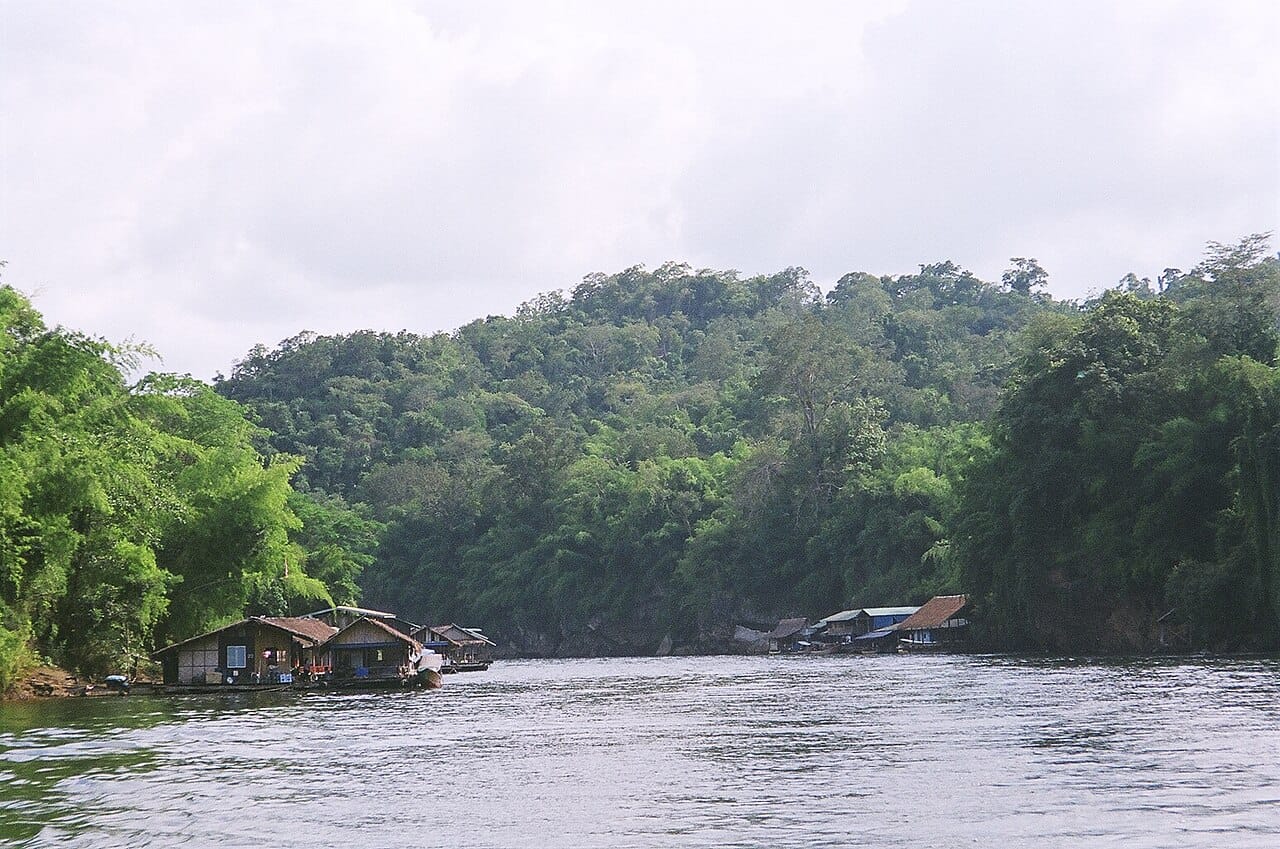
Sai Yok National Park covers more than 900 square kilometres in Sai Yok district. The park headquarters is about 100 kilometres northwest of Kanchanaburi town, reached by driving along Highway 323 (the Kanchanaburi–Thong Pha Phum road), which takes roughly an hour and a half to two hours. What ties everything together here is the Khwae Noi River — the waterfalls drop into it, the caves sit along it, and the raft houses float right on it. It's the kind of nature that only really opens up if you stay the night.
Sai Yok Yai and Sai Yok Noi are not the same place
People mix this up all the time. Sai Yok Yai waterfall and Sai Yok Noi waterfall are in different spots with a completely different feel, so heading to the wrong one can leave you seeing something other than what you pictured. The simple version: Sai Yok Yai is inside the park beside the Khwae Noi River, while Sai Yok Noi is right by the road near the train station, easy to reach and free of the park fee.
Sai Yok Yai Waterfall (Khao Chon Falls)
Inside the park headquarters area, pouring straight into the Khwae Noi River from about 8 metres up. You can walk across a suspension bridge to view it from the far bank. The water is at its best from late rainy season into early winter. Park entry fee required.
Sai Yok Noi Waterfall (Khao Phang Falls)
Right beside Highway 323 near Nam Tok train station, a limestone waterfall about 15 metres high. Park, walk a short way, and you're there — free to enter, which is why so many people stop to swim. The flow can drop off in the dry season.
Straight talk
If you're short on time and just want to see a waterfall clearly, Sai Yok Noi is far more convenient — park and you're basically there. But if you want the forest-and-river atmosphere, the suspension bridge, and a night on a raft house, you'll need to head into Sai Yok Yai inside the park. At both spots the water is strongest and clearest from October to January; in the dry season (March–May) it usually drops off a lot.
Want more out of Kanchanaburi? Book tours & activities
Booking online ahead on Klook or GetYourGuide is usually cheaper than the gate and skips the queue. Pick only the experiences you actually want — prices and availability are shown live on each site.
The caves of Sai Yok, and the smallest bat in the world
Sai Yok is limestone country, so there are plenty of caves — some you can walk to from the roadside, others you reach by boat or raft. What makes this place genuinely special is that it's home to Kitti's hog-nosed bat (the bumblebee bat), the smallest mammal in the world: about the size of a bumblebee and weighing around 2 grams. Naturalists worldwide know Sai Yok because of this tiny creature.
Lawa Cave
The most beautiful and most talked-about cave in Sai Yok, full of stalactites and stalagmites. It runs several hundred metres deep, splits into chambers, and is packed with oddly shaped rock formations. Most people take a boat or raft along the Khwae Noi River and then climb up to the cave.
Daowadueng Cave
In the northern part of the park, around 300–400 metres deep and split into roughly 8 chambers, with lovely stalactites, stalagmites, and rock curtains inside. You can reach it by road or by boat, and it's noticeably quieter than Lawa Cave.
Bat Cave (Kitti's hog-nosed bat)
A riverside cave that's home to Kitti's hog-nosed bat, the smallest mammal in the world — a draw for researchers and nature lovers. The bats are so tiny you have to look carefully to spot them; it isn't a flashy photo stop, but it's special in a natural-history sense.
About Kitti's bat
Kitti's hog-nosed bat is a protected and very fragile species, and disturbing it inside the cave has a direct impact. If you go to see it, stay quiet, no flash, no loud noise, and stick to the marked path. At various times the park may limit access to caves with bats to protect their population — checking with the rangers first is your best bet.
Rafting on the Khwae Noi River
The heart of a Sai Yok trip is the Khwae Noi River — clear and cool all year round. The popular thing to do is take a long-tail boat or raft along the river, stopping to see the waterfalls that drop into it, the riverside caves, and the forest views on both banks. Some rafts are bamboo platforms towed by a boat, while other operators rent long-tail boats by the round. Boat hire runs roughly 400–500 THB per half hour, depending on the route and group size — agree on the price and route clearly before you get on.
- Rafting to Lawa Cave — the classic route, combining river views and a climb up to the cave in one trip
- Long-tail boat to see the falls — view Sai Yok Yai waterfall from mid-river, an angle you can't get on foot
- Wet rafts / floating platforms — some riverside resorts have rafts you can float and swim off right in front of your room, great on a hot day
Raft houses and riverside stays
The kind of stay people picture when they think of Sai Yok is a riverside raft house — a room floating on the Khwae Noi River, where you open the door in the morning to water and hear it running all night. Along the river around Sai Yok there are plenty of raft resorts to suit your budget, from simple rafts to air-conditioned ones right on the water. Beyond the private operators, the park itself has bungalows and a campground run by the Department of National Parks.
Park bungalows
Bungalows within the park headquarters area, sleeping around 4–7 people, roughly 800–3,000 THB per house. Great for groups or families. Book ahead through the Department of National Parks system on long weekends.
Campground
Riverside camping inside the park; a tent pitch for two costs around 225 THB, with bedding sets to rent at 60 THB each. Ideal for campers who want to sleep to the sound of the forest and river.
Private raft resorts
Riverside raft houses from a number of private resorts all along Highway 323, ranging from budget fan rafts to air-conditioned ones on the water. Some include rafting and kayaking activities on site.
Book raft houses ahead in high season
From late rainy season into winter (October–January) and on long weekends, riverside raft houses fill up fast — especially the ones next to a waterfall or with a good view. Book several weeks ahead. For bungalows inside the park, reserve through the Department of National Parks online system before you travel.
Entry fees and opening hours
- Park entry fee — Thai adults 60 THB, Thai children 30 THB, foreign adults 300 THB, foreign children 150 THB
- Opening hours — roughly 06:00–18:00 (the cave and rafting points keep their own service hours, so aim for morning to afternoon)
- Sai Yok Noi waterfall — outside the park fee checkpoint, free to visit
- Boat / rafting fees — paid separately, around 400–500 THB per half hour; agree on the price before you board
Prices are approximate ranges
Entry and bungalow fees are based on Department of National Parks information and reviews from 2025–2026, while boat and rafting prices are market rates that shift with the season and group size. Check the actual price on site or call the park at 034-686-024 before you travel, especially if you plan to stay overnight.
How to get to Sai Yok
The easiest way is to drive yourself or rent a car. From Kanchanaburi town, take Highway 323 toward Thong Pha Phum; you'll pass Sai Yok Noi waterfall before reaching the Sai Yok Yai park headquarters. It's about 100 kilometres from town and takes roughly an hour and a half to two hours. Without a car, there are vans and buses on the Kanchanaburi–Thong Pha Phum route that drop off near Sai Yok Noi waterfall, but getting to the spots deeper inside the park is harder. Another option a lot of people enjoy is taking the Death Railway train to Nam Tok station, which is close to Sai Yok Noi waterfall.
Pair it with other stops on Highway 323
This same Highway 323 passes several well-known spots. Before you reach Sai Yok there's Krasae Cave and Tham Krasae train station (the railway curve along the cliff face), while about 19 kilometres further north past Sai Yok is Hellfire Pass. You can plan a trip that strings them together along the road over one or two days.
What to pack
- Shoes that can get wet — the paths near the waterfalls and the boat-landing points are slippery and wet
- Swimwear + a towel — for swimming at Sai Yok Noi or floating off the raft in front of your room
- Mosquito repellent — this is riverside forest, with plenty of mosquitoes especially in the evening
- A flashlight — handy in the caves and at raft houses where there's little light at night
- Cash — boat fees, riverside meals, and many shops around the park don't take cards
- A light jacket — winter nights by the river are cooler than in town
Who it suits, who it doesn't
Sai Yok suits people who want a quiet riverside stay and love nature, forest, and caves, and who aren't fussed about luxury. The appeal here is sleeping on a raft to the sound of water and waking up to a thin mist over the river. Anyone expecting a huge, dramatic waterfall like Erawan may find Sai Yok's falls short and less showy — because Sai Yok's real draw is the river atmosphere and staying overnight, not the waterfall alone. Coming on a day trip won't feel as satisfying as spending a night on a raft.
Plan a full Kanchanaburi trip — the Bridge over the River Kwai, the waterfalls, and riverside stays.
See the Kanchanaburi travel guide →