🔄 Updated 21 Jun 2026
When people think of Pathum Thani, malls and universities usually come to mind. But across the river in Sam Khok, on the banks of the Chao Phraya, is an old community of Mon people who migrated here back in the late Ayutthaya period. Their food culture has held onto a lot of the original Mon recipes, both savory and sweet — and plenty of it is still cooked at home, only coming out to sell on weekends or during temple fairs. If you make it here and don't try the khao chae and matad curry, you haven't really been to Sam Khok.
Mon khao chae — the star of Sam Khok
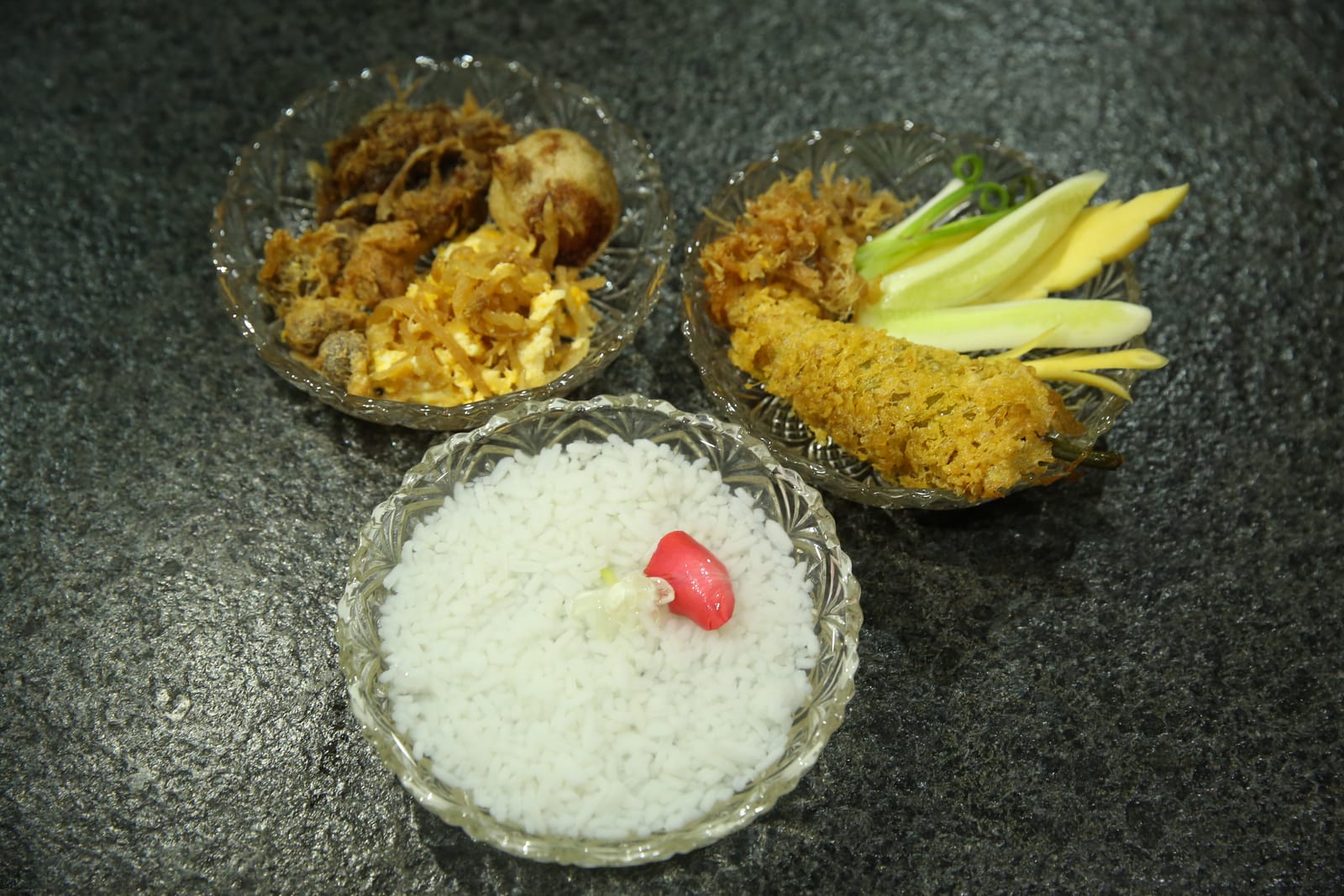
Mon khao chae isn't the elaborate, ornamental palace version. The Mon take is plainer — cooked rice soaked in cool jasmine-scented water, eaten with side dishes like fried shrimp-paste balls, sweet shredded pork, sweet-stir-fried pickled radish, and fresh vegetables. Originally it was made as an offering to monks and prepared during Songkran to beat the heat; some traditions treat it as a dish for fulfilling vows. Come April, the whole neighborhood smells of jasmine from pots of khao chae.
Best time to come
Khao chae is a hot-season dish, easiest to find from March to May, especially around Songkran. Pathum Thani has a tradition of "sending khao chae to the city governor" every April, and if you come during this window you'll see the whole community making khao chae the traditional way together.
Want to taste deeper? Try a Pathum Thani food tour or cooking class
Half a day with a local who knows the lanes — or cooking a dish yourself — teaches you more than just eating. Book ahead on Klook or GetYourGuide.
Mon restaurants and homemade dishes still open today
Baan Raman
An old teakwood house on the Chao Phraya that has served authentic Mon recipes for decades. The dishes to order are the Raman khao chae and matad curry — bold, homestyle flavors in a quiet riverside setting. It's known among people who hunt for hard-to-find Mon food. Call ahead before you go, as the opening days and hours aren't fixed.
Sam Khok Ing Nam Floating Market
A canal-side market on Bang Toey canal that gathers Mon eats in one place. There's Mon khao chae with the full set of sides — fried shrimp-paste balls, sweet shredded pork, sweet pickled radish — and you can graze on homemade sweets as you wander past old wooden houses and street art. Open Friday, Saturday, Sunday and public holidays, 9 a.m.–4 p.m.
Matad curry (at Mon restaurants)
A local curry made with young matad fruit — sour with a faint astringent edge and a distinctive aroma that's hard to find elsewhere. It's a real dare-you dish for anyone who likes trying the unusual. You'll find it at Mon restaurants around Sam Khok and Mueang Pathum Thani, starting at roughly THB 150 a bowl.
Raman chili dip (nam phrik)
A Mon-style chili dip, deeper in flavor than the usual Thai nam phrik, eaten with fresh vegetables and fried fish. It's a spread that old Mon shops like Baan Raman do authentically. Worth a try if you like bold, homestyle flavors.
Raman snakehead fish
Snakehead fish cooked the Mon way — firm flesh, well-rounded flavor, a river-fish dish that pairs with hot steamed rice. Order it at Mon restaurants along the Chao Phraya; the price depends on the size of the fish.
Boat noodles (Ing Nam market)
Not strictly Mon, but a floating-market staple that's tasty and cheap. A good way to line your stomach while you graze on homemade sweets — the bowls are small, so you can eat several, and it fits the canal-side vibe.
Straight talk
Many traditional Mon shops keep irregular hours — some open only on weekends or take advance bookings. Before driving out a long way, always call or check the shop's page first. And outside the hot season, khao chae can be hard to find, so you'll need to ask shop by shop.
Homemade sweets and stirred temple-fair treats
Sam Khok Mon sweets come in two kinds — the everyday ones made for sale, and the ones made only at festivals. The most distinctive are the stirred Songkran sweets, cooked at home and at temple fairs. Come April, you'll see kalamae and red sticky rice being stirred in huge woks, with several people taking turns at the paddle — a scene you only really catch in a community like this.
- Kalamae (kwan ha kor) — a chewy stirred sweet that the Mon call "kwan ha kor," meaning stirred sweet. It's made only around Songkran, at temple fairs and at home.
- Red sticky rice — a stirred sweet paired with kalamae, sweet and fragrant with palm sugar. It's offered to monks and shared with neighbors over the Thai New Year.
- Yok mani — clear, chewy little beads tossed with coconut. You can buy it at Sam Khok Ing Nam market.
- Ba bin with aromatic coconut — grilled coconut-flour cakes, best eaten warm, sold at market stalls.
- Fried lotus seeds · pandan khanom krok — snacks to graze on while you wander the canal-side market.
Want to see the sweets stirred for real
If you're set on watching kalamae and red sticky rice stirred the traditional way, come just before Songkran, around early April. The Sam Khok subdistrict municipality and the local temples usually hold sweet-stirring and Thai-Mon cooking activities, complete with traditional Mon dress.
Eating your way through Sam Khok in a single day
Sam Khok Ing Nam Market
Start the morning at the Bang Toey canal market — try khao chae and homemade sweets, and wander past old wooden houses and street art. Open Friday to Sunday.
Old riverside temples
Stop at the key temples of the Mon district to see the architecture and pay respects. Around Songkran there are sweet-stirring and khao chae-making activities.
Baan Raman on the Chao Phraya
Finish with a big meal of Raman khao chae and matad curry in an old wooden house by the river. Call ahead to book.
Sam Khok is an easy half-day to full-day trip. The draw is the old riverside community that still isn't crowded — perfect for anyone who wants to escape the city for some unusual food near Bangkok. It's under a 20-minute drive from the center of Pathum Thani.
Plan a full eating trip around Pathum Thani
See the Pathum Thani guide →