🔄 Updated 21 Jun 2026
Before you buy edible souvenirs on Samui, two quick checks make the choice easier. First, think about how you'll carry it home: liquids like a big bottle of coconut oil have to go in checked baggage, while dry goods like yanom and dried fish travel fine in your carry-on. Second, check the shelf life — many homemade local products contain no preservatives and only keep for a few days, so if you have several more days of travel ahead, pick items with a clearly marked best-by date.
Coconut products — the island's real signature
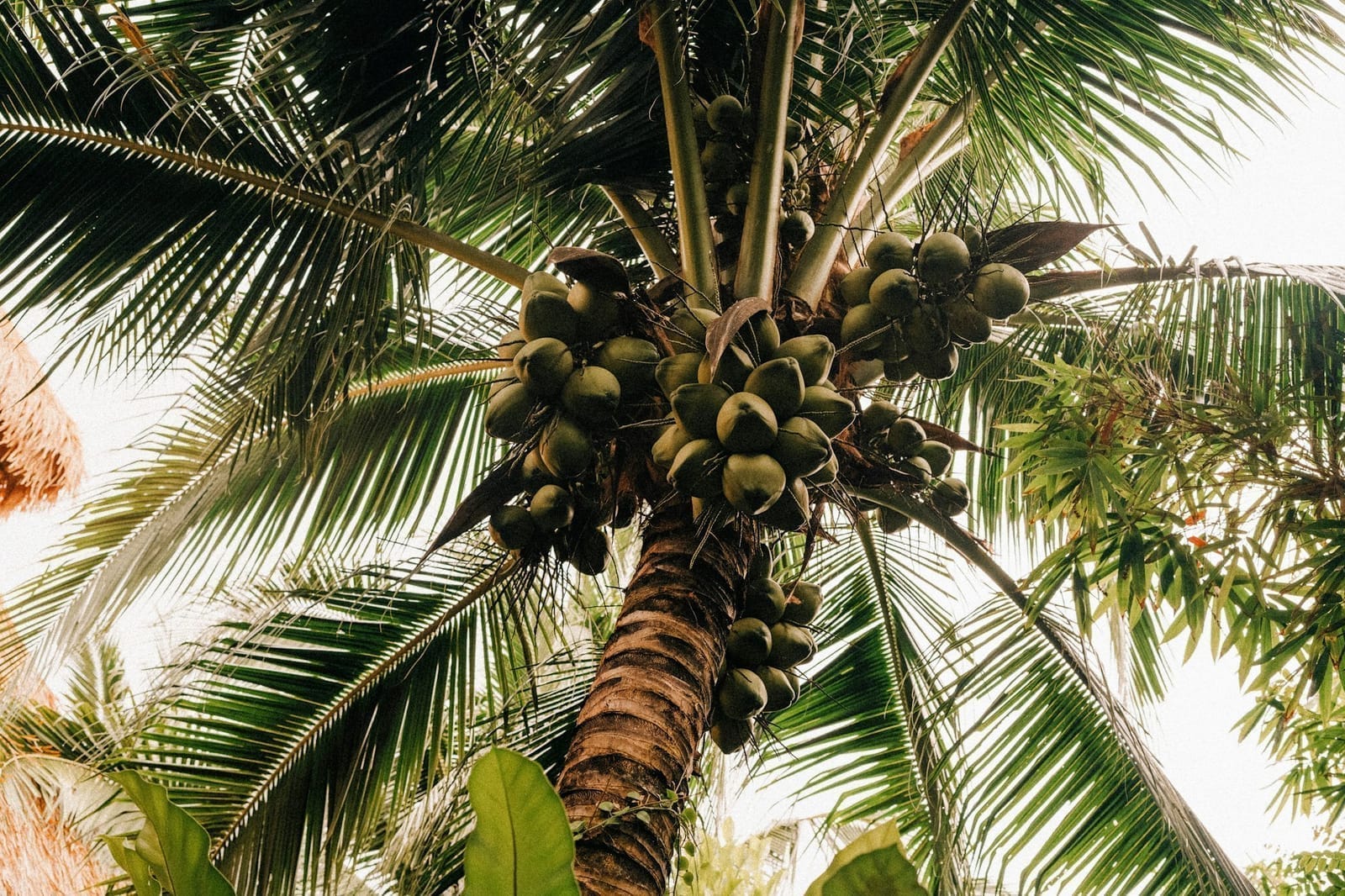
Samui has grown coconuts for over a hundred years, and even though the plantations have shrunk as land turned into resorts, coconut products are still an easy-to-find souvenir that's genuinely unique to the island. These are the few you'll see most often.
- Cold-pressed coconut oil (VCO) — one of the island's top souvenirs. The group that makes it most seriously is a community coconut-product cooperative around Bo Phut sub-district, with both small travel-friendly bottles and large ones. Use it on skin, hair, or for cooking. Small bottles run roughly ฿120–250 depending on size.
- Baked / crispy coconut — dried, crisp coconut flesh that's easy to keep snacking on and keeps for a long time. It's the easiest of the coconut souvenirs to pack, around ฿50–100 a bag.
- Coconut sugar / coconut nectar — made from coconut blossom, with a soft caramel aroma and sweetness. Use it in cooking or stir it into a drink.
- Coconut-oil soap / cream — these are toiletries, not food, but they're usually sold alongside the rest at the same OTOP shops. If you want a full set of coconut souvenirs, you can usually grab everything from one shop.
Before you buy coconut oil
Cold-pressed coconut oil is a liquid, so any bottle over 100 ml has to go in checked baggage — you can't carry it into the cabin. If you buy a big bottle, leave room in your checked bag for it.
Want to taste deeper? Try a Koh Samui food tour or cooking class
Half a day with a local who knows the lanes — or cooking a dish yourself — teaches you more than just eating. Book ahead on Klook or GetYourGuide.
Yanom (kalamae) — the local sweet Samui is most famous for
Samui locals call kalamae "yanom" — a dark, chewy, sticky sweet stirred from glutinous rice flour, coconut milk and sugar, cooked for several hours in a big wok. The best part is that it keeps for more than 10 days without refrigeration, which makes it ideal for a long trip home.
Where you'll really see it sold in a long row is the shopping walk near the Hin Ta–Hin Yai entrance in the Lamai Beach area, where shops line almost the whole stretch and you can taste before you buy. Most offer 3 flavors — original, pandan and black sticky rice — and some sprinkle on sesame and peanuts for extra fragrance. Prices run from a small box at around ฿40–60 up to large boxes in the hundreds. Sample a few shops before settling, because the sweetness and chewiness vary from one to the next.
honest
Good yanom is freshly stirred and soft. If a shop's batch feels hard and stiff, it's usually been sitting around — press it or ask for a taste first at any shop, no need to feel awkward about it.
Dried seafood + dried fish
Samui sits in the middle of the Gulf of Thailand, so sun-dried seafood is a souvenir you'll find all over the island, especially at the morning fresh markets and the souvenir shops around Nathon. This group is easy to pack since it's all dry, but the smell is fairly strong — wrap it well or seal it in a zip bag before it goes in your luggage.
- Salted fish / dried fish — several kinds depending on the catch season. Salted king mackerel is a favorite; fry it up to eat with rice porridge. Pick a shop whose fish is fully dry, not damp.
- Dried shrimp — big, bright-orange dried shrimp, used for chili dips or salads. It should smell fragrant when you sniff it, with no musty odor.
- Dried squid — both sheet and whole-body styles, grilled as a snack or used in dishes. Choose pieces without a thick white film on them.
- Shrimp paste (kapi) — Gulf of Thailand shrimp paste is pungent with a well-rounded salty flavor, a souvenir for the cooks in the family. Pack it in a tightly sealed jar.
On freshness
Dried seafood from the island is best when it's new, but it has to be stored well. If you buy it and still have several days of travel before heading home, keep it somewhere dry and cool — don't leave it in a hot car, because oily items like dried shrimp turn rancid quickly.
Edible souvenirs, ranked — what to grab first
If you're short on time or low on bag space, this is the order we'd reach for, judged by how unique it is to the island, how easy it is to pack, and how likely the person receiving it is to enjoy it.
Yanom (kalamae) from the Hin Ta–Hin Yai row
The most quintessentially Samui souvenir — chewy, fragrant with coconut milk, in 3 flavors, with a whole row to taste before you buy. Keeps over 10 days without refrigeration and travels in your carry-on.
Cold-pressed coconut oil (VCO), Bo Phut community
A signature product from a genuine coconut island, made by the local community group. Use it on skin, hair, or in cooking. Small bottles pack easily; big bottles have to be checked.
Baked crispy coconut
Dried, crisp coconut flesh that's easy to keep snacking on — kids and adults both like it, and it's the easiest of the coconut souvenirs to pack. Keeps a long time.
Chaiya salted eggs
Although it's a signature of Chaiya on the Surat Thani mainland, you can buy it on the island. Deep-red yolks, rich and oozy, with no fishy smell — a souvenir the cooks in the family love.
Salted king mackerel / dried fish
The Gulf of Thailand's classic processed seafood, fried up to eat with hot rice porridge. Pick a shop whose fish is fully dry — easy to keep, though the smell is strong, so wrap it tightly.
Salted-egg crispy noodles
A hit snack from the south — crispy noodles tossed in salted-egg or shrimp-flavored sauce, easy to keep nibbling. A youth-friendly souvenir that's easy to hand out.
Large dried shrimp
Bright-orange dried shrimp with firm flesh, used for chili dips or salads. It should smell fragrant, not musty — a souvenir for the home cook that every kitchen can actually use.
Coconut sugar / coconut nectar
Made from the island's coconut blossom, with a soft caramel aroma — use it in cooking or stir it into a drink. A wellness-leaning souvenir that's more unusual than ordinary sugar.
Dried squid
Both sheet and whole-body styles, grilled as a snack or used in dishes. Choose pieces without a thick white film. Fairly strong-smelling, so wrap it tightly.
Gulf of Thailand shrimp paste
Pungent shrimp paste with a well-rounded salty flavor, a true souvenir for the home cook. Pack it in a tightly sealed jar to keep the smell out of your bag.
Where to buy — souvenir neighborhoods and markets
Souvenirs on the island are spread across the busier neighborhoods, each with its own strengths. Pick the one that's on your route and you'll save yourself from driving all the way around the island.
Hin Ta–Hin Yai entrance (Lamai Beach)
The yanom hub, sold in a long row down almost the whole walkway — taste several shops before you choose. It pairs perfectly with a visit to the Hin Ta–Hin Yai rock viewpoint.
Bo Phut Fisherman's Village
A souvenir district with community shops selling coconut products and handmade goods. The walking street runs Friday evenings from around 5 pm to 11 pm — busy, with a good atmosphere.
Nathon (pier–town)
The town and pier side, with a fresh market and local souvenir shops. Good for picking up dried seafood and salted eggs before you board the ferry home.
OTOP shops / island supermarkets
If you're short on time or want a full set of coconut products in one place, the OTOP shops and big supermarkets in Chaweng have souvenirs pre-packed and ready to go.
Getting around the island
If you rent a motorbike to hunt for souvenirs yourself, watch out for the steep, twisty climbs around Lamai–Chaweng. Ride slowly, wear a helmet, and remember the roads get much more slippery in the rain. If you're not used to it, hiring a car or using an island taxi is the more relaxed option.
How to carry it home without spoilage
- Liquids (big bottles of coconut oil) — must go in checked baggage, wrapped in clothes so they don't break. Only small bottles of 100 ml or less can come into the cabin.
- Dry goods (yanom, baked coconut, crispy noodles) — carry on fine. Keep them somewhere dry and out of the hot sun.
- Strong-smelling items (dried fish, dried shrimp, shrimp paste) — double-bag them in zip bags or sealed boxes so the smell doesn't take over your luggage.
- Fresh / homemade items with no preservatives — check the date made and eat them within a few days. Don't over-buy if you still have more traveling to do.
Plan the rest of your Koh Samui eating trip in full
See the Koh Samui travel guide →