🔄 Updated 21 Jun 2026
Say Sing Buri and most people picture the Bang Rachan camp and river fish first. But this is really a province of temples. Many old wats line the banks of the Noi River and the Chao Phraya, some built before Ayutthaya, and one holds the largest Buddha image of the central group. The good part is that the important temples sit close to one another, so you can drive a loop and pay your respects across half a day to a full day without rushing. We've picked out the wats that both locals and visitors actually stop at, with a route that links them together.
Wat Phra Non Chaksi Worawihan — a reclining Buddha nearly 50 metres long
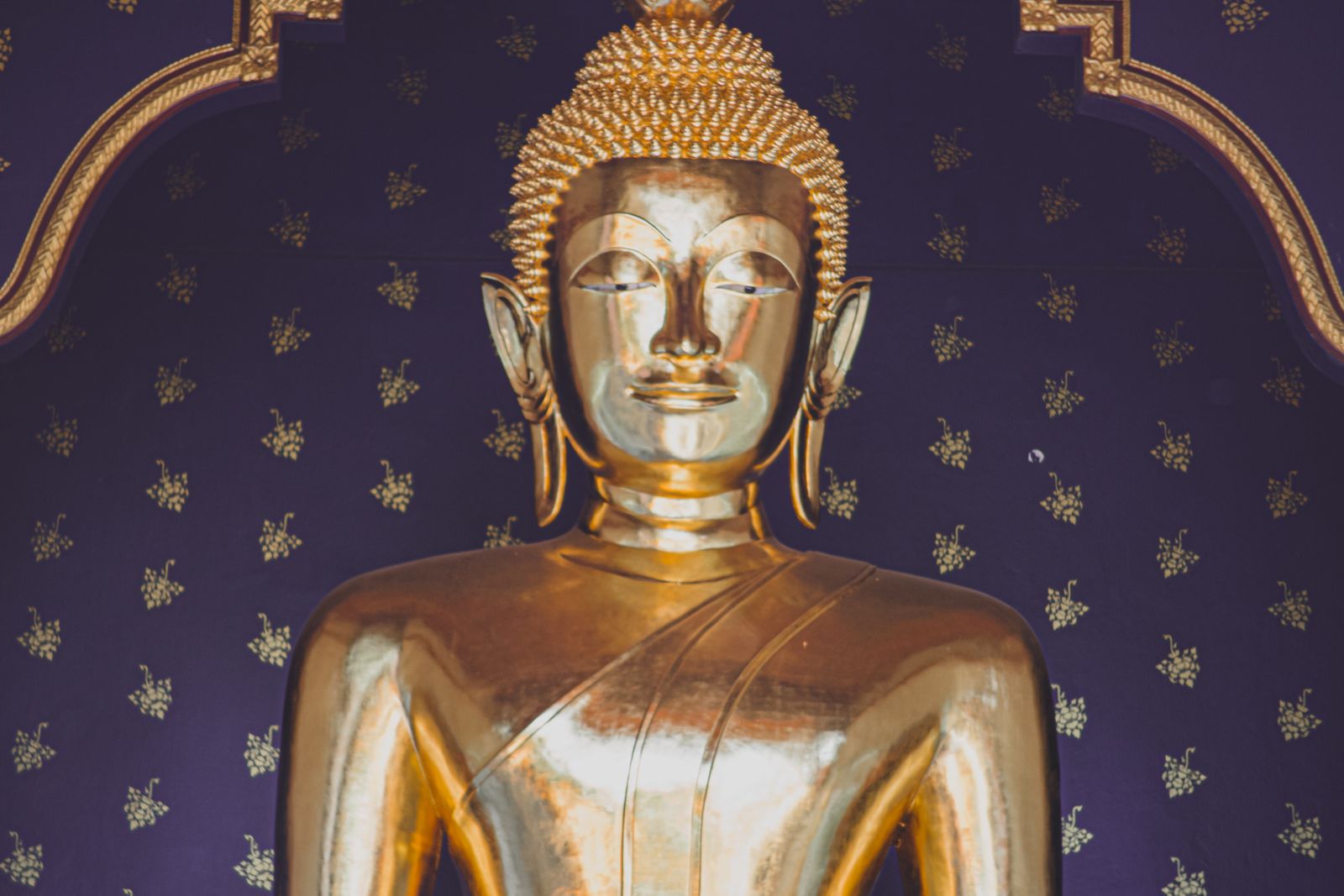
This is the first stop people come to Sing Buri for. It sits in Chaksi sub-district, Mueang district, a royal temple thought to predate Ayutthaya. The principal image is the reclining Buddha (Phra Non Chaksi), around 47 metres long — one of the largest brick-and-stucco reclining Buddhas in the country. The face points north and the head turns to the east, and the image lies inside a long viharn, so the moment you walk in you feel the scale. The viharn and ordination hall were rebuilt during the reign of King Rama V, so it's a temple that is both very old and well kept.
Within the grounds you'll also find Phra Kan and Phra Kaeo, two revered images people like to pray to as well, plus a small market in front of the temple where you can grab souvenirs and snacks before heading on. It makes a good starting point — it's close to town and easy to continue toward the other wats out Bang Rachan way.
Local tip
The reclining Buddha hall is wide and gets hot around midday. Come before 10am when the sun is still soft — the image photographs brighter and there are fewer people than later in the morning.
Want more out of Sing Buri? Book tours & activities
Booking online ahead on Klook or GetYourGuide is usually cheaper than the gate and skips the queue. Pick only the experiences you actually want — prices and availability are shown live on each site.
Wat Phikun Thong — Luang Pho Phae, the Great Buddha, and Ganesha over the water
Wat Phikun Thong (a royal temple) sits on the Noi River in Tha Chang district, about 16 km from town and roughly 4 km past Wat Phra Non Chaksi. Locals just call it "Luang Pho Phae's temple," because this is where Luang Pho Phae (Phra Thep Singhaburachan), a monk revered across the whole country, lived until he passed away in 1999. The temple has a Luang Pho Phae museum showing his life and personal effects, and the faithful often stop to pay respects at his preserved body and ask for blessings.
Another highlight is the Great Buddha (Phra Phuttha Suwan Mongkhon Maha Muni), a huge blessing-pose image with a lap more than 11 wa wide and a height of about 21 wa — you can see it from a distance as you drive in. Behind the temple stands a large Ganesha set out over the water, with a bridge you can walk across to make an offering; it's a spot people come to for blessings around work and study. The temple is spacious, with parking, restrooms and souvenir shops, so it's worth a longer stop.
Wat Pho Kao Ton — the Bang Rachan camp, a temple steeped in history
Carry on past the in-town temples toward Khai Bang Rachan district and you reach Wat Pho Kao Ton, which locals call "Wat Mai Daeng." This was once the stronghold of the Bang Rachan villagers who banded together to hold off the Burmese army before the second fall of Ayutthaya, so it carries real historical weight. Inside there's a sacred pond people come to for blessings, and it sits right beside the Bang Rachan Heroes Monument — you can walk from one to the other.
If you're with family or bringing kids, this place is good because you get to pay your respects and tell the history at the same time. There's a park and open grounds around it to walk through, so it's worth setting aside about an hour.
Old wats along the Noi River and other cultural stops
Beyond the three main temples, Sing Buri has plenty more old riverside wats and traditional craftwork worth a look. If you've got time to spare, add these stops to the route.
Wat Phra Prang (Chansut)
In Bang Rachan district, with an Ayutthaya-style corn-cob brick prang around 15 metres tall, next to the ancient Noi River kiln site. There's a small market in front of the temple on Sundays.
Wat Sawang Arom (Wat Bang Mon)
In Mueang district, home to a shadow-puppet museum with over 300 figures and a Buddha-casting workshop carrying on the craft, plus a Chinese-style viharn and a Buddha footprint. Open Mon–Fri 9:00–16:00, Sat–Sun 8:30–17:00.
Bang Rachan Heroes Monument
Near Wat Pho Kao Ton, a memorial ground for the Bang Rachan villagers, with a museum and open square. Good for photos and for telling the kids the history.
Worth knowing before you go
Wat Sawang Arom and its museum keep set opening hours, and a shadow-puppet demonstration has to be booked ahead as a group. If you're going on a weekday, call the temple to check times first so you don't make the trip for nothing.
Planning a one-day Sing Buri temple route
Sing Buri's main temples mostly line up along the same road, so you can drive the loop in half a day to a full day with ease. Here's the order that flows best.
- Start at Wat Phra Non Chaksi Worawihan — close to town; come in the morning before the sun gets harsh.
- On to Wat Phikun Thong — drive Highway 3032 toward Bang Rachan, about 4 km on, to pay respects to Luang Pho Phae, the Great Buddha and Ganesha.
- Lunch by the river — Sing Buri is known for river fish and boat noodles, so refuel before moving on.
- Finish at the Bang Rachan camp and Wat Pho Kao Ton — pay your respects, see the monument and walk the park. If you've still got time, swing by Wat Phra Prang or Wat Sawang Arom.
Dress modestly and carry a shawl in case you enter a viharn, and bring cash for offerings and souvenirs since plenty of spots still aren't set up for transfers. Pack an umbrella or a hat too, because most of the temple grounds are out in the open.
Plan a full day of temples and sightseeing in Sing Buri
See the Sing Buri travel guide →