🔄 Updated 21 Jun 2026
A lot of people hear 'Songkhla Lake' and picture an ordinary freshwater pond. In reality it's a large lagoon connected to the Gulf of Thailand through the mouth of the lake near downtown Songkhla — seawater pushes in and mixes with freshwater from the rivers, creating a brackish system where the ecology shifts completely from one zone to the next. Drive roughly 30–40 min from Hat Yai and you're already standing on the shoreline.
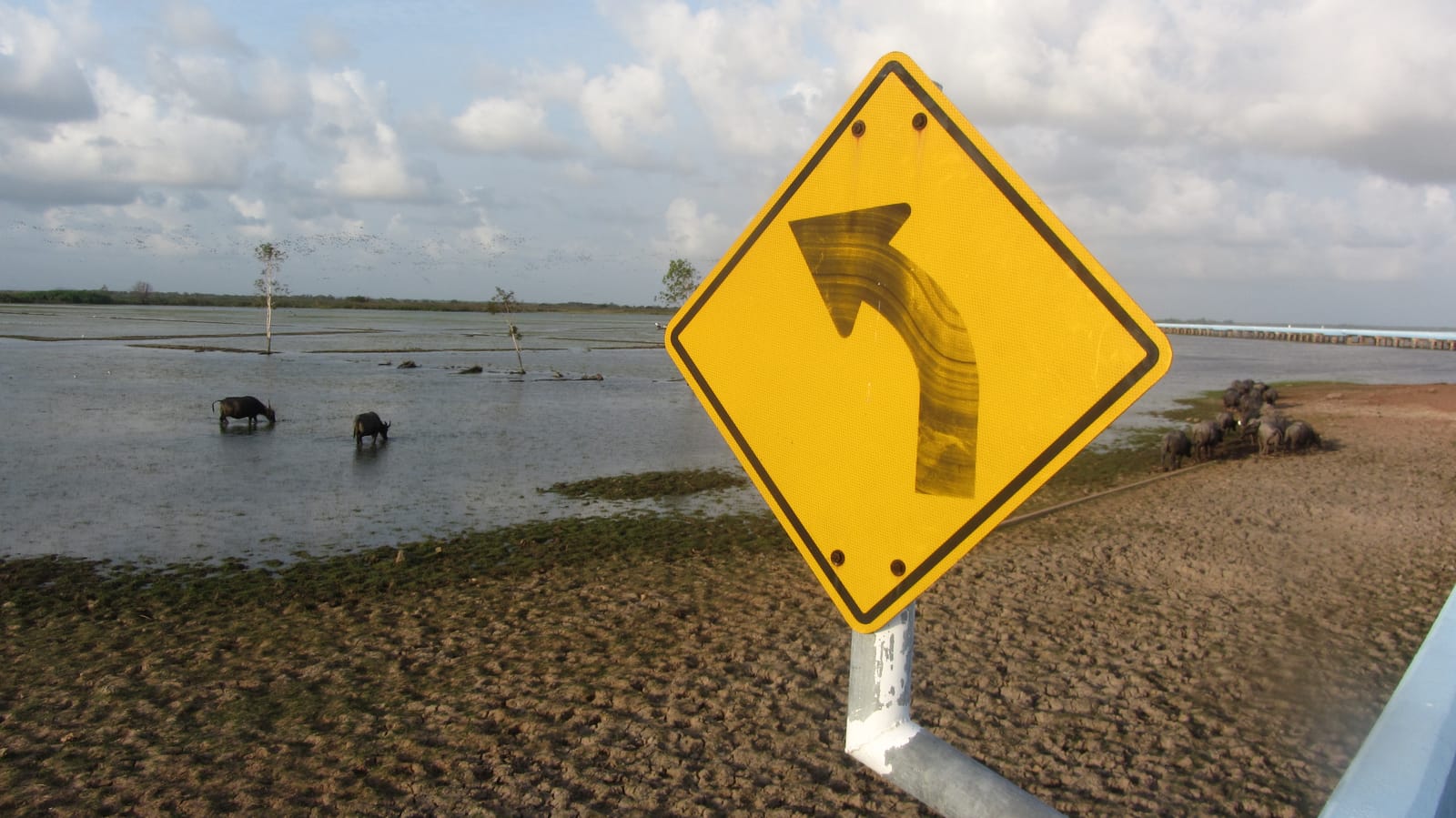
What makes this place interesting is that it wears several different faces. The lower section near the mouth is brackish to salty — people raise barramundi in floating cages here. The far northern end, called Thale Noi, turns fully freshwater, its surface carpeted with red lotus and water buffaloes wading through the shallows. It's the only lake in Thailand where a single trip can give you both a saltwater coast and a freshwater wetland.
What Is Songkhla Lake — and Why Does It Stand Out?
At roughly 1,000 sq km, Songkhla Lake is the largest natural lake or lagoon in Thailand and one of the largest in Southeast Asia. What sets it apart from other bodies of water is the 'three-water' character: freshwater, brackish water, and saltwater all exist in the same basin. Salinity shifts with the seasons and with distance from the mouth, so the plants and aquatic life in each zone look nothing alike.
That diverse ecosystem has sustained both people and wildlife for generations — from traditional fishermen who still go out by boat every morning, to barramundi farmers tending floating cages, to rare waterbirds and one of the world's few populations of freshwater Irrawaddy dolphins.
Want more out of Songkhla? Book tours & activities
Booking online ahead on Klook or GetYourGuide is usually cheaper than the gate and skips the queue. Pick only the experiences you actually want — prices and availability are shown live on each site.
Three Zones — What's Different in Each
To really understand Songkhla Lake, think of it in sections running from the mouth northward. Each section has its own atmosphere and its own activities — planning around the zones makes your trip far easier.
- Lower Lake — the section bordering downtown Songkhla and Koh Yo. Brackish to salty water. This is where most visitors go: Tinsulanon Bridge, barramundi floating cages, waterfront seafood restaurants, and lakeside cafés.
- Middle Lake (Thale Luang) — the wide expanse stretching northward, trending toward brackish-to-fresh. This is the zone where Irrawaddy dolphins occasionally appear near the transition area. It's quieter here, better suited to a slow boat trip than sightseeing stops.
- Thale Noi — the far northern tip in Phatthalung province, fully freshwater. Home to the Thale Noi Wildlife Sanctuary, a red lotus field, water buffaloes, and tens of thousands of migratory waterbirds in winter. Thailand's first Ramsar Wetland site.
Match Your Zone to Your Time
If you only have half a day and you're based in Hat Yai or downtown Songkhla, the Lower Lake and Koh Yo is plenty. Thale Noi is roughly 1.5–2 hours further north into Phatthalung — save it for a separate full-day trip.
Best Viewpoints Around the Lake
The appeal of Songkhla Lake is its evening light — still water mirroring the sky, the silhouette of the bridge, and rows of floating cages catching the last of the sun. These are the spots people actually photograph.
Tinsulanon Bridge Viewpoint (Koh Yo Side)
Watch the twin bridge spans stretch across the open water — best in late afternoon around 17:30–18:30 when the light goes golden. There's parking and a small sitting area right on the lakeshore.
Observation Tower — Institute of Southern Thai Studies
Up on the hillside of Koh Yo, you get a wide panorama of the lake, Tinsulanon Bridge, and the floating fish cages below. It's inside the folklore museum — worth walking around to catch the southern Thai cultural exhibits too.
Wat Khao Bo / Temple on Koh Yo Hill
A hilltop temple with views across Koh Yo and the lake below. Locals stop here to pay respects and enjoy the view in relative quiet — much less crowded than the bridge viewpoint.
Laem Son On – Kao Seng Shoreline (Downtown Side)
Standing on the downtown Songkhla side, you can see the mouth of the lake where it meets the Gulf of Thailand. Good for an evening stroll and catching the sea breeze.
Koh Yo — Heart of the Lower Lake
Koh Yo is an island sitting in the lower section of Songkhla Lake, connected to the mainland by Tinsulanon Bridge — you can drive right on. The whole island is still a working community: fruit orchards, floating fish farms, and weavers producing the famous Koh Yo royal-pattern cotton fabric. The pace is slow and unhurried, easy to spend a full day driving around the island, stopping to eat and photograph as you go.
- Barramundi Floating Cages — the entire shoreline of Koh Yo is lined with floating cages raising white barramundi. Many restaurants scoop the fish straight from the cage and cook it in front of you.
- Institute of Southern Thai Studies Folklore Museum — a collection of everyday objects and customs from southern Thai life, set on a hill overlooking the lake. Includes an observation tower and a café.
- Wat Laem Pho — home to one of Songkhla's large reclining Buddha statues, at the island's tip near the foot of the bridge. Easy to stop in on your way around.
- Koh Yo Woven Fabric and Champada Fruit — the island's signature souvenirs: royal-pattern handwoven cotton and seasonal champada (a type of jackfruit relative) with a distinctive sweet fragrance. Found at shops along the road through the island.
What to Eat by the Lake on Koh Yo
The star of the show is barramundi from the cages — fresh, firm-fleshed, and priced by weight per kilogram. Beyond the fish, you'll find shrimp, shellfish, and crab straight from the lake, plus a growing number of lakeside cafés where you can sit with a coffee and wait for the afternoon light.
Steamed Barramundi with Lime Sauce
The dish everyone orders first. Fresh barramundi from the cage, steamed over a lime, chili, and garlic broth — sour, spicy, well-rounded. Eat it with hot jasmine rice.
Deep-Fried Barramundi with Fish Sauce / Chili Sauce
Fried until the skin is crisp while the flesh stays tender inside, then topped with sweet fish sauce or three-flavour chili. Another technique the Koh Yo restaurants do very well.
Grilled Prawns & Fresh Oysters
Seafood from the lake and local farms nearby — large prawns grilled over charcoal with seafood dipping sauce, alongside fresh oysters at very reasonable prices.
Tom Yum Seafood / Southern Sour Fish Curry
A hot, intensely flavoured bowl in the southern Thai style, made with the day's fresh catch from the lake. A proper filling meal that fits the waterside setting perfectly.
Lakeside Café on Koh Yo
A handful of new cafés have opened on Koh Yo with views over the fish cages and Tinsulanon Bridge. Good for a mid-afternoon break while you wait for the evening light.
A Note on Barramundi Pricing
Most restaurants charge by actual weight per kilogram — not a flat per-dish price. Before you order, ask how much the fish weighs and the price per kg. That way there are no surprises when the bill arrives.
Freshwater Dolphins and Waterbirds — Wildlife You Won't Find Everywhere
The upper section of Songkhla Lake around Thale Luang is one of a very few places in the world where Irrawaddy dolphins live in fresh-to-brackish water. Their numbers are critically low and they are a protected species. Spotting one depends on luck and going out with a local who genuinely knows where to look — no tour operator can honestly guarantee a sighting.
At the far north end, Thale Noi Wildlife Sanctuary is something else entirely. In winter, tens of thousands of waterbirds gather here. Red lotus blooms early in the morning, and water buffaloes wade through the shallows looking for grass. It's a scene you won't find many other places in Thailand — best experienced from a boat at first light.
2-Day Songkhla Lake Itinerary
If you want to cover both the Koh Yo side in the lower lake and Thale Noi in the north, plan for two days. Use downtown Songkhla or Hat Yai as your base — having your own car makes everything much easier.
Koh Yo & Tinsulanon Bridge — Lower Lake
Thale Noi — Freshwater Northern End
Best Time to Visit
- November–February — the sweet spot. Cool weather, clear skies, migratory birds peak at Thale Noi, red lotus in full bloom, and great light for photography.
- October–December — this is the rainy season on the Gulf side of the south. Expect heavy rain; check the forecast before planning any boat trips.
- Early morning and late afternoon near sunset — the lake is at its best at these hours regardless of season: still water, soft light, cool breeze, ideal for both boating and café-sitting.
Straight Talk
Songkhla Lake is not a clear-water swimming beach. Its appeal is wide-open views, the pace of lakeside life, and that golden evening light. Come expecting a beach holiday and you'll leave disappointed. Come for quiet scenery, fresh seafood, and an unhurried atmosphere — and it genuinely delivers.
Want a full Songkhla plan covering the lake, temples, cafés, and food?
See the Songkhla Travel Guide →