🔄 Updated 21 Jun 2026
When people think of Sukhothai food, Sukhothai noodles come to mind first. But drive north toward Si Satchanalai and Sawankhalok, and you'll find a whole other group of dishes locals have been eating for generations — one that most visitors never reach. That's the family of khao poep, khao phan, mee phan, and guay tiew bae. They're all related: each one uses steamed rice-batter sheets at its core, differing only in how they're wrapped and what goes inside.
What Is Khao Poep and How Is It Made?
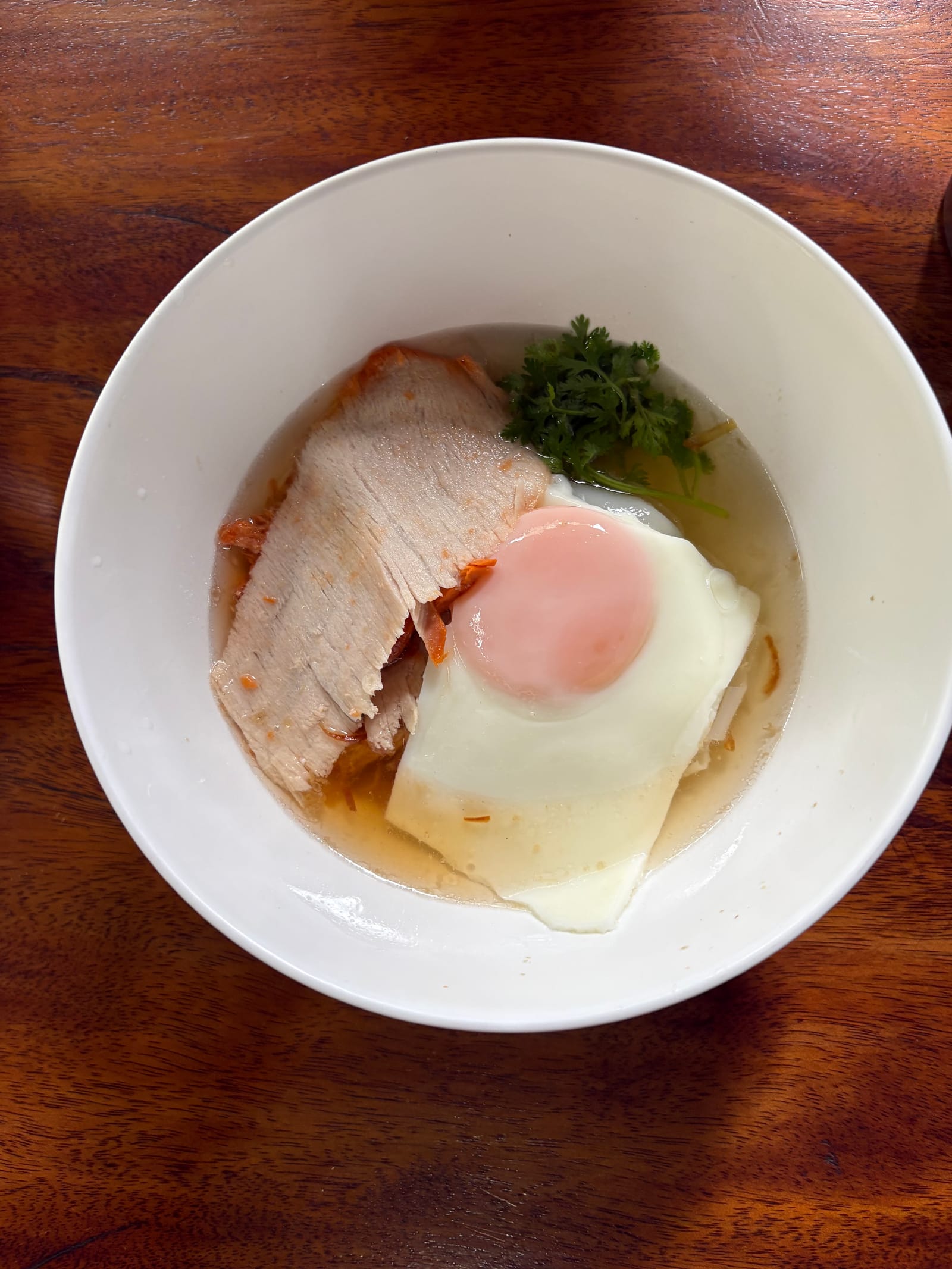
The word "poep" is local dialect for folding back and forth — which is exactly what happens to the food. The process starts with ladling rice-batter onto a thin cloth stretched taut over a pot of boiling water. Once the sheet sets into a translucent layer, vegetables go on top — shredded cabbage or bean sprouts — then the lid goes back on to steam briefly. A wooden spatula lifts and folds it into a square parcel, which lands in a bowl of clear pork-bone broth seasoned lightly, finished with egg, red pork, fried garlic, spring onion, and coriander.
What sets khao poep apart from the standard khanom bueang yuan (pan-steamed rice rolls) you find elsewhere is the batter itself: it's made from fermented rice. Authentic shops soak raw rice for 2–3 days until soft, then grind and strain it into batter. The colour comes out cloudy white rather than glassy clear, and the flavour is noticeably deeper. Served alongside crispy pork crackling, it's a bowl that fills you up without weighing you down.
Want to taste deeper? Try a Sukhothai food tour or cooking class
Half a day with a local who knows the lanes — or cooking a dish yourself — teaches you more than just eating. Book ahead on Klook or GetYourGuide.
Khao Poep vs Sukhothai Noodles — What's the Difference?
- Noodle vs sheet — Sukhothai noodles use thin rice noodles boiled in broth; khao poep uses a folded steamed rice sheet around vegetables, with no noodles at all.
- Broth flavour — Sukhothai noodle broth leads with sweetness and comes with long beans, peanuts, and sugar; khao poep's pork-bone broth is gentler, letting the silky texture of the rice sheet carry the bowl.
- Toppings — Khao poep typically comes with egg and red pork on top; some shops also offer a dry version dressed with red pork.
- Where to find it — Sukhothai noodles are easy to find across the whole province; authentic khao poep is clustered around Si Satchanalai–Sawankhalok, especially Ban Na Ton Chan village.
Khao Poep Shops That Are Actually Open — Where to Eat
Ranked by reputation and originality. Prices are approximate ranges and may shift with ingredient costs. Check each shop's page before making a special trip during long weekends.
Khao Poep Yai Khrueang (Original) — Ban Na Ton Chan
The real original. Khun Yai Khamkhrueang Wongsarasin has been making khao poep here for over 40 years, in a two-storey wooden house beside Wat Na Ton Chan. The menu is short but everything is made fresh — fermented-rice sheets that slide clean in the mouth, pork-bone broth that's clear and well-rounded. No branches. Parking is easy.
Khao Poep Lom Yak — Na Ton Chan Mud-Dyed Cloth Centre
Also in Ban Na Ton Chan village: a large traditional Thai house guarded by two giant mythical figures at the gate. Plenty of seating — good for groups. Alongside the broth version, they offer dry khao poep with red pork and khao phan to round out the meal. You can browse the community's mud-dyed cloth workshop right on site.
Khao Phan & Khao Poep Stalls — Sawankhalok Market
Several khao phan and khao poep stalls are scattered through Sawankhalok's morning market and breakfast shops — ideal for anyone not making the drive up to Na Ton Chan. Stop in for breakfast before touring the old town. Ask locals which stall is open that day since many only trade in the early morning.
Before You Go
Shops in Na Ton Chan steam each sheet to order, so expect a short wait when it's busy. Arrive before 11 am if you'd rather not queue, and bring cash — most of these family shops don't take transfers yet.
What to Order at a Khao Poep Spread
If you're at one of the Na Ton Chan shops, several dishes from the same family are worth ordering together to compare. Each one uses steamed rice-batter sheets as the base — the difference is in how they're wrapped and seasoned.
Khao Poep Nam (Soup)
The main event: steamed rice sheet folded around vegetables, floated in pork-bone broth, topped with egg and red pork. Start here on a first visit.
Mee Phan
A rice sheet rolled around glass noodles, rice noodles, and vermicelli, served on skewers and eaten dipped in sauce. Good for snacking while you wait.
Khao Op
Rice-batter wrapped around noodles in a long cylinder — comes plain, with egg, or spicy. Think of it as the rolled-log version of the khao phan family.
Guay Tiew Bae
Thin noodles tossed with garlic and long beans, dressed with red pork, peanuts, and pork crackling. The neighbourhood's go-to noodle dish alongside khao poep.
What to Do After Breakfast
Ban Na Ton Chan is in Si Satchanalai District — a homestay community with several things to see within walking or cycling distance. One morning is enough to eat well and tick off the highlights.
- Na Ton Chan Mud-Dyed Cloth — the village's signature mud-and-indigo textile tradition. You can buy scarves and fabric as take-home gifts.
- Sunrise viewpoint and the Wonder Tree — both local icons, best experienced by guests staying overnight at the homestay.
- Si Satchanalai Historical Park — a group of ancient ruins along the Yom River, a short drive away and easy to explore by bicycle.
- Sangkhalok Kiln Sites — the original Sangkhalok celadon kilns, linking the area's craft history to the same pottery traded across Southeast Asia centuries ago.
Want a full picture of Sukhothai's food scene?
See the Sukhothai Food Guide →