🔄 Updated 21 Jun 2026
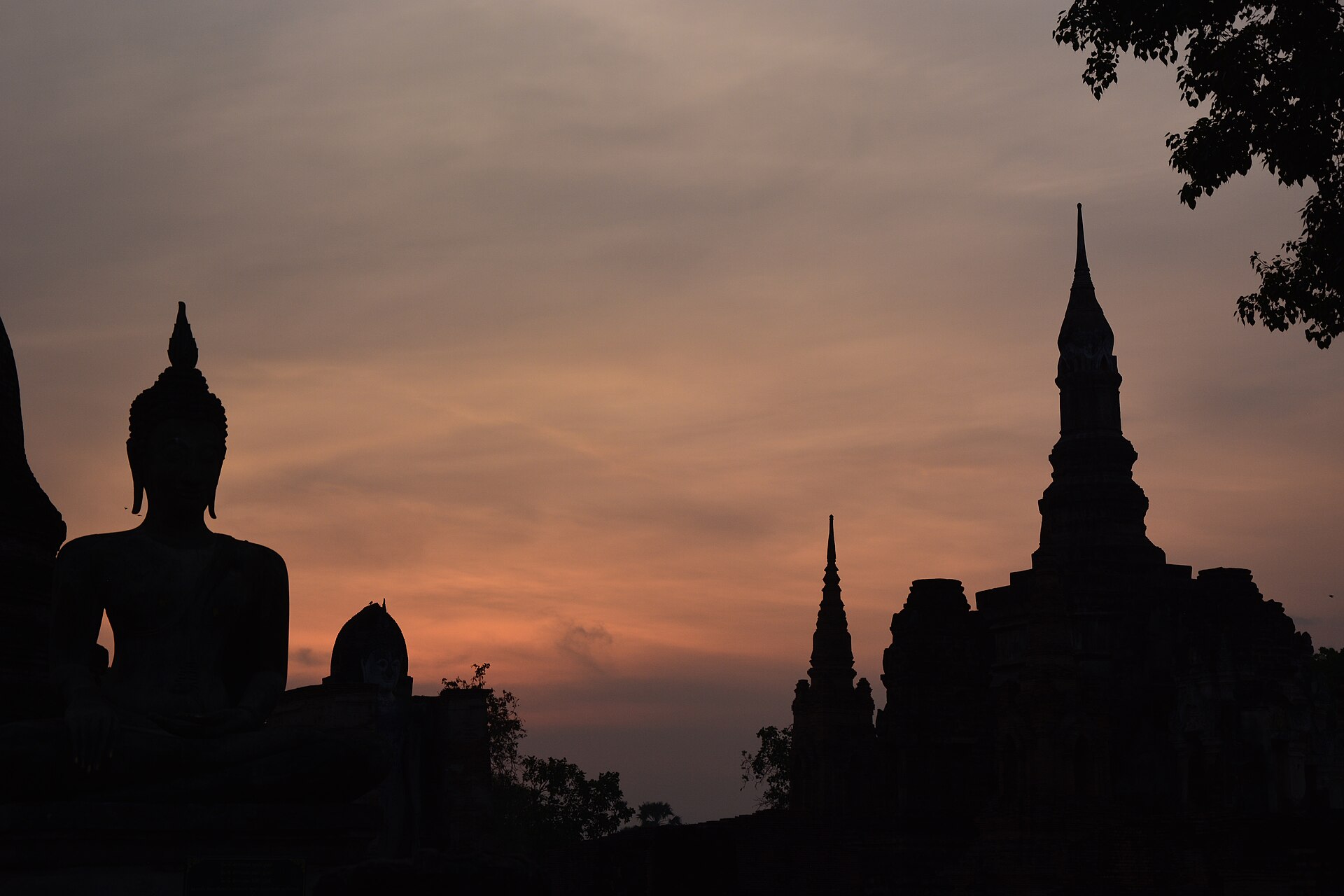
If you're going to float a krathong once somewhere other than a river in the city, Sukhothai is the one most people put at the top of the list. The festival takes place inside the Sukhothai Historical Park, a UNESCO World Heritage site, so on festival nights you're walking between ancient ruins lit with warm lanterns, krathongs floating across temple ponds, fireworks going up, sky lanterns drifting overhead, and a full theatrical performance in front of Wat Mahathat. The atmosphere is nothing like a standard Loy Krathong celebration.
Festival Dates — When It Runs and How Long
The festival follows the full moon of the 12th lunar month (Loy Krathong Day) each year, and runs for around 10 days and 10 nights spanning that date. It typically falls in late October to early November — a recent edition ran 27 October–5 November. Since the date shifts with the lunar calendar, the best approach is to confirm the full-moon date for the year you're traveling, then budget about 5 days on either side.
- Festival window — roughly 10 nights centered on Loy Krathong Day (usually late Oct–early Nov)
- Peak night — the actual full-moon night (Loy Krathong Day); biggest crowds, krathongs packed across every pond
- Main venue — Wat Mahathat area, at the center of the Sukhothai Historical Park
- When things come alive — ruins light up and markets open from early evening onward
Confirm Dates Before Booking
Loy Krathong shifts every year with the lunar calendar. Before booking accommodation or tickets, double-check the exact dates with the Sukhothai Historical Park's official page or the TAT Sukhothai office — show times can vary slightly from year to year.
Want more out of Sukhothai? Book tours & activities
Booking online ahead on Klook or GetYourGuide is usually cheaper than the gate and skips the queue. Pick only the experiences you actually want — prices and availability are shown live on each site.
Light & Sound Show Tickets — Prices and Where to Buy
One thing that trips people up: general entry to the Historical Park is free. You can walk the ruins, float a krathong, browse the market, and watch the candle-lighting areas at no cost. What requires a paid ticket is the Light & Sound Show in front of Wat Mahathat — a theatrical performance with fireworks and a procession retelling the Sukhothai Kingdom's history.
- Light & Sound Show ticket tiers — 3 levels at roughly 500 / 900 / 1,200 THB, depending on seat proximity to the stage
- Where to buy — primarily through ThaiTicketMajor online; tickets go on sale months in advance
- Show schedule — usually one performance per night around 19:00; an extra late show is often added on the final night
- General park entry — free; no ticket needed to walk, float a krathong, or explore the ruins
Good Seats Sell Out Fast
Front and mid-tier seats for the show on the actual Loy Krathong night routinely sell out well before the festival. If you want to watch the performance, buy as soon as tickets open — don't plan to grab them at the gate. Several past years have seen peak-night tickets gone weeks before the event.
Best Spots Inside the Old City
The whole park becomes a stage during the festival. You can wander between several distinct areas, each with a different mood. If time is short, here's where to focus.
Wat Mahathat
The heart of the festival and the Light & Sound Show stage. The lotus-bud stupa lit at night is the defining image of Sukhothai — the best single photo spot in the park.
Temple Ponds (Traphang)
Krathongs and sky lanterns crowd the water surface, reflecting the stupa silhouette. Slightly less packed than the stage area and often more atmospheric for floating.
Wat Sa Si
A stupa rising from the middle of Traphang Trakuan pond. The water reflections here are stunning, and the venue often hosts a Nang Noppamas legend performance — genuinely romantic.
Market & Candle-Lighting Zone
Local food stalls, souvenirs, and rows of clay oil lamps lit along the old walls. This is where the 'candle festival' feel really comes through — slower and more traditional than the main stage area.
Arrive Before Dark
For stupa shots with the sky still deep blue behind them (blue hour), aim to be inside the park by 17:30–18:00. The light at this time is the best of the evening, and the crowds haven't built up yet.
Getting There — New City to Old City
Most accommodation is in Sukhothai New City (the modern town), while the festival is in the Old City (Historical Park), roughly 12 km apart. Traffic is heavy during the festival and parking fills up fast — sort out transport before you arrive.
- Songthaew (shared pickup truck) New City–Old City route — departs from the bus terminal, around 30 THB per person; the cheapest option and extra runs are added during the festival
- Rental motorbike — most flexible option, easy to park compared to a car; good if you want to avoid traffic jams
- Private car — workable, but on peak nights parking is very limited and the exit crawl can be long; budget extra time
- Local taxi or charter vehicle — convenient but hard to find on peak nights, and queues get long; pre-book a pickup if you go this route
Book Accommodation Early
Hotels in both the Old City and New City fill up months before the festival — some years everything in walking distance of the park is sold out weeks ahead. Once you know the dates, book immediately. Old City lodging means you can walk to the venue; New City has more options but you need to factor in transport both ways.
2-Night Festival Itinerary
Two nights is the sweet spot for this trip — enough time to visit the park relaxed during the day and still catch the peak night properly. This is a plan that works without being exhausting.
Arrive in Sukhothai + First Festival Night
Daytime Park Ride + Peak Night
What to Prepare — Practical Checklist
- Comfortable walking shoes — the park is large, you'll cover a lot of ground, and some areas are uneven dirt and grass
- Bring cash — food stalls and krathong vendors inside the park mostly prefer cash
- Water and a small fan — daytime is hot; evenings with big crowds can get stuffy
- Budget extra time to leave — on peak night, everyone exits at the same time; don't plan anything right after
- Use a natural-material krathong — banana trunk and leaves break down cleanly in the ancient ponds; a small courtesy to a World Heritage site
Want a Clear Shot Without the Crowds
The less-crowded angles for stupa reflections are the side of Wat Mahathat's pond away from the main stage, and Traphang Trakuan in front of Wat Sa Si. Walk just a short distance from the main stage and you'll find frames with far more breathing room.
Want a full Sukhothai plan covering temples, cafes, and local food?
See the Sukhothai City Guide →