📝 Written 2 Jul 2026 · ✅ Fact-checked 3 Jul 2026 · prices and schedules can change — check with the operator before booking
Before deciding which way to go, start with two questions: which style interests you most, and how many days do you have. If you're into history and architecture, the Khmer temple group is the main anchor — Prasat Sikhoraphum is the closest to the city in the east, while the Ta Muen temple group and Phum Pon temple are to the south near the border, so you'll need to allow driving time. If you're into handicrafts, Ban Tha Sawang silk village and Khwao Sinarin silverware village aren't far from the city and can be combined into a half day. For travelers who want to see the way of life of elephant keepers, Ban Ta Klang elephant village is in Tha Tum district to the north, and if you have limited time and want temples with nearby views, Wat Burapharam in town along with Phnom Sawai and Huay Saneng Reservoir can be visited quickly.
Overall, all four styles sit in different directions, so it's hard to cover everything in a single day. The table below sums up which zone each is in, how far from the city, the best time to go, and who it suits, before we go into detail on each style — so you can match it to however many days you have.
| Attraction | Travel Style | Zone / Distance from City | Best Time | Who It Suits |
|---|---|---|---|---|
| Khmer Temples (Sikhoraphum, Ta Muen, Phum Pon) | Ancient sites, Khmer architecture, photography | Sikhoraphum ~34 km east · Ta Muen–Phum Pon south near the border, 60–90 km | Nov–Feb, cool weather · mornings avoid the sun | History and architecture lovers, photographers |
| Tha Sawang Silk + Khwao Sinarin Silverware | Local handicrafts, watch artisans at work, shop for souvenirs | Tha Sawang ~8 km · Khwao Sinarin ~14 km, north-east | Year-round · best on weekdays during working hours when artisans are at work | Craft enthusiasts, handmade souvenir shoppers, families |
| Ban Ta Klang Elephant Village (Elephant Study Center) | Kuy elephant-keeper way of life, respectful learning and observation | Tha Tum district ~58 km north | Late rainy season–early cool season · Elephant Round-up festival in November | Culture lovers, families, those who care about animal welfare |
| Wat Burapharam + Phnom Sawai + Huay Saneng | Merit-making, temple visits, mountain and reservoir views near the city | Wat Burapharam in town · Phnom Sawai ~22 km · Huay Saneng ~5 km | Year-round · Phnom Sawai is beautiful in the morning-evening | Time-pressed travelers, temple-goers, those wanting views near the city |
Khmer Temples — Sikhoraphum · Ta Muen · Phum Pon

If you're coming to Surin for ancient sites, the Khmer temple group is the core of the trip, since the province sits along an old Khmer cultural route and has stone temples scattered across several districts. The easiest to reach and closest to the city is Prasat Sikhoraphum in Sikhoraphum district, about 34 kilometers from town. It's five brick prangs on a single base, and the part people talk about most is the lintel and door-frame columns, which still show sharp carved patterns — especially the Shiva Nataraja relief, considered one of the most complete in Thailand. The temple is surrounded by a pond, making it pleasant to walk around and great for photos both morning and evening.
If you want to go deeper and have a car, it's worth heading south toward the border. The first stop is the Ta Muen temple group in Phanom Dong Rak district, made up of Prasat Ta Muen Thom, Ta Muen Toch, and Ta Muen, lined up along a route that crosses the Dangrek mountain range — once an ancient border checkpoint. The atmosphere here is raw and quiet, unlike the temples in town. Another stop is Prasat Phum Pon in Sangkha district, believed to be one of the oldest Khmer temples in the country. The brick prang still stands tall, paired with local folk legends.
Based on real reviews across several platforms, visitors praise how uncrowded the temples in this area are, allowing for a calm walk and plenty of time for photos, with information signage in both Thai and English at the main sites. The thing to prepare for is that the Ta Muen and Phum Pon groups are far from the city and sit right along the border, so you should check the local situation and opening hours before heading out. A private car or tour is the most convenient way to go, and you should allow a full day if you plan to cover several temples.
- Thousand-year-old Khmer temples scattered across several spots — pick based on the time you have
- Sikhoraphum is close to the city, known for its Shiva Nataraja lintel and sharp carved patterns
- The Ta Muen and Phum Pon groups are uncrowded, calm, and great for unrushed photography
- Sits along a Khmer cultural route, connecting a deeper historical story
- Ta Muen and Phum Pon are far from the city and sit along the border — you'll need a car and extra time
- Check the border area situation and opening hours before traveling
- Most temples have strong sun and little shade — best to avoid midday
Ban Tha Sawang Silk Village + Khwao Sinarin Silverware Village

If your trip's goal is to see genuine handmade craftsmanship and pick up souvenirs with a real story, Surin stands out for this. The first stop is Ban Tha Sawang silk-weaving village in Mueang district, about 8 kilometers from the city, famous for its ancient-pattern gold-brocade silk woven on a special loom. Some pieces require several weavers working together at once and take a month or more to finish. This village once wove silk for important national ceremonies. Walk in and you'll see large weaving looms and can watch the entire process, from the initial pattern-setting onward. The finest silk can be priced high given the difficulty of the work, but there are also more affordable fabrics and souvenirs available.
Another stop that pairs well with it is Khwao Sinarin silverware village in Khwao Sinarin district, about 14 kilometers from the city — a source of antique silverware passed down for generations. Its signature item is lukprakeaum, embossed silver beads handmade one at a time and then strung into necklaces and jewelry. The work is intricate and has a local character hard to find elsewhere. Many houses let visitors watch the artisans at work and buy directly from the maker.
Based on real reviews, craft lovers say it's worth it to see the actual process rather than just a shop selling goods, and buying directly from the community helps support local artisans. One thing to know is that it's best to go on a weekday during working hours when the artisans are actually working, since some houses may be closed or have no demonstrations on holidays or in the evening. Both villages are close to the city and roughly along the same route, so they pair easily into a half-day trip — a good fit before or after visiting the temple group.
- See genuine handmade craft — both gold-brocade silk weaving and antique silverware making
- Tha Sawang silk is renowned fine work, while lukprakeaum is a truly local specialty
- Buy souvenirs directly from community artisans, supporting local makers
- Both villages are close to the city and pair into a half-day trip
- Best visited on a weekday during working hours, or you may miss the artisan demonstrations
- Fine gold-brocade silk can be pricey given the difficulty of the work
- This is a watch-and-shop style trip, which may not excite those uninterested in craft
Ban Ta Klang Elephant Village (Elephant Study Center)
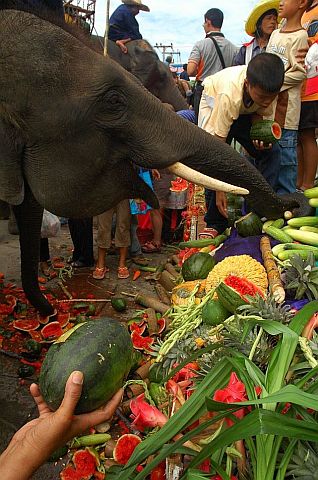
Ban Ta Klang elephant village in Tha Tum district, about 58 kilometers from the city, is a community where the Kuy people have lived alongside elephants for generations. It's home to the Elephant Study Center, a place to learn about the bond between people and elephants, covering the village's history, the daily life of mahout families, and a museum that tells these stories. What sets this apart from a typical elephant attraction is that the point of coming here isn't to watch a show, but to understand how elephants are part of the local family and culture.
If you intend to visit respectfully, focus on observing elephants in the village's natural setting — for example, walking through daily village life, listening to stories from mahouts, and learning through the exhibitions, rather than choosing activities where elephants perform tricks or offer rides. Many parties today are placing more importance on elephant welfare, and visitors can help by choosing activities that don't force elephants against their nature, keeping an appropriate distance, not making loud noises or getting too close, and asking the community for guidance on what they recommend.
The busiest period is around November, when the province holds its elephant-related festival, so crowds are larger and lodging fills up fast. Anyone wanting a quieter atmosphere and a more intimate conversation with the community may prefer visiting during a regular period instead. Based on real reviews, visitors who come intending to learn say they gain a fresh perspective on people and elephants that's hard to find elsewhere. One thing to accept is that this spot is fairly far from the city and is a cultural experience, not an amusement park — so it suits those who come with genuine interest rather than those looking for quick entertainment.
- Learn about the Kuy way of life with elephants, bonded together across generations
- The Elephant Study Center and museum tell the story of people and elephants in depth
- A respectful cultural experience focused on observation rather than performance
- The November elephant festival period has a special atmosphere if you enjoy big events
- About 58 km from the city — you'll need a car or tour and extra travel time
- This is a learning-focused experience, not an amusement park, which may not thrill everyone
- Choose activities mindful of elephant welfare and ask the community for guidance first
Wat Burapharam + Phnom Sawai + Huay Saneng

If you have limited time or want stops close to the city without a long drive, the temples-and-nature route around town fits the bill. The first stop is Wat Burapharam, an old temple that stands alongside the history of Surin city, right in the heart of town. It houses Luang Pho Phrachi, a sacred Buddha image revered by the people of Surin, and locals come regularly to make merit. It's easy to reach and doesn't take long, making it a good stop in the morning before heading elsewhere or as a break during the day.
About 22 kilometers further out of town is Phnom Sawai Forest Park, a low, three-peaked mountain considered the province's sacred mountain. At the summit are a large Buddha image, a replica Buddha footprint, and a long row of bells to ring. The view from the top overlooks the city and wide rice fields, and the air is cooler than at ground level. It works as both a place to make merit and a spot to relax and take photos — most people go up in the morning or evening when the light is soft and it isn't too hot. Another spot very close to the city is Huay Saneng Reservoir, about 5 kilometers from town — a wide reservoir where locals come to relax, catch the breeze, and watch the sunset, with waterside restaurants to stop at.
Based on real reviews, people like this route because it's easy to reach, doesn't take much time, and combines merit-making with natural views in a single trip — a good complement to a day spent at the temples or craft villages that doesn't fill the whole day. One thing to know is that each stop doesn't take long and is more about atmosphere than a dramatic highlight — those looking for grandeur may find it simple, but for anyone wanting a relaxed trip close to the city, this route is the easiest of the four to plan.
- Close to the city, easy to reach, doesn't take long — good to fill an incomplete day
- Wat Burapharam is the city's landmark temple, with Luang Pho Phrachi for merit-making
- Phnom Sawai has views of the city and rice fields, with cool air in the morning-evening
- Huay Saneng is a good spot to catch the breeze and watch the sunset, with waterside restaurants
- Each stop doesn't take long and focuses more on atmosphere than a dramatic highlight
- Those seeking grandeur may find it too simple
- Phnom Sawai gets hot at midday — best visited in the morning or evening
Quick summary: which style should you choose
Love history and architecture — focus on the Khmer temple group. With half a day, go to Sikhoraphum near the city; with a full day and a car, head south to the Ta Muen and Phum Pon groups. Check the border area situation and go in the morning to avoid the sun.
Into craft and handmade souvenirs — pair Ban Tha Sawang silk village with Khwao Sinarin silverware village in a half day. Go on a weekday during working hours to see the artisans actually at work, and buy directly from the makers.
Interested in the bond between people and elephants, and culture — visit Ban Ta Klang elephant village intending to learn. Focus on respectful observation and choose activities mindful of elephant welfare, allowing travel time since it's far from the city.
Short on time and want somewhere near the city — choose the temples-and-nature route. Pay respects at Wat Burapharam, head up Phnom Sawai for the view, and stop by Huay Saneng for the breeze. All doable in just a few hours.
Book Activities & Tickets in Advance
Surin's popular temple tours and activities fill up fast — booking online ahead of time is more convenient.
Where to stay in Surin?
Choose a place to stay in Surin city near the market and train station as your base for every route. Compare prices across 3 sites before booking.
Search hotels on AgodaOnce you've picked the right style of trip, don't forget to book a place to stay in town as your base. See hotels with prices already compared here.
See Surin city hotels →