🔄 Updated 21 Jun 2026
Say Phichit and a lot of people think first of the Krai Thong–Chalawan crocodile legend, but the food that really fixes this town in people's memory is the Tha Khoi pomelo. The variety is named after Tha Khoi subdistrict in Mueang Phichit district, its original growing area along the Nan River. The river-silt soil and a cultivar passed down over many generations give the pomelo here a flavour all its own — enough that it's registered as a Geographical Indication (GI) under the name "Tha Khoi Pomelo of Phichit."
The charm of coming here isn't just leaving with pomelos in hand — it's seeing real riverside farming up close. Most orchards are small family plots laid out in raised beds along the Nan River. The owners usually cut one open for you to taste before you buy, and you can pick the fruit you like. Some will walk you through the trees and show you how they tend them — an experience an ordinary souvenir stall can't give you.
What Makes Tha Khoi Pomelo Special
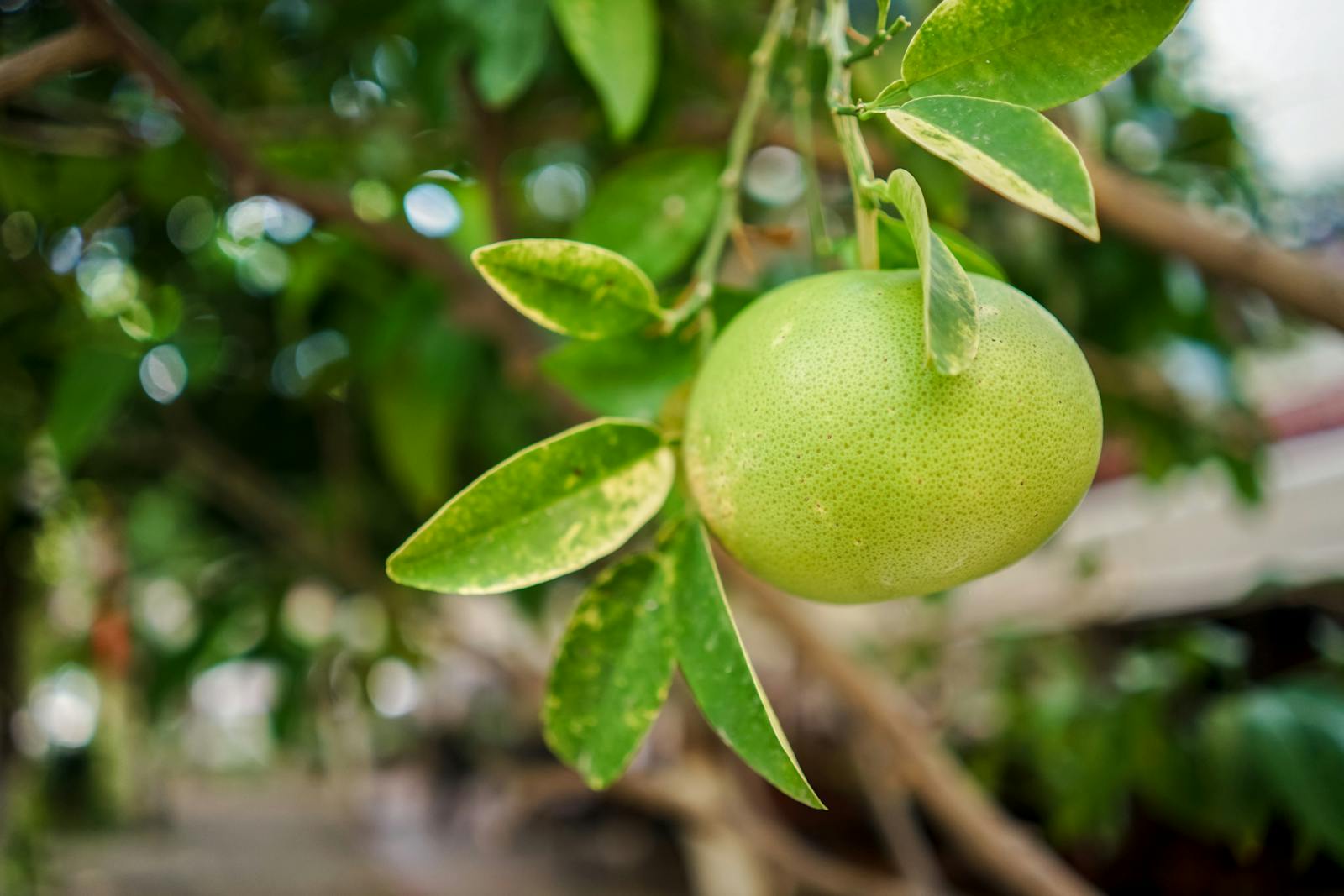
Tha Khoi pomelo is a white-to-pink-fleshed variety, fairly round, with a thin, smooth skin that turns slightly yellow once the fruit is fully ripe. What people fall for is the flesh — plump, well-formed juice vesicles that come apart cleanly without going mushy, full of juice, sweet up front with a soft sour finish that balances it out. Best of all, the flesh is almost seedless, so it's easy to eat.
- Taste — sweet with a balancing sourness, never so sweet it cloys; great eaten plain or in a pomelo yam salad.
- Flesh — fine, juicy segments that crumble apart cleanly, with hardly any seeds.
- GI standard — registered as a Geographical Indication tied to the Phichit growing area. Farmers licensed to use the mark are guaranteeing it's the real thing from the region.
- How to spot a good one — a fully ripe fruit feels heavy for its size and the skin starts to yellow. If the owner cuts one open and the flesh is juicy and crumbly without any bitterness, it was picked at just the right age.
Watch out for unripe pomelo
Early in the season some sellers rush out pomelos that aren't fully ripe yet — the flesh comes out hard and leaves a bitter edge on the tongue. The province even runs spot-checks on souvenir shops to head this off. The simplest defence is to always ask to taste before you buy. An orchard that's confident in its fruit will cut one open without a second thought.
Want more out of Phichit? Book tours & activities
Booking online ahead on Klook or GetYourGuide is usually cheaper than the gate and skips the queue. Pick only the experiences you actually want — prices and availability are shown live on each site.
When to Visit (the Season)
You can find Tha Khoi pomelo nearly year-round, because different orchards time their fruiting rounds differently. But the period when the harvest is heaviest and the flavour is at its best is roughly October to April. There's another fruiting window around June to September. The trick is to choose fruit that's reached the right age (around seven months or more) for the most balanced flavour.
Late Rains–Cool Season (Oct–Dec)
The harvest is picking up and the weather is turning pleasantly cool — good for walking the riverside orchards, with the flavour starting to settle in.
Hot Season (Jan–Apr)
The pomelos are fully ripe, sweet and juicy at their best — the peak of the season, with the widest pick of fruit to take home.
Mid-Year (Jun–Sep)
Some orchards still have fruit, but you'll hit the rains, so pack an umbrella for the orchard walk. Picking the riper fruit is the safer bet.
What You Can Do at the Orchard
- Taste before you buy — the owner will cut open several pomelos for you to try, so you can pick the sweet-to-sour balance you like before deciding.
- Walk the raised-bed orchard — see the pomelo trees along the Nan River and the way the beds are raised to draw water into the orchard, the riverside farming style of the central plains.
- Chat with the owner — ask how to pick ripe fruit and how to keep it longer; many are happy to share because they take real pride in what they grow.
- Buy a basket to take home — most sell by the basket or by the fruit, cheaper than buying it down the line, and some will pack a box and ship it for you.
Pomelo isn't a fruit you have to refrigerate right away. A whole, uncut fruit keeps at room temperature for several days to a week, and the longer it sits the slightly sweeter it gets — which makes it an easy gift to carry a long way home, without bruising like soft-fleshed fruit does.
Roughly What Tha Khoi Pomelo Costs
Prices depend on the size of the fruit and the time of year. Buying at the orchard or a local roadside stall works out cheaper than buying at the tour-bus stops. The rough figures you'll run into most often look like this.
- Small to medium fruit — around 30–50 THB each, or in a set, say 3 for 100 THB.
- Large graded fruit — around 70–120 THB each, the good-looking grade meant for gifts or export.
- Sold by the kilo — some sell from around 50 THB a kilo and up, depending on grade.
- By the basket — you can haggle if you're buying a lot; tell the owner you're taking it to several people and you'll usually get a better price.
Getting your money's worth
If you're set on buying a lot for gifts, buy straight from the orchards or stalls in Tha Khoi subdistrict and the surrounding districts — better prices and fresher fruit. If you're in a hurry, the stalls along the main road have plenty to choose from, but always ask to taste first.
Getting There
The main growing area is Tha Khoi subdistrict and the land along the Nan River in Mueang Phichit district, not far from Phichit town. Driving yourself is by far the easiest way, since the orchards are spread out along the river rather than gathered in one spot.
- Car or motorbike — from Phichit town head toward Tha Khoi subdistrict; it doesn't take long. Use a map app to navigate to the orchard or stall you've got your eye on.
- As part of a Phichit trip — you can stop at the pomelo orchards after Bueng Si Fai or a temple in town in the same day, as a place to pick up gifts to close out the trip.
- Best time of day — go from late morning into the afternoon, when the sun isn't too harsh, the owner is around, and it's comfortable to walk the trees.
Want to do Phichit fully — temples, legends, and food
See the Phichit travel guide →