🔄 Updated 21 Jun 2026
If you come to Nong Khai and skip Tha Sadet Market, you haven't really seen the place. The market runs in a long line along the Mekong inside the municipal area, right next to the riverside road and the Naga Park promenade where people like to stroll. What sets it apart is the mix of Lao, Vietnamese and Chinese goods — Nong Khai is a border town that has traded with Vientiane for ages, and it has a sizable Thai-Vietnamese community, so the souvenirs and dried goods here are the real thing, not just stuff cranked out for tourists.
The market is almost entirely roofed, so it's an easy walk even in strong sun or rain. The path is one long lane running parallel to the river, with fairly clear sections for food, dried goods, cloth and household items. Walking end to end at a relaxed pace takes about 1–2 hours.
What zones are inside the market
Before you dive in, knowing the rough layout helps you find what you want faster. Tha Sadet Market breaks down loosely into a few zones, each strongest in something different.
Food & riverside zone
Near the entrance and along the water — pâté, naem nueang (fresh spring rolls), khao piak sen (rice noodle soup), Vietnamese coffee and stalls with river views. A good spot to start with a meal or coffee before you shop.
Dried goods & souvenirs zone
Mid-market — mu yo, Chinese sausage, prunes, dried lukyee, shiitake mushrooms, Lao coffee and imported processed foods. This is where most people stock up to take home.
Cloth & clothing zone
Handwoven cloth, silk, pha khao ma (checked cotton), sarongs and local-style clothing, plus cheap clothes from the Lao and Chinese side. Haggling welcome.
Household & odds-and-ends zone
Kitchenware, kai krata egg pans, bags, shoes, watches, small appliances, toys and a wide range of cheap Chinese goods.
How to walk it smart
Start at the riverside food zone and fuel up first, then head deeper into the dried-goods and cloth sections once you're full — you'll choose better than shopping hungry with bags already in hand. Eat the fresh stuff on the spot; save the dried goods and cloth for the end, right before you leave.
Want more out of Nong Khai? Book tours & activities
Booking online ahead on Klook or GetYourGuide is usually cheaper than the gate and skips the queue. Pick only the experiences you actually want — prices and availability are shown live on each site.
Dried souvenirs actually worth taking home
The beauty of Tha Sadet Market is how easily you can take dried goods home — no worrying about them spoiling, fine for hauling onto a bus or plane, and many shops will vacuum-seal them for you. Here's what people buy and what you'll find better here than at an ordinary market, because it comes straight from Laos, Vietnam and China.
- Mu yo, Chinese sausage & Isan sausage — Nong Khai's number-one souvenir. The Vietnamese-style mu yo is springy and keeps for days; ask the shop to vacuum-seal it and you can carry it onto a flight.
- Lao / Vietnamese coffee beans — dark-roasted and bold. Buy a bag along with a Vietnamese phin filter and brew it yourself at home.
- Prunes, lukyee & dried fruit — imported processed snacks, all in the middle zone. Sold by the kilo, and many shops let you taste before you buy.
- Dried shiitake & Chinese herbs — for the home cooks, cheaper here than in the big cities.
- Rice paper (krayo) — take it home to wrap your own naem nueang or spring rolls. Keeps a long time and weighs almost nothing.
- Kai krata egg pans & Vietnamese kitchenware — the small dimpled pan for Nong Khai-style skillet eggs. A souvenir for the cooks in your life, and only a few places stock it.
Woven cloth, silk & pha khao ma — how to choose without getting burned
Tha Sadet Market is a riverside cloth source people come specifically to browse. There's everything from handwoven Isan-pattern cloth, silk, pha khao ma and sarongs to local-style clothing and fabric from the Lao side. Prices range widely, from a few hundred to a few thousand baht depending on the fabric and how much of it is handwork.
- Pha khao ma — the easiest cloth souvenir to buy: a few hundred baht a piece, endlessly useful, and a popular grab-and-go gift.
- Handwoven Isan-pattern cloth & sarongs — mat mi (ikat) and local patterns. Check the fabric and how even the pattern is before buying; handwoven patterns won't be as perfectly uniform as printed ones.
- Silk — both pure silk and blends, with big price gaps. If you want pure silk, ask the shop straight and feel the fabric across a few shops before you decide.
- Ready-made clothes & Lao fabric — cheap clothing from the Lao and Chinese side, good for casual travel wear. Don't expect fine detailing.
Read the cloth like a pro
Handwoven and machine-printed cloth differ in price by several times over. Handwoven patterns won't track perfectly straight and you'll see the silk threads joining; printed cloth looks unrealistically smooth and even. If you're serious about pure silk, feel and compare across 2–3 shops and ask prices straight before you commit. Don't rush the first stall.
Strolling the Mekong around the market
Tha Sadet Market isn't just shopping. Around it are Nong Khai's riverside landmarks, all walkable in the same trip if you want more atmosphere than retail.
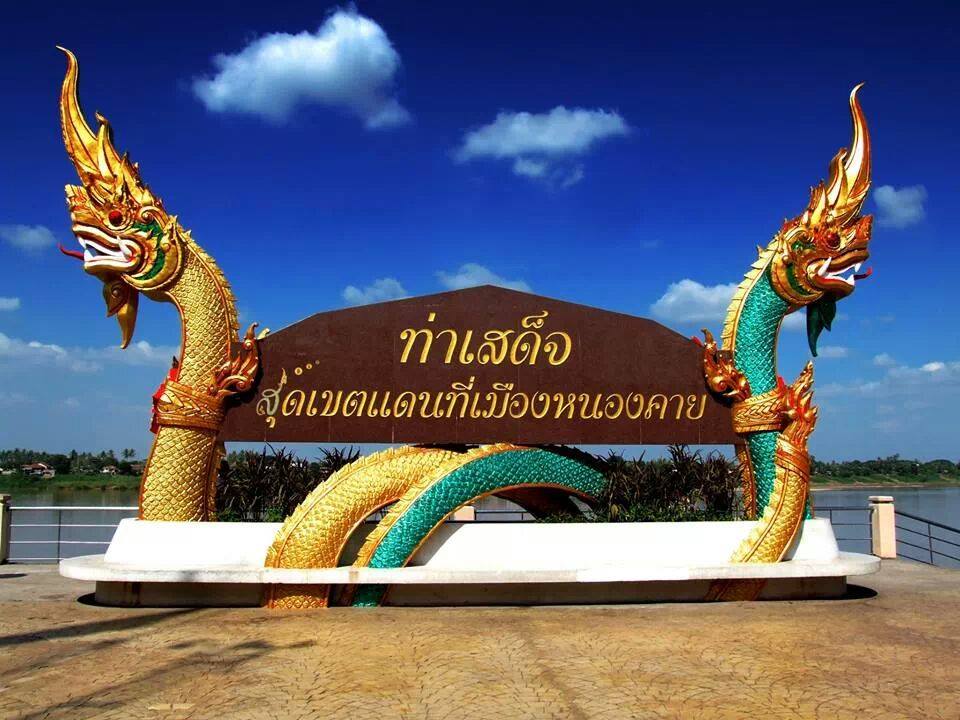
- Naga Park on the river — the naga statue and riverfront walkway next to the market, a photo spot and a place to catch the cool breeze in the evening.
- Vientiane view & Friendship Bridge — across the river you'll see the Lao side, with the first Thai-Lao Friendship Bridge not far off.
- Wat Lamduan / old-town temples — easy to carry on from the market and pay your respects in the old-town district.
- Riverside cafés — if the market wears you out, there are cafés right by the water to sit, rest and take in the view before heading back.
How to time your Tha Sadet Market walk
The market is open all day, so timing is flexible. Below is a rhythm that works well — adjust it whether you arrive in the morning or the afternoon.
Ease in by the river
Tackle the dried goods & souvenirs
Grab household bits, then enjoy the view
Straight talk
Most shops take cash, so bring plenty of small bills. Haggling is normal, especially for dried goods and cloth, but sit-down restaurants usually have fixed prices. Some items are labelled as coming from Laos or Vietnam but are really Chinese — judge by quality rather than trusting the sign. Weekday late mornings are quiet and easy to walk; weekends and holidays have more shops open but bigger crowds.
Want a full-day Nong Khai plan with all the places to eat and see
See the Nong Khai travel guide →