🔄 Updated 21 Jun 2026
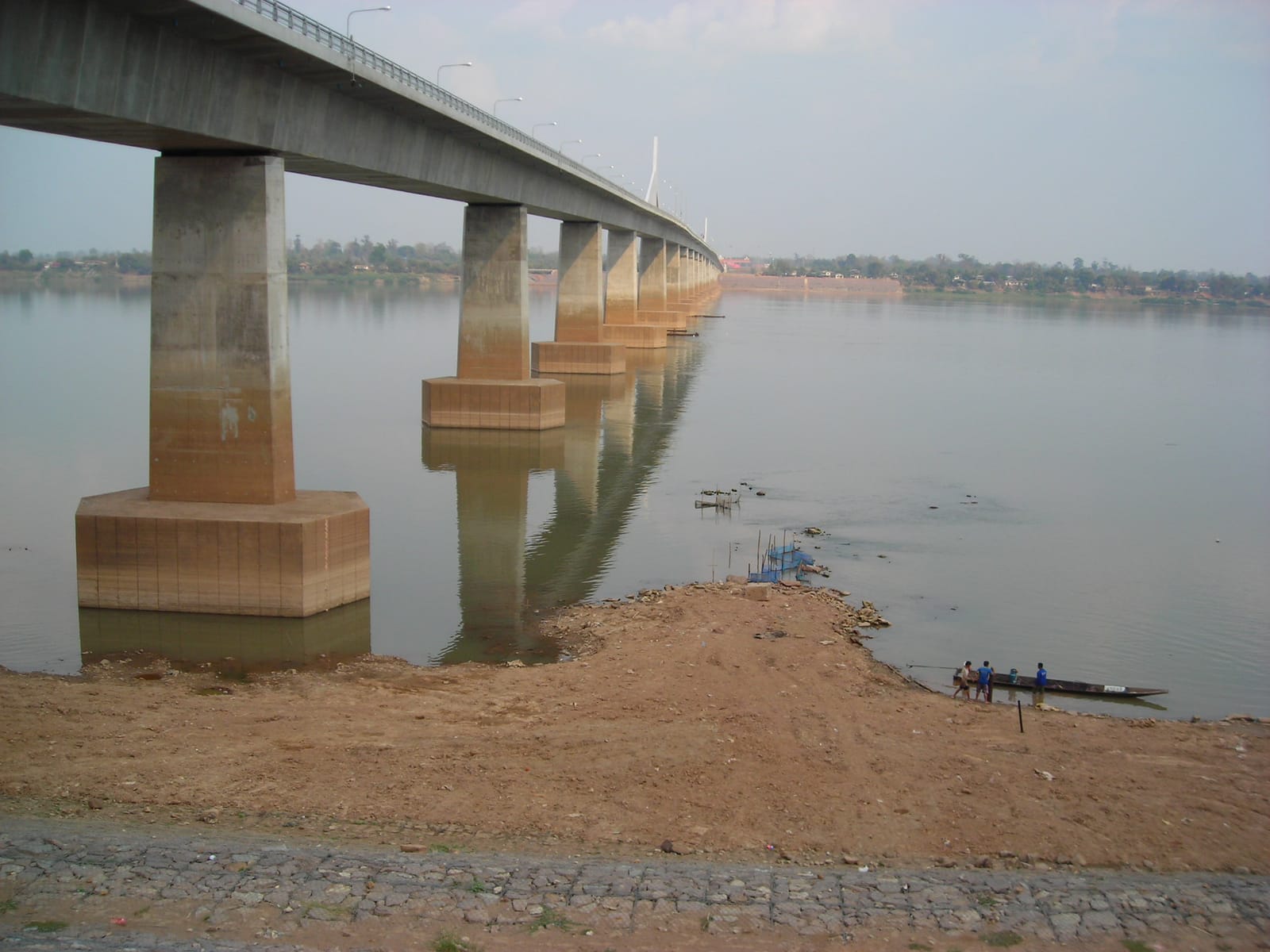
The second Thai-Lao Friendship Bridge opened in late 2006, linking the Thai side at Ban Song Pueai, Bang Sai Yai sub-district, Mueang Mukdahan district, with the Lao side at Kaysone Phomvihane city in Savannakhet province. The bridge is about 1,600 meters long and 12 meters wide, with two lanes, sitting roughly 7 kilometers north of Mukdahan town. What sets it apart is that it was designed as part of Route 9 (R9), the East-West Economic Corridor that connects the Andaman Sea on the Myanmar side all the way to the South China Sea on the Vietnam side.
Honestly, the bridge itself isn't an attraction you'd set aside half a day for. Most people stop for a few photos along the Mekong and then move on. What makes this bridge more interesting than your average river crossing is that it's the gateway into Savannakhet, a Lao town with walkable old French-colonial buildings, and it's the start of the overland route that continues into Vietnam. If you like multi-country overland trips, this is a natural starting point.
How to cross the border and what documents you need
The Mukdahan border checkpoint on the Thai side is open daily, roughly 06:00–22:00. During festivals or long holidays it's worth checking the times again, as they can change. The key thing to know is that on this bridge you can't walk across and can't just drive your own car over freely. You have to take the scheduled bus or complete the proper vehicle-export paperwork.
- Use a passport — Thai travelers can enter Laos on a passport and stay up to 30 days, traveling anywhere in Laos, not just Savannakhet.
- Use a Border Pass — for people with residency registered in Mukdahan province; valid only within Savannakhet province for a set period. Good for a there-and-back day trip, and you can apply for it at the district office.
- Foreign nationals — many nationalities can get a visa on arrival at the Lao checkpoint. It's best to fill out the immigration form online (LDIF) in advance and bring a passport photo and the fee in US dollars — it's faster than sorting it out on the spot.
Good to know
Private cars can cross the bridge, but you'll need to complete vehicle-export paperwork and buy Lao-side insurance at the checkpoint. That's why a lot of people just take the scheduled bus across instead — no fuss with vehicle documents and no need to find parking.
Want more out of Mukdahan? Book tours & activities
Booking online ahead on Klook or GetYourGuide is usually cheaper than the gate and skips the queue. Pick only the experiences you actually want — prices and availability are shown live on each site.
How much is the bus across the bridge?
The easiest and cheapest way is to take the international Mukdahan–Savannakhet route bus (Route 4) from the Mukdahan provincial bus terminal. The bus runs across Friendship Bridge 2 straight to the Savannakhet bus station. The fare is around 45 THB per trip, the distance is about 17 kilometers, and it takes roughly 1 hour including immigration on both sides.
- Departures — there are several runs per day. From the Mukdahan side, buses leave roughly 07:30–18:30; from the Savannakhet side, roughly 08:15–19:30. Morning runs have shorter queues.
- Where to board — the Mukdahan provincial bus terminal, in town. You can get there by songthaew or motorbike taxi.
- Bring cash — carry both Thai baht and Lao kip. The fare, visa fee, and small checkpoint fees are sometimes cash only.
Straight talk
The busiest stretch is the morning, 06:00–09:00, and weekends. You'll usually wait about 15–30 minutes in the queue. If you'd rather not stand around, skip weekend mornings and go on a weekday around mid-morning — it's much more relaxed.
Photo spots that actually look good
It's hard to take photos at the checkpoint itself, since it's a controlled zone. The spots with better views of the bridge are further out along the Mekong, especially in the evening when the golden light falls on the river.
Mekong riverfront promenade in Mukdahan town
Stroll the Mekong riverfront in town in the evening and look north — you'll see the bridge stretching out as a backdrop. There are riverside cafes and restaurants to sit and relax.
Friendship Bridge 2 viewpoint
The authorities built a viewpoint near the foot of the bridge on the Thai side, with a full-on angle of the span. Good for a quick stop before crossing or after you come back out.
Savannakhet side
Once you've crossed, walk along the Mekong on the Lao side and look back at the Mukdahan skyline — an angle Thai travelers don't often shoot.
What to see across the border in Savannakhet
Savannakhet is a mid-sized Mekong town with an old-world feel, with an old quarter where many French colonial buildings still stand. It's easy walking and photo-taking for half a day to a full day. For food there's Lao cuisine, Vietnamese pho, and hot coffee at the old shops.
- Old quarter by the Mekong — the town square, St. Theresa Church, and old French buildings. Pleasant to wander and photograph.
- That Ing Hang Stupa — an ancient stupa outside town, revered by the people of Savannakhet, with architecture similar to Phra That Phanom on the Thai side.
- Savannakhet Dinosaur Museum — small, but with real fossils excavated in this province. Good if you're traveling with kids.
- Morning market and pho shops — try Vietnamese pho and Lao coffee at the old shops in town. Prices are easy on the wallet.
Straight talk
If you only have half a day and just cross over to walk around Savannakhet, you might find the town quiet relative to the travel effort. The people who get real value are the ones who set out to wander the old quarter without rushing, eat their fill of Lao-Vietnamese food, or use Savannakhet as a stopover on the way onward to Vietnam.
The onward route to Vietnam via R9
This is the reason a lot of people choose to cross at Mukdahan. From Savannakhet, Route 9 (R9) runs straight east through Seno and out to the Dansavanh checkpoint on the Lao side, which connects to the Lao Bao checkpoint in Quang Tri province, Vietnam. From there you drop down to Dong Ha and continue on to Hue and Da Nang. From Savannakhet to the border is about 255 kilometers, and the drive takes roughly 5–5.5 hours.
There are international buses running Savannakhet–Hue and Savannakhet–Da Nang directly, and the staff onboard handle the border procedures for you on both sides. The full trip takes about 10–11 hours, with buses leaving mainly in the morning. Schedules change with the season, so it's best to ask at the Savannakhet bus station ahead of time. The Lao Bao checkpoint on the Vietnam side is open roughly 07:00–18:00 — don't plan to hit it on the same day as your flight home.
Mukdahan → Savannakhet
Savannakhet → Dong Ha/Hue (Vietnam)
Plan it to make it worth it
This route suits people who want to see three countries in one trip — Thailand, Laos, Vietnam. It's not for anyone wanting a there-and-back day trip, because reaching Vietnam means at least one overnight in Savannakhet. We recommend having your Vietnam visa ready and carrying cash in US dollars/kip/dong before you set off.
How to get to the bridge from town
- Private car/rental — from Mukdahan town, drive about 7 km north; it's clearly signposted and takes roughly 10–15 minutes. If you plan to drive across, you'll need vehicle-export paperwork.
- Motorbike/songthaew — handy if you just want to photograph the viewpoint and loop back into town.
- Cross-border bus — if you're set on crossing to Savannakhet, just take the Route 4 bus from the Mukdahan bus terminal. No fuss with vehicle documents.
Plan a full Mukdahan trip across the whole town
See the Mukdahan travel guide →