🔄 Updated 21 Jun 2026
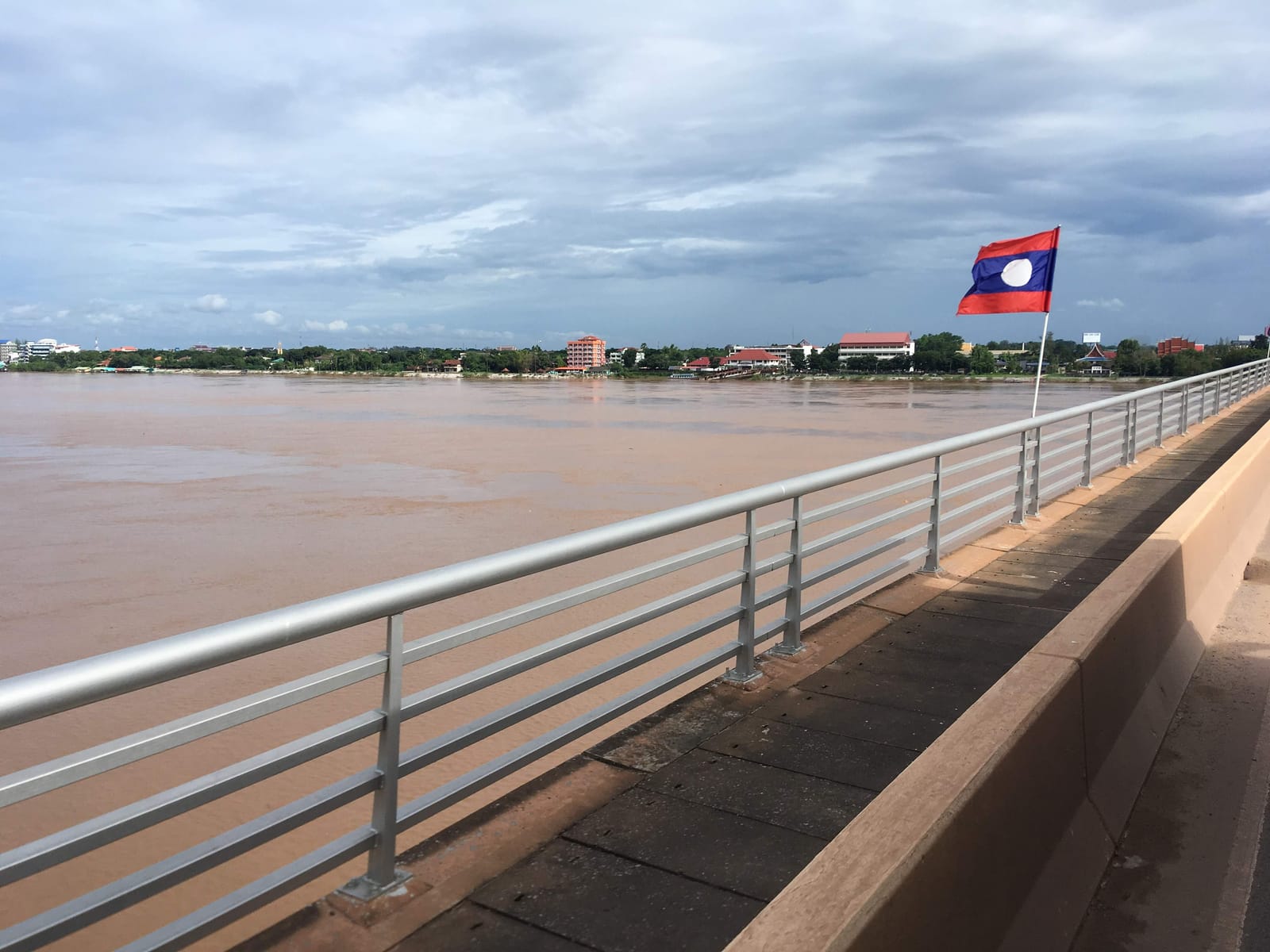
The Thai-Lao Friendship Bridge No. 1 has been open since 1994 and was the first bridge across the Mekong between the two countries. The Thai end sits in Muang Nong Khai district, about 2 km from the town center, while the Lao end is at Ban Tha Na Laeng, roughly 20 km from central Vientiane. Pedestrians and motorbikes aren't allowed to cross the bridge itself — you have to take the cross-border bus, a car, or one of the shuttle vehicles — because a railway line runs down the middle of the span as well. The route most Thai travelers use is the cross-border bus that runs straight from Nong Khai bus terminal to the Vientiane bus station, clearing immigration on both sides in a single trip.
What documents do you need to cross?
What you need depends on how far you plan to go. Thai nationals have two options: if you're only heading to Vientiane and nearby towns, a temporary border pass is enough. But if you want to travel deeper into Laos — Vang Vieng, Luang Prabang and so on — you'll need a passport.
- Thai passport — the easiest route. No visa needed in advance, you can enter Laos and continue on to other towns, and officers stamp you at the checkpoint on both sides. Most Thai travelers go this way because it's simple and leaves your options open.
- Temporary border pass — for those without a passport. You can get one at the Nong Khai provincial hall (district administration office) using your Thai ID card and a photo, for a small fee. It only covers Vientiane Capital and is valid for a set window of time — you can't go any further than that.
- Children and dependents — kids need their own documents. Have a copy of the birth certificate or the child's passport ready.
- Cash — bring Thai baht and Lao kip, or use baht at tourist-facing shops on the Vientiane side. Currency exchange booths are available at the checkpoint and in town.
Straight talk on documents
If you don't have a passport yet and only plan to cross to Vientiane now and then, the border pass is cheaper and easy to arrange. But if you think you might want to travel further into Laos down the line, just get a passport — it's the cleaner option, since the border pass only covers the Vientiane area. Rules and fees on the Lao side change from time to time, so check with the Nong Khai customs checkpoint before you go to be sure.
Want more out of Nong Khai? Book tours & activities
Booking online ahead on Klook or GetYourGuide is usually cheaper than the gate and skips the queue. Pick only the experiences you actually want — prices and availability are shown live on each site.
The border crossing, step by step
If you don't have a car, the easiest way is the international cross-border bus from Nong Khai bus terminal. The bus takes you through both checkpoints itself — no need to find onward transport along the way. Here's how it actually goes.
Nong Khai → Vientiane
Keep your ticket and documents close
When you get off for immigration, the bus waits at the checkpoint — don't leave your belongings on board if you're not sure, and keep your ticket and crossing documents on you the whole time, since officers may ask to see them again on the way back. On the morning of a long weekend the crowds swell and immigration lines can be long, so give yourself a little buffer.
The Nong Khai-Vientiane cross-border bus
The international cross-border bus, route 1, runs straight from Nong Khai bus terminal to the Vientiane bus station (near the Morning Market), a distance of about 27 km, with the whole trip including immigration taking around 2 hours. It's the option most people without a car rely on, because the bus handles both checkpoints in a single trip.
- Fare — around 55 THB on weekdays and around 60 THB on weekends and public holidays (not including the Lao immigration fee).
- Approximate schedule — several departures a day; the morning runs start around 07:30 and continue through the day into the evening, with the last departure around 18:00 (schedules change, so check at the terminal before you travel).
- Where to board — Nong Khai bus terminal; buy your ticket at the cross-border bus counter inside the station.
- Lao-side terminus — Vientiane bus station by the Morning Market, right in the city center, so you can start sightseeing on foot.
Want more flexibility? Try another way
If you'd rather not wait for the bus schedule, another option is to take one of the bridge shuttle vehicles across to the Lao side and then arrange a tuk-tuk or onward transport into town yourself. It's more flexible on timing, but you'll change vehicles several times and have to haggle on the fare. If you drive your own car, you can cross, but you'll need extra paperwork and Lao-side insurance for the vehicle, which is more hassle for a single day. For a day trip, the cross-border bus is the most straightforward.
On a day trip, what can you see in Vientiane?
Vientiane is an easy capital to explore on foot — the main sights cluster fairly close together, so you can cover the headline landmarks in a single day. These are the spots day-trippers tend to stop at.
Pha That Luang (That Luang)
The golden stupa that symbolizes Laos and the most sacred site the Lao people take pride in. It photographs beautifully when the sun catches the gold, and there's a small entry fee.
Patuxai
An arch in the city center reminiscent of the Arc de Triomphe; climb to the top for views over Vientiane. It's ringed by a fountain park that's pleasant for a stroll and photos.
Wat Si Muang / Haw Phra Kaew
An old temple in the city center where locals come to make wishes, near Haw Phra Kaew, which once housed the Emerald Buddha — close enough to walk between the two.
Vientiane Morning Market
A big central market with food, Lao woven textiles, silverware and souvenirs, right next to the bus station — easy to swing by before you board for home.
Vientiane Mekong riverfront
The Lao-side riverside walk has an evening market and restaurants, and you can look back across to the Thai side. A nice spot for a lunch in the breeze.
Where people get stuck vs. what you can skip
That Luang and Patuxai give you the most for a single day — both photograph well and sit close together. The Morning Market is right by the bus station, so you can browse it while waiting for the bus back. If time is tight, don't force yourself to hit every temple; pick 2-3 main spots and leave room for a relaxed lunch by the Mekong rather than rushing yourself into the ground.
A one-day timeline that catches the bus back
The key to a day trip is leaving enough time to catch one of the return buses. Where a lot of people slip up is losing track of time and missing the evening departure, then having to arrange their own crossing after dark, which is far more of a hassle. Plan it like this and you'll be relaxed and on time.
Out early, back before dark
Don't bank on the very last departure
On the way back you'll clear immigration on both sides again, so if you aim for the very last bus and the line is long or you miss it, you'll be stuck arranging a crossing after dark. Better to target a departure with one more in reserve — it's a lot more reassuring. And always keep some Thai baht on you for fees or onward transport.
Fees and checkpoint hours
- Cross-border bus fare — around 55 THB on weekdays / around 60 THB on holidays, per trip.
- Lao-side crossing fee — a small fee applies at Lao immigration, usually higher on weekends and holidays than on weekdays. Have cash in baht or kip ready.
- Checkpoint hours — the Friendship Bridge checkpoint is open for crossings from morning to night every day, generally around 06:00 to around 22:00, but the cross-border bus only runs until the evening, so plan around the bus schedule.
- Keep a cash reserve — exchange booths are available at the checkpoint and around Vientiane, but rates in town are usually better. Bring baht to exchange, or spend it directly at tourist-facing shops.
Fees and schedules change from time to time, especially on the Lao side, so before you actually travel, check again with the Nong Khai bus terminal or the customs checkpoint to be sure. A number many people use to ask is the Nong Khai bus office: 042-412-679.
Photographing the bridge from the Nong Khai side
If you're not ready to cross but still want to see the bridge, the Nong Khai side has some lovely photo angles. The popular spots are the Nong Khai riverside walk and the riverfront cafes that look out at the span reaching across the Mekong to the Lao side. Late afternoon, when the sun softens, is the prettiest time — you get the bridge, the Mekong and the sunset all in one frame. If you come to Nong Khai and don't cross the border, just sitting by the river watching the bridge is the image that'll stay with you of this town.
Plan the full crossing to Vientiane
See the Vientiane crossing plan →