📝 Written 3 Jul 2026 · ✅ Fact-checked 3 Jul 2026 · prices and schedules can change — check with the operator before booking
Amnat Charoen sits in lower Isan, a small province with beautiful temples and one of the few in Isan with a border directly on the Mekong River (in Chanuman district). The highlight is Phra Mongkol Ming Muang, a large seated Buddha in the Maravijaya posture on a rock plateau in the middle of the Buddha Park. Wat Phra Lao Thep Nimit in Phana district is home to a Lan Xang-style Buddha image many consider the most beautiful in Isan. Wat Tham Saeng Phet is a forest temple in the Ajahn Chah tradition set on a hill. Kaeng Khan Sung is a rocky river rapid on the Mekong in Chanuman, and Chitrakut Island is a heart-shaped island in the Buddha Park's reservoir.
Below we've picked the activities and attractions reviewers mention most often, along with the best time to visit and what to know before you go. Most of these spots are temples and natural sites with free admission, spread across several districts, so having a car helps. The rocky rapids at Kaeng Khan Sung on the Mekong show up clearest during the low-water season (November–May), while Don Chao Pu Forest Park has monkeys best viewed from a distance — don't feed them or approach, since the area already has an overpopulation problem and the monkeys are used to people.
Phra Mongkol Ming Muang and the Buddha Park (Khao Dan Phra Bat)

Phra Mongkol Ming Muang is the Buddha image that locals consider the guardian of Amnat Charoen, often simply called "the big Buddha." The statue sits on a natural rock plateau at Khao Dan Phra Bat, Tambon Bung, about three kilometres from the city along Highway 212, the Amnat Charoen–Yasothon road. It's a Maravijaya-posture Buddha image, built from reinforced concrete in 1965, with a lap width of about eleven metres and a height of roughly twenty metres from base to the tip of the flame finial. The entire figure is covered in gold mosaic tiles that catch the sunlight and can be seen from a distance. The style shows the influence of northern Indian art from the Pala dynasty, giving the face and proportions a different look from the Buddha images Thais are usually used to. Around the statue is a shaded Buddha Park planted with a variety of large trees, pleasant for a stroll on days when the sun isn't too strong.
The Khao Dan Phra Bat area has traces of being a religious site for a long time — sandstone Buddha images in Dvaravati style have been found here, suggesting people revered this spot even before the current giant statue was built. Locals commonly come to pray for happiness, prosperity, and success, and every year on Makha Bucha Day there's a candlelit procession and a big province-wide ceremony honouring Phra Mongkol Ming Muang. There's no admission fee, and the site is open for visits roughly from 8am to 5pm. Many people driving through Amnat Charoen toward Mukdahan or Yasothon stop here for a short break, since it sits right on the main highway, is easy to reach, has a large car park, and the statue is visible even before you reach the gate.
To be upfront about what to expect: this is a small provincial landmark, not a major attraction with activities to fill a day. Most people need about an hour to pay respects and take photos. The statue sits on an open-air rock plateau, and the midday-to-afternoon sun can get quite strong and hot, so mornings or evenings are more comfortable. Parts of the rock surface are uneven and can get slippery when wet, so wear shoes that are easy to walk in. Public transport doesn't reach here conveniently — you'll mostly need a private car or a chartered ride from the city. And since it's a sacred site, dress modestly, keep noise down, and follow the usual etiquette for paying respects at a temple. Visiting during Makha Bucha will give you a livelier atmosphere, but expect bigger crowds and a fuller car park than usual.
- The giant Buddha that anchors Amnat Charoen, standing about 20 metres tall with an 11-metre lap, entirely covered in gold mosaic — visible from a distance and photographs well
- Free admission, sits right on Highway 212 only about 3 km from the city, with a large car park — an easy stop along the way
- The style shows northern Indian Pala-era influence, distinct from typical Thai Buddha images, set on Khao Dan Phra Bat, a site considered sacred for a long time
- The shaded Buddha Park around the statue, planted with large trees, is pleasant to walk through — good for both merit-makers and families
- It's a landmark for a short stop of about an hour, not an attraction with activities for a full day
- The statue sits on an open-air rock plateau; midday-to-afternoon sun is strong and hot, and parts of the rock surface are uneven and slippery when wet
- Public transport doesn't reach here conveniently; you'll mostly need a private car or a chartered ride from the city
Wat Phra Lao Thep Nimit (Phra Lao Thep Nimit, a beautiful Lan Xang-style Buddha image), Phana district

Wat Phra Lao Thep Nimit is a historic temple in Phana district, Amnat Charoen, with a history dating back to 1711. At its heart is Phra Lao Thep Nimit, a Maravijaya-posture Buddha image that many people consider one of the most beautiful in the whole Isan region. The style follows the Vientiane-period Lan Xang tradition, blending the grace of Lao art with the simplicity of Isan craftsmanship. The face is serene and the proportions well balanced, and visitors often say they find themselves standing and looking for a long time, drawn by a beauty different from the Buddha images typically seen in central Thailand. The temple has become a destination for travellers passing through Amnat Charoen who want to see genuine Buddhist art in a setting that's still quiet, without the crowds of famous temples in bigger cities.
Besides the principal Buddha image, the ordination hall and the decorative work around the temple have plenty of detail worth a closer look, including stucco patterns and local craftsmanship reflecting the skill of Isan artisans in the past. There's no admission fee; anyone who wants to make merit can simply drop a donation in the box. It's ideal for a short visit of about half an hour to an hour — paying respects, photographing the artwork, and strolling around the temple grounds. It sits in Phana town centre, about forty kilometres from Amnat Charoen city, conveniently reached by private car along the Amnat Charoen–Phana highway. Travellers planning a trip to Amnat Charoen often pair this temple with other temple and nature stops in the province in the same trip, since the sites aren't far apart.
A few things worth knowing upfront: first, this is a working temple, not a commercial attraction, so it doesn't have the full range of facilities you'd find at a major site — shops and restaurants around the temple are limited, so bring your own water and snacks. Second, public transport is hard to come by; buses into Phana district run infrequently, so the most convenient option is to drive yourself or rent a car from the city. Third, the ordination hall may keep set hours or be closed for religious ceremonies at times, so if you want to go inside and pay respects to the principal Buddha image, visit during the day and allow extra time. Fourth, as a sacred site, dress modestly, remove your shoes before entering the ordination hall, and behave respectfully around people who come to pray and make merit. With that in mind, you can enjoy the temple comfortably and see a genuine piece of Buddhist art that's one of the province's true treasures.
- Phra Lao Thep Nimit is a Lan Xang-style Buddha image many consider one of the most beautiful in the whole Isan region — worth standing and admiring for a while
- A historic temple dating back to 1711, with stucco work and local Isan craftsmanship to admire around the grounds
- Free admission, no entry fee, donations at your discretion — a short visit of half an hour to an hour covers it all
- A quiet, uncrowded atmosphere — easy to pair with other temple stops in Amnat Charoen in the same trip
- Public transport is hard to come by; buses into Phana district run infrequently, so driving yourself is the most convenient option
- It's a working temple, not a commercial attraction — shops and restaurants around it are limited, so bring your own water
- The ordination hall may keep set hours or close for religious ceremonies at times, so visit during the day and allow extra time
Wat Tham Saeng Phet (Phu Khao Kham) — a forest temple in the hills, Ajahn Chah tradition, a 19-metre white mosaic reclining Buddha
Wat Tham Saeng Phet sits on Phu Khao Kham hill, roughly 18-20 kilometres outside Amnat Charoen city on the road toward Sena Nikhom. It's a forest temple in the tradition of Ajahn Chah Subhaddo, with a shaded, peaceful atmosphere among large trees and natural rock formations. The feature most people talk about is the reclining Buddha (Phra Non), a white statue covered in mosaic tiles and roughly 19 metres long, set on an open rock plateau where visitors can pay respects up close. Beyond the reclining Buddha, there are several caves within the rock formation housing Buddha images, along with 'Phan Hong,' a maze of narrow rock passages connected together that you can walk and duck through section by section. The name 'Tham Saeng Phet' (Diamond Light Cave) comes from quartz flecks in the rock that sparkle like diamonds when hit by sunlight — a small detail that makes exploring the rocks here different from an ordinary temple.
The real charm of this place is its calm and the amount of space to wander freely. Reviewers consistently mention that it's not crowded, so you can pay respects and duck through the caves without feeling rushed. There are good photo spots at the reclining Buddha plaza, the rock tunnels, and the shaded tree-lined sections. It's open daily roughly from 8am to 5pm with no admission fee; anyone who wants to make merit can drop a donation in the box. The most convenient way here is to drive or rent a car from Amnat Charoen city, since public transport doesn't reach well and the temple sits on a hillside. Allow about one and a half to two and a half hours to see it all — the reclining Buddha, the cave complex, Phan Hong, and the upper viewpoint overlooking the surrounding rice fields and forest.
A few things worth knowing upfront: the paths up the hill and into the caves are natural rock in places, uneven and potentially slippery after rain, so wear shoes with good grip and watch your head when ducking through low rock passages. Midday sun can be quite strong since the reclining Buddha plaza is an open area, so bring a hat and water and aim for morning or late afternoon for more comfort. As a meditation temple, dress modestly, keep noise down, and stay respectful in the cave and Buddha-image areas. Facilities like shops and restrooms are limited, as is typical for a forest temple, so bring what you need. If you're looking for overnight accommodation, it's best to stay in Amnat Charoen city, which has more hotel options, and drive out in the morning.
- A white mosaic reclining Buddha roughly 19 metres long, plus a cave complex and 'Phan Hong' passages you can genuinely walk through — a temple with more to see than just paying respects
- A peaceful, shaded atmosphere among large trees, uncrowded, letting you explore and take photos without rushing, as many reviews note
- Free admission, open daily roughly 8am-5pm — a good half-day stop for anyone driving through Amnat Charoen
- Quartz flecks in the rock sparkle in the sunlight, a distinctive feature that gives the temple its name, 'Tham Saeng Phet' (Diamond Light Cave)
- Sits on a hillside outside the city; public transport barely reaches, so a private car or rental is nearly essential
- The paths up the hill and into the caves include natural rock sections, uneven and slippery after rain, and you'll need to watch your head ducking through low rock passages
- The reclining Buddha plaza is an open area with strong midday sun, and facilities (shops, restrooms) are limited, as is typical for a forest temple
Kaeng Khan Sung on the Mekong, Chanuman district — floating riverside rafts, dip your feet and cool off in the dry-season shallows

Amnat Charoen is one of the few Isan provinces with its own genuine stretch of the Mekong River. On the Thai side, Chanuman district runs along the river for about 38 kilometres, with Laos directly across the water. The spot that locals and travellers alike flock to is where rocky rapids emerge mid-river — clearly visible only during the dry season when the Mekong's water level drops, roughly from November to May. As the water recedes, rocks and rapids normally submerged rise up along the bank, turning into a rocky plateau where you can sit, dip your feet, and photograph the wide river view, all for free. It's a simple way to soak in the full Mekong riverside atmosphere.
The charm here lies in riverside life. Many spots have floating rafts tied to the bank where you can sit down and eat right on the river. The most popular order is fresh Mekong river fish, boiled, fried, steamed, or made into larb, paired with som tam and hot sticky rice, while listening to the water flow and looking across at Laos. Food is inexpensive, running roughly in the low hundreds of baht per person; some rafts charge a separate deposit for a table or mat, so it's worth asking before you order. Late afternoon into evening is when the sun isn't too strong and you can catch the sunset light on the water's surface — great for anyone wanting a beautiful Mekong photo to take home. Bring a hat, sunglasses, and shoes that can get wet or handle walking on rocks, since parts of the rocky bank near the rapids can be slippery and uneven.
A few things to keep in mind upfront: Kaeng Khan Sung is a natural rest spot, not an attraction with full facilities. Restrooms and shops depend on each individual raft, and some may be closed or quiet outside peak season, so it's worth calling ahead to the raft or restaurant you plan to visit. The Mekong's water level changes with upstream water releases and rainfall, so the rapids may be more or less exposed depending on the year — there's no guarantee you'll always see a wide rocky plateau. During the rainy season, water rises and flows fast, and many rafts suspend service for safety. When it comes to swimming, stick to the shallow water near the bank and don't go out into the middle of the river, since the Mekong's current is strong and has whirlpools. Visiting during the dry season, when the water is calmer and the rapids are clearly exposed, gives you both safety and the best view for the trip.
- Free entry with no charge to view the rapids — a genuine chance to sit right on the Mekong in an Isan province that actually borders the river
- Floating riverside rafts let you sit down and eat fresh Mekong river fish, som tam, and larb right on the water, at an affordable price per person
- During the dry season, receding water exposes wide rocky plateaus, great for walking, dipping your feet, and photographing the river view
- Late afternoon into evening brings a Mekong sunset atmosphere with views across to the Laos side
- It's a natural rest spot; restrooms and shops depend on each individual raft, and some may be closed or quiet outside peak season
- The Mekong's water level changes with upstream releases and rainfall, so the rapids may be more or less exposed depending on the year, with no guarantee every time
- During the rainy season, water rises and flows fast, and many rafts suspend service, while the current in the middle of the river is too dangerous to swim in
Chitrakut Island (Koh Sanya Rak) — the Buddha Park reservoir, Amnat Charoen
Chitrakut Island, better known locally as Koh Sanya Rak (Love Promise Island), is a man-made island in the middle of the reservoir inside the Buddha Park in Amnat Charoen city. What draws many visitors here is the island's shape — seen from above, it forms a heart. It covers about 42 rai and sits opposite Phra Mongkol Ming Muang, the giant Buddha image that serves as the city's landmark. You reach the island by walking across a concrete bridge over the water. On the island there's a small shrine for paying respects and a sacred well that locals hold in high regard. The overall atmosphere is calm, good for a leisurely stroll rather than a lively attraction, making it well suited to anyone looking for a quiet spot by the water rather than entertainment.
The real appeal here is combining a visit to pay respects, make merit, and capture beautiful photos all in one trip. Many visitors to Amnat Charoen pair Chitrakut Island with Phra Mongkol Ming Muang as a single package, since they sit next to each other within the Buddha Park and you can walk or drive between them in just a few minutes. Morning and evening, when the sun isn't strong, are the most comfortable times to walk, and the light is also at its best for photos. Many couples like taking photos here because the island's name and heart shape fit the romantic theme perfectly. If you want a photo showing the full heart shape from above, you'll likely need a drone, since standing at ground level by the water only shows an ordinary island and bridge. It's worth understanding this beforehand so you're not disappointed about the angle.
To be upfront: Chitrakut Island has free admission, no ticket, and no advance booking, so it's not something you can purchase as a tour or ticket online. Facilities on the island are limited — restrooms and shops are mostly around the reservoir rather than on the island itself, so bring water and a sun hat, since there's little shade on the bridge and the island. Midday sun can get quite hot. It's also a place for making merit with a shrine to pay respects at, so dress modestly and stay respectful within the sacred area. If you're planning a full day in Amnat Charoen, it's worth pairing Chitrakut Island with activities and trips you can book through a platform in nearby provinces, to make the most of the trip to this quiet, less-crowded small city.
- Free admission, no ticket needed — just walk across the bridge onto the island, great for a budget-friendly trip
- The heart-shaped island in the middle of the water is a distinctive photo spot, fitting the romantic theme and the island's name, Koh Sanya Rak
- Sits right next to Phra Mongkol Ming Muang, the province's giant Buddha — pay respects, make merit, and take photos all in one trip
- The calm, uncrowded atmosphere beside the reservoir is comfortable for a relaxed stroll
- You need a drone for an aerial shot to see the heart shape; ground-level photos only show an ordinary island and bridge
- Facilities on the island are limited and there's little shade, so midday sun can get quite hot — bring water and a hat
- It's a free site with no direct online booking, and Amnat Charoen city is fairly far, so plan your travel time accordingly
Buddha Park Reservoir — a riverside stroll, sunset views, Mueang Amnat Charoen district
The Buddha Park reservoir is a large body of water in the middle of Amnat Charoen city, sitting beside Chayangkun Road opposite Phra Mongkol Ming Muang, the giant Buddha that has become the province's symbol. Locals come here for a stroll or exercise in the morning and evening, since the breeze off the water keeps the air cooler than elsewhere in the city. A path and road run along the reservoir, good for walking, jogging, or cycling at a comfortable pace, with open views stretching across the water to the horizon. It's a good spot for anyone wanting a quiet moment away from touring temples or walking markets, and it pairs easily with a visit to the giant Buddha across the way in the same trip.
The moment people talk about most is the late afternoon just before sunset, when golden-orange light reflects off the water with the giant Buddha as a backdrop, producing beautiful photos without much editing needed. Many people sit by the water waiting for sunset, buying snacks from a food cart or roadside stall to enjoy while catching the breeze. The atmosphere is friendly and small-town, nothing like a major crowded attraction. Admission is free, and there's parking along the road and in the lot near the giant Buddha. Anyone passing through Amnat Charoen can easily stop by, since it sits right on the main road running through the city. One to two hours is a comfortable amount of time — a walk around the reservoir, a stop to pay respects, and a wait to catch the sunset before heading off.
A few things to be upfront about: this is a public park and reservoir, not an attraction with full facilities. Parts of the path aren't well shaded and daytime sun can be quite strong, so mornings or evenings are more comfortable. Restrooms and shops are limited and mostly clustered near the giant Buddha side. During the dry season the reservoir's water level can drop, making the view less impressive than during or after the rainy season, and mosquitoes are fairly common in the evening, so bring repellent. This spot works best as a bonus stop rather than a trip's main highlight, but if you time it for sunset, it's a worthwhile detour that doesn't cost a single baht.
- Free admission, right in the city on a main road — easy to stop by and pair with a visit to the giant Buddha across the way in one trip
- A cool breeze off the water all day, ideal for walking, jogging, or cycling by the reservoir in the morning or evening
- Open views across the wide reservoir make it a great sunset spot with beautiful shots alongside the giant Buddha
- A quiet, friendly small-town atmosphere, uncrowded, a good break from touring temples or walking markets
- As a riverside public park, facilities are limited, with restrooms and shops clustered mostly on the giant Buddha side
- Daytime sun is strong and parts of the path aren't well shaded, so mornings or evenings are more comfortable
- During the dry season, the water level drops and the view is less impressive, and evenings bring a fair number of mosquitoes, so bring repellent
Don Chao Pu Forest Park (Dong Ling Don Chao Pu), Phana district — a sacred community forest with a macaque troop and a spirit shrine
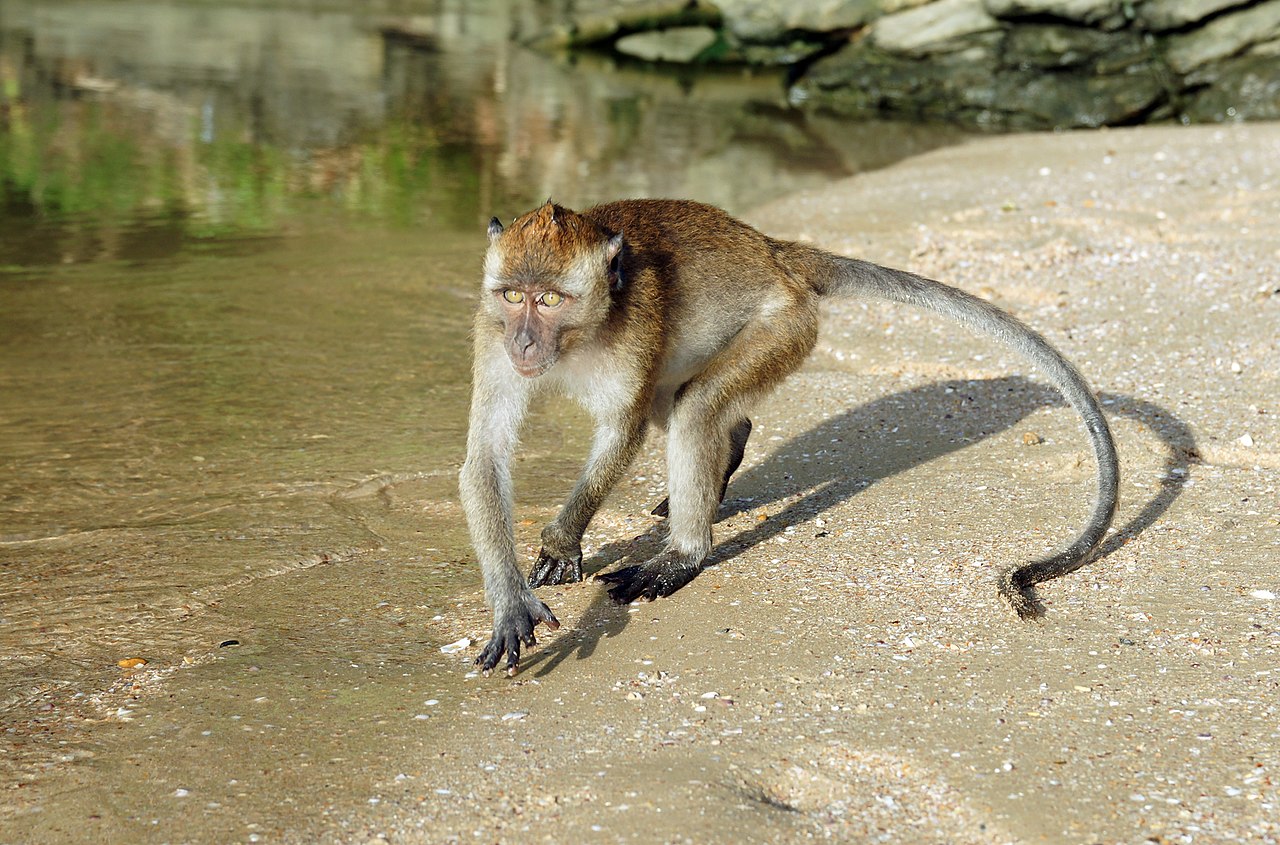
Don Chao Pu Forest Park, or Dong Ling Don Chao Pu as locals call it, sits in Phana district, about 3 kilometres from the town centre. It's a mixed dry evergreen forest covering roughly 170-300 rai (estimates vary by source) that villagers have preserved as a sacred community forest for a long time. What makes it well known is the large troop of long-tailed macaques that have lived in the forest for many generations. Locals consider the monkeys part of the community's heritage, tied to beliefs about Chao Pu, a guardian spirit. Inside the forest is a shrine to Chao Pu that villagers hold in deep respect, believed to be home to the spirit of a hunter who protects the forest, along with several Buddha images in different postures. The site brings together nature, belief, and community life all in one place. It's open daily during the day with no official admission fee; anyone who wants to make merit can do so at the shrine at their discretion.
The appeal here is seeing wild monkeys in their real habitat, not caged animals. Walk quietly through the forest and you'll likely spot monkeys leaping between branches, grooming themselves, or caring for their young naturally. Morning and evening are when the monkeys are most active and easiest to see, making it a good time for anyone who enjoys observing animal behaviour and photographing with a zoom lens without needing to get close. That said, visit in a strictly 'look, don't feed' way, since roadside feeding — a common sight here — is one of the reasons the monkey population has grown beyond a sustainable balance, causing overcrowding issues that affect nearby villagers, to the point where the province has had to carry out sterilisation programmes to manage numbers. Not feeding them is a way of helping reduce the long-term problem, not an act of unkindness.
A few things worth knowing upfront: the monkeys here are used to people and can be bold, especially if they spot a plastic bag or food in your hand — they'll move in quickly to grab it. Keep food out of sight, hold your bag in front of you, remove your glasses, hat, and any toys children might be carrying that monkeys like to snatch. Don't stare directly at a monkey or smile with your teeth showing, since monkeys interpret this as a threat. If a monkey approaches, back away slowly and don't run. Keep young children close at all times, and avoid reaching out to touch a monkey, since you risk being bitten or scratched, which may require a rabies vaccination. The terrain is dirt and forest, so wear comfortable walking shoes and be careful of slippery ground after rain. Come here respecting the animals, the forest, and the community's beliefs, and you'll come away with an experience quite different from an ordinary sightseeing trip.
- See a large troop of wild macaques in their genuine natural habitat, not caged animals, with clear natural behaviour visible morning and evening
- Combines nature, local belief in the guardian spirit Chao Pu, and community life in one place, with a shrine and Buddha images to visit
- No official admission fee, an easy stop along the route through Phana district
- Good for photographers and wildlife watchers who keep their distance and use a zoom lens
- Monkeys are used to people and bold about grabbing items — keep food, glasses, hats, and bags out of sight at all times
- The area has an overpopulation problem and conflicts with villagers, requiring the province to run sterilisation programmes, so visitors should never feed them
- Risk of being bitten or scratched if you get too close, especially with young children, potentially requiring a rabies vaccination
Phu Sing–Phu Pha Phueng Forest Park (hiking, viewpoints, camping on sandstone ridges)

Phu Sing–Phu Pha Phueng Forest Park sits in Sang Nok Tha subdistrict, Mueang Amnat Charoen district, not far from the city and easy to drive to. The highlight is a cluster of sandstone ridges roughly 200-300 metres high rising out of dry dipterocarp forest, featuring wide rock plateaus, oddly-shaped boulders carved by wind and rain over a long time, and a trail leading up to a ridgeline viewpoint overlooking the plains below in a long stretch. The climb isn't very steep, taking roughly 20-40 minutes each way, so even people who aren't regularly active can manage it at their own pace. The trail passes through shaded forest with local plant species along the way, making it a good pick for anyone wanting a quiet nature spot away from famous crowded attractions.
Most visitors head up early in the morning or in the evening to catch sunrise and sunset over the rock plateau, when the light is beautiful and the air is cooler than during the day. Many choose to camp overnight in the area the forest park has set aside, waking up to a thin sea of mist during the cool season. It's managed as a forest park under the Royal Forest Department, free to enter with no fee like a national park would charge. Camping costs only a small per-person fee, tens of baht, and gear rental is available at an affordable price. Basic facilities like restrooms and a car park exist, but there's no regular restaurant, so bring your own water and food.
A few things worth knowing upfront: this is a small forest park without much signage or promotion yet, and parts of the access road can be gravel or narrow, so check the route on a map and ask locals or staff beforehand. During the rainy season the rocky trail up can be slippery, so wear shoes with good grip and take extra care. During the dry season, daytime sun is strong and hot, so it's best to climb in the morning or evening, bringing enough water, a hat, and sunscreen, since the rock plateau has little shade. Most importantly, take your rubbish back down with you and don't carve into the rocks, since this is a natural formation that took a long time to form and is more fragile than it looks. Visiting here gives you a peaceful atmosphere, low cost, and a view well worth the climb.
- Free entry, low-cost trip, good for budget travellers — camping only costs a small per-person fee
- A viewpoint on the sandstone ridge overlooking the plains below, especially beautiful at sunrise and sunset
- The climb isn't very steep and doesn't take long, manageable even for people who aren't regularly active
- Quiet, uncrowded nature, with oddly-shaped boulders and local dry dipterocarp forest to see
- A small forest park with limited signage and information; parts of the access road can be gravel or narrow
- No regular restaurant, so you need to bring your own water and food; facilities are basic
- The rocky trail is slippery during the rainy season, and during the dry season daytime sun is strong with little shade on the rock plateau
Mekong Riverside Viewpoint, Chanuman district (the Chanuman riverfront plateau, looking across to Laos)

Chanuman is the northernmost district of Amnat Charoen, stretching along about 38 kilometres of the Mekong River, which forms the border between Thailand and Laos. The riverside viewpoint in the district centre is an open plateau along the bank where locals regularly come to stroll and take photos. Looking out, you'll see the wide river flowing gently, with forest and villages on the Laos side visible across the water. The charm here is its quiet, uncrowded feel compared to more famous Mekong viewpoints in other provinces. It offers a simple border-town atmosphere — sitting by the water catching the breeze, watching small fishing boats pass, and observing riverside life that still moves at the unhurried pace of the river.
The most popular time to visit is early morning, since Chanuman faces the direction where you can watch a beautiful sunrise over the river. The sun gradually rises above the Laos bank, casting a long streak of light across the water's surface, and some mornings a thin mist hovers over the river, softening the scene even further. In the evening, though the sun doesn't set directly into the water, the sky after sunset still changes colour beautifully. It's a good stop for anyone driving through who wants to stretch their legs for 30-60 minutes, since it's free with no admission fee — just park by the road and walk down to the riverside plateau. Nearby are coffee shops and simple restaurants along the Mekong to sit at afterward.
A few things to be upfront about: this is a local natural viewpoint, not an attraction with full facilities. Some sections of the bank may lack railings or nighttime lighting, so be careful walking near the water's edge, especially with young children. The river level and the look of the bank change with the seasons — during the rainy season the water rises and turns murky, while during the dry season it recedes to reveal sandbars and river islands, so the view can look quite different depending on the time of year. The most convenient way to reach Chanuman is by private car, since public transport doesn't run frequently, and it's worth having a map handy since there are several riverside spots in the district. Asking a local which plateau has the most open view and the clearest sunrise can help a lot.
- Free entry with no fee — park by the road and walk down to the view, a good stop along the Isan Mekong route
- Open Mekong views looking across to Laos, with a quiet, uncrowded atmosphere compared to riverside viewpoints in other provinces
- A local favourite for sunrise over the river, with mornings that sometimes bring a thin mist for beautiful photos
- Nearby coffee shops and riverside restaurants to relax at afterward, offering a glimpse of simple riverside life
- As a local viewpoint, facilities are minimal; some sections of the bank lack railings or nighttime lighting, so be careful with young children
- The view and water level change a lot with the season; during the rainy season the water is high and murky, so visiting at the wrong time may not give you the photo you expect
- Public transport doesn't run frequently, so a private car is more convenient, and there are several riverside spots in the district, so bring a map or ask locals
Hae Yak Khu Procession, Chanuman district (a giant-figure procession based on the Ramakien legend, held on the Mekong riverside, early March)

The Hae Yak Khu procession is a local festival unique to Chanuman district, Amnat Charoen, found nowhere else in Thailand. It's held once a year in early March (usually the first Friday-Saturday-Sunday of the month; for example, around 6-8 March in 2026) at the Chanuman subdistrict municipal grounds, on the Mekong River along the Thai-Laos border. The name Yak Khu, or 'kneeling giant,' comes from a local legend tied to the Ramakien epic, involving Thotsakan, Rama, and Lakshman. Locals have kept this tradition alive for over a hundred years, turning it into a procession of large, elaborately decorated giant figures that parade through the streets of the district — a scene that blends belief, legend, and community craftsmanship.
The festival includes several activities to take in, including the Yak Khu procession itself, a giant-figure and 'giant princess' procession contest, a light-and-sound show retelling the Yak Khu legend of Chanuman, a mock 'giants' village' recreating scenes from the story, and a communal Isan-style dinner (phalaeng) with traditional performances. The moment people talk about most is the nighttime light-and-sound show, when the giant figures are lit up and the story is told scene by scene, creating an atmosphere quite different from an ordinary temple fair. There's no admission fee; entry is free, so the real costs are travel, accommodation, and food at the festival. It's a great addition for anyone planning a trip through lower Isan around Amnat Charoen, Yasothon, and Mukdahan who wants to catch a festival unlike any other.
A few things to understand before planning: first, this festival is held once a year and tied to early March dates, so visiting at the wrong time means you'll find nothing but a quiet district town by the Mekong. Always check that year's schedule from the province or municipality announcements before setting off, since dates can shift. Second, Chanuman is a small, remote district with limited accommodation, so most visitors stay in Amnat Charoen city or across in Mukdahan and drive in — book ahead, since the festival draws bigger crowds than usual. Third, March is the hot season in Isan, with intense daytime sun, so plan to visit mainly in the evening into the night, when it's cooler and matches the timing of the procession and light-and-sound show. Bring a hat, water, and comfortable walking shoes, since you'll be standing and walking along with the procession for a while.
- A local festival found nowhere else in Thailand, featuring a giant-figure procession based on the Ramakien legend and Chanuman's culture, passed down for over a hundred years
- Free to watch, with several activities in one event — the procession, a giant princess contest, a mock giants' village, and a traditional Isan communal dinner
- A nighttime light-and-sound show retelling the Yak Khu legend creates an atmosphere quite different from an ordinary temple fair, with lit-up giant figures and scenes telling the story
- Set on the Mekong River along the Thai-Laos border, easy to combine with a trip through lower Isan around Amnat Charoen, Yasothon, and Mukdahan
- Held once a year and tied only to early March dates — visit at the wrong time and you'll miss the festival entirely, so always check that year's schedule before setting off
- Chanuman is a small, remote district with limited accommodation; most visitors need to stay in Amnat Charoen city or Mukdahan and drive in
- March is the hot season in Isan with intense daytime sun, so plan around midday and bring a hat and plenty of water
Where to stay in Amnat Charoen?
Choose a place to stay in Amnat Charoen city near the Buddha Park, convenient for exploring the province. Compare prices across 3 sites before booking.
Search Hotels on AgodaBook Activities & Tickets in Advance
Attractions are spread across several districts, with the Mekong riverside far away in Chanuman — booking a car or package in advance makes things easier.
💡 Know Before You Visit Amnat Charoen
Phra Mongkol Ming Muang is a giant Buddha image set on a rock plateau in the middle of the Buddha Park, about 3 km from the city. The same area has the reservoir and heart-shaped Chitrakut Island, so you can visit them together. Dress modestly and go in the morning or evening to avoid the sun.
Wat Phra Lao Thep Nimit in Phana district houses a Lao Lan Xang-style Buddha image many consider the most beautiful in Isan. It's a fair distance from the city, so allow extra travel time and stop by Don Chao Pu forest and nearby villages along the same route.
Kaeng Khan Sung in Chanuman district is a rocky Mekong rapid, most visible when water is low (Nov-May). There are riverside food rafts to relax at — take care by the water and check water levels before swimming.
Don Chao Pu Forest Park in Phana district has a large troop of wild macaques, and the area already has an overpopulation and habituation problem. Watch from a distance, don't feed or approach them, and keep valuables and food bags out of sight to avoid having them snatched.
How to Plan an Amnat Charoen Trip That's Worth It
Amnat Charoen makes for a comfortable 1-2 day trip. On day one, explore the city — pay respects at Phra Mongkol Ming Muang in the Buddha Park in the morning, walk the reservoir and photograph heart-shaped Chitrakut Island, then head up to Wat Tham Saeng Phet in the afternoon to see the reclining Buddha and caves. On day two, head out of the city to pay respects at Phra Lao Thep Nimit in Phana district, stop by Don Chao Pu (watching the monkeys from a distance), and if you have time, continue to the Mekong riverside in Chanuman to see Kaeng Khan Sung and eat at a riverside raft. Amnat Charoen combines well with trips to Ubon Ratchathani, Yasothon, and Mukdahan.
Ready to visit Amnat Charoen? Start by choosing where to stay in the city.
See Amnat Charoen Hotels →