📝 Written 3 Jul 2026 · ✅ Fact-checked 3 Jul 2026 · prices and schedules can change — check with the operator before booking
Koh Chang sits in Trat province, about a 4-5 hour drive from Bangkok plus a ferry crossing. Its charm is nature that's still lush and green, with beaches ranging from lively white-sand stretches to quiet secluded bays, and it's also a launch point for beautiful islands like Koh Kood and Koh Mak. There's something here for beach lovers, adventure seekers, and people who just want to chill.
The activities we've picked below are the ones reviewers talk about most. We break down who each one suits, what stands out, and what you should know before you go — drawing on real reviews from both people who loved it and people who flagged concerns (we've left elephant activities off this list because camps on Koh Chang still have unresolved animal-welfare concerns).
4-5 Island Snorkeling Tour Around Koh Chang (Koh Wai, Koh Rang, Koh Yak, Mu Ko Chang National Park)

An island-hopping snorkel tour around Koh Chang is the easiest way to see several different faces of the Trat sea in a single day. Boats leave from the pier on Koh Chang's west coast and loop through Mu Ko Chang National Park, stopping at around 3-5 snorkel spots — places like Koh Rang, Koh Wai, and the Koh Yak Yai-Yak Lek islands. Each stop has shallow reef where you can float and watch schools of fish without needing to be a strong swimmer. The big-boat, join-group format is popular because it's affordable per person, life jackets are provided for everyone, and it works well for families with kids or adults who aren't confident swimmers. If you'd rather have more privacy and pick your own stops, speedboat or private charter options are also available, though they cost noticeably more.
Big-boat tour prices per person usually include lunch, fruit, drinking water, and snorkel gear (mask and snorkel). Many operators also offer pickup from west-coast resorts on Koh Chang. Booking through an online platform ahead of time makes it easier to compare exactly what's included, how many stops you'll get, and whether an underwater photographer is on board. It's also worth checking whether the itinerary covers 3 islands or 4-5 islands, since the route and time at each stop varies. The national park entrance fee is usually charged separately from the tour price, with different rates for Thai and foreign visitors, so it's worth keeping cash on hand for that. The clearest water and best snorkeling conditions are during the dry season, roughly November to April; during the monsoon season the waves pick up and underwater visibility drops, and some operators pause service.
One thing worth being upfront about before booking: the boat ride out to the snorkel spots takes a while, and the water can get fairly choppy at times. If you get seasick easily, take motion-sickness medication ahead of time and sit toward the middle of the boat. Around midday, many tour boats converge on the same spots, so some sites get crowded and the water gets stirred up and murky from all the snorkelers. Some reef patches show signs of bleaching and wear from weather and heavy use, so avoid stepping on or touching the coral, and use reef-safe sunscreen. Getting to the first stop early, ahead of other boats, means clearer water and fewer people. Bring a long-sleeve rash guard, a hat, and shoes you don't mind getting wet to stay comfortable all day.
- Snorkel over coral and schools of fish at several spots in one day; the reefs are shallow enough to float over without strong swimming skills
- Big-boat join-group tours are affordable per person and usually include lunch, fruit, drinking water, and snorkel gear
- Crew and guides on board get praised for being attentive, teaching gear use, and being friendly to first-time snorkelers
- Choose between an affordable big boat or a speedboat/private charter depending on budget and how much privacy you want
- The boat ride to the snorkel spots takes a while and can get choppy at times; if you're prone to seasickness, bring your own medication
- Around midday, many tour boats converge on the same spots, so some sites get crowded and the water turns murky
- Some reef patches show bleaching and wear, and the national park fee is charged separately from the tour price
Klong Plu Waterfall & Swimming Pool, Koh Chang (Klong Plu Waterfall, Mu Ko Chang National Park)

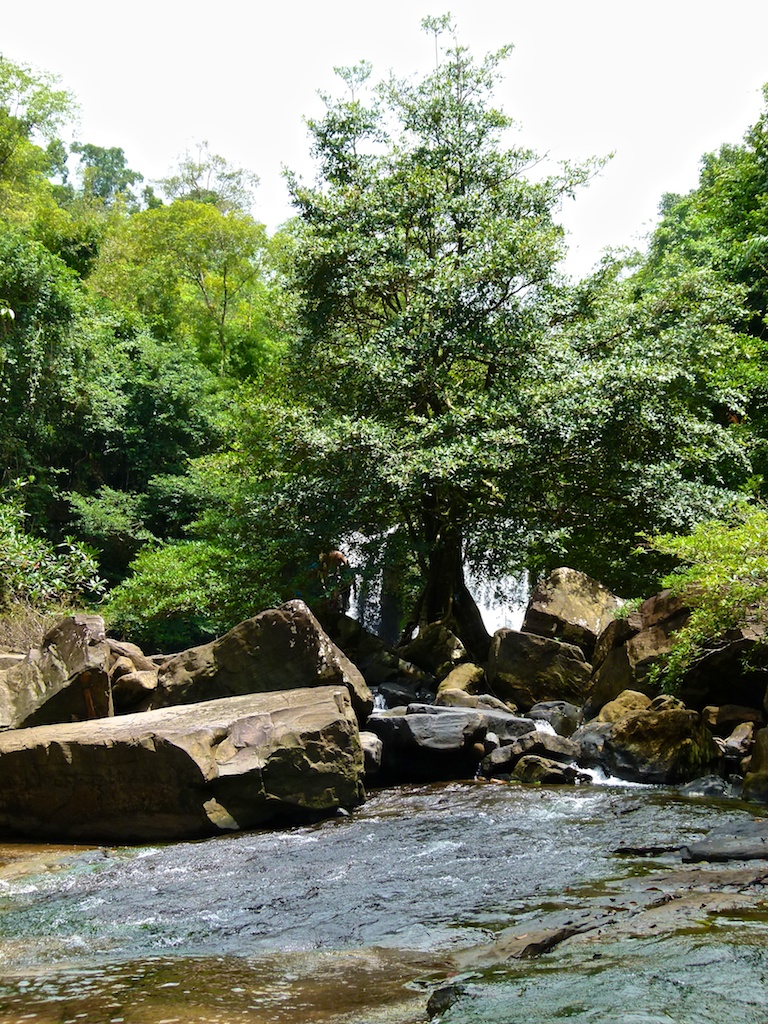
Klong Plu Waterfall (sometimes spelled Klong Prao) is the biggest and most accessible waterfall on Koh Chang, located within Mu Ko Chang National Park on the Klong Prao side, just 10-15 minutes by car from the main beach. What draws people here is a wide pool right beneath the falls that you can actually swim in, unlike many waterfalls where you can only look. After parking, you walk about 15 minutes along a shaded forest trail before reaching the rock face where the water cascades down into the pool below. Most visitors change into swimwear and cool off in the water, where small fish will nibble at your feet — a natural, easygoing scene that's not hard to find on the island.
Entry requires a national park fee, charged at clearly different rates for Thai and foreign visitors. People staying on Koh Chang often visit the waterfall for half a day, alternating with beach days, or include it as one stop on an island tour that also visits scenic viewpoints and the Bang Bao fishing village. If you don't have a car or motorbike, booking a tour with transport included is more convenient, since the waterfall entrance is off the main coastal road. On review platforms like Tripadvisor, Klong Plu Waterfall averages around 4.2 out of 5 from more than 2,400 reviews. Most comments praise it as a beautiful waterfall, an easy walk in, and a place where you can genuinely swim. Many say it's well worth it if you visit when the water is flowing strong.
A few honest things to know before you go. First, the water flow depends heavily on the season — during the dry season, roughly February to April, the flow can thin out considerably, and several reviews from that period note the water was lower than expected. If you want to see the falls at full force, aim for late rainy season through early cool season. Second, you'll need to walk about 15 minutes from the parking area; the path is a mix of dirt and rock with some steps, and while it's not far, there are some inclines. Third, the rocks by the water and inside the pool get very slippery, especially when wet — wear shoes with good grip and take care when climbing over rocks. Fourth, leeches can show up on the trail after rain, so wear closed shoes and avoid sitting on damp ground for long. And don't forget that the fee for foreigners is several times higher than for Thai visitors, so prepare your cash and expectations accordingly.
- The biggest, most accessible waterfall on Koh Chang — just a 15-minute walk from the parking area, good for families and anyone who doesn't want a strenuous hike
- A wide pool right beneath the falls that you can actually swim in, with small fish nibbling at your feet, unlike many waterfalls where you can only look
- Close to the main beach on the Klong Prao side, easy to fit in for half a day alongside beach time, or as part of an island tour
- Real reviews on Tripadvisor average around 4.2 out of 5, with many praising the beauty and value when the water is flowing well
- There's a national park entrance fee, with a clearly higher rate for foreigners than Thai visitors, and about a 15-minute walk in over dirt and rock with steps
- Water flow depends on the season — during the dry season, roughly February to April, the flow often thins out into a light trickle
- Rocks by the water and inside the pool get very slippery when wet, so climbing takes care, and leeches can appear on the trail after rain
Sunset Cruise + Night Squid Fishing, Koh Chang (Koh Chang sunset & night squid-fishing cruise, includes snorkeling/dinner on board)

The sunset and night squid-fishing cruise on Koh Chang is an evening activity for anyone who wants a relaxed night out at sea. Most boats depart from west-coast piers like Bang Bao or near White Sand Beach around 6pm, sailing out to a spot where you can watch the sun sink below the horizon. Along the way there's time for photos, sipping drinks, and on some trips a chance to snorkel before it gets dark. Once night falls, the boat switches on lights at the stern to attract squid, and the crew hands out simple squid-fishing lines for guests to try. If you catch any, the crew will often cook it up fresh on the spot, alongside a prepared dinner served on board.
What reviewers consistently agree on is the value of combining sunset, snorkeling, and squid fishing in one trip. Tour prices, usually around ฿1,300-1,600 per person, typically include pickup from accommodation, food, drinking water, and squid-fishing gear, so there's not much you need to prepare. Many people love the quiet atmosphere out on the sea at night, the boat's lights reflecting on the water, and the small thrill of feeling a tug on the line. Local crew are often friendly and happy to show you how to jig the line. The trip suits couples, groups of friends, or families who want a laid-back seaside experience rather than a physically demanding activity — and it's a nice change of pace from a regular dinner on land.
A few honest things to know before booking. First, this trip depends heavily on weather and sea conditions — during the monsoon season or on rough days, organizers may cancel or reschedule for safety, so check the forecast and refund policy before paying. Second, seasickness is a real factor: being out at sea at night with no visible horizon can make some people feel dizzy or nauseous more easily than during the day. If you get seasick easily, take motion-sickness medication about 30 minutes before boarding. Third, catching squid isn't guaranteed — the amount depends on the season, currents, and moon phase, so some nights you'll catch plenty and others almost none. It's best to treat it as an experience rather than expecting to bring squid home. Finally, boats return fairly late, roughly between 9pm and 11pm, so plan your time accordingly and bring a light jacket, since it gets cool and can be a bit splashy out at sea at night.
- Combines sunset at sea, snorkeling, and night squid fishing in one relaxed trip that doesn't require much physical effort
- Most tour prices already include pickup from accommodation, food, drinking water, and squid-fishing gear, so there's little to prepare
- You get to eat freshly cooked squid prepared by the crew, along with dinner on board — a different vibe from eating on land
- Local crew are friendly and happy to teach you how to fish for squid; suits couples, groups of friends, and families alike
- Depends heavily on weather and sea conditions — trips can be cancelled or rescheduled during the monsoon season or on rough days, so check forecasts and refund terms first
- Being out at sea at night with no visible horizon makes seasickness more likely than during the day; take medication beforehand if you're prone to it
- Catching squid isn't guaranteed and depends on season and currents — some nights yield little, and the boat doesn't return until fairly late, around 9pm-11pm
Salak Kok Mangrove Kayaking / Boat Tour, Koh Chang (Salak Kok mangrove kayak / community boardwalk eco-tour)

Salak Kok Bay sits on Koh Chang's southeastern side, a quiet inlet surrounded by wide mangrove forest — a completely different scene from the beaches and shopfronts on the west coast, like White Sand Beach or Klong Prao. The main draw here is the Salak Kok Kayak Station, run as a community enterprise by local villagers. They offer both self-paddled kayak rentals and local rowboats with a village boatman. Numbered markers along the mangrove channels make it easy to follow the route without getting lost, and there are smaller side channels to explore if you're curious. As you paddle, you'll see mangrove roots poking up out of the water, various water birds, and homes of fishing families who still live along the water. If you'd rather not get in a boat, you can also walk the wooden boardwalk that winds into the mangroves for free.
The charm that reviewers consistently mention is the peace and unspoiled nature of the place. On Tripadvisor, the Salak Kok Kayak Station averages around 4.7 out of 5 from a modest number of reviews. Many describe it as a quiet, relaxing paddle through mangrove forest, with beautiful bay views, an affordable price, and friendly local staff. What sets this apart from a typical tour is that the income goes directly back to the community, and Salak Kok has previously won awards for community-based tourism and conservation at an international level. It's an activity that combines fun with supporting mangrove conservation, and suits anyone who wants to swap a beach day for a different side of Koh Chang.
A few honest things to know before you go. First, the activity depends fairly heavily on the tide — at low tide the channels through the mangroves get shallow and harder to paddle, so it's worth asking locals or checking tide times to go when the water level is good. Second, there's sun and heat to consider: kayaks and boats are open with almost no shade, and it gets hot from late morning into the afternoon, so many reviews recommend going in the morning when it's cooler and there's a better chance of spotting birds. Third, the mangroves have a fair number of mosquitoes and biting insects, so bring mosquito repellent, a hat, sunglasses, and sunscreen. Fourth, paddling a kayak yourself takes some effort and time — if you're not confident paddling, or you're traveling with elderly relatives or young kids, the local rowboat with a boatman is the more comfortable option. Salak Kok Bay is also some distance from the west-coast beach zone, so if you don't have your own transport, arrange a motorbike or car in advance, since public transport in this area is limited.
- Paddle a kayak or ride a local rowboat through peaceful mangrove forest with beautiful bay views, following numbered markers so you won't get lost
- Affordable pricing — kayak rental around ฿100/hour or a boatman-rowed boat around ฿200/person, with the mangrove boardwalk free to walk
- A community enterprise where income goes directly to local villagers; the group has won community tourism and conservation awards, and staff are friendly
- A completely different side of Koh Chang from the beach zone — local fishing life, water birds, and mangrove roots up close
- Depends on the tide — at low tide the channels get shallow and harder to paddle, so check tide times and aim for a morning slot
- Boats and kayaks are open with no shade, so it gets hot from late morning into the afternoon, and the mangroves have plenty of mosquitoes and insects
- Paddling a kayak yourself takes real effort, and Salak Kok Bay is some distance from the west-coast beach zone, so you'll need to arrange transport if you don't have your own
Koh Kood Day Trip from Trat/Koh Chang (Koh Kood day trip — clear water, beautiful beaches, Klong Chao Waterfall)
Koh Kood is Trat province's second-largest island after Koh Chang, sitting at the far edge of the eastern seaboard near the Cambodian border. It's known for emerald-green clear water, fine white-sand beaches, and a quiet atmosphere that's still less crowded than Koh Chang. Most day-trip tours to Koh Kood depart from piers on the Trat mainland, such as Laem Sok or Laem Ngob, with a fast-boat crossing of roughly one to one-and-a-half hours. A typical itinerary includes swimming at a scenic beach, snorkeling over reefs and fish at clear-water spots, a stop at Klong Chao Waterfall — a large freshwater falls in the forest with a pool to swim in — and finishing with a seafood lunch before the boat back. This suits anyone already staying on Koh Chang or in Trat town who wants to add Koh Kood as an extra day, without having to plan their own boat and route.
What reviewers consistently agree on is how clear the water is and how natural the beaches remain. Many say the water is clear enough to see the sandy bottom and schools of fish, making it great for snorkeling and photos. Klong Chao Waterfall is the on-land highlight — a nice change of pace from the sea to soak in cool freshwater in the forest, just a short walk in from the parking area to the pool. Going as part of an organized tour that includes the boat removes the hassle of finding a boat, checking schedules, and getting around the island yourself, since Koh Kood is spread out and its attractions are quite far apart. Koh Kood's overall Tripadvisor rating sits high at around 4.6 out of 5 from several hundred reviews, reflecting how impressed most visitors are with the island's natural beauty.
A few honest things to keep in mind before booking. First, Koh Kood is far, and the fast-boat crossing takes a while and can hit rough water on some days — if you're prone to seasickness, bring medication, and if you're coming from Koh Chang, you'll need to return to the Trat mainland pier first before catching another boat to Koh Kood, adding significantly to your total travel time. Second, many reviewers note that Koh Kood suits an overnight stay better than a single day trip, since by the time you arrive and actually get to swim, there's not much time left before you have to rush back for the return boat, which can feel hurried and doesn't let you fully soak in the island's quiet. Third, boat and tour prices run higher than trips to nearer islands, due to the longer distance and fuel costs. Finally, on seasonality: during the monsoon season, roughly May to October, rough seas mean many fast boats reduce their schedule or stop running, and some resorts on the island close for the season, so always check weather conditions and confirm the boat schedule with the operator before you travel.
- Emerald-green clear water and quiet white-sand beaches, still less crowded than Koh Chang, great for snorkeling and photos
- Combines sea and forest waterfall in one day at Klong Chao Waterfall, a refreshing change of pace from saltwater to freshwater
- The tour bundles the round-trip fast boat and lunch, removing the hassle of finding a boat, checking schedules, and getting around an island where the sights are spread far apart
- Koh Kood's overall Tripadvisor rating sits high at around 4.6, reflecting how impressed most visitors are with the island's natural beauty
- Koh Kood is far — the fast-boat crossing is long and can get rough on some days, and from Koh Chang you must first return to the Trat mainland pier before catching another boat, adding significant travel time
- Many reviews say Koh Kood suits an overnight stay better than a day trip, since by the time you arrive there's little time left to swim before rushing back for the return boat
- Boat and tour prices are higher than trips to nearer islands due to the distance, and during monsoon season (May-Oct) rough seas mean reduced boat schedules and some resorts closing
Koh Mak Day Trip from Trat/Koh Chang (Koh Mak day trip — a quiet, laid-back island, snorkeling, cycling)

Koh Mak is a mid-sized island in Trat province, sitting between Koh Chang and Koh Kood, reached by fast boat from Laem Ngob pier or connecting from Koh Chang in roughly 45-60 minutes. What makes Koh Mak clearly different from Koh Chang is the quiet, slower pace of life — no bustling walking street, no loud bars. Most of the island is covered in coconut and rubber plantations owned by locals, with fine white-sand beaches and shallow, clear water that slopes gently, ideal for a relaxed swim. Day tours from Trat or Koh Chang usually come in two forms: buying a round-trip fast-boat ticket and exploring the island independently, or a snorkeling tour that also stops at nearby smaller islands like Koh Rayang or reef spots near Koh Kradad.
The most popular activities on the island have an easygoing rhythm — renting a bicycle or motorbike to cruise around past coconut groves and island homes, lying under a coconut tree reading on the beach, snorkeling over reasonably healthy shallow reef, or paddling a kayak along the coastline. The west side of the island is a well-loved sunset spot, with still, clear water you can see the sandy bottom through. Restaurants and cafes are scattered along the beaches, focused on fresh seafood and a relaxed vibe rather than anything flashy, since the island is small and uncrowded. It suits couples, families who genuinely want to rest, and anyone looking for a quiet place to recharge after the busier pace of Koh Chang.
A few honest things to know before booking. First, the quiet and limited facilities are both the charm and the drawback — there are no big malls or convenience stores on the island, and ATMs are limited, so bring cash and essentials with you. Anyone who enjoys nightlife or a livelier scene might find it too quiet. Second, a day trip is tiring and leaves little time on the island, since it includes the round-trip boat ride plus travel to the pier — actual time on the island often works out to just 4-5 hours, so many reviews recommend staying overnight if you want to properly experience Koh Mak. Third, on seasonality: during the monsoon season, roughly May to October, the sea gets rough, some boats stop running, and many resorts close, so check boat schedules and weather before planning. The best time to visit is roughly November to April, when the sea is calm and clear.
- A quiet island with a slow pace of life and no loud bars — ideal for anyone wanting genuine rest after the busier pace of Koh Chang
- Fine white-sand beaches and shallow, clear water, comfortable for swimming and snorkeling over shallow reef
- Cycling or riding a motorbike around the island past coconut groves and local homes is a relaxed pleasure, and the west-coast beach is a well-loved sunset spot
- Can be combined with a snorkeling tour to nearby smaller islands like Koh Rayang in a single trip
- Quiet with limited facilities — no big malls or convenience stores, and few ATMs; anyone who wants nightlife may find it too quiet (which is exactly the island's character)
- A day trip is tiring and leaves little time on the island, with actual time there working out to roughly 4-5 hours after the boat ride; many reviews recommend staying overnight instead
- During monsoon season (May-Oct), rough seas mean some boats stop running and many resorts close, so check schedules and weather beforehand
Koh Chang Scuba Diving Trip — HTMS Chang Wreck + Koh Rang Reef (includes Discover Scuba trial course)

Most scuba diving trips on Koh Chang depart from Bang Bao pier on the island's south side, heading out to two main dive areas. The first is the HTMS Chang wreck, a decommissioned Royal Thai Navy landing ship roughly 100 meters long that was sunk to form an artificial reef in 2012 and is now the largest known wreck dive in Thai waters, home to large schools of barracuda, snapper, and grouper. The second is the reef around the Koh Rang island group within the national park, where sites like Hin Luk Bat and Hin Rab feature colorful coral, clownfish, butterflyfish, and blue-spotted stingrays in shallow water of about 10-16 meters — good for easy diving and training courses.
The appeal of this trip is that it suits any experience level. Anyone without a diving certification can take a Discover Scuba trial course in a single day, with an instructor teaching basic skills in shallow water before a supervised first dive. Divers with an Open Water or Advanced certification can do a two-dive Fun dive. The HTMS Chang wreck suits more experienced divers, since the deck sits at around 25 meters depth — Advanced certification is needed to explore the deeper parts of the ship and swim through its passageways, while Open Water divers typically circle the bridge and gun deck at a shallower level. Real reviews on Tripadvisor for well-known local dive operators like BB Divers Bang Bao average around 4.9 out of 5 from over 1,238 reviews, with consistent praise for attentive, friendly, patient instructors who explain things thoroughly, plus good food and fruit on board — making it a trip beginners feel confident trying.
A few honest things to know before booking. First, underwater visibility around Koh Chang depends heavily on the season. The clearest water and calmest seas are roughly November to May, when visibility can reach 20-30 meters, but during the mid-year monsoon, visibility often drops to around 5-15 meters as rain and waves stir up sediment. Second, during the monsoon season, roughly May to October, rough seas mean many dive centers reduce trips or close for the day for safety, so build in a backup plan and check the weather. Third, the boat ride out to the dive sites takes a fair amount of time, so if you're prone to seasickness, take medication beforehand. Fourth, the HTMS Chang wreck leans toward Advanced level — diving to the deeper sections and through the ship's interior carries more risk than a typical reef dive, so honestly assess your own level and listen carefully to the instructor's full briefing before diving.
- Suits any level — a Discover Scuba trial course for the uncertified, and a two-dive Fun dive for Open Water/Advanced certified divers
- Dive the HTMS Chang wreck, the largest known wreck dive in Thai waters, home to schools of barracuda, grouper, and snapper
- Koh Rang's reef sits in shallow water of roughly 10-16 meters with colorful coral and clownfish, good for beginners and training courses
- Real reviews on Tripadvisor praise patient, thorough instructors and good food on board (BB Divers rated 4.9/5)
- Underwater visibility depends heavily on the season — during the mid-year monsoon, water clarity drops to roughly 5-15 meters, versus 20-30 meters in the dry season
- The boat ride to the dive sites takes a fair amount of time, so bring seasickness medication if needed, and many centers reduce trips or close during the monsoon season
- The HTMS Chang wreck leans toward Advanced level, with the deck at roughly 25 meters depth — diving deeper sections and through the ship's interior carries more risk than a typical reef dive
Bang Bao Fishing Village & Pier, Koh Chang (Bang Bao stilt fishing village & pier — seafood, shops, harbor, lighthouse)

Bang Bao is an old fishing village at the southern tip of Koh Chang. Its heart is a long wooden boardwalk stretching out into the sea, lined on both sides with stilt houses built over the water — originally homes of genuine fishing families, many of which have now become seafood restaurants, souvenir shops, guesthouses, and dive-tour shops. There's no entry fee to walk into the village; you can stroll the boardwalk freely, look down to see small fishing boats moored beneath the houses, and at the end of the pier there's a tower-shaped lighthouse that's a popular photo spot with wide open sea views. It works best as a half-day stop between beach days rather than a full-day activity on its own.
The main draw that reviewers consistently mention is the seafood and the waterside atmosphere. Many restaurants have seating extending out over the sea, where you can pick fresh shrimp, shellfish, crab, or fish and have it cooked to order while watching boats come and go — a different scene from the regular beaches on the island. Beyond eating and strolling, Bang Bao is also an important departure point for reef-diving tours and boat trips to nearby islands like Koh Wai, Koh Rang, or Koh Kradad, as well as onward boats to Koh Mak and Koh Kood. Most tour boats leave from this pier in the morning, so many people walk the village in the afternoon after returning from a boat trip, or come for dinner by the pier before heading back to their accommodation. On Tripadvisor, the Bang Bao village and pier listing averages around 4.0 out of 5 from 27 reviews, with most comments praising the views, the lighthouse, and the seafood.
A few honest things to keep in mind before you go. Bang Bao today has changed a lot from a traditional fishing village — many reviews note that the boardwalk has become filled with souvenir and gift shops for tourists, and anyone expecting an authentic fishing-village scene may find it feels rather commercial. Seafood prices by the pier also run higher than in town or away from tourist areas, so it's worth asking the price per kilogram and confirming the weight before ordering, to avoid a surprise bill. The boardwalk is open to the sun with almost no shade, so it gets very hot around midday — bring a hat, sunscreen, and water. The busiest times are when tour boats depart and return in the morning and late afternoon, when the boardwalk gets crowded and hard to walk through. Some reviews also mention odor and cleanliness issues with the water beneath parts of the boardwalk. For a more relaxed visit, go mid-morning after the boats have left, or in the evening near sunset when the light is soft and the views are at their best.
- Free to walk into the village, with a wooden stilt boardwalk and houses built over the water that are unique to Bang Bao
- Fresh seafood right by the pier — pick shrimp, shellfish, crab, or fish and have it cooked to order while watching boats come and go
- A lighthouse and wide open sea views at the end of the pier make for a popular photo spot, especially in the evening
- A key departure point for reef-diving tours and boats to Koh Wai, Koh Rang, Koh Mak, and Koh Kood, all reachable in one trip
- Increasingly commercial these days, filled with souvenir shops — many reviews say it feels different from a traditional fishing village
- Seafood by the pier costs more than away from tourist areas, so ask the price per kilogram and confirm the weight before ordering
- The boardwalk is open to the sun with no shade, gets hot and crowded when tour boats depart and return, and some reviews note odor and cleanliness issues with the water in places
Tree Top Adventure Park, Koh Chang (ziplining + high-ropes adventure course in the forest)

Tree Top Adventure Park on Koh Chang is a high-ropes adventure park set in the forest at the island's interior, rather than by the beach like the water-based activities. The concept is simple: you wear a safety harness and move between stations mounted on large trees, including ziplines that carry you across gaps between trees, rope bridges, suspended wooden bridges, climbing nets, and rappel points down to the ground, all strung together into a course you work through station by station. The main appeal is being up in the forest canopy itself, looking down at the forest floor below, combining excitement with the shaded, cool atmosphere of Koh Chang's inland forest at the same time. It suits anyone visiting Koh Chang who wants a land-based, challenging activity to break up beach time.
Before starting, staff help fit your gear and explain how to clip and unclip your safety line and use the pulley — a step worth paying close attention to, since you'll need to clip and unclip the safety line yourself at designated points during the course. The activity mainly requires balance and moderate use of your arms and legs, but doesn't demand athlete-level fitness — anyone in reasonably normal physical condition can do it. Staff are stationed along the route to help if anyone gets stuck partway through. Booking ahead through an online platform makes it easier to compare which course and price you're getting, whether transport on the island is included, and helps avoid the course selling out during high season. It's worth arriving before your scheduled time to allow for gearing up and hearing the full safety briefing.
A few honest things to know before you go. This activity has physical restrictions — many stations set minimum weight and height requirements, so very young children or anyone genuinely afraid of heights may not be able to do the full course; check the conditions with the operator before booking. The park sits inland, so you'll need transport from the beach zone — if your package doesn't include transport, arrange your own car or rental. As an outdoor activity at height, it also depends on weather — heavy rain or storms usually mean a temporary pause for safety, so check the forecast and confirm your slot before traveling. It's also important to listen carefully to the safety briefing and follow staff instructions closely, wear snug-fitting clothes and closed-toe shoes with good grip, and secure valuables and tie back long hair before starting the course.
- Real ziplining, rope bridges, and canopy climbing in genuine forest, combining excitement with a shaded, cool atmosphere
- A land-based, challenging activity to break up beach time, good for anyone who wants more than just the sea
- Staff help fit gear, explain how to use the safety line, and are stationed along the route to help throughout
- Doable by anyone in reasonably normal physical condition, no athlete-level fitness required, and you can book online ahead to compare courses and avoid sellouts in high season
- Has physical restrictions — many stations set minimum weight and height requirements, so very young children or anyone genuinely afraid of heights may not be able to do the full course
- The park sits inland, requiring transport from the beach zone; if your package doesn't include transport, you'll need to arrange your own
- An outdoor activity at height that depends on weather — heavy rain or storms usually cause a temporary pause, and you must listen to the full safety briefing before starting
Where to stay in Koh Chang?
Choose a hotel near White Sand Beach and compare prices across 3 sites before booking
Search hotels on AgodaBook activities & tickets ahead
Popular island tours and activities fill up fast — booking online ahead is more convenient
💡 Know before you go to Koh Chang
Drive to Laem Ngob pier or Ao Thammachat pier, then take a ferry across to the island, ~30-45 minutes
The east coast gets heavy rain May-Oct. Outer-island and diving tours often pause when seas are rough. Best time to visit is Nov-Apr
The mountain roads on Koh Chang are steep and winding — ride a scooter carefully, or take a red songthaew
Diving trips and Koh Kood-Koh Mak tours fill up fast in high season — book 1-2 days ahead
How to pick activities that make it worth it
If you have 3 days, we'd suggest island-hopping snorkeling around Koh Chang on day one, exploring the island itself on day two (Klong Plu Waterfall + Bang Bao kayaking + sunset cruise), and if you have a third day, take a boat to Koh Kood or Koh Mak. That way you get the sea, the nature, and a quiet island without rushing too much.
Ready to plan your Koh Chang trip? Start by picking a beachfront hotel
See Koh Chang hotels →