📝 Written 2 Jul 2026 · ✅ Fact-checked 3 Jul 2026 · prices and schedules can change — check with the operator before booking
Nakhon Pathom sits in central Thailand just west of Bangkok, making it easy to reach and perfect for a day trip. The highlight is Phra Pathom Chedi, a massive and ancient stupa that anchors the province, along with Sanam Chandra Palace from the reign of King Rama VI, riverside floating markets like Don Wai known for their food, Wat Rai Khing on the Tha Chin River, and fun museums like the Human Imagery Museum and Jesada Technik Museum.
Below we've rounded up the places and activities that come up most often in reviews, along with the best time to visit and what to know before you go. Many of these spots are in or around the city and easy to reach. Don Wai Floating Market gets busy on weekends, so plan to go from late morning to afternoon and allow extra time for parking.
Phra Pathom Chedi, Nakhon Pathom (pay respects + walk the market around the chedi)

Phra Pathom Chedi is Nakhon Pathom's landmark stupa and the tallest bell-shaped chedi in Thailand. It stands right in the center of the city, its golden-orange spire visible from far away and glinting in the sunlight. The chedi sits within Wat Phra Pathom Chedi Ratchaworamahawihan, with a surrounding cloister where visitors can walk and pay respects to Buddha images set at each cardinal direction, plus a shrine to Luang Phor Phra Roung Rojanaridh where locals and passing travelers often stop to pray. Around the chedi is a wide, shaded plaza with large trees, pleasant for a stroll morning or evening. Entry to the chedi grounds is free; anyone interested in the artifacts and antiques on display can visit the small museum on-site for a modest admission fee.
Another draw that keeps visitors coming is the market and food stalls scattered around the chedi, especially along the naga staircase side out front that leads into the municipal market and the area near the train station. Nakhon Pathom specialties like khao lam (sticky rice in bamboo), pomelo, fried pork, and sweets are easy to find nearby. Many people plan to pay respects in the morning, then spend the late morning hunting for food. The overall vibe is a genuine Thai town market that locals actually use, not one staged for tourists, so prices stay reasonable and the flavors are authentically local. This spot is very easy to reach since it's close to Nakhon Pathom Railway Station — take the train from Bangkok and walk straight in, or drive and park nearby.
A few practical things to know before you go. First, this is a temple and an important religious site, so dress modestly — no tank tops, shorts, or short skirts — and remove your shoes before entering the main hall. Second, the midday sun is fairly strong and the concrete plaza reflects heat, so avoid coming at noon if you plan to walk a lot; morning or evening is more comfortable and gives better light for photos. Third, during the year-end Phra Pathom Chedi worship festival, crowds swell noticeably, parking is hard to find, and vendors fill every available space — skip that period if you don't like crowds. Fourth, you can't enter the interior of the chedi itself; viewing is limited to the exterior and the cloister, but that alone is well worth the stop for anyone passing through Nakhon Pathom.
- Thailand's tallest landmark chedi, grand and beautiful, with free entry to the grounds — great for both the devout and travelers just passing through
- A market and local food stalls ring the chedi, with easy access to khao lam, pomelo, fried pork, and Nakhon Pathom sweets at reasonable prices
- Very convenient to reach — right in the city center near Nakhon Pathom Railway Station, so you can hop off the train from Bangkok and walk straight in
- Real reviews on Tripadvisor average around 4.4 out of 5 from over 433 reviews, with many praising how magnificent and worthwhile it is
- As an important temple site, modest dress is required — shoulders and knees covered, shoes off before entering the main hall — visitors dressed too casually may be turned away
- The midday sun is strong and the concrete plaza reflects heat, making a lot of walking around noon tiring
- You can't enter the interior of the chedi itself, only the exterior and cloister, and during the year-end festival crowds swell and parking becomes scarce
Sanam Chandra Palace (Rama VI era) — royal residences, museum, and shaded gardens

Sanam Chandra Palace was built by order of King Vajiravudh, Rama VI, starting around 1907, on more than 800 rai of land in the heart of Nakhon Pathom, roughly two kilometers from Phra Pathom Chedi. What draws visitors is the shaded garden setting, with large trees and wide lawns, plus canals and bridges linking the various residences — pleasant for walking or cycling all day. The building everyone photographs most is Chaleemongkolasana Residence, a pink European-castle-style building blending in English timber-frame work, with a statue of Ya Lae, Rama VI's beloved dog, standing out front.
Inside the grounds are several more residences and halls, including Phiman Pathom Hall, the first to be built, Vajiraram Palace, and Samakkhi Mukhamat Hall, once used as a throne hall. Each building has distinctly different architecture — Thai, European, and mixed styles. Part of the residence now houses the King Vajiravudh Museum, displaying his biography and royal duties, while another part of the grounds serves as a Silpakorn University campus today. Walking the gardens and photographing the exteriors is free; entering the residences and museum comes with an admission fee and more limited opening hours. Plan on roughly two to three hours to see it all.
A few practical things to know before you go. First, the opening hours for the residence and museum section don't always match those of the outdoor gardens — several reviews mention arriving to find the interior buildings closed, or visiting during a renovation period, so it's worth calling ahead or checking opening days beforehand, especially if visiting specifically to see the interior. Second, this is a royal and government site, so dress modestly; some periods enforce rules against shorts, so bring appropriately neat clothing. Third, the grounds are very large and shade isn't available everywhere, and the midday sun is strong — bring an umbrella, hat, and water, or come in the morning or late afternoon when the sun is gentler. Fourth, information signage in some buildings is limited, so if you want detailed history, research beforehand or look for an on-site guide.
- A Rama VI-era palace on more than 800 rai of land, with shaded gardens, large trees, and space to walk or cycle in a quiet setting
- A variety of architecture to see and photograph, especially the pink castle-style Chaleemongkolasana Residence and the statue of Ya Lae, the royal dog
- Walking the gardens and photographing the exteriors is free, plus the King Vajiravudh Museum offers a look at Thai history
- Located right in central Nakhon Pathom, only about 2 km from Phra Pathom Chedi, so pairing both in one trip is easy
- Opening hours for the residence/museum section don't match the outdoor gardens, and some periods close for renovation — several reviewers found interior buildings closed, so check ahead
- As a palace and government site, modest dress is required, with some periods strict about shorts, and information signage in some buildings is limited
- The grounds are very large with uneven shade, and the midday sun is strong, making for a tiring walk without an umbrella and water
Don Wai Floating Market (Talat Nam Don Wai), Wat Don Wai, Sam Phran, Nakhon Pathom

Don Wai Floating Market sits on the Tha Chin River within the grounds of Wat Don Wai in Sam Phran District, Nakhon Pathom. It's an old riverside market that Bangkok residents love to drive out to on weekends for a day of eating, since it's not far — about forty-five minutes to an hour by car. The market itself is a wooden walkway and rows of old shophouses stretching along the river, lined tightly on both sides with food stalls. What makes Don Wai stand out is the sheer variety of food: braised duck, a market staple, river fish like steamed snakehead fish and grilled fish, several kinds of old-fashioned Thai sweets, krayasat (rice and grain candy), rolled coconut wafers, custard cakes, plus fruit and local souvenirs. You can graze your way through since individual items are inexpensive, and there's no entry fee — you only pay for what you buy.
Beyond walking and eating, another popular activity is taking a boat ride along the Tha Chin River. Boat services carry visitors past riverside life, old houses, and temples along the banks for a fee ranging from a few dozen to a couple hundred baht per person — a nice change of pace from walking on land. Families often bring both kids and grandparents along for a relaxing boat ride. The market is busiest on Saturdays, Sundays, and long weekends, with every stall open and a lively crowd; on weekdays it stays open but with fewer vendors and fewer visitors, better for anyone who wants to stroll without the crush. The market runs from around eight in the morning to about five in the evening, with late morning to afternoon being when the most food stalls are open and fully stocked.
A few things worth bracing for before you go. First, parking — on weekends or busy days, the market and temple parking lots fill up fast, so you may have to circle around or park further away and walk in; arriving early helps avoid this. Second, during peak times the walkways inside the market are fairly narrow and crowded, which can be tough going for anyone bringing elderly visitors or a stroller. Third, a lot of the food is fried, rich, or sweet, so pace yourself and share several items rather than filling up on just one. Fourth, since this is a popular riverside market, some stalls charge slightly more than an average market and quality varies from stall to stall — look for the ones with a queue or regular customers. During the rainy season the wooden riverside walkway can get slippery, so wear shoes with good grip and be careful near the water's edge.
- A huge variety of food in one place — braised duck, river fish, old-fashioned Thai sweets, and local souvenirs — with inexpensive prices per item, perfect for grazing
- Free market entry, no admission fee, only pay for what you eat; close to Bangkok at about 45 minutes to 1 hour by car, ideal for a half-day trip
- A genuine old riverside market atmosphere along the Tha Chin River, with old wooden shophouses and riverside life, plus boat rides for a change of scenery
- Real reviews on Tripadvisor average around 4.3 out of 5, with many praising the delicious variety of food and reasonable prices
- Parking fills up fast on weekends or busy days at both the market and temple lots, forcing visitors to circle or park further away and walk in
- During peak times the walkways are narrow and crowded, which isn't very comfortable for elderly visitors or strollers
- Much of the food is fried and sweet, which can feel heavy if you overeat, and some stalls charge more than a typical market with inconsistent quality
Wat Rai Khing (Luang Phor Wat Rai Khing) — a riverside temple on the Tha Chin River, Sam Phran, Nakhon Pathom

Wat Rai Khing is an old royal temple on the Tha Chin (Nakhon Chai Si) River in Sam Phran District, Nakhon Pathom. The temple's name comes from the community that once grew a lot of ginger (khing) in the area. Most visitors come to pay respects to Luang Phor Wat Rai Khing, a Buddha image in the subduing Mara posture enshrined in the main hall. Legend holds that the image arrived by river, and it has been revered by locals for generations, with many people coming to make vows about work and health. What sets this temple apart from most is its riverside location, with a pavilion and platform where visitors can feed fish — dense schools of large striped catfish and iridescent sharks gather here, a sight kids especially love. The overall atmosphere is a large, shaded temple with plenty of trees and seating, easy to walk even with elderly visitors in tow.
Beyond praying in the main hall, the temple grounds have several more spots worth a visit, including a shrine to Tao Vessuwan, popular with people seeking fortune, other shrines and Buddha images, and a fortune-stick corner for those curious about their luck. You can wander the Thai architecture at leisure, then head to the riverside to buy small bags of bread or fish food to toss to the fish. Visitors who come on Fridays or Sunday mornings will also find a market by the temple selling food and fruit to browse. It's a temple visit that combines merit-making, eating, and a relaxing stroll in one place. Getting there from western Bangkok or central Nakhon Pathom isn't far, there's parking available, and it's often paired with a floating market or other Sam Phran attractions in a single day.
A few practical things to know before you go. Wat Rai Khing is a sacred site, so dress modestly — no tank tops, shorts, or short skirts — and remove your shoes before entering the main hall. During long weekends, Songkran, and important religious holidays, crowds swell both inside the hall and in the parking area, so go in the morning for a quieter atmosphere and easier parking. The riverside area where you feed the fish can be slippery with a low railing, so keep a close eye on small children. As for food and shops around the temple, quality varies and some charge higher prices on busy days, so check prices before buying, and bring cash since some vendors don't accept transfers. Overall, this is a temple best suited to a relaxed half-day visit rather than a full-day destination.
- Pay respects to Luang Phor Wat Rai Khing and several other shrines in one temple, long revered by the local community
- A riverside location on the Tha Chin River with a platform for feeding large fish that kids love, in a shaded, relaxing setting
- Free entry, visitable in half a day, good for families and elderly visitors, with parking available
- A market by the temple on Fridays and Sunday mornings sells food and fruit to browse afterward
- During long weekends, festivals, and important religious holidays, crowds swell heavily both in the hall and in the parking area
- The riverside fish-feeding area can be slippery with a low railing, requiring close supervision of small children
- Some shops around the temple charge higher prices on busy days, and many don't accept card or transfer payments, so bring cash
Thai Human Imagery Museum — hyper-realistic wax-style figures of the Supreme Patriarch and other notable figures

The Thai Human Imagery Museum sits in Nakhon Chai Si District along Borommaratchachonnani Road, not far from central Nakhon Pathom or the Pinklao side of Bangkok. Its draw is hyper-realistic figure sculpting developed in-house by a team of Thai craftspeople, using fiberglass instead of real wax so the figures hold up in the heat and last longer. Many of the figures are detailed down to individual hairs, veins, and skin texture — realistic enough that plenty of visitors say they were startled at how lifelike they looked. The most talked-about highlight is the set of figures depicting the Supreme Patriarch and senior monks in various poses, along with figures showing scenes of traditional Thai daily life, such as village families, folk games, and glimpses of the past. Both kids and adults can enjoy strolling through.
The building itself is an air-conditioned indoor museum divided into zones, taking roughly one to two hours to tour at a relaxed pace — a good stop during a Nakhon Pathom trip, since it sits along the same route as Phra Pathom Chedi, the floating markets, and roadside restaurants. Many families choose to visit here during the hottest part of the day, since it offers a cool indoor escape along with content for kids to learn about history and the art of figure sculpting. The museum grounds also have a souvenir shop, photo spots, and a drink stand for a rest before continuing your trip. Admission for Thai visitors is inexpensive, while foreign visitors pay a different rate — it's worth checking the latest prices and hours before you go, since weekday and holiday hours differ.
A few practical things to know before you go. The museum isn't especially large, so anyone expecting a scale like Madame Tussauds may feel the number of figures is limited and the visit doesn't take long. Some reviews note that admission for foreign visitors feels a bit steep relative to the time spent touring, and some exhibits show their age. The museum is also outside the city, and public transport doesn't reach it easily, so most visitors arrive by private car or rental. Long weekends and festival periods bring bigger crowds, meaning you may have to wait for a good photo spot. If you want a more relaxed experience, aim for right after opening in the morning or a weekday, when you can tour and take photos more comfortably.
- Extremely lifelike figure sculpting, detailed down to the hair and skin texture — many visitors say they were startled at how real the figures looked
- An air-conditioned indoor museum, comfortable for both kids and adults to tour — a great stop during the hottest part of the day
- Inexpensive admission for Thai visitors, with added content on history, Thai traditional life, and notable monks
- Located along the same route as Phra Pathom Chedi and the floating markets, making it easy to combine into one Nakhon Pathom day trip
- The museum isn't very large, with a limited number of figures — visitors expecting Madame Tussauds-scale exhibits may find the visit short
- Admission for foreign visitors is fairly high relative to the time spent, and some exhibits show their age
- Located outside the city with poor public transport access, requiring most visitors to arrive by private car or rental
Jesada Technik Museum — rare car and vehicle museum, free entry

Jesada Technik Museum is one of Thailand's largest private car and vehicle collections, located in Ngio Rai Subdistrict, Nakhon Chai Si District, Nakhon Pathom, about half an hour from the city center and roughly an hour from Bangkok. What gets people talking is a collection of more than 500 vehicles, ranging from classic cars from around the world, miniature and cartoon-themed cars, motorcycles, tricycles, and bicycles, to larger pieces like buses, tanks, planes, and helicopters — all displayed across several buildings and an outdoor lot, an enjoyable walk-through for the whole family. One thing many people love is that admission is completely free, with only a donation box, and there's ample parking on-site.
The touring experience is relaxed, without the tight rope barriers found at many other museums, so visitors can get close to the vehicles and take good photos. Kids who love cars tend to get excited by the range of small and large vehicles on display, while car enthusiasts get to see rare models they don't often see elsewhere. It's convenient for anyone driving themselves since it's not far off the route to Nakhon Pathom, though public transport doesn't reach easily, so plan your transportation in advance. The best time to visit is morning to afternoon on a day without harsh sun, since some exhibits are outdoors — if you visit during the hot season midday, it can get quite warm, so bring water and a hat.
A few things worth checking before you set out. The museum is only open on certain days — generally every day except Monday, from around 9:00 AM to 5:00 PM, though hours may change, so it's worth calling or checking official channels beforehand to avoid a wasted trip. Some reviews mention that not every vehicle has an information plaque, and what signage exists is mostly in Thai, so anyone wanting detailed history may need to do extra research. It's also a large private collection displayed in bulk, so some corners feel crowded and the layout can shift over time. On-site dining options are limited, so plan your meals accordingly, and allow enough time to walk the grounds since the exhibition space is fairly spread out — seeing every zone takes roughly two to three hours.
- Free admission with only a donation box, plus ample parking
- A collection of more than 500 vehicles, ranging from classic cars and miniatures to motorcycles, planes, and tanks
- Displayed up close and accessible, great for photos, and ideal for families and kids who love cars
- About an hour from Bangkok, making it a great day trip you can drive to and from in a single day
- Only open on certain days, generally closed Mondays, with hours that can change — check ahead or risk a wasted trip
- Public transport doesn't reach easily; driving yourself is by far the most convenient way to get there
- Not every vehicle has an information plaque, and most signage is in Thai, with limited on-site dining options
Wat Lam Phaya Floating Market (open Saturday-Sunday), Tha Chin riverside, Bang Len, Nakhon Pathom
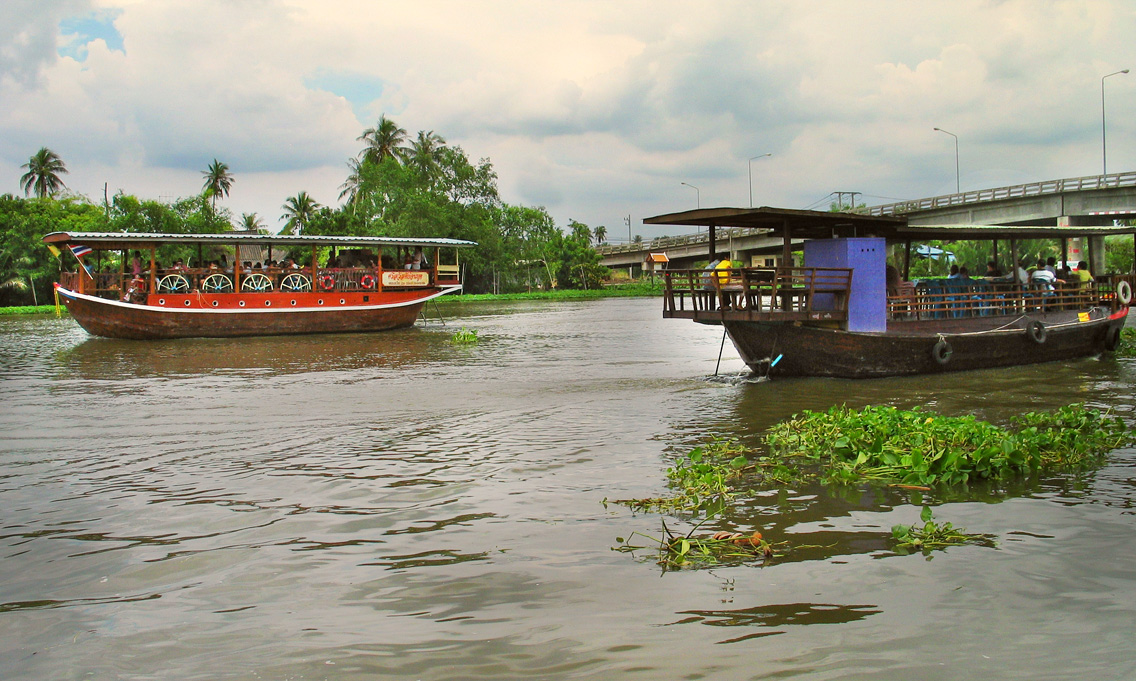
Wat Lam Phaya Floating Market sits within Wat Lam Phaya on the Tha Chin (Nakhon Chai Si) River in Bang Len District, Nakhon Pathom. It's open only on Saturdays, Sundays, and public holidays, from morning until afternoon. Its main draw is being only about an hour and a half from Bangkok, making it a popular day-trip destination for city dwellers who want to drive out, walk the market, eat, and make merit on a day off. The market is split into a roadside fresh-produce zone, where locals sell inexpensive vegetables and fruit, and a section of floating restaurant rafts extending over the water, offering both savory and sweet dishes and Thai sweets to choose from. Most prices run from a few dozen baht to just over a hundred, so you can graze all day. Reviewers frequently mention duck noodle soup, seasonal fruit, and traditional Thai sweets as favorites here.
Another activity most visitors don't skip is taking a motorized boat ride along the Tha Chin River to pay respects at riverside temples — some routes stop at several nearby temples in a single trip. Boats depart on a schedule from late morning to afternoon, fares are inexpensive, and you can bring food bought at the market to eat onboard while taking in the views on both banks. Overall, this is a market mostly visited by Thai locals, with far fewer foreign tourists than famous floating markets like Damnoen Saduak or Amphawa, so it retains the feel of a genuine community market rather than one staged for tourists. Many reviewers say they like that it doesn't feel too chaotic and offers a genuine glimpse of local riverside life.
A few things worth bracing for based on real reviews. The market is only open on Saturdays, Sundays, and holidays — visit on a weekday and you'll find it quiet with almost nothing open. Many vendors also start packing up from around 3 PM. Anyone wanting the full range of stalls open should arrive in the morning through midday. It gets fairly hot around midday since it's an open-air riverside market, so bring a hat and water. Some reviews warn about inflated boat-ride prices being quoted to visitors who don't know the going rate, so confirm the per-person price and route clearly before boarding. As for the food overall, it's fairly standard market fare — some reviewers find the flavors average rather than exceptional compared to other markets — but as a place to stroll, eat, and make merit close to Bangkok on a day off, it's still considered worth the trip.
- About 1.5 hours from Bangkok with free entry, making it a great day trip for eating and making merit on a day off
- Plenty of affordable food, mostly a few dozen to just over a hundred baht, with savory dishes, sweets, and local fruit
- Inexpensive motorized boat rides past riverside temples on the Tha Chin River, where you can bring food to eat onboard while taking in views of both banks
- Mostly visited by Thai locals with few foreign tourists, retaining a genuine community riverside-market atmosphere
- Open only on Saturdays, Sundays, and holidays — quiet with almost nothing open on weekdays, and many stalls pack up from around 3 PM
- As an open-air riverside market, midday gets hot, so bring a hat and water
- Some reviews warn of inflated boat-ride prices quoted to those who don't know the rate, and the food overall is fairly average compared to other markets
Phutthamonthon + pay respects to Phra Sri Sakayamuni (the large walking-posture Buddha image), Salaya

Phutthamonthon is a vast Buddhist park spanning more than 2,500 rai in Salaya Subdistrict, Phutthamonthon District, Nakhon Pathom, built to commemorate the 2,500th anniversary of the Buddhist era in 1957. Its centerpiece is Phra Sri Sakayamuni, the presiding Buddha image of Phutthamonthon, a bronze-cast walking-posture Buddha standing roughly 15.875 meters tall, designed by Professor Silpa Bhirasri. What people remember most is the walking stance and the flowing robes that seem to ripple as if caught in the wind, quite different from the seated Buddha images found elsewhere. Around the image is a wide plaza and gardens shaded by large trees, with ponds, pavilions, and long walking paths. The atmosphere is calm and quiet, free of tall buildings, making it a peaceful retreat for anyone wanting to escape the city bustle to get some fresh air and pay respects.
The appeal here for most visitors goes beyond worship — it's a huge green space open free from morning to evening. Many people come to walk or cycle for exercise in the early morning or evening when the air is cool and shade is plentiful. Bicycle rentals are available at reasonable prices for anyone who didn't bring their own. The paths inside are smooth and wide, ideal for a leisurely ride, letting kids run around, or spreading a mat under a tree to relax. Inside the grounds are also gardens of plants from Buddhist history, stupas, and meditation spots scattered throughout. Phutthamonthon is close to Mahidol University Salaya, easily reached from western Bangkok via either Borommaratchachonnani Road or Phutthamonthon Sai 4 Road, making it a favorite weekend retreat for people from Bangkok and surrounding areas.
A few practical things to know before you go. First, the grounds are very large with uneven shade, and the midday sun gets strong and hot — walking from the parking area to the Buddha image or between zones covers a fair distance, so come in the morning or evening and bring a hat and water. Second, this is a religious site, so dress modestly, especially when approaching the image to pay respects, and stay quiet and respectful since people come here to meditate. Third, public transport doesn't reach easily; most visitors need a private car or a songthaew/taxi from Salaya. Fourth, during important Buddhist holidays like Visakha Bucha or Makha Bucha, crowds swell noticeably for the large candlelight processions — avoid those days if you want a peaceful visit and come on a regular weekday instead.
- Phra Sri Sakayamuni, the large walking-posture Buddha image, is a magnificent sight with flowing robes, designed by Professor Silpa Bhirasri, making it an instantly recognizable spot for worship and photos
- A vast green space of more than 2,500 rai, shaded and peaceful, with free entry — great for walking, relaxing, and bringing kids and family on a day off
- Comfortable walking and cycling for exercise, with smooth, wide paths and reasonably priced bicycle rentals
- Close to Mahidol University Salaya, easily reached from western Bangkok via Borommaratchachonnani Road or Phutthamonthon Sai 4 Road · real reviews on Wongnai average around 4.3 out of 5
- The grounds are very large with uneven shade, and the midday sun gets strong and hot, requiring long walks between zones — best to come in the morning or evening with a hat and water
- Public transport doesn't reach easily; most visitors need a private car or a songthaew/taxi from Salaya
- During important Buddhist holidays (Visakha Bucha/Makha Bucha), crowds swell noticeably for the large candlelight processions
Sampran Riverside + Sukjai Market (a riverside cultural park on the Tha Chin River · Thai craft workshops + organic market)

Sampran Riverside is a cultural park on the Tha Chin River in Sam Phran District, about 30 kilometers from Bangkok — roughly an hour's drive — making it a popular day-trip destination for city dwellers wanting to escape into greenery and Thai traditional life without traveling far. The grounds feature a wide riverside garden with Thai-style houses, restaurants, an organic café, and organic farm plots to explore. What people talk about most is the hands-on Thai craft activities, including pottery, garland making, fruit carving, and making herbal perfumes and soap, each with an instructor guiding the process — great for kids who get to make something themselves, and adults who want a handmade souvenir to take home. In the afternoon, there's a folk cultural performance featuring Thai dance, martial arts, and traditional games staged inside a Thai-style pavilion.
A separate section that draws its own dedicated visitors is Sukjai Market, an organic farmers' market that brings together growers from a network around the park to sell vegetables, fruit, freshly prepared food, and processed goods that meet organic certification standards. One key thing to know when planning is that Sukjai Market is open only on Saturdays and Sundays, from 10:00 AM to 5:00 PM — if you specifically want to browse the market, plan your visit for a weekend. Costs are flexible depending on what you choose to do: park entry is only a few dozen baht, a separate combo ticket covers the full cultural show, and workshops are charged per activity, while browsing Sukjai Market itself is free. Booking packages or checking activity and show schedules in advance helps you plan your day more smoothly, since each activity runs on a set time slot.
A few honest observations from real reviews worth keeping in mind. The overall rating on travel platforms sits in the middle range rather than sky-high. Many reviewers praise the charming, educational garden and activities, but some note that service can feel inconsistent at times, food prices inside the park run higher than outside, and when tour groups arrive en masse, it can get crowded and noisy. Some show times cater mainly to foreign tour groups, so if you're visiting independently, check the schedule to make sure you don't miss a performance. Another common point of confusion is that Sampran Riverside is a completely different place from Samphran Crocodile Farm — double-check your map pin before heading out. Mornings, before the heat sets in, are best for walking the gardens and doing outdoor activities; bring a hat and water for comfort, and if you're bringing small kids, booking a kid-friendly workshop in advance helps keep the whole day engaging.
- About 30 km from Bangkok, roughly an hour's drive, ideal for a day trip without traveling far
- Several hands-on Thai craft activities including pottery, garland making, fruit carving, and perfume making — fun for kids, who get to take something home
- A green riverside garden on the Tha Chin River with a relaxing atmosphere, Thai-style houses, an organic café, and an afternoon cultural performance
- Sukjai Market brings together organic produce from a network of local farmers, letting you browse fresh and processed goods with no entry fee
- Sukjai Market is open only on Saturdays and Sundays — visit on a weekday and you'll miss the market entirely
- Some reviews note inconsistent service at times, and food prices inside the park run higher than outside
- Crowds and noise pick up when tour groups arrive en masse, and visitors often confuse this with Samphran Crocodile Farm, which is a completely different place
Wat Bang Phra (Luang Phor Pern) — a temple famous for sacred tattoo (Sak Yant) tradition and its annual master-worship ceremony, Nakhon Chai Si

Wat Bang Phra sits on the Tha Chin River in Nakhon Chai Si District, Nakhon Pathom, an old temple with a history dating back to the late Ayutthaya period. Thais across the country know it as the home of the Sak Yant sacred tattoo tradition, especially through the legacy of Luang Phor Pern Thitakhuno, a former abbot who inherited the art of sacred tattooing and incantations from earlier masters, becoming revered by devotees both Thai and foreign. Although Luang Phor Pern has since passed away, the temple continues the sacred tattoo tradition, and people still travel here to pray, make merit, and ask for blessings. The overall atmosphere is a fairly peaceful riverside temple with halls and a main worship hall for paying respects, plus a statue of Luang Phor Pern for veneration — a good fit for anyone interested in traditional Thai spiritual culture.
What sets Wat Bang Phra apart from a typical temple is its annual master-worship ceremony, usually held in early March, when devotees of the Sak Yant tradition travel in from all directions to honor their teachers and masters. In some years the ceremony has drawn attention from both Thai and international media for moments when participants enter a trance-like state as part of the ritual. On regular days, visitors can tour the temple, pray, and choose sacred amulets to venerate as they wish. Anyone wanting an actual Sak Yant tattoo should research the temple's rules and available times in advance, since the tattooing here is a matter of ritual and belief rather than a commercial tattoo service, and the fee to the master follows the temple's own customs and schedule.
In terms of getting there, Wat Bang Phra is about thirty minutes by car from central Nakhon Pathom and not far from Phra Pathom Chedi and the floating markets in the Nakhon Chai Si area, so it combines easily into a half-day or full-day Nakhon Pathom trip. One thing to prepare for is dress code, since this is a sacred site that still hosts active rituals — dress modestly, cover your shoulders and knees, and remain respectful while inside the temple grounds. On holidays and important dates for believers, crowds increase and parking gets fairly tight, so come on a weekday morning if you want a peaceful atmosphere. Anyone planning to attend the master-worship ceremony should allow extra time and be prepared for large crowds on the day of the event.
- An old riverside temple on the Tha Chin River and the original home of Sak Yant sacred tattooing, nationally famous through Luang Phor Pern
- Free entry to tour and pray, with merit-making and sacred amulet offerings by donation — a great fit for those interested in spiritual culture and belief
- The annual master-worship ceremony in early March is a uniquely distinctive ritual that draws devotees and media from both Thailand and abroad
- Along the same route as Phra Pathom Chedi and the Nakhon Chai Si floating markets, making it easy to combine into a half-day or full-day trip
- Crowds and tight parking during holidays and important dates for believers require extra time and patience
- Sak Yant tattooing is a ritual based on belief, not a general tattoo service — anyone interested must research the temple's rules and schedule in advance
- Requires modest dress and respectful conduct throughout the temple grounds, not a fit for those looking for a purely entertainment-focused destination
Where to stay in Nakhon Pathom?
Choose a hotel in Nakhon Pathom city near Phra Pathom Chedi, or stay in the Salaya-Phutthamonthon area. Compare prices across 3 sites before booking
Search hotels on AgodaBook Activities & Tickets in Advance
A Nakhon Pathom trip works well as a day trip from Bangkok — booking a car or package in advance makes it more convenient
💡 Know Before You Go to Nakhon Pathom
Phra Pathom Chedi is an important religious site, so dress modestly. Around the chedi there's a market and food stalls to explore afterward, and the evening is pleasant weather-wise
Don Wai Floating Market and Wat Lam Phaya Floating Market get busy from late morning to afternoon on holidays, known for their food — allow extra time for parking when it's crowded
Sanam Chandra Palace has wide, shaded gardens to walk or cycle through — check the opening hours of the residence/museum section before you go
Nakhon Pathom borders western Bangkok, easy to reach by car, van, or train — a comfortable day trip
How to Plan a Worthwhile Nakhon Pathom Trip
A classic one-day itinerary: pay respects at Phra Pathom Chedi in the morning and walk the market around the chedi, stop by Sanam Chandra Palace mid-morning, have lunch with great food at Don Wai Floating Market or Wat Rai Khing, then spend the afternoon at the Human Imagery Museum or Jesada Technik Museum — covering temples, culture, food, and fun museums all in one trip
Ready to visit Nakhon Pathom? Start by picking a hotel in the city first
See Nakhon Pathom hotels →