📝 Written 1 Jul 2026 · ✅ Fact-checked 3 Jul 2026 · prices and schedules can change — check with the operator before booking
Pai sits about 3 hours from Chiang Mai on a road with 762 curves. The appeal is the town's easygoing small-town feel, ringed by mountains and rice fields — you can lean into nature, cafes, or light adventure, and the air stays pleasantly cool nearly all year, especially in the cool season when a sea of mist rolls in.
The activities we've picked below are the ones reviewers mention most. We've summarized who each one suits, what stands out, and what to know before you go — drawing on real reviews from both the people who loved it and the people who flagged concerns. (We've left elephant activities off this list, since sanctuaries in Pai still raise animal-welfare concerns.)
Pai one-day city tour: Pai Historical Bridge + Wat Phra That Mae Yen (Big White Buddha) + Pai Canyon + Santichon Village

The Pai one-day city tour is a shortcut for anyone with limited time in Pai who still wants to hit the main landmarks in a single trip. The standard itinerary usually covers the four best-known stops. It starts at the Pai Historical Bridge, an old steel bridge from the World War II era with signboards telling its history and photo spots along the Pai River. Next is Wat Phra That Mae Yen, home to a large white Buddha statue on a hillside — climb the stairs up and you get a wide view over Pai town and its rice fields. Then comes Pai Canyon, a narrow ridge of orange earth cliffs where you can walk along the ridgeline taking in the view, before finishing at Santichon Village, a Yunnan Chinese community with Chinese-style photo corners, tea shops, and local snacks.
The advantage of going as a tour is not having to drive the winding mountain roads yourself, which many people find unfamiliar. The transfer vehicle loops around picking up guests in town and sequences the stops so they flow smoothly. This is especially convenient if you're only in Pai for a day or don't have your own vehicle, since the sights are scattered in different directions — going independently means renting a motorbike or car and planning the route yourself. A group tour also helps cut costs when split among several people, and some operators include a guide who shares the history of the bridge and temple along the way, so you come away understanding the story behind each stop rather than just snapping photos and moving on. It's worth checking exactly which stops are included before booking, since some tours add Mo Paeng Waterfall or the Pai walking market as well.
Here's what to expect honestly before you go. The road up to Pai from Chiang Mai has around 762 curves, so if you get carsick easily, bring motion-sickness medicine and eat lightly before setting off. The city tour itself is a multi-stop, quick-photo format, so you don't get much time at any single spot — if you like to linger and soak in the atmosphere, it may feel rushed. Midday sun is strong and hot, especially at Pai Canyon where there's almost no shade, so bring a hat, sunglasses, and water. Walking the narrow ridges takes care, since the cliff edges are steep and the soil is loose. Sunset time at Pai Canyon and Wat Phra That Mae Yen also gets more crowded than usual, so arrive a bit early if you want a good photo spot.
- Covers Pai's main landmarks in a single day — the historical bridge, Wat Phra That Mae Yen, Pai Canyon, and Santichon Village
- Includes an in-town transfer, so you don't have to drive the winding mountain roads yourself — great if you don't have your own vehicle
- Sunset views at Pai Canyon and town views from the Big Buddha make for great photos
- Splitting transport costs in a group tour saves money, and some operators include a guide who shares the local history
- The road up to Pai has around 762 curves, so those who get carsick easily may feel uncomfortable the whole way
- It's a quick multi-stop photo tour, so you don't get much time at any single site — those who like to soak in the atmosphere may feel rushed
- Midday sun is strong and hot, especially at Pai Canyon where there's no shade, and some spots get crowded at sunset
Pai Canyon (Kong Lan) sunset tour with transfer from Pai town

Pai Canyon, known locally as Kong Lan, is a stretch of red-earth ridges carved by water and wind into deep gullies alternating with narrow ridgelines, sitting above a valley about eight kilometres south of Pai town. The time most people deliberately come is late afternoon before sunset — a short climb up steps from the car park to the viewpoint above rewards you with golden light gradually washing over the surrounding valley and forest. Many people choose to book an evening tour with transfer from town, since you travel as a group, get delivered in time for the good light, and don't have to ride a motorbike or drive back into town yourself once it's dark — a route that's winding and pitch-black in places.
The viewpoint itself is free with no admission fee; what you're paying for in a tour is the transfer and the guide or driver who manages the timing. Most tours arrive around an hour before sunset, giving time to explore the ridges, find a spot to sit, and take photos before the light fades. The ridgetop has several paths branching off along the gullies — some wide enough to walk comfortably, others narrowing to about half a metre wide with steep drops on both sides. Anyone who doesn't want to take the risk can simply sit near the main viewpoint, which is safer and still offers a full view of the sunset, making the spot suitable for both explorers and people who just want to relax in the cool breeze.
Here's what to know honestly before you go. Real reviews on Tripadvisor give Pai Canyon an average score of around 4.3 out of 5 from over 2,200 reviewers. Most praise the sunset views, but consistently flag a few things. First, many stretches of the ridge are narrow, with loose, slippery soil and no railings at all, with steep drops on both sides — walk carefully and wear shoes with good grip; it's not suited to anyone afraid of heights, young children, or anyone unsteady on their feet. Second, it gets very crowded at sunset, making a quiet spot hard to find, especially in high season. Third, there's almost no shade up top, so it's still hot and sunny before the sun goes down — bring water, a hat, and sunscreen, and bring a flashlight or use your phone light for walking down after dark.
- Sunset views over a wide valley — many reviews rate it one of the best sunset spots in Pai
- The viewpoint is free to enter; it's just a short walk up from the car park to the main viewpoint
- Paths to suit both ridge-walking explorers and people who'd rather sit and enjoy the breeze at the viewpoint
- Booking an evening tour with transfer gets you there in time for the good light and saves you driving back on the winding road after dark
- Many stretches of the ridge are narrow with loose, slippery soil, no railings, and steep drops on both sides — take great care; not suited to those afraid of heights or young children
- It gets very crowded at sunset, making a quiet spot hard to find, especially in high season
- Almost no shade up top — it's still hot and sunny before sunset, so bring water, a hat, sunscreen, and a flashlight for the walk down after dark
Tha Pai Hot Springs + mineral hot spring soak (Tha Pai Hot Springs / Sai Ngam mineral pools)

Tha Pai Hot Springs, often lumped together with the nearby Sai Ngam Hot Spring, is a natural mineral spring inside the Huai Nam Dang National Park area, about eight to ten kilometres from Pai town. It's a popular rest stop for people riding motorbikes or driving around Pai who want somewhere to soak away sore muscles. The hot spring bubbles up from underground into a small stream that winds through teak forest and tall trees, giving it a very different feel from soaking in an enclosed in-town spa. Many people love being able to dip their feet or soak while listening to the water and looking at the trees around them. The source itself is hot enough to boil eggs, so visitors often buy eggs to drop in as a fun side activity alongside soaking.
The area splits into two main sections: the scalding-hot source, which is fenced off for viewing and egg-boiling only, and the soaking pools further down, where the hot water mixes with cooler water until it's comfortable to get into. Some stretches have concrete pools and natural pools at different temperature levels to suit however much heat you can handle. People who like it warm and comfortable tend to look for the spot where the two streams meet, while those who want it properly hot move closer to the source. The mineral water here is known for easing muscle tension, making it a good stop after a day of hiking, cycling, or riding around Pai's viewpoints. Admission is a national park fee, with Thai and foreign visitors charged at different rates according to regulations.
Here's what to know honestly before you go. First, there's a national park admission fee, and foreign visitors pay considerably more than Thai visitors, with parking usually charged separately. Second, the water at the source is genuinely too hot to get into — you can only soak in the mixed pools once the temperature has cooled. On days with heavy rain or high water, the pools can turn cloudy or close temporarily for safety. Third, weekends and high season get fairly busy, and the pools at a comfortable temperature are limited, so you may have to wait or share the space with others. Facilities like changing rooms and toilets are basic, not spa-level, so bring your own towel, a change of clothes you don't mind getting wet, and shoes that grip slippery ground, for a more comfortable visit.
- Natural mineral water flowing as a forest stream through teak trees, a very different feel from an enclosed in-town spa — soak while listening to the water and looking at the trees
- Only about 8–10 km from Pai town, an easy stop to ease sore muscles after a day of riding or hiking around Pai
- Both a scalding-hot source for boiling eggs and mixed pools cooled to a comfortable soaking temperature, so you can choose the heat level you can handle
- The mineral water helps relax muscles, making it a great follow-up to hiking, cycling, or riding around Pai's viewpoints
- There's a national park admission fee, and foreign visitors pay considerably more than Thai visitors, usually with a separate parking fee
- The source itself is too hot to soak in — you can only use the cooled, mixed pools, and spots at a comfortable temperature are limited
- Weekends and high season get crowded, so you may have to wait or share a pool, and changing rooms and toilets are basic
Santichon Yunnan Village + Yun Lai Viewpoint for the morning sea of mist, Pai

Santichon Village and Yun Lai Viewpoint are a pair that most visitors to Pai combine into a single morning, since they sit along the same route about five to six kilometres west of town. Santichon is a community of Yunnan Chinese who settled here and turned the area into a cultural village open for walking tours, with mud-brick Yunnan-style houses, Chinese-style gateways, a fish pond, and tea shops and Yunnan restaurants serving dishes like pork leg with mantou and oolong tea to try. Yun Lai Viewpoint sits higher up the mountain road above the village — a wide platform looking straight down over the Pai valley, and on clear mornings you'll see a sea of mist blanketing the valley at sunrise, a sight many people deliberately wake before dawn to drive up and wait for.
Real reviews on Tripadvisor give Yun Lai Viewpoint an average score of around 4.2 out of 5 from a few hundred reviews. The consistent verdict is that the morning valley views are beautiful and well worth the roughly twenty-baht entry fee, with photo spots, flower arches, and a warm tea shop to sit in while waiting for the morning light. Many say that on a clear day with mist, the photos are truly memorable. Santichon Village gets more mixed reviews — some love walking around the Yunnan architecture, renting Chinese costumes for photos, and trying the affordable food and tea, making it a good fit for families or anyone with only a short stop to spare, since it sits right along the way up to Yun Lai and requires no detour.
Here's what to know honestly before you go. First, Santichon Village is fairly clearly built for tourism — some reviews feel the atmosphere is staged and geared toward photos and sales, with activities like costume rental and the wooden Ferris wheel charged item by item. Anyone hoping for an authentic working village may be disappointed, and outside high season the village is fairly quiet with many shops closed. Second, Yun Lai is at its best just before dawn, so you'll need to get up early and it's cold on the mountain — bring warm clothing. Third, the sea of mist depends on weather conditions; on overcast days or during the dry-season haze from forest fires, you may not see mist or the view may be unclear, so check the forecast beforehand. Finally, the road up to the viewpoint is fairly steep, so take care on a small motorbike or underpowered car, and the viewpoint admission fee is charged separately from transport.
- Combine Yun Lai before dawn with Santichon Village in one morning, since they sit along the same route only 5–6 km from Pai town
- Morning valley views from Yun Lai are beautiful and worth the roughly 20-baht entry fee, with photo arches and a warm tea shop to wait in for the morning light, as many reviews note
- Santichon Village lets you walk around Yunnan Chinese architecture, rent Chinese costumes for photos, and try Yunnan food like pork leg with mantou and tea at affordable prices
- Good for families or anyone with only a short stop — village entry is free, and you pay only for the activities you choose
- Santichon Village is fairly built for tourism — some reviews feel it's staged and geared toward photos and sales, with activities like costume rental charged item by item; outside high season it's quiet with many shops closed
- Yun Lai is at its best just before dawn, requiring an early wake-up in the cold mountain air, and the sea of mist depends on weather — overcast days or forest-fire haze may mean no mist
- The road up to the viewpoint is fairly steep — take care on a small motorbike or underpowered car — and viewpoint admission is charged separately from transport
Pai River white-water rafting & tubing

The Pai River is the main waterway running through Pai town, flowing through the green valleys and forests of Mae Hong Son. Two water activities are popular here, chosen by preference and by season. The first is white-water rafting, tackling the current and periodic rapids in an inflatable raft; the other is tubing, floating leisurely downstream, taking in the views on both banks and cooling off in the water. Rafting trips range from a half-day near Pai to a two-day course running from Pai toward Chiang Mai, covering about sixty-five kilometres, passing several rapids and camping overnight by the river. Most put-in points are in or near Pai town, just a few minutes' walk from Pai Walking Street, making it easy to fit this activity into a Pai itinerary.
Real reviews on Tripadvisor give Thai Adventure Rafting, one of Pai's longest-running rafting operators, an average score of around 4.7 out of 5 from over 140 reviews. Reviewers consistently praise friendly, knowledgeable guides who point out wildlife and plants along the way. Many also compliment the meals provided on the trip as tasty and well-prepared, and note that safety management and communication with the trip organizer went smoothly. A highlight many mention is that the trip mixes exciting rapid sections with calmer stretches where you can soak in the forest atmosphere on both banks — a good fit for anyone after a genuine nature experience rather than just splashing around. Tubing is the lighter, cheaper option, better suited to those who want to relax rather than push for thrills.
Here's what to know honestly before booking. The intensity of the rapids depends heavily on the season. During the rainy season, roughly July to October, the water is strongest and the rapids most exciting — more fun, but riskier, so choose an operator that takes safety seriously. In the dry season, water is low and the rapids ease off to the point where it's more of a gentle tube float than real rafting; some reviews from around January mention water being too low to enjoy fully. The activity requires physical effort and being wet the whole time; the Pai River water is fairly cold, especially in the morning and cool season, and the sun by the river is strong — many reviewers mention sunburned arms and knees from the trip. Use waterproof sunscreen, wear a thin long-sleeve shirt, and bring a change of clothes and a waterproof bag for valuables. Importantly, safety standards vary between operators, so check reviews and choose one with proper equipment and a solid reputation — don't choose based on price alone.
- Choose by preference and season — tackle strong rapids in the rainy season, or float a chill inner-tube trip in the dry season
- Real reviews praise friendly, knowledgeable guides who point out wildlife and plants along the way
- The trip mixes exciting rapids with calm stretches where you can soak in the forest atmosphere on both banks of the Pai River
- Most put-in points are in or near Pai town, making it easy to fit into a Pai itinerary
- Intensity depends on season — rainy season rapids are strong and riskier, requiring a safety-focused operator, while dry season water is low and rapids ease off into more of a gentle float (some January reviews mention low water limiting the fun)
- Requires effort and being wet throughout; Pai River water is fairly cold especially in morning and cool season, and strong sun by the river left many reviewers sunburned on arms and knees
- Safety standards vary between operators — check reviews and equipment, and don't choose based on price alone
Tham Lod Cave tour, Pang Mapha (guided lantern cave walk + bamboo raft + swallow and bat colonies at dusk)

Tham Lod Cave, also known locally as Tham Nam Lod, sits in Pang Mapha District, Mae Hong Son, near Soppong. It's a huge limestone cave with an underground river flowing straight through the mountain and out the other side. What sets it apart from most caves is how you visit it — you can't explore on your own; you must hire a local guide who carries an oil lantern and leads you in, one small group at a time, with a maximum of three visitors per guide. Inside, the cave splits into several connected large chambers, with towering limestone columns, stalactites and stalagmites, and one chamber holding centuries- to millennia-old wooden coffins. You walk along built wooden walkways, alternating with sections where you ride a small bamboo raft, paddled by a boatman, through the water from one chamber to the next — a stretch many say is the most memorable part, sitting quietly watching clear water, fish swimming beneath the raft, and the cave ceiling overhead.
Real reviews on Tripadvisor give Tham Lod Cave an average score of around 4.4 out of 5 from over 374 reviews, and it's rated among the top things to do in the Soppong area. Reviewers consistently mention the cave being far larger than expected, stalactites and stalagmites in full view, and the bamboo raft section leaving a lasting impression on many. Another highlight people specifically wait for is dusk, roughly 5 to 6pm, when tens of thousands of swallows fly back into the cave crossing paths with bats flying out to feed — a huge swirl of birds and bats circling above the cave mouth for a stretch of time. People planning a Pai itinerary often pair Tham Lod with a stop along the way, like a hot spring or hill-tribe village, then close out the day at the cave in the evening to catch the bird and bat show before driving back.
Here's what to know honestly before you go. First, distance: the cave is about one to one and a half hours from Pai on a winding, occasionally steep mountain road — those prone to motion sickness should bring medicine, and you should allow for a long round trip. Second, cost always includes hiring a local guide with a lantern, a mandatory fee; the price depends on how many chambers you choose to walk, so the more chambers, the more you pay, and the bamboo raft fee is charged separately per person — when the stream runs high, the raft becomes essential, adding to the cost. Third, it's dark inside with limited lantern light, and some walkways are wooden steps and uneven rock that can be slippery — many reviews recommend bringing your own flashlight or headlamp for safety. Elderly visitors, young children, or anyone who struggles with stairs should think carefully, and the deeper chambers carry a fairly strong smell of bat guano. Most local guides also speak little English, so it suits admiring the cave's beauty more than following in-depth explanations.
- A very large limestone cave with several connected chambers, stone columns, stalactites and stalagmites, and ancient wooden coffins — real reviews say it's bigger than expected
- The bamboo raft ride through the underground river has great atmosphere, with fish visible beneath the raft and the cave ceiling overhead — many call it the most memorable part
- At dusk you can watch tens of thousands of swallows fly back into the cave crossing paths with bats flying out, a highlight many people wait specifically to see
- Easy to pair with stops along the way from Pai, like a hot spring or hill-tribe village, making a complete one-day trip from Pai
- About 1–1.5 hrs from Pai on a winding, occasionally steep mountain road — allow extra travel time and bring motion-sickness medicine
- You must always hire a local guide with a lantern (a mandatory fee); price depends on the number of chambers, and the bamboo raft fee is charged separately, rising when the water is high
- Dark inside with limited lantern light; rock paths and wooden steps can be slippery — bring your own flashlight; deeper chambers have a strong bat-guano smell, and guides speak little English
Pai waterfall tour: Mo Paeng Waterfall + Pang Dao Waterfall (nature tour with a stop at Mo Paeng's natural rock slide)

Mo Paeng is a multi-tiered waterfall in Pai District known for letting visitors slide down its rock surface like a natural water slide. Rather than being steep, it's a wide, sloped rock shelf worn smooth by the flowing water, and many people sit and let themselves slide down the current, ending up in the pool below where you can soak or swim. The surroundings are lush green forest, cooler than in town, making it a good spot for anyone wanting a break from Pai's cafes and night markets in favour of a half-day of outdoor swimming. It's about eight to ten kilometres from Pai town, roughly fifteen to twenty minutes by car or motorbike.
The usual way to visit is a half-day nature tour from town that includes transfer and a guide, stopping at Mo Paeng along with nearby sights on the same route, such as a bamboo bridge, a viewpoint, or another small waterfall in the area. Anyone who doesn't want to drive the winding mountain roads themselves will find this convenient, since you don't need to worry about the route or parking. Those renting a motorbike can drive there themselves, but should take care on the final stretch, which narrows and has an uneven surface. Booking through an online platform makes it easier to compare exactly what's included in the price, and the roughly hundred-baht waterfall admission is usually charged separately from the tour fee — worth confirming clearly before booking.
Here's what to expect honestly before you go. In the dry season, roughly February to April, water is often low or nearly dry, limiting how well the rock slide works and leaving the pool shallow. The best time for strong water and full slide fun is the rainy season and just after, roughly July to November. The slippery rock surface is a double-edged sword — it's what makes sliding possible, but it also means easy slips onto knees or backside. Many reviews warn that the rock can hurt when you slip hard, so wear shoes with good grip and test carefully before committing. Facilities in the area remain basic, with limited toilets and changing rooms, occasionally damaged bridges or walkways, and a narrow, rough final stretch of road — allow extra travel time and bring your own personal items.
- Slide down the natural rock waterfall — an experience many reviews call fun for adventure lovers
- A multi-tiered waterfall with a pool to soak and swim in, surrounded by green forest that's cooler than in town
- Only 8–10 km from Pai town, about 15–20 minutes away, and easy to combine with nearby stops like a bamboo bridge or viewpoint in one trip
- Half-day tours with transfer and guide included are available, good for anyone who doesn't want to drive the winding mountain roads themselves
- In the dry season, roughly February to April, water is often low or nearly dry, limiting the rock-slide experience — best visited in or after the rainy season
- The rock surface is very slippery — many reviews warn of slips and hard falls, so take care and wear grippy shoes
- Facilities remain basic, with limited toilets and changing rooms, occasionally damaged walkways, and a narrow, rough final stretch of road
Pai Walking Street food walk at night (street food, craft stalls, and live music)

Pai Walking Street is the heart of the town after dark. As the sun sets and the air cools, vendors start setting up stalls along Chai Songkhram Road and the surrounding lanes in the town centre, turning it into a relaxed food-and-shopping walk where locals and travellers from all over the world mix easily. The highlight is the wide variety of street food, from grilled pork skewers, Isan sausage, and omelette pancakes to roti and crepes, alongside Western options like burgers and falafel that reflect the international crowd who pass through town. Prices per skewer or plate start in the tens of baht, so you can graze from one stall to the next rather than sitting down for one big meal — think of it as a food walk for dinner rather than a single restaurant.
Beyond the food, the other half of the charm is handmade crafts — jewellery, tie-dye clothes, cloth bags, hand-drawn postcards, and small artworks made by the vendors themselves. Several corners have buskers playing live, from acoustic guitar to small bands, keeping the atmosphere lively without feeling overwhelming. Pai Walking Street is free to walk with no entry fee, making it an any-budget evening activity — whether you come to walk off dinner, pick up souvenirs, or just sit listening to music with a drink. It gets busiest from around 6pm onward, and especially lively during the late-rainy-to-early-cool-season tourist peak.
Here's what to expect honestly before you go. Pai Walking Street has a clear seasonal rhythm — during high season, roughly November to February, it can get so crowded some evenings that walking is difficult, while in low season and the rainy season the market quiets down, with some stalls not opening, and rain can shut it down early. The street itself isn't especially long or large — one loop doesn't take long, so anyone expecting a big-city-style night market may find it smaller and shorter than expected. Some prices are set with tourists in mind, particularly for food and souvenirs along the main stretch, so it's worth comparing a few stalls before buying, and carry small cash since many stalls don't accept transfers or cards.
- Free to walk with no entry fee; street food starts in the tens of baht, making it an any-budget evening activity
- A wide variety of food, both Thai street classics and Western dishes, perfect for a grazing food walk
- Handmade crafts and live buskers keep the atmosphere lively without feeling overwhelming
- Right in the centre of town, easy to reach on foot from in-town accommodation without travelling far
- High season (Nov–Feb) gets so crowded some evenings that walking is difficult, while low season and the rainy season leave it quiet with some stalls closed
- The street isn't especially long or large — one loop doesn't take long, so anyone expecting a large night market may be surprised
- Some food and souvenirs are priced for tourists — worth comparing prices first, and many stalls take cash only
Self-drive cafe and photo-spot tour around Pai (Coffee in Love mountain viewpoint · Pai Land Split · Kob Kab bamboo bridge · flower fields)
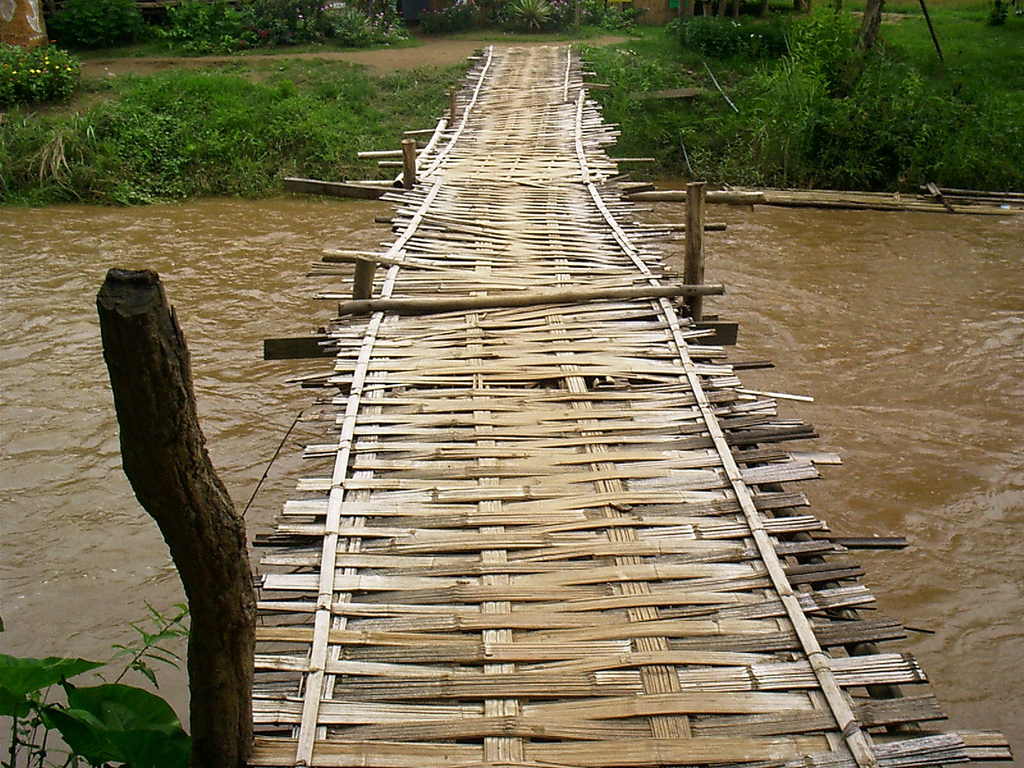
Part of Pai's charm is riding a motorbike or driving yourself along the roads that hug the foothills, stopping at photo spots and cafes scattered around town. A popular route often starts at Coffee in Love, a cafe with a viewpoint and photo corner looking out over mountains and rice fields, followed by the Land Split — a crack in the earth that the landowner has turned into a rest stop, serving snacks and drinks made from produce grown on the land. From there, walk the Kob Kab bamboo bridge stretching across green rice fields, and finish at seasonal flower fields. The whole loop can be strung together over half a day to a full day, with plenty of time to sit and enjoy coffee with a view between stops.
One thing to understand upfront: this isn't a guided package tour but a self-drive trip combining mostly free photo spots with cafes. Most spots are free or charge a small entry fee, while the Land Split runs on a donation system in exchange for the snacks and drinks they bring out. The real cost is in renting a motorbike or car, fuel, and coffee and food at the cafes you stop at. This style of touring is highly flexible — linger as long as you like at any cafe, or skip any stop entirely — making it a good fit for anyone who prefers planning their own route, taking lots of photos, and not being rushed along a tour schedule.
Here's what to keep in mind honestly before setting out. First, the stops are spread several kilometres apart, so without a motorbike or car of your own, getting around is difficult; some stretches of road wind up and down through the mountains, so anyone not confident riding or unfamiliar with mountain roads should think carefully and drive with care. Second, many spots are corners specifically staged for social-media photos — signs, swings, or mock cliff-edge corners — and some visitors arrive to find the real thing smaller than in photos, or a long queue for photos. Third, the flower fields depend on the season; Mexican sunflowers and cool-season blooms only look their best in the late rainy to early cool season, so visiting at the wrong time may mean just an empty field. Finally, during the cool-season high season Pai gets very crowded, and both cafes and popular photo spots fill up with limited parking — head out early and avoid long holiday weekends if you want a calmer experience.
- Fully flexible — set your own route and pace, linger at any cafe or skip any stop, with no tour schedule rushing you
- Most photo spots are free or low-cost, so the main expense is vehicle rental, fuel, and coffee — an affordable way to explore
- Mountain views, rice fields, a bamboo bridge, and great cafes all in one trip, a good fit for photo lovers and chill travellers alike
- Riding a motorbike along the foothill roads yourself is an experience that captures Pai's atmosphere better than sitting on a tour bus
- Stops are spread several kilometres apart, requiring a motorbike or car of your own, with some winding mountain stretches that need careful driving
- Many spots are corners specifically staged for social-media photos — some visitors find the real thing smaller than in photos or face a long queue for photos
- Flower fields depend on the season — visiting at the wrong time may mean an empty field, and the cool-season high season brings crowds and limited parking (Land Split runs on donations)
Where to stay in Pai?
Choose a place in town or by the river with mountain views — compare prices across 3 sites before booking
Search hotels on AgodaBook activities & tickets in advance
Popular activities fill up fast in the cool season — booking online ahead of time is more convenient
💡 Know before you go to Pai
The Chiang Mai–Pai road has 762 curves and causes motion sickness easily — take medicine before you set off
Nov–Feb: early mornings at viewpoints get very cold — bring warm clothing
Sights are scattered, so renting a motorbike is popular, but the roads are winding and steep — drive carefully if you're not used to it
Northern Thailand can have dust/haze from forest fires — check the AQI before outdoor activities
How to pick activities to get the most out of your trip
If you have 2 days, we'd suggest covering the in-town and nearby spots on day one (Pai Canyon–hot springs–Santichon–Walking Street), then heading further out on day two to Tham Lod Cave in Pang Mapha or river rafting depending on the season, weaving in a rice-field-view cafe along the way. That way you get nature, culture, and chill time without wearing yourself out.
Ready to plan your Pai trip? Start by picking a mountain-view place to stay
See Pai hotels →