📝 Written 1 Jul 2026 · ✅ Fact-checked 3 Jul 2026 · prices and schedules can change — check with the operator before booking
Sukhothai is a relaxed destination built around old-city atmosphere and Sukhothai-era art. The main draw is the Historical Park, which you can cycle around all day, while further out Si Satchanalai and Kamphaeng Phet share the same World Heritage status. In town, don't miss the famous Sukhothai-style noodles and the local Sangkhalok pottery craft.
The activities we've picked below are the ones reviewers talk about most. We break down who each one suits, what's great about it, and what you should know before you go — based on real reviews from both fans and critics.
Sukhothai Historical Park Central Zone Tour (Wat Mahathat + Wat Si Sawai + Wat Sa Si — UNESCO)

Sukhothai was Thailand's first royal capital more than seven hundred years ago, and the cluster of ruins inside the old city walls has been inscribed as a UNESCO World Heritage Site. A guided tour of the Central Zone walks you through all the major temples within the walls in a single trip. At the heart of this zone is Wat Mahathat, the royal temple at the city's center, famous for its lotus-bud-shaped main chedi — a signature of Sukhothai art — surrounded by smaller chedis and a large principal Buddha image that still sits serenely in the middle of the viharn courtyard. Next comes Wat Si Sawai, with its three prangs reflecting Khmer artistic influence, and Wat Sa Si, set on an island in the middle of a pond, where the Sri Lankan-style chedi reflected across the lotus blooms is a scene many visitors remember long after.
The advantage of going with a guide is hearing the backstory of each temple — when it was built, the meaning behind the lotus-bud chedi shape, and why Wat Si Sawai looks so different from the others — turning what might otherwise look like similar brick ruins and column bases into distinct stories. Many programs include transfers from your hotel or from Sukhothai town and help manage viewing order and timing, saving you the trouble of route-planning it yourself. This suits anyone short on time who still wants to see all the key temples inside the walls while getting a real sense of the old city as a whole.
One thing to keep in mind: Sukhothai gets very hot, and most of the temple grounds are open, shadeless courtyards. Walking around at midday can be tiring, so bring a hat, umbrella, water, and sunscreen. The park itself is large — renting a bicycle or riding the tram within the grounds saves both time and energy. Central Zone admission is charged separately from the tour price, plus an additional vehicle-entry fee. Group tours tend to keep a fairly brisk pace at each stop, so if you like to linger or take your time photographing, it may feel rushed. And since these are sacred sites, dress modestly (covering shoulders and knees), don't climb on the ruins, and avoid sitting or pointing your feet toward Buddha images.
- See all the highlight temples inside the old city walls in one trip — Wat Mahathat, Wat Si Sawai, and Wat Sa Si
- A guide explains the history of each temple, giving you a much deeper understanding of Sukhothai art and the old city than exploring alone
- Many programs include transfers and manage the visiting order for you, so there's no need to navigate or find parking yourself
- The lotus-bud chedi at Wat Mahathat and Wat Sa Si's island setting are images many visitors find especially striking, particularly in evening light
- It gets very hot and the temples are open courtyards with almost no shade, so bring a hat, water, and sunscreen
- The park is huge — walking alone is tiring, so renting a bike or taking the tram helps; Central Zone admission is charged separately from the tour
- Group tours keep a brisk pace at each stop, so anyone wanting to linger or take lots of photos may feel rushed
Sukhothai Historical Park Bicycle Tour (guided/self bicycle tour around the World Heritage old city)

Sukhothai Historical Park, the site of Thailand's first royal capital, is a UNESCO World Heritage Site. It's a wide, flat area with ruined temples, chedis, Buddha images, and ponds scattered both inside and outside the old city walls. The distance between sights is too far to comfortably walk but close enough to cover easily by bicycle, making it one of Thailand's best cities to explore on two wheels. Most guided bicycle tours include bike and helmet rental in the package, riding in a loop within the inner city walls, stopping at Wat Mahathat with its signature Sukhothai-style lotus-bud chedi, and passing ponds and viharns with beautiful reflections. Some programs ride out beyond the walls to Wat Si Chum, home to the huge Phra Achana Buddha image inside its mondop. Along the way, guides stop to explain the history at each point, while independent travelers can rent a bike from a shop near the park entrance and ride their own route by map.
Real reviews on tour-booking platforms rate the Sukhothai bicycle tour highly. A common thread is that cycling covers the park's wide area in a relatively short time while still allowing stops for photos or simply soaking in the atmosphere at your own pace. Many reviews praise the routes inside the city walls as easy riding — smooth roads with less traffic than other tourist towns — with a quiet, shaded atmosphere from the large trees that feels more relaxing than walking across open courtyards. Those who went with a guide say the historical commentary on each temple helped them understand Sukhothai art and the city's significance far better than riding through on their own. Those who rented bikes and rode independently liked the very low cost relative to what they got, plus the flexibility to explore on their own schedule.
Here's what you should honestly know before booking: Sukhothai gets extremely hot and sunny from midday into the afternoon, so cycling then is tiring and carries a risk of heat exhaustion. Several reviews consistently recommend an early-morning or late-afternoon-into-sunset slot instead, which is both more comfortable and better for photos thanks to the light. Most rental bikes are basic models rather than high-performance ones — some have hard seats or few gears, so longer rides may not be very comfortable. Also, the ruins are spread across several zones — inside the walls and to the north, south, and west outside them — and some of those zones charge admission separately from the Central Zone, with fairly long distances between the outer zones requiring real pedaling effort. Anyone who doesn't exercise much regularly should expect tired legs and plan to focus only on the zones they truly want to see, so as not to overdo it.
- Cover a wide area of the park in a short time, with the freedom to stop for photos or soak in the atmosphere at your own pace
- Routes inside the city walls are easy riding — smooth roads, light traffic, shaded by large trees, and a quiet atmosphere praised by many reviewers
- Going with a guide means hearing the history of each temple, giving a deeper understanding of Sukhothai art than riding through alone
- Renting a bike and riding independently is very cheap and lets you explore flexibly on your own schedule
- Midday to afternoon gets extremely hot and sunny; cycling then risks heat exhaustion, so choose a morning or evening slot
- Most bikes are basic models — some have hard seats or few gears, making longer rides less comfortable
- The ruins span multiple zones; some outer zones charge separate admission and are spread apart, requiring real pedaling effort
Si Satchanalai Historical Park Tour (Wat Chang Lom + Wat Chedi Chet Thaeo — the quieter twin World Heritage city)

Si Satchanalai was a satellite royal city of the Sukhothai kingdom, sitting on the Yom River about 50 kilometers north of Sukhothai town. Today it shares the same World Heritage listing as Sukhothai and Kamphaeng Phet, but far fewer visitors make the trip, so it has kept its quiet old-city atmosphere intact. Tours heading up from Sukhothai typically stop at the cluster of ruins in the city center, starting with Wat Chang Lom, whose large Sri Lankan-style chedi sits on a base ringed on all four sides by stucco elephant sculptures — the origin of the temple's name and the image most associated with the site. Next is Wat Chedi Chet Thaeo directly across from it, a row of chedis in a variety of shapes reflecting the combined influence of Sukhothai, Sri Lankan, and Khmer art in one place.
The charm that visitors consistently mention is the quiet — this site isn't crowded the way Sukhothai's main park can be. At times you can walk through as if you had the entire old city to yourself, photographing the elephant-base chedi without waiting in line or dodging other people. Having a guide helps explain why this city mattered, from the Sangkhalok kilns that once exported ceramics far and wide to the differences in craftsmanship between temples — details easy to miss if you're just walking through on your own. Many tours also pair Si Satchanalai with the Sangkhalok kiln cluster or a stop at a village known for handwoven teen jok skirts in the same district, combining history with local craft in one program.
Here's what you should honestly keep in mind: the drive from Sukhothai town takes about an hour each way, and without a private car you'll practically need a tour or a rental car, since public transport isn't convenient. The park grounds are large and spread out, and amenities like restaurants or drink stalls are far scarcer than on the Sukhothai side, so bring water and snacks. The area is hot and sunny, and most of the ruins sit in open, shadeless courtyards, so walking during the day is tiring — bring a hat, umbrella, and sunscreen. The quiet that's the main selling point also comes with fewer staff on hand at some spots, and since this is a sacred archaeological site, dress modestly and avoid climbing on the ruins.
- The elephant-buttressed chedi at Wat Chang Lom and the row of chedis at Wat Chedi Chet Thaeo are highlights rarely seen elsewhere
- Far quieter and less crowded than Sukhothai's main park — you can explore and photograph without waiting in line
- A guide explains the story of this satellite royal city, its Sangkhalok kilns, and the craftsmanship of each temple, adding depth you'd miss on your own
- Many tours add on the teen jok weaving village or the Sangkhalok kiln cluster in the same district
- About 50 km from Sukhothai town, roughly an hour's drive each way; without a car you'll need a tour or rental
- Amenities like restaurants and drink stalls are scarcer than in Sukhothai, so bring your own water and snacks
- It's hot and the ruins sit in open, shadeless courtyards, making daytime walking tiring and sun protection essential
Thai Costume Rental & Photoshoot in Sukhothai Historical Park (Thai/Sukhothai-era costume rental + photos at Wat Mahathat · Wat Sa Si)
Renting a Thai costume for photos in Sukhothai Historical Park has become an increasingly popular activity among younger travelers, thanks to the old city's status as Thailand's first royal capital and a UNESCO World Heritage Site. Clusters of chedis, Buddha images, and viharn ruins are scattered across the well-maintained grounds with their neatly trimmed lawns, giving the backdrop a calm, orderly look unlike anywhere else. The most popular photo spot is Wat Mahathat at the city center, with its signature Sukhothai-style lotus-bud chedi, and Wat Sa Si, set on an island in the middle of a pond, its Sri Lankan-style chedi reflected in the water. Wearing a Thai costume amid this setting, many say the photos genuinely look like a trip back to the Sukhothai era.
Around the park and in the old town, there are several costume rental shops to choose from, ranging from simple sabai wraps and traditional skirts at modest prices to full packages that include hair styling, jewelry, and a photographer to follow along. The process is: choose and put on a costume at the shop, then walk or cycle into the walled area to shoot photos at various spots. Based on real reviews from people who've done it, most praise the ruins-and-lawn backdrop for producing photos that look cleaner and more evocative than expected. The Historical Park itself scores around 4.7 out of 5 on Tripadvisor, with reviewers consistently mentioning the wide, occasionally shaded grounds that are enjoyable to walk and photograph, especially in early-morning or evening light when the brick and chedis take on a warm glow.
One thing to honestly keep in mind: wearing a full Thai costume while walking under the Sukhothai sun is fairly hot, since the outfits are multi-layered and most of the grounds are open with almost no shade — midday can be tiring and sweaty. Many reviews recommend timing your visit for right after opening or from late afternoon into evening, when the heat eases and the light is at its best. Costume shops are located outside the city walls, so allow time for getting dressed and traveling into the park, and note that walled-area admission is charged separately from the costume rental. During festivals like Loy Krathong or long holidays, expect especially heavy crowds — both for costume rental and at popular photo spots — with waits likely at both. Booking a package online in advance makes it easier to compare prices and what's included, and cuts down on waiting at the shop on the day.
- The chedi clusters and wide lawns of this World Heritage city make a clean backdrop, with many reviewers saying the photos feel like a genuine step back in time
- Several rental shops at different price points, from simple outfits to full packages with hair styling and a photographer
- Early morning and evening light turns the brick and chedis a warm color — the time reviewers say produces the most beautiful photos
- Photo spots like Wat Mahathat and Wat Sa Si sit in the same zone, so you can walk or cycle between several temples in one trip
- Wearing a full Thai costume in the sun is quite hot, since the outfits are multi-layered and most courtyards are open with no shade
- Loy Krathong and long holidays get crowded, with queues at both the rental shop and popular photo spots
- Rental shops are outside the city walls, and park admission is charged separately from the costume rental, so budget extra time and money
Wat Si Chum (Phra Achana) + Wat Phra Phai Luang Tour, Northern Zone of Sukhothai Historical Park

The Northern Zone of Sukhothai Historical Park lies outside the old city walls, further north, and is home to the two temples most visitors set out specifically to see: Wat Si Chum and Wat Phra Phai Luang. Wat Si Chum is famous for its square, thick-walled mondop, inside which sits Phra Achana, a huge Buddha image in the Bhumisparsha posture with a lap span of roughly eleven meters, filling the mondop's interior almost exactly. A narrow, tall opening at the front lets visitors glimpse the serene face and slender hand — an iconic image of Sukhothai that many travel a long way just to see in person. Wat Phra Phai Luang, further along, is a large early-period temple with three prangs and scattered viharn ruins across a wide area, reflecting the Khmer artistic influence that predated Sukhothai's own distinct style.
Most tours covering the Northern Zone include transfers from your hotel or Sukhothai town, taking care of admission and looping you through both temples in one trip. The advantage is not having to drive or navigate yourself, since the Northern Zone sits apart from the Central Zone within the city walls. A guide will explain the origin of Phra Achana, the legend of the Buddha image that supposedly spoke during King Naresuan's era, and the meaning behind the architecture in front of you, turning otherwise quiet brick ruins into a story. Many programs pair the Northern Zone with the Central Zone's Wat Mahathat in one trip, or add on a bicycle-tour option — good for anyone with limited time who still wants to see all the highlights.
Here's what you should honestly know before going: the Northern Zone charges admission separately from the Central Zone — it's not a single ticket covering every zone, so expect to pay per zone. The sights within this zone are also spread fairly far apart; getting between Wat Si Chum and Wat Phra Phai Luang requires a ride or a bike, as walking the whole way is tiring and time-consuming. Sukhothai gets very hot during the day and the area is mostly open with little shade, so bring a hat, umbrella, water, and sunscreen. Group tours covering multiple zones tend to keep each stop fairly brisk, so if you want to linger at Phra Achana or take detailed photos, it may feel rushed. And since this is a sacred site, dress modestly, keep your voice down, and don't climb on the ruins.
- See the huge Phra Achana Buddha image inside Wat Si Chum's mondop through the narrow front opening — an iconic Sukhothai image many come specifically to see
- Transfers and a guide are included, so there's no need to drive or navigate to the Northern Zone, which sits apart from the city walls
- Includes Wat Phra Phai Luang, a large early-period temple, giving you both a standout Buddha image and old prang ruins in one trip
- Many programs pair the Northern Zone with the Central Zone (Wat Mahathat) or add a bicycle option depending on your time
- The Northern Zone charges admission separately from the Central Zone — not a single all-zone ticket, so expect extra per-zone costs
- Sights are spread apart, requiring a ride or bike between temples; walking the whole way is tiring and time-consuming
- It's very hot with little shade, and group tours covering multiple zones tend to move at a brisk pace, which may feel rushed if you want to linger
Sangkhalok Pottery Workshop + Kiln Sites, Sukhothai (paint ceramics and visit the ancient kiln museum)

Sangkhalok refers to the glazed pottery produced around Sukhothai and Si Satchanalai since the Sukhothai era, once a major export sold as far as Japan, Indonesia, and the Philippines. The underglaze brown-black designs on a cream background, featuring fish and floral motifs, became an unmistakable signature. A Sangkhalok pottery workshop in Sukhothai lets you get hands-on with this centuries-old craft. Many start with a visit to a museum or kiln site before moving on to shaping or painting a prepared ceramic piece. It's a good fit for anyone who wants an indoor activity to balance out walking around ruins in the sun, plus a handmade souvenir to take home.
What sets this apart from buying an ordinary souvenir is seeing the craft's origins firsthand. Around Si Satchanalai and the old town, several ancient kiln remains known as Tao Thu Riang still survive — some excavated and roofed over so visitors can view the kiln structure up close. The Sangkhalok Museum in new Sukhothai town and the Ramkhamhaeng National Museum both hold collections ranging from plates, bowls, and jars to figurines and architectural ornaments, offering inspiration before you start painting. Having seen the real pieces first, many say they understand and enjoy the craft more once they pick up a brush themselves. Workshop instructors typically help guide brush technique and color mixing, so even first-timers can produce a decent piece.
Here's what to honestly keep in mind: this kind of activity is still fairly niche and isn't run daily like mainstream tourist activities. Some shops or craft groups require advance booking and may only open sessions when there's enough interest. Workshops tend to run in small groups, and instructors may have limited English, so foreign visitors should expect to rely mostly on gestures and demonstration. Some painted pieces need to be re-fired and glazed, so you won't necessarily take your work home the same day — ask clearly in advance whether pickup is same-day or later, or whether shipping is available. Also, some of the Tao Thu Riang kiln sites are in Si Satchanalai, a fair distance from Sukhothai's old town, so plan your route and timing carefully if you want to see both the museum and the kilns in one trip.
- Get hands-on shaping or painting Sangkhalok pottery and take home a piece you made yourself
- An indoor activity that pairs well with walking around ruins in the sun at the Historical Park
- Learn about the origins of Sukhothai ceramics from the ancient Tao Thu Riang kilns and museums before you start
- Small groups with instructors on hand to guide brush technique and color mixing — beginners can still produce a decent piece
- A niche activity that isn't offered daily; many places require advance booking
- Instructors may have limited English, so foreign visitors should expect some communication challenges
- Some pieces need re-firing and glazing, so you may not get them back the same day, and some kiln sites are far from the old town
Sukhothai Noodle Food Tour + Old-City Local Eats (Sukhothai noodle + local food tasting)

Sukhothai-style noodles are best sampled at the source, right here in Sukhothai province. What sets them apart from ordinary noodles is a broth that's sweet-forward with a slight tang, filled with minced pork and red pork, then topped with sliced long beans, ground peanuts, and preserved radish, with a squeeze of lime for freshness. Both wet and dry versions are available. A food tour along these lines takes you shop-hopping through both new Sukhothai town and long-standing shops around the old-city Historical Park, some of which have been open for decades with their own closely guarded broth recipes that locals return to again and again.
Beyond noodles, old-city food tours typically add on local specialties hard to find in Bangkok, such as khao piep (rice-flour wraps in broth), charcoal-baked khanom phing cookies, and seasonal local desserts. Some trips stop at a morning or evening market so you can pick out food yourself and see the ingredients and cooking process firsthand. For anyone who'd rather not hunt down shops by car, having a guide or a chartered tuk-tuk saves considerable time, since the best spots are scattered across different corners of town rather than clustered in one area. Tasting several shops in one round also makes it easy to compare each one's broth and find your favorite.
Here's what you should honestly know before going: many of the famous Sukhothai noodle shops operate only from morning through midday and close once they sell out, with some shutting even earlier or closing certain days. Arrive too late and you may miss the shop you had in mind, so check hours and days off in advance. The best spots are also scattered across both the new and old towns, roughly ten-plus kilometers apart, so touring without your own transport is difficult — budget for a ride or choose a program that includes transport. Another point: tasting several shops back to back adds up faster than you'd expect, so order small bowls or share portions to try more places without getting too full, and the sweet-forward broth may not suit everyone's palate at first — you can adjust it with the chili vinegar and lime provided at the table.
- Taste authentic Sukhothai noodles at the source — some long-standing shops have their own closely guarded broth recipes locals eat regularly
- Adds on local specialties hard to find outside the province, such as khao piep, khanom phing, and local desserts
- Having a guide or chartered ride saves time, since the best shops are scattered across different corners of town
- Tasting several shops in one round lets you compare broths and find the flavor you like best
- The best spots are scattered across the new and old towns, roughly ten-plus kilometers apart — difficult without your own transport
- Many famous noodle shops open only from morning through midday and close afterward; arriving late may mean missing your target shop
- Tasting several shops back to back can fill you up faster than expected, and the sweet-forward broth may not suit everyone at first
Sukhothai Historical Park by Night + Loy Krathong Candle-and-Fire Festival (light-and-sound show at Wat Mahathat · ~November)

Sukhothai Historical Park, the cluster of ruins from Thailand's first royal capital, is a UNESCO World Heritage Site. By day you can explore Wat Mahathat, Wat Si Sawai, Wat Traphang Ngoen, and the ponds around the old city, but the time visitors talk about most is at night, when the chedis and Buddha images are lit up, casting reflections on the water — a completely different atmosphere from daytime. The peak of the year is the Loy Krathong candle-and-fire festival held in the old city around November, a festival tied to the legend of Nang Noppamas, said to have created the first krathong offering during the Sukhothai era, which is why many consider this the birthplace of the Loy Krathong tradition.
The festival's highlight is a light-and-sound show at Wat Mahathat, using lighting, lasers, music, and performers in period Thai costume to tell the story of Sukhothai's founding and the origins of Loy Krathong. It runs about 45 minutes, with several evening showings across the festival's nights, each requiring a separate ticket priced by seating zone. Beyond the show, the festival grounds also feature illuminated ruins decorated with candles, krathong floating on the old-city ponds, a vintage-style food market, and people dressed in traditional Thai costume — making for a night that captures the old city in an atmosphere rarely seen at other times. Anyone who happens to visit during this window usually says it was well worth planning around.
Here's what you should honestly know: the full-scale event runs only once a year, for just a few nights around late November. On other nights, the park is open for walking and some ruins are lit in places, but not with the full illumination or light-and-sound show featured during the festival. During the festival, expect heavy crowds both inside and outside the park, accumulated traffic around the old city, scarce parking, and hotels in Sukhothai that fill up and raise prices months in advance. Good showtime tickets also sell out fast, so check that year's festival dates and showtimes carefully, book tickets and accommodation early, and allow more travel and parking time than usual.
- The illuminated World Heritage ruins at night create a completely different atmosphere from daytime, with beautiful chedi reflections on the water
- The light-and-sound show at Wat Mahathat tells the story of Sukhothai's founding and Loy Krathong in about 45 minutes, in an easy-to-follow format
- Loy Krathong here is tied to the legend of Nang Noppamas and is considered by many the origin of the tradition, with candles, krathong, and Thai costumes filling the old city
- Even outside festival season, you can still walk the park and see some ruins lit on certain evenings — you don't have to wait for the festival
- The full-scale event runs only once a year around November and lasts just a few nights; other nights have much more limited lighting and no show
- During the festival, expect heavy crowds, traffic around the old city, scarce parking, and hotels that fill up and raise prices months ahead
- The light-and-sound show requires a separate ticket, and good showtimes sell out fast, so check festival dates and book well in advance
Ramkhamhaeng National Museum, Sukhothai (Sukhothai-era art, near the Historical Park)
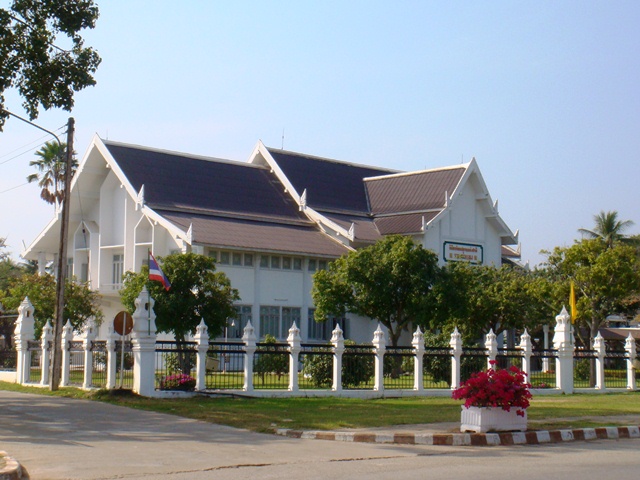
The Ramkhamhaeng National Museum sits within Sukhothai's old city, just a few hundred meters from the Historical Park's entrance gate, and houses artifacts excavated from Sukhothai and its surrounding satellite cities. Inside, you'll find Sukhothai-style Buddha images renowned for their graceful lines, especially the Walking Buddha posture considered a signature of the Sukhothai school of craftsmanship. There's also Sangkhalok pottery — the glazed ceramics that were once a major export of the kingdom — along with stone inscriptions, deity images, and architectural fragments from various temples across the old city.
The advantage of stopping here before walking the Historical Park is that it lays the groundwork for understanding what kind of Buddha images the temple ruins outside once housed, and how people of that era lived. Many display captions are in both Thai and English, helping visitors without a guide follow along. The building has cool, air-conditioned indoor galleries as well as an open-air courtyard for larger artifacts. Touring takes roughly an hour to an hour and a half, making it easy to pair with cycling or walking the Historical Park in the same trip. Admission for Thai visitors is very affordable given what you learn.
Here's what to honestly keep in mind: this is a mid-sized museum, not as large or equipped with modern interactive displays as museums in bigger cities, so anyone expecting an interactive exhibition may find it fairly simple. Some captions are Thai-only or offer brief information, so those wanting deeper detail may need to research further on their own. Importantly, the museum is closed every Monday, Tuesday, and public holiday, so check opening days before planning. And since the museum is most rewarding when paired with a walk through the actual Historical Park, visiting the museum alone without following up outside may feel incomplete.
- Lays the groundwork for understanding Sukhothai art and history before you walk the actual Historical Park, giving you a much better overall picture
- Brings together Walking Buddha images from the Sukhothai school, Sangkhalok pottery, and stone inscriptions all in one place
- Located within the old city near the Historical Park entrance, making it easy to pair into a single day's visit
- Admission for Thai visitors is very cheap, and children, students, and monks enter free
- A mid-sized museum, not as large or equipped with modern displays as museums in bigger cities
- Some captions are Thai-only or brief, so those wanting deeper detail may need to research more on their own
- Closed every Monday, Tuesday, and public holidays, and most rewarding when paired with a visit to the Historical Park
Kamphaeng Phet Historical Park Day Trip (UNESCO World Heritage cluster of quiet forest temples)

Kamphaeng Phet Historical Park is one of three cities inscribed as a UNESCO World Heritage Site alongside Sukhothai and Si Satchanalai, yet it receives by far the fewest visitors, giving it a quiet atmosphere unlike the busier Sukhothai park. The area splits into two main sections: the cluster of ruins within the old city walls, such as Wat Phra Kaeo and Wat Phra That, and the temple cluster in the Aranyik zone — forest temples once used by monks for meditation practice, scattered among large trees. The most memorable spots are Wat Phra Si Iriyabot, whose mondop houses Buddha images in four postures, and Wat Chang Rop, with elephant sculptures ringing its chedi base. Most of the structures are built from laterite, the signature material of this city.
Because Kamphaeng Phet sits about 75 kilometers south of Sukhothai town — roughly an hour to an hour and a half by car — many people treat it as a day trip extending a Sukhothai visit. The easiest way is to charter a car with driver or book a tour that includes transfers from your Sukhothai hotel, since getting there by public transport is fairly cumbersome and requires several transfers. The appeal here lies in the quiet and the shade of the trees in the Aranyik zone, where you can wander at leisure without competing for photo spots — a good fit for anyone who prefers soaking in history slowly rather than chasing spectacular highlights.
Here's what to honestly keep in mind: the round trip takes a fair amount of time, with nearly half a day spent in transit. Without your own car or a tour that includes transfers, getting there can be difficult. The park grounds themselves are large, with shade only in the Aranyik zone, while the temple cluster within the walls is fairly open and sun-exposed. Amenities like restaurants and shops are scarcer than in Sukhothai, so bring water and snacks. Because this historical city sees fewer visitors, the quiet is genuine, but it may feel a bit desolate to some. Overall, this suits true history enthusiasts wanting to complete their World Heritage checklist more than travelers looking for a lively activity.
- A UNESCO World Heritage city like Sukhothai but with far fewer visitors — explore quietly without competing for photo spots
- The Aranyik zone's temple cluster, including Wat Phra Si Iriyabot and Wat Chang Rop, sits amid large trees, offering shade and an atmosphere unlike anywhere else
- Easy to extend from a Sukhothai trip in a single day, ideal for history lovers wanting to complete their World Heritage checklist
- The laterite construction and elephant-ringed chedi are a distinctive craft rarely seen at other historical cities
- About 75 km from Sukhothai, roughly an hour to an hour and a half by car, so the round trip eats up nearly half a day
- Fewer visitors also means fewer amenities like restaurants and shops, so bring your own water and food; it's hot with sun exposure in some zones
- Difficult to visit without your own car or a tour with transfers, and better suited to serious history fans than those seeking a lively activity
Where to stay in Sukhothai?
Choose a hotel near the old city or in town, and compare prices across 3 sites before booking
Search hotels on AgodaBook Activities & Tickets in Advance
Popular tours and activities — booking online in advance is more convenient
💡 Know before you go: Sukhothai
The park grounds are wide — cycling covers it all and adds to the atmosphere; rent a bike near the entrance
The park splits into Central, Northern, and Western zones with separate admission; a combined ticket is available if visiting multiple zones
There's little shade — visit in the morning or late afternoon into evening (the light is beautiful for photos too), and bring water and a hat
The candle-and-fire festival (November) is beautiful but very crowded, and hotels fill up — book well in advance
How to pick activities for the best value
With one day, spend the morning cycling the Central Zone (Wat Mahathat–Wat Sa Si), stop by Phra Achana at Wat Si Chum, then rent a Thai costume for photos in the evening light. With two days, add Si Satchanalai or a Sangkhalok pottery workshop, and if your visit coincides with Loy Krathong, don't miss the light-and-sound show — that way you'll cover the history, the art, and the food all in one trip.
Ready to plan your Sukhothai trip? Start by picking a hotel near the old city
See Sukhothai hotels →