📝 Written 3 Jul 2026 · ✅ Fact-checked 3 Jul 2026 · prices and schedules can change — check with the operator before booking
Yasothon is a small Isan province best known for Bun Bang Fai, one of Thailand's biggest rocket-launching festivals held to ask the heavens for rain. The city's headline sight is Phra That Kong Khao Noi, a small stupa shaped like a woven rice basket tied to a local folk legend, followed by Phaya Thaen Public Park with its oddly-shaped Phaya Khan Khak (toad) museum, the century-old Sino-Portuguese shophouses of the Ban Singha Tha old town, and the famous khit-pattern pillow village of Ban Sri Than.
Below we've rounded up the activities and sights that come up again and again in reviews, along with the best time to visit each and what to know before you go. Yasothon is a small city, and most of its attractions are temples, festivals, and community life that cost nothing to enter. Bun Bang Fai only runs during the second week of May (around May 8–10 in 2026) — if you're visiting at another time, the main draws are Phra That Kong Khao Noi, the Phaya Khan Khak museum, and Ban Singha Tha, which has a Wednesday evening walking street.
Phra That Kong Khao Noi (Ban Tat Thong, Mueang Yasothon)

Phra That Kong Khao Noi is an ancient stupa dating from the Khmer era into the late Ayutthaya period, standing amid rice fields in Tat Thong Subdistrict, about 9–12 kilometers from Yasothon town along Highway 23 toward Ubon Ratchathani. What people remember most is the stupa's shape, which resembles a kong khao (the woven basket Isan people use to carry sticky rice) — a shape tied to a local legend about a son so ravenously hungry that he lashed out at his mother because the rice she brought looked too small, only to find he couldn't finish it after all. Overcome with remorse, he built this stupa to atone and honor her memory. Because of this story, many visitors come specifically to pay respects and reflect on gratitude toward their own parents, making this more than just an ordinary historic site.
The stupa itself is modest in scale, standing prominently in an open clearing surrounded by rice fields. The atmosphere is quiet and shaded by large trees, making it better suited to a brief stop on the way into Yasothon than a full day out. Most visitors spend around thirty to forty-five minutes walking around and taking photos. There's no admission fee, just a donation box for those who wish to give. Local vendor stalls around the site sell food and regional souvenirs worth a browse. The prettiest light is in the morning and evening when the sun isn't too harsh — the surrounding rice fields turn lush green in the rainy season and golden as harvest approaches. Getting here is easiest by private car, rental car, or motorbike, since public transport doesn't run through often.
To be upfront about the drawbacks: this is a small, simple site without many facilities or activities. Some visitors have noted in reviews that information signage and upkeep aren't always consistent. Anyone expecting a grand landmark may find it smaller than expected. But viewed for its historical value and folklore, it's a charming stop that offers real food for thought about filial gratitude. Since it sits right along the main road, it's easy to fold into a Yasothon itinerary — for example, stopping here before heading into town to visit its temples or old quarter. Bring a hat, umbrella, and water, since the open field gets quite sunny at midday, and dress modestly, as this remains a sacred site where locals still come to pay respects.
- Free admission, no ticket needed, and right along Highway 23 — easy to fold into a Yasothon town itinerary
- An ancient Khmer-to-late-Ayutthaya-era stupa with real historical value and a well-known folklore tale about filial gratitude
- Quiet, shaded atmosphere surrounded by rice fields — great photos, especially in the morning and evening
- A quick stop that suits families, older travelers, and anyone visiting to honor their parents
- A small, simple site without much in the way of facilities or activities — anyone expecting a grand landmark may find it smaller than expected
- Information signage and upkeep aren't always consistent, as some travelers have noted in reviews
- Public transport rarely runs here, so you'll need a private car, rental car, or motorbike, and the open field gets quite sunny at midday
Bun Bang Fai Yasothon — The Rocket Festival Parade + Rocket Launching Competition at Phaya Thaen Public Park

Bun Bang Fai is the festival so closely tied to Yasothon that it has become the province's symbol. It's rooted in an old Isan belief in which villagers launch homemade rockets skyward to ask Phaya Thaen, the local rain deity, for rain before the rice-growing season begins. The festival is held every year in mid-May. The highlight is the rocket parade, where each neighborhood competes to decorate their bang fai eh (ornamental rockets) with intricate colored paper and traditional Isan patterns. There's traditional dance, folk performances, and a procession that winds down the main streets of town. On the final day, the action moves to Phaya Thaen Public Park, where villagers launch their rockets for real to compete over whose flies highest and stays airborne longest. Tradition even has it that a rocket that fails to launch gets its maker tossed playfully into the mud — a scene you won't find at typical festivals.
To be candid, this festival happens only once a year, over a short window. It falls on the second weekend of May, which in 2026 lands around May 8–10. Visit Yasothon outside this window and you won't catch the parade or rocket launch, though you can still get a taste of the atmosphere at Phaya Thaen Public Park, which features a giant toad statue, an art gallery, and a museum telling the story of Bun Bang Fai year-round, along with Wat Mahathat and the Ban Singha Tha old town, both worth a stroll any time of year. Anyone planning to visit during the festival should book accommodation months ahead, since Yasothon's hotels are limited in number and fill up fast, with rates rising noticeably during festival season. Getting here from Bangkok is possible by bus, by train to Ubon Ratchathani with a connecting ride, or by flying into Ubon Ratchathani or Roi Et airport and driving the rest of the way to Yasothon.
There's no admission fee to attend — you can watch the parade and join the atmosphere for free. The main costs are travel, lodging, and food. On parade day, crowds get thick, especially along the main streets, so it's worth staking out a photo spot early in the morning. Bring a hat, umbrella, and water, since mid-May is hot with strong sun. On rocket-launching day at the Phaya Thaen grounds, safety matters — watch from the designated safe zones and stay well clear of the launch pads, since rockets can occasionally misfire or veer off course. Keep a close eye on young children and stay away from the launch area. Overall, this festival brings together the craftsmanship of rocket-making, the artistry of the parade, and the living beliefs of Isan people all in one place — ideal for anyone who wants a Thai festival that still feels genuinely alive, not staged purely for tourists.
- See authentic Isan culture in one place — elaborately decorated bang fai eh rocket parades, traditional dance, and a real rocket-launching competition
- Free admission — anyone can watch the parade and join the festival atmosphere
- A festival that's still genuinely alive within the community, not staged purely for tourists — ideal for culture lovers and photographers
- Visit Yasothon outside festival season and you can still enjoy Phaya Thaen Park, the rocket museum, and the Ban Singha Tha old town year-round
- Held only once a year, over a short window in mid-May — visit at another time and you'll miss the parade and rocket launch
- In-town accommodation is limited and fills fast, with rates rising during festival season, so book months ahead
- Parade day gets crowded and hot, while rocket-launching day requires care around safety — stay well clear of launch pads as directed by officials
Phaya Thaen Public Park + Phaya Khan Khak Museum (Toad Museum) on the Lam Thuan Riverbank, Yasothon Town

Phaya Thaen Public Park is a riverside park in the middle of Yasothon town, sitting along the Lam Thuan Reservoir, which connects to the Chi River. The biggest draw is the Phaya Khan Khak museum, often called simply the Toad Museum. The building is shaped like a giant toad sitting upright, standing about five stories (roughly 19 meters) tall and visible from a distance. Inside, exhibits tell the legend of Phaya Khan Khak and Phaya Thaen, the origins of the Bun Bang Fai rain-asking tradition among Isan people, and the story of Yasothon itself. Climb floor by floor up to the viewing point inside the toad's mouth, where you get a sweeping view of the park and river below. The park grounds around the building are shaded, with walking paths and riverside seating, and it's also the main venue for the Bun Bang Fai festival held every May.
Visiting here is easy and relaxed. The park itself is free, while the Phaya Khan Khak museum charges only a small fee, payable at the ticket counter in front of the building — children and students pay less than adults. The interior is air-conditioned and comfortable, and a walkthrough takes about an hour. It makes a good stop on the way in or out of Yasothon town, or pairs well with an evening stroll through the park when the heat has eased. Check ahead that the museum is closed on Tuesdays, and note that afternoons can get quite sunny since the grounds around the building are open and exposed — many visitors prefer mornings or late afternoon. It's easy to reach by private car or motorbike, with plenty of parking available.
To be candid: the museum itself isn't especially large. The exhibits lean toward information panels, models, and photo spots rather than large collections of artifacts. Anyone hoping for a grand museum experience may find the content a bit thin, but as a photo landmark and a quick lesson in local legend, it's good value for the modest admission fee. The stairs to the upper floor are fairly steep with no elevator, so older visitors or anyone who struggles with stairs should plan accordingly. Most information signage is in Thai, with limited English translation. On long weekends or during festivals, crowds build up and the photo queue at the entrance can get long — weekdays are more relaxed. Bring a hat and water for the sun-exposed grounds, then cool off inside the air-conditioned building.
- A striking five-story toad-shaped landmark that photographs beautifully and has become a symbol of Yasothon
- Cheap admission at just a small fee, with an air-conditioned interior that explains the Phaya Khan Khak legend and Bun Bang Fai in an easy-to-follow way
- A viewing point at the top inside the toad's mouth offers sweeping views of the park and river
- The free riverside Phaya Thaen Public Park is shaded and pleasant for an evening stroll, with plenty of parking
- The museum isn't especially large, leaning on information panels and photo spots — anyone hoping for extensive exhibits may find the content thin
- The stairs to the upper floor are steep with no elevator, so older visitors or those who struggle with stairs should plan ahead
- Most signage is in Thai with limited English, and the grounds get quite sunny in the afternoon
Ban Singha Tha Old Town (Wednesday Walking Street) — Sino-Portuguese Riverside Shophouses in the Heart of Yasothon

The Ban Singha Tha old town is the historic heart of Yasothon, sitting in the middle of the municipal district along the Chi River. The area was originally known as "Mueang Singha Tha," a trading district since ancient times, and it flourished further as French influence spread through the region. The charm that draws travelers here today is the row upon row of century-old wood-and-masonry shophouses lining both sides of the street, many built in the Sino-Portuguese style with soft pastel tones and old-fashioned folding shutter doors — some even built with the help of Vietnamese craftsmen brought in during that era. Walking along Si Sunthon, Nakhon Thung, Uthai Ramrit, and Wittithamrung roads, you'll see buildings beautifully restored alongside others that still wear the marks of time, creating an atmosphere that's genuinely hard to find elsewhere.
Most visitors come here simply to stroll, photograph the old shophouses, and stop into the cafes and local shops tucked throughout the district. Don't miss the local specialties — Yasothon's fermented fish (pla som) and old-recipe lod chong. Along the way, there's also a Chinese-style city shrine worth a visit, giving this district a blend of Thai, Chinese, and French cultural influences all in one place. The highlight many travelers plan their visit around is Wednesday evening, when the municipality runs a cultural walking street lined with local food stalls, craft vendors, and performances. The atmosphere is far livelier than on ordinary days, ideal for anyone who wants both photos of the old shophouses at dusk and a taste of local street food at the same time.
The upside here is free admission and a central location, with easy walking access to nearby temples or markets — making it a great half-day stop on a Yasothon trip. But there are a few things worth knowing honestly. This is a community where people still live and work, not a staged tourist attraction, so not every shop is open every day. Weekday afternoons can be genuinely quiet. If you want to see the district at its liveliest, aim for Wednesday evening's walking street. Isan afternoons run hot with strong sun, so photographing in the morning or evening is more comfortable. Street parking in the district is limited, so allow extra time to find a spot on event days. And because this is a real residential community, be sure to ask permission before photographing homes or residents, and be respectful of the space.
- Century-old Sino-Portuguese shophouses line both sides of the street, some beautifully restored and others wearing a classic weathered charm — a fantastic spot for photos
- Free to explore and centrally located, with easy walking access to nearby temples, markets, and the city shrine — makes an easy half-day stop
- Wednesday evenings bring a cultural walking street with local food stalls, crafts, and performances, livelier than an ordinary day
- Blends Thai, Chinese, and French cultural influences in one district, with local specialties like pla som and lod chong to try
- This is a real residential community, so not every shop is open every day, and weekday afternoons can be quite quiet
- Isan afternoons run hot with strong sun, making midday photography more tiring than morning or evening visits
- Street parking in the district is limited, so allow extra time to find a spot on walking-street days
Ban Sri Than Khit-Pillow Village — Watch the Khit Weaving Process, Sewing Axe Pillows, and Buy Directly From the Makers
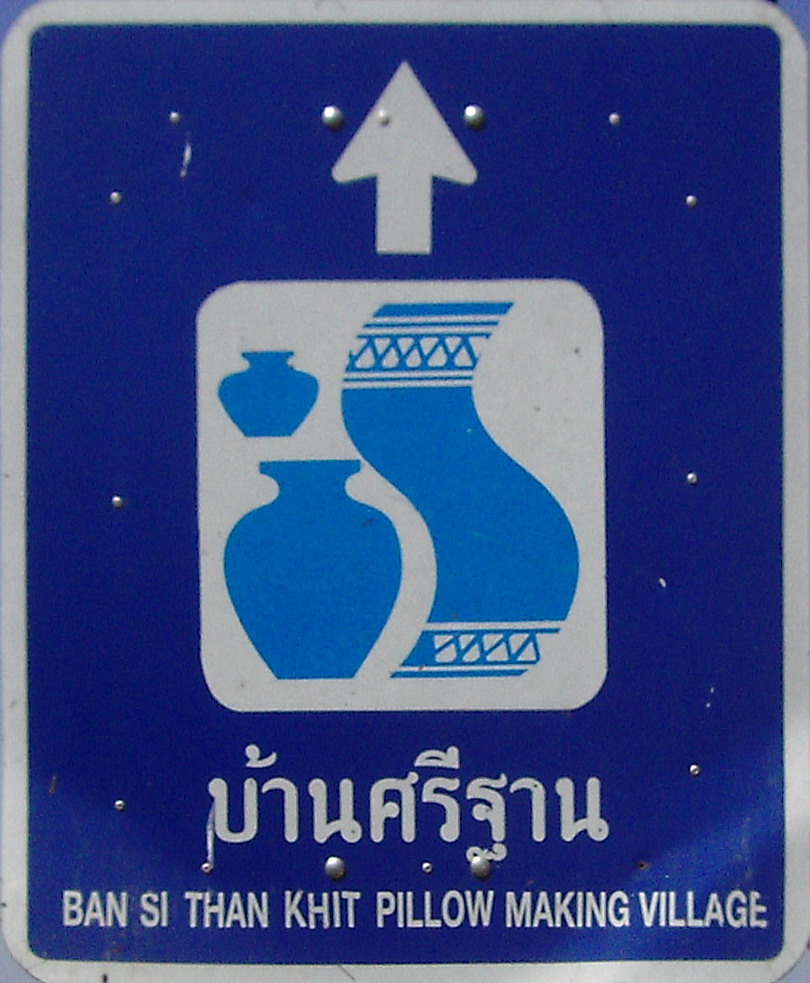
Ban Sri Than is the khit-pillow village that has become something of a signature product of Yasothon province, located in Sri Than Subdistrict, Pa Tio District, about 20 kilometers from town along Highway 202, the Yasothon–Amnat Charoen route — an easy stop driving in or out of the city. What sets this apart from browsing souvenirs at an ordinary shop is that nearly the entire village makes khit pillows for a living, and many households let visitors walk right in and watch the whole process: weaving the khit pattern on a wooden loom, stitching it into segments, then stuffing kapok layer by layer until it forms the familiar triangular pillow or tiered backrest cushion. The khit pattern is a raised-weave design that requires tracking each thread row by row, taking far more time and skill than it might appear.
The goods on offer range from small triangular pillows for lounging or gift-giving, up to multi-tiered backrest cushions for sitting on the floor, foldable mattresses, and large sets for hosting guests. Prices scale with size and number of tiers — small ones start in the low hundreds of baht, while large multi-tiered sets run into the thousands. Buying directly from the households that make them means you can choose your own pattern and color, and more of the money goes straight to the artisans rather than through a middleman. Many households are happy to explain what each pattern is called, the difference between cotton and synthetic filling, and which pillow style suits which use. If you want good quality, try feeling the fabric, pressing to check the firmness of the stuffing, and comparing the stitching across a few households before deciding.
To be candid about what to expect: this is a genuine working village, not a purpose-built tourist attraction, so signage is limited. Some households work quietly under their raised houses, and it's polite to greet them and ask permission before walking in to watch or take photos. The busiest time to see the work in progress is on weekday afternoons; on weekends or during festivals, some households may be closed or away selling at events. Large pillows are heavy and bulky, so if you're traveling by plane or bus, plan ahead for how to carry them home or ask the shop about shipping. And since these are handmade goods, the color and pattern of each piece may not match exactly — part of the charm of genuine craft rather than a flaw.
- See the real process of making a khit pillow, from weaving the pattern on a wooden loom to stuffing and shaping it — not just browsing finished goods
- Buy directly from the households that make them, choosing your own pattern, color, and size, with the money going straight to local artisans
- A distinctive Yasothon souvenir available in many sizes and price points, from a few hundred baht up to several thousand
- Sits right along Highway 202, only about 20 km from town, making it an easy stop on the way in or out of the city
- A genuine working village with no dedicated visitor area and limited signage — greet the household and ask permission before walking in
- Some households may be closed or away selling at events on weekends and during festivals, so weekday afternoons are best
- Large pillows are heavy and bulky — plan ahead for carrying them home or arranging shipping if traveling far
Wat Mahathat (Phra That Anon) — Yasothon's Time-Honored Temple

Wat Mahathat has stood as Yasothon's most time-honored temple since the city's founding, sitting right in the heart of the municipal district within easy walking distance of the market and old town. What draws visitors here is Phra That Anon, a white-and-gold Lan Xang-style stupa standing about twenty-five meters tall, its square base tapering up to a gilded finial. It's believed to enshrine relics of Phra Anon (Ananda), the Buddha's foremost attendant among his arahant disciples, and is said to be the only stupa in Thailand that houses his relics. The stupa is both a spiritual anchor for the people of Yasothon and a historical landmark that tells the story of Mekong basin culture in its own right.
Beyond the stupa, the temple grounds hold several more historic structures worth exploring. The mid-pond scripture hall is an old wooden building raised on stilts in the middle of a pond, built to protect palm-leaf manuscripts from termites and humidity — a piece of traditional local carpentry rarely seen today. Nearby stand the ordination hall and viharn, which still preserve their Isan-Lan Xang architectural form. Photography enthusiasts often walk a full loop around the stupa to catch the morning and evening light on its white plastered surface, while those coming to pay respects typically light incense and candles before circling the stupa clockwise in the traditional manner. The temple is open free of charge every day, with only a donation box for those wishing to give.
A few honest things to know before visiting: this is a sacred site still actively used by the local community, so dress modestly, cover shoulders and knees, and keep your conduct respectful within the Buddhist compound. The stupa itself is viewed from the outside only, as it isn't open for visitors to enter. Anyone expecting lively activities may find this a quiet, brief visit, since the appeal here lies in historical value and stillness rather than entertainment. Midday sun can be strong across the open temple courtyard with little shade, so mornings or evenings are more comfortable for walking and better for photos. Parking can be limited during religious festivals, especially around Bun Bang Fai when Yasothon draws unusually large crowds, so allow extra time.
- Phra That Anon is a beautiful Lan Xang-style stupa with real historical significance, believed to be the only one in Thailand enshrining relics of Phra Anon
- Centrally located in Yasothon town, an easy walk from the market and old town, so it pairs well with other stops in the same trip
- Free admission, suiting every age and budget — easy for families and older travelers to walk through
- Beyond the main stupa, there's more to see, including the mid-pond scripture hall and an Isan-Lan Xang style ordination hall, both great for photos
- The appeal lies in stillness and historical value rather than lively activity — visitors seeking entertainment may find the visit brief
- The temple courtyard is open with little shade, and midday sun can be strong — best to avoid visiting around noon
- Parking can be limited during religious festivals, especially around Bun Bang Fai when crowds are unusually large
Phra That Ku Chan (Wat Ku Chan), Kham Khuean Kaeo District, Yasothon — an Old Stupa Resembling Phra That Phanom
Phra That Ku Chan stands within Wat Ku Chan in Ban Ku Chan, Ku Chan Subdistrict, Kham Khuean Kaeo District, about 25–30 kilometers east of Yasothon town. It's an old stupa roughly 15 meters tall, square in plan with a pointed spire, one that locals see as bearing a resemblance to Phra That Phanom in Nakhon Phanom province. What makes it special in local eyes is a long-held legend that the stupa is connected to a division of the Buddha's relics enshrined here, making it a sacred site of local significance for the people of Ku Chan and neighboring districts. There's an annual merit-making tradition of bathing the stupa during the fifth lunar month of the Isan calendar. Visitors here tend to be locals and devotees tracing a route of Isan stupas rather than general tourists, which gives the site a genuinely quiet, village-temple atmosphere free of the bustle found at mainstream attractions.
Visiting Phra That Ku Chan suits travelers with a private car or rental car, since no bus route runs directly to the temple. The route from Yasothon town follows the road toward Kham Khuean Kaeo District before turning onto a village road; the final stretch is a rural road, so allow extra time and check your map carefully, as signage is sparse. Once you arrive, the stupa stands in an open courtyard, easy to walk around; the whole visit takes about half an hour. Admission is free, with only a donation box for those who wish to give. The best times to visit are morning or evening when the sun is gentler, since the stupa grounds are fairly open with little shade. Dress modestly, as this is a sacred site actively used by locals for real ceremonies.
To be candid about what to expect: Phra That Ku Chan suits travelers who already enjoy historic sites and paying respects, rather than a destination with full facilities or many activities. The surrounding area is a rural village with few shops or restaurants, so bring your own water and plan meals in the district town or back in Yasothon town. This isn't yet a site you can book tickets or tour packages for directly, so plan it as a self-guided visit — pairing it with other stops along the same route, such as temples in Yasothon town or nearby historic stupas, makes for a more worthwhile trip. Anyone visiting during the Bun Bang Fai festival in May could add Phra That Ku Chan as an extra stop on a temple-focused route in the same trip.
- An old stupa roughly 15 meters tall resembling Phra That Phanom, offering an authentic Isan-stupa atmosphere
- Free admission, no fee, with an easy, quick walk around the stupa
- Quiet and uncrowded, with a genuine village-temple atmosphere and a local legend about enshrined Buddha relics
- Easy to pair with temples in Yasothon town or the Bun Bang Fai festival in May as part of a temple-focused route
- No direct bus service — requires a private car or rental car, and signage on the final stretch is sparse
- The stupa grounds are fairly open with little shade, and midday sun can be strong
- Facilities, shops, and restaurants around the temple are limited — bring your own water and plan meals ahead
Phu Tham Phra, Loeng Nok Tha District — a Forest Cave Forest Park with a Long Reclining Buddha and Old Buddha Images Across Two Cave Levels (Phu Tham Phra, Yasothon)

Phu Tham Phra is a small forest park in Loeng Nok Tha District, in the northern part of Yasothon, about 85 to 100 kilometers from town. What draws people to travel this far is a forest cave containing a long reclining Buddha and several old Buddha images scattered across two cave levels. The atmosphere is a world apart from temples in town — you walk under a canopy of trees and past stone walls the whole way, with the air inside the cave noticeably cooler than outside. Light filters in at intervals, giving the Buddha images inside a solemn, peaceful presence. Most visitors come to pay respects, rest in the cool of the cave, and explore the connected chambers as they wind onward. It's a nature-meets-faith destination that stands as one of the province's main sights on this side of Yasothon.
Visiting here mostly means walking up and exploring the cave itself. From the parking area, you'll need to walk up a path of stone alternating with steps, then gradually work your way through the levels viewing the enshrined Buddha images. The whole visit takes about two to three hours. If you're short on time, walking just the lower level still lets you see the standout reclining Buddha. Plan ahead for the distance from town, since it's considerably far and public transport barely reaches here — travelers without their own vehicle will find it difficult. Driving yourself or renting a car from Yasothon town is the most practical option, and you should allow for a full day round trip. The most comfortable season to visit runs from winter into early summer, when the air isn't too humid and the paths aren't slippery; during the rainy season the forest paths can get muddy and slick, so wear shoes with good grip.
To be candid before you decide to go: this is far from town and sits toward the far end of the province. If you're staying in Yasothon town and only want to fit in one destination, this may not be worth the drive on its own, but if your route passes through Loeng Nok Tha or continues on to Mukdahan or Amnat Charoen, it fits in nicely along the way. Some sections inside the cave are narrow and dark, so bring a flashlight or use your phone's light, and mind your head and uneven footing. Anyone uneasy in tight spaces or around bats should prepare themselves. Facilities like shops and restrooms are limited, typical of a rural forest park, so bring your own food and water. And because this is a place of practice with enshrined Buddha images, dress modestly, keep your voice down, avoid climbing on or touching the images, and carry your trash back out to help keep the forest and cave clean.
- A cool forest cave, noticeably cooler than outside, where you can pay respects at a long reclining Buddha and old Buddha images across two cave levels
- A quiet, faith-meets-nature atmosphere unlike any temple in town — great for resting and photos
- One of Yasothon's main nature-and-temple destinations, free to visit with donations welcome
- Doable in half a day — walking just the lower level still reveals the standout reclining Buddha, and it fits neatly along the route toward Loeng Nok Tha or Mukdahan
- Very far from Yasothon town (roughly 85–100 km) and toward the far end of the province, with public transport barely reaching here — a private vehicle is nearly essential
- Some sections inside the cave are narrow and dark, requiring a flashlight, with uneven footing and low ceilings — those uneasy around bats or tight spaces should prepare
- Facilities, shops, and restrooms are limited, and forest paths get muddy and slippery during the rainy season
Wat Phra Phutthabat Yasothon (Replica Buddha Footprint · White Jade Buddha Image · Maha Chana Chai Stupa)

Wat Phra Phutthabat Yasothon sits in Hua Mueang Subdistrict, Maha Chana Chai District, in the southern part of Yasothon province along the Chi River, about 40 kilometers from Yasothon town. What draws visitors here to pay respects is a replica Buddha footprint enshrined at the temple, revered by locals and by traveling devotees passing through this side of the province. Inside the pavilion stands a large white jade Buddha image, roughly 3.7 meters tall, that many visitors come specifically to see, its pale white jade catching the pavilion's light in a way that feels calm and serene. It's a beautifully photogenic image and gives a real sense of peace when you step in to pay your respects.
Another sight visible from a distance is a tall, multi-tiered white stupa that locals call the Maha Chana Chai Stupa. Standing roughly 45 meters tall, it can be seen well before you even reach the temple grounds. Walking around its base offers photo opportunities against the open sky, with river views not far away. The overall atmosphere is that of a quiet provincial temple, without the crowds found at famous temples in big cities, so you can wander at your own pace. Admission is free, with only a donation box for those wishing to give — ideal for anyone who wants a quiet place to pay respects without an entrance fee.
In terms of planning your trip, Wat Phra Phutthabat Yasothon works best as an add-on stop along a Yasothon temple route rather than a standalone destination, since it sits toward the southern end of the province. Driving yourself or renting a car is the most convenient option, as public transport is difficult to rely on here with no fixed schedule. It's worth pairing this with other temples, sights, or food in the Maha Chana Chai area on the same trip to make the drive worthwhile. Dress modestly when entering the temple grounds as custom dictates, remove your shoes before entering the pavilion, and if you want the best light for photographing the stupa and the white jade Buddha, aim for morning or late afternoon, when the light is softer than the harsh midday sun.
- Free admission, with a replica Buddha footprint, a large white jade Buddha image, and a tall stupa all in one temple
- The roughly 45-meter-tall stupa is visible from a distance, with photo opportunities against an open sky and Chi River views
- Quiet, uncrowded atmosphere, letting you pay respects and explore at your own pace
- A great add-on to a Yasothon temple route, easy to pair with other sights in the Maha Chana Chai area on the same trip
- Located in the southern part of the province, about 40 km from Yasothon town, adding meaningful travel time
- Public transport is difficult and unreliable, making a private car or rental car nearly essential
- A quick visit on its own — if you come here alone, it may feel like a lot of travel for a short stop, so plan it alongside other sights
Where to Stay in Yasothon?
Pick a hotel in Yasothon town near the old quarter and Phaya Thaen Park for easy access to the sights. Compare prices across 3 sites before booking.
Search Hotels on AgodaBook Activities & Tickets in Advance
Yasothon is a small city — booking a car or package tour ahead of time makes it easy to reach temples and craft villages outside town.
💡 Know Before You Go to Yasothon
The Bun Bang Fai festival is held during the second week of May (around May 8–10 in 2026) at Phaya Thaen Park, with a beautiful rocket parade and a rocket-launching competition. Crowds are heavy during the festival, so book accommodation ahead and stay mindful of safety near the launch area.
Phra That Kong Khao Noi sits about 9–12 km outside town — a small stupa shaped like a rice basket, tied to a legend of a son who struck his hungry mother. Many visitors come to seek forgiveness and honor their parents; dress modestly.
The Ban Singha Tha old town has Sino-Portuguese shophouses and old wooden buildings worth photographing. Wednesday evening brings a walking street with food stalls and crafts — a relaxed way to soak up the old-town atmosphere.
Ban Sri Than in Pa Tio District, about 20 km from town, is a village that makes khit-pattern axe pillows. Stop by to see the sewing and stuffing process and buy directly from locals for less than elsewhere. Unstuffed versions make an easy-to-carry souvenir.
How to Plan a Worthwhile Yasothon Trip
One to two days is enough to see Yasothon's main sights. If you're visiting in early May, build your trip around the Bun Bang Fai festival at Phaya Thaen Park as the highlight. Otherwise, spend a single day in town: pay respects at Phra That Kong Khao Noi, visit the Phaya Khan Khak museum and Phaya Thaen Park, and stroll the Ban Singha Tha old town (Wednesday evening brings the walking street). With a second day, add Wat Mahathat (Phra That Anon) and the Ban Sri Than khit-pillow village. Yasothon also pairs well with Ubon Ratchathani, Roi Et, and Amnat Charoen in the same trip.
Ready to visit Yasothon? Start by picking where to stay in town.
See Yasothon Hotels →