🔄 Last checked 20 Jun 2026 · details and hours can change — check the venue before you go
📍 All restaurants on the map
Tap a pin for the spot + nearby stays
If you're looking for a city you could eat in every day without running out of things to try, Bangkok delivers — because the charm here isn't only about fine dining. It lives in the street stalls along the old town and Yaowarat, where the fires come alive together as the sun goes down, the smell of hot woks and smoke drifting all the way down the soi. Walk a few steps and you're past pad thai, oyster omelette, boat noodles, fish rice soup, and a late-night toast-and-fresh-milk shop. On another side, Bangkok also holds meticulous royal Thai cuisine that takes real patience to find — a city that contains both the warmth of street food and the precision of palace cooking in the same place.
Several restaurants on this list have become part of Bangkok's food mythology. Raan Jay Fai, the Michelin-starred street food legend. Thipsamai Pad Thai, a pad thai institution that's stood beside this neighborhood for decades. Jeh O Chula with its mama tom yum hot pot, where queuing until late is just part of the deal. Krua Apsorn, making royal Thai cuisine including a crab omelette that's dense with crab flesh. Wattana Panich, the beef noodle shop with a stock pot that's never been extinguished. Then three charcoal-stove veterans of Yaowarat — Nai Mong Hoy Thod, Khao Gaeng Jek Pui, and Siang Ki Fish Rice Soup, all still standing. Closing out with the legendary Mont Nom Sod toast-and-milk shop, and Guay Jub Mr. Joe. Many of them hold Michelin Bib Gourmand recognition. If you love eating properly, go work through them one by one — you won't leave disappointed.
Raan Jay Fai
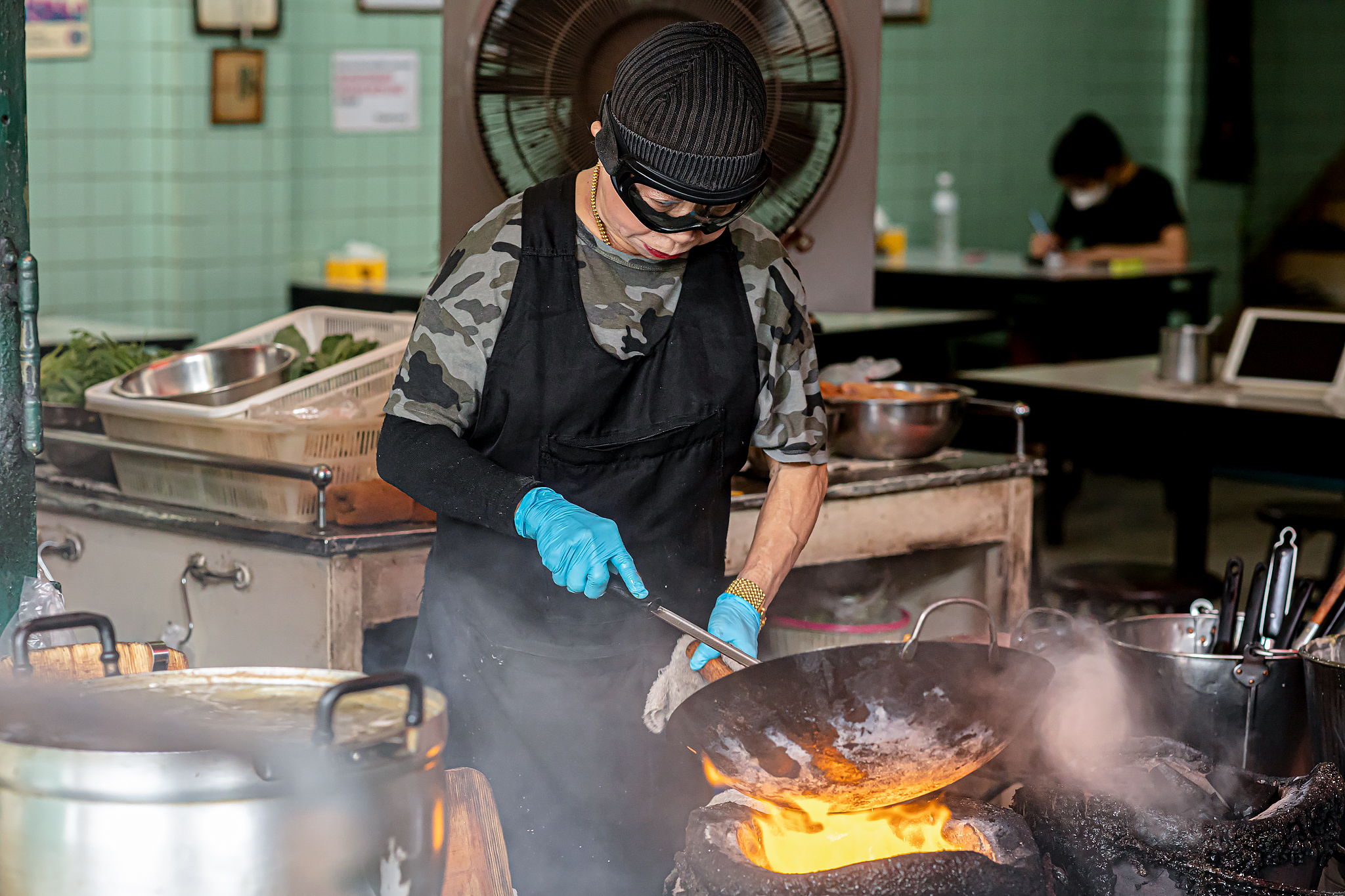
Raan Jay Fai is a street food legend in the old town, on Mahachai Road near Sao Ching Cha and Pom Mahakan, that became known worldwide after earning its first Michelin star in 2018 — a star it has held ever since. The owner is Jay Fai (Supinya Junsuta), a woman in her eighties who still stands at the charcoal stove, wearing eye-protection goggles, cooking every dish herself. The image was featured in Netflix's Street Food series. To answer directly who this is right for: it's for people who want to experience something legendary at least once in their lives, have time to wait, and have the budget. It's more of an event than a regular street food stop.
The must-order is the crab omelette — the restaurant's signature. Most real reviews say the shell is crispy outside and tender inside, and when you cut through it you find large chunks of dense crab meat packed inside. Another dish mentioned frequently is the drunken seafood stir-fry: assertively flavored and intensely aromatic. Tom yum and seafood rad na are also available. Opinions from real reviews cut both ways: supporters say the ingredients are fresh and the wok skill justifies the price; critics focus on the cost, with some finding the crab not as fresh as expected, or certain dishes over-salted. Go with an open mind knowing you're partly paying for the experience.
The pricing needs mental preparation: crab omelette runs around 1,400–1,500 THB per portion, stir-fried noodles and drunken seafood in the hundreds of baht, with most people reporting a meal per person in the thousands. The restaurant is an open-front shophouse with green-tiled walls and simple tables and chairs — a genuinely street-food atmosphere, not an air-conditioned dining room. The appeal is sitting and watching Jay Fai cook right in front of you.
Worth knowing before you go: the restaurant opens Wednesday through Saturday, roughly 09:00–19:30, closed Sunday through Tuesday. Very long queues are normal — many people wait several hours. Arriving early to write your name on the queue list, bringing cash, and leaving extra time is the standard approach. The location is a short walk from Wat Saket (Golden Mount) — a natural side trip while you wait. The restaurant is popular because it's a Michelin-starred street food operation that's genuinely rare, and Jay Fai herself has become an icon of the Thai food world.
Thipsamai Pad Thai (Pratu Phi Branch)
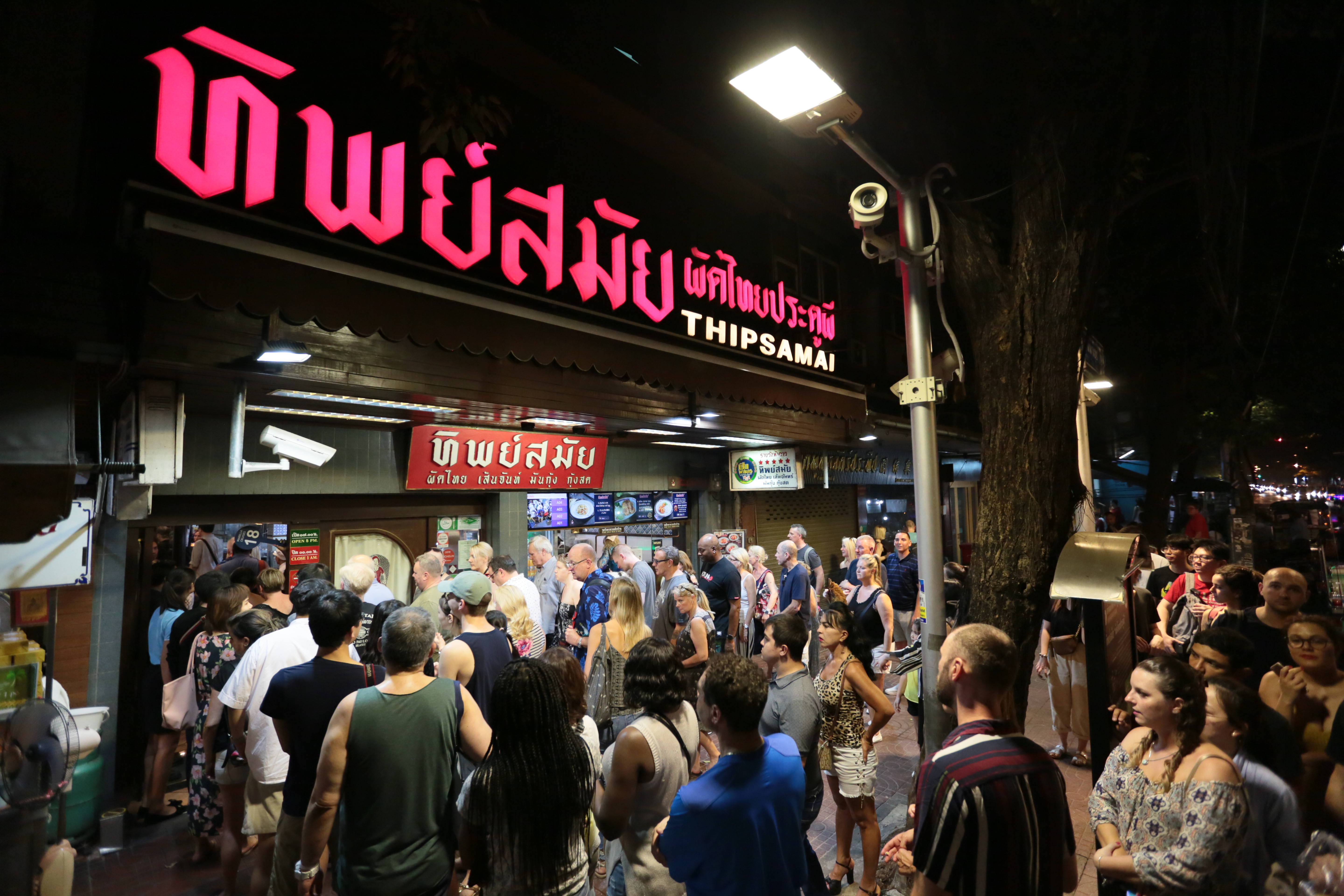
When people bring up pad thai institutions of Bangkok, Thipsamai Pad Thai Pratu Phi is one of the first names out of anyone's mouth. A shop over 50 years old on Mahachai Road, opposite Wat Thepthidaram in the Pratu Phi area, Phra Nakhon District — it holds a Michelin Bib Gourmand plaque and has appeared in a NatGeo Street Food documentary. A great fit for travelers wanting to try a renowned pad thai in the old town, people exploring Rattanakosin Island and looking for dinner or a late meal, or anyone following the trail of the spot that has foreigners queueing down the road.
The must-order is the chanthaburi rice noodle pad thai with prawn roe and fresh prawns, wrapped in egg — the restaurant's signature. The chanthaburi noodles are chewy and coated throughout with the restaurant's own-simmered prawn roe, then wrapped in a thin egg sheet like a blanket, topped with large fresh prawns laid across the surface. Another item not to miss is the large bottle of fresh-squeezed orange juice, which many reviews say is so good they order a second. For a group, the "complete topping" version loads everything in.
Real reviews split noticeably into two camps. The approving side says the prawns are genuinely fresh and large with no colouring, the pad thai flavour leads sweet but is rounded — season further yourself as you like — and the fresh-squeezed juice is the real star. The critical side mentions noodles that can come out a touch soft without much bounce on some visits, and a price that feels a bit high for a single plate of pad thai. The restaurant is an old-style shophouse with the open wok station visible from the street — energetic and alive with activity.
Pricing: pad thai with prawn roe and fresh prawns around 150 THB, large bottle of fresh-squeezed orange juice around 200 THB, so roughly 150–250 THB per head plus a 10% service charge. Open 09:00–24:00, closed every Tuesday. The queue gets very long in the evening, especially on weekends — you may need to stand beside the wok station and wait. Coming before or after the peak window is the easier approach. The restaurant stays popular because it's the original egg-wrapped pad thai that's been part of this neighbourhood for so long and still holds its standard.
Jeh O Chula
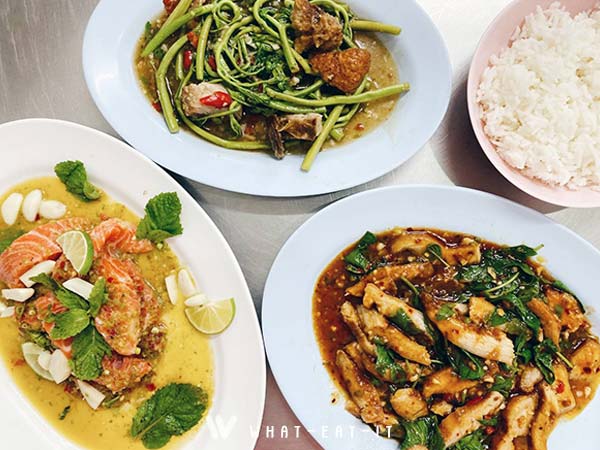
If you're thinking of Bangkok's most queue-worthy mama tom yum restaurants, Jeh O Chula — the duck rice soup shop on Soi Charoenmueang, in the Banthat Thong–Sam Yan area near Chulalongkorn University — is one of the first names that comes up. It started as a plain duck rice soup shop, but once the Mama Oh Ho became a social media sensation, and after earning Michelin Bib Gourmand consecutively for several years, it became a destination for both Thai diners and international visitors exploring the Banthat Thong area on a late evening. A good fit for people who want a proper late meal, going in a group, and comfortable with queuing.
The star of the show is the Mama Oh Ho — a tom yum mama hot pot with a bold tom yum broth, crispy pork, seafood, house-made fish balls, and a raw egg you crack in and stir yourself. Real reviews are fairly consistent: the mama noodles themselves are just regular instant noodles, but what makes it work is the assertive broth and the toppings — especially the crispy pork and fish balls. Many people suggest stirring the egg yolk into the broth to enrich it. Beyond the mama, the dish that reviewers frequently praise is the salmon salad — with a sour-spicy dressing cutting against the thick salmon — and some say it steals the whole meal. Duck rice soup and crispy pork remain from the original menu.
Pricing sits in the mid-range: Mama Oh Ho starts around 160 THB per pot, scaling up to a large pot in the upper hundreds of baht. Average per person around 250–500 THB when ordering several dishes. The restaurant opens in the evening through late night every day. Located on Soi Charoenmueang, walkable from MRT Sam Yan or the National Stadium. The unavoidable caveat is the queue — reviews consistently warn it gets very long, sometimes over an hour. Booking through the QueQ app in advance, or arriving before opening time, is the standard workaround.
Worth knowing: the setting is an open-air roadside layout, tables close together, loud and lively in the late-night street food way. Some reviews mention the noise and the wait as downsides, but most see them as part of the atmosphere. For the best value, come in a group so you can order multiple dishes — a pair of people going for just the mama won't get as much out of the experience as a table of four ordering the full spread.
Krua Apsorn (Dinso Branch)
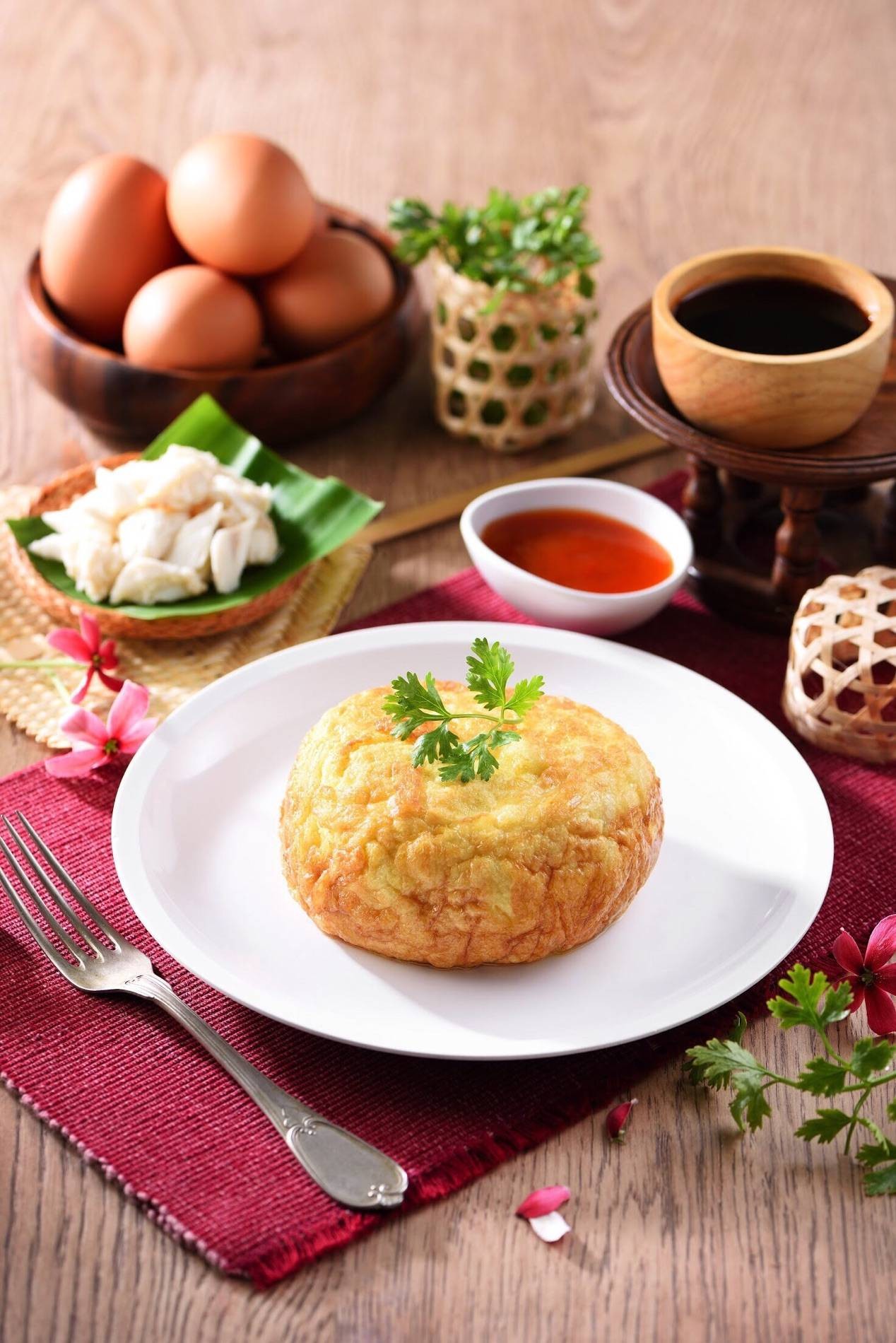
Krua Apsorn (Dinso Branch) is a royal Thai cuisine restaurant where, if you ask anyone in Bangkok about crab omelette — the puffed kind — this name floats to the top of the list without fail. A family business with a multi-generational recipe, sitting on Dinso Road near Sao Ching Cha and Wat Bowonniwet, walkable from Bangkok City Hall. A good fit for people who want genuinely skilled Thai home-cooking in the old town, both international visitors following the Michelin list and Thais making a deliberate trip to taste the real thing — the restaurant has held Bib Gourmand status continuously for several years.
The dish almost every table orders is the crab omelette (puffed crab egg) — a round, golden, puffy mound with dense chunks of crab meat packed inside. Dipped in the sour-sweet sauce, it works perfectly. The other signature is the crab meat stir-fried with yellow chilli (in the same family as curry-powder crab): all-crab, stir-fried with fragrant yellow chilli. And the southern yellow curry with lotus stems and fresh prawns — assertively sour and spicy in the southern style. Real reviews from Wongnai and Tripadvisor mostly praise the flavours as deeply developed and the restaurant for maintaining consistent quality even after expanding to multiple branches. Many say the crab meat portions are genuinely full; the occasional criticism is that some dishes look smaller than the menu photo, and peak hours mean waiting.
Prices are reasonable for royal-style cooking: crab omelette around 139 THB, full-crab dishes like crab stir-fried with yellow chilli step up to 500-plus THB depending on the crab. Average per person around 250 THB if you're not ordering all-crab dishes. The setting is a simple old-neighbourhood shophouse — tables close together, loud and busy at lunchtime in the way of popular old-town restaurants. That's part of the appeal.
Open approximately 10:30–19:30. Worth knowing: the restaurant sometimes closes on Sundays, and crab dishes can sell out on busy days. Coming before midday or in the mid-to-late afternoon is the more comfortable approach. The restaurant's lasting popularity comes from consistent flavour standards and its Michelin status, which has made it a destination for Thai food lovers both local and international visiting Rattanakosin Island.
Wattana Panich
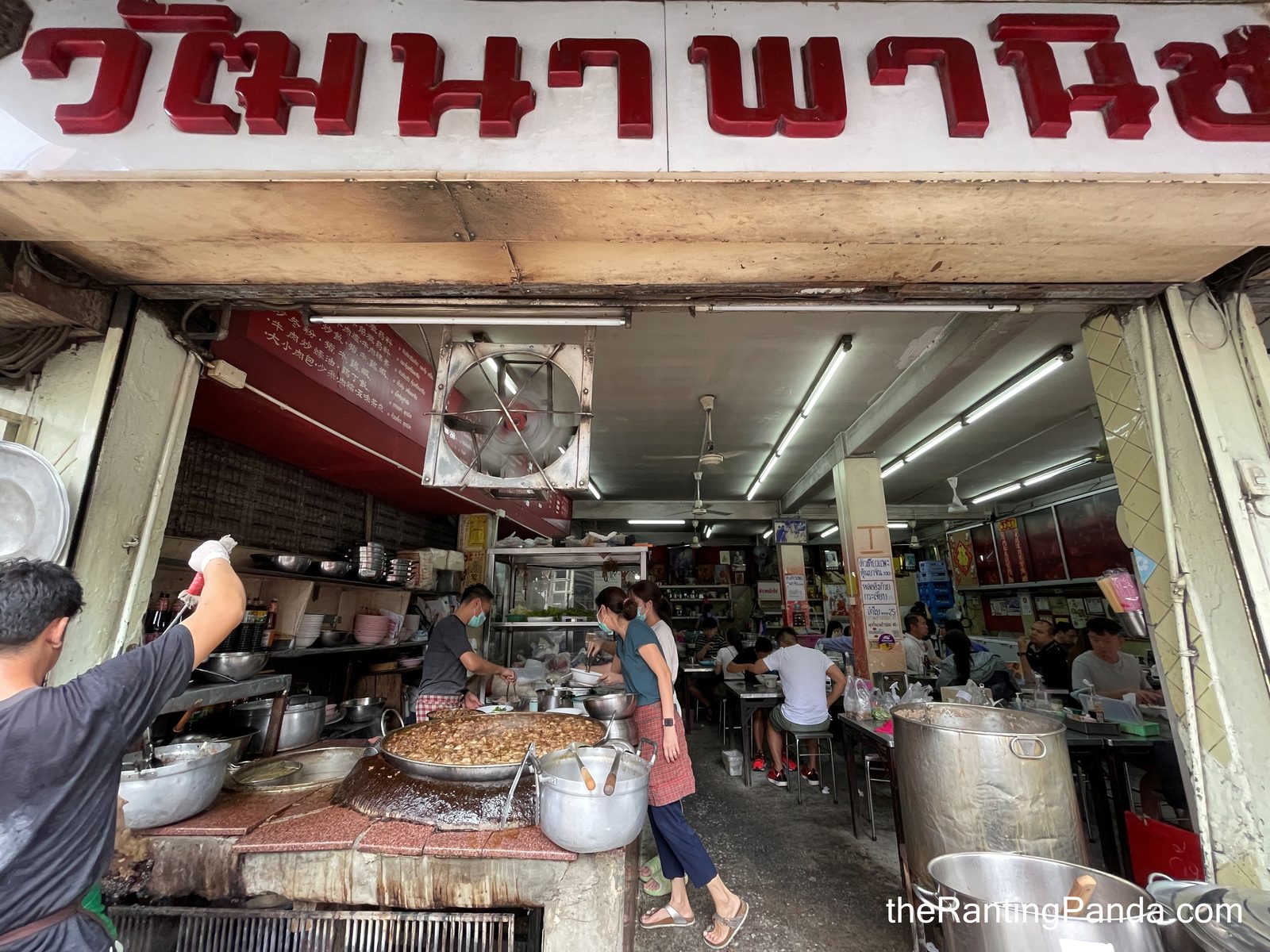
When people bring up legendary beef noodles in Bangkok, Wattana Panich in the Ekkamai area is always on the list. The shop has been running for over forty years. What makes people talk about it worldwide is the large beef stock pot at the front of the restaurant that has never been extinguished — new water and aromatics are added every day, creating a broth that has been building its layers of flavour for decades. A great fit for anyone who loves old-style Chinese braised beef noodles, or travelers making a deliberate trip to taste a true institution.
The most-ordered dish is the braised beef noodles — your choice of all beef, innards, or mixed. Anyone with a larger appetite can order the special combination braised beef over rice instead. The other must-order is the Chinese herbal goat broth — the goat braised until tender with wolfberries and Chinese herbs, fragrant and deeply developed. Real reviews consistently describe the broth as fragrant with star anise and cinnamon, rounded without being overpowering, slightly thicker than standard beef noodles, and the braised beef as soft and yielding at just the right point. Some international reviewers describe it as the best beef broth they've ever tasted.
Prices remain approachable for a restaurant of this reputation: standard bowl of beef noodles around 100 THB, special around 150 THB, rice dishes starting at 60 THB, Chinese herbal goat around 200 THB. The setting is an old Chinese shophouse — metal chairs and tables, old objects covering the walls, nothing polished, but with a genuine sense of a real institution. Location is on Ekkamai Road (Sukhumvit 63), Khlong Tan Nuea, Watthana District. Open approximately 09:00–19:00 daily, but often closed on the last Monday of the month. Parking is available across the road.
Worth knowing: the peak hour can be slow and service variable. Some reviews note that table cleanliness and the floor could be better. And there are imitation shops with similar names — the original has no branches. Anyone who wants to taste the legendary never-extinguished pot broth comes to this one shop on Ekkamai, and allowing time to arrive off-peak makes the visit more comfortable.
🛏️ Find a stay near the eating districts
If you're planning several days of eating your way around Bangkok, choosing a stay close to the districts you want to explore will save you significant time and transport. For the old town route — Raan Jay Fai, Thipsamai, Krua Apsorn — try staying in the Phra Nakhon–Sao Ching Cha area or near Khao San Road. For Yaowarat–Chinatown as the main base, staying around Hua Lamphong–Yaowarat puts the restaurants within walking distance. For the BTS/MTS crowd, Sukhumvit–Ekkamai is easy to get around from and close to Wattana Panich. Always compare prices across multiple booking sites — in high season, good rooms fill up fast.
Nai Mong Hoy Thod
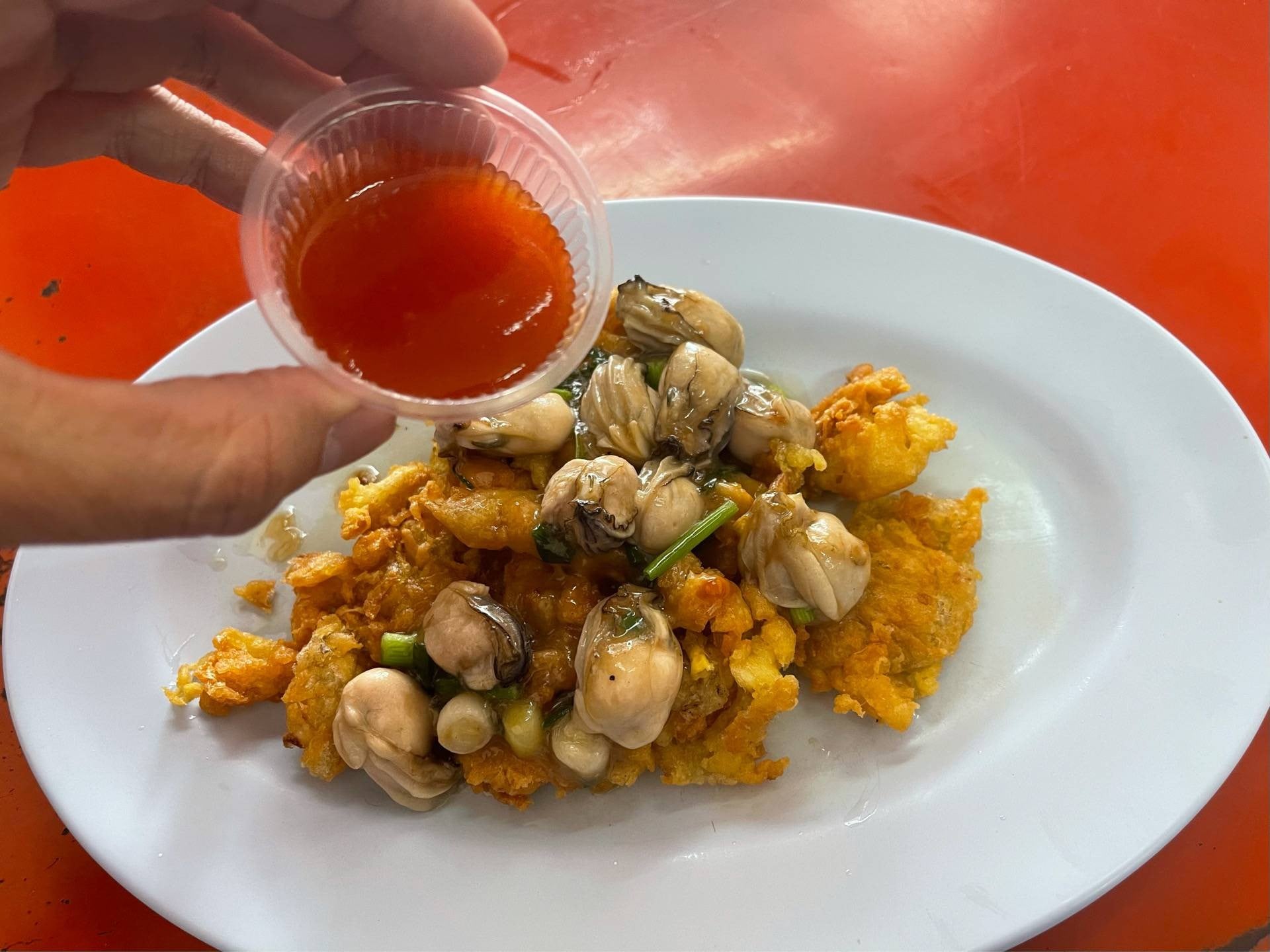
Any conversation about oyster omelette in Yaowarat has to include Nai Mong Hoy Thod. This single-unit shop on Phlab Phla Chai Road has been selling oyster omelette for over 40 years and has held Michelin Bib Gourmand recognition for several consecutive years — a go-to for anyone who wants the real old-school oyster omelette experience. A great fit for people walking Chinatown who want to stop for one standout dish, or oyster enthusiasts tracking down an institution. If it's your first time in Yaowarat and you don't know where to start, this is a safe and satisfying answer.
The must-order is the oyster omelette in two styles: o-luak is the crispy version — oysters fried on a hot iron wok at high heat, the batter coming out crisp with a slight char fragrance. O-suan is the soft, moist version — batter tender, egg runny, fully loaded with oysters. Both come with large plump oysters in a generous portion. People who don't eat oysters can get mussels fried or crab fried rice instead. Real reviews consistently say the oysters here are fresh and larger than at most comparable spots, the batter doesn't absorb excess oil, and the orange sour-sweet-spicy dipping sauce ties everything together. Some reviewers prefer o-luak for the crispiness; others go o-suan for the full oyster flavour.
Prices start around 120 THB for a small plate, with medium and large plates scaling up by size and oyster count — fair for the neighbourhood and the quality. The shop is at the entrance of Phlab Phla Chai soi, a short walk from MRT Wat Mangkon. The setting is pure Yaowarat street food: red plastic tables, limited seating, family team working the kitchen. Open approximately 10:00–19:00, Wednesday through Sunday, closed Monday and Tuesday (Sunday may close slightly early).
The restaurant stays popular because it has delivered consistent flavour for decades, backed by Michelin recognition. Queues in the evening are normal but move fast because the cooking is quick. Worth knowing: cash only — bring small notes. To avoid queuing, arriving in the mid-afternoon before the after-work crowd is the most comfortable window. Anyone with a seafood allergy can order the crab fried rice instead.
Khao Gaeng Jek Pui
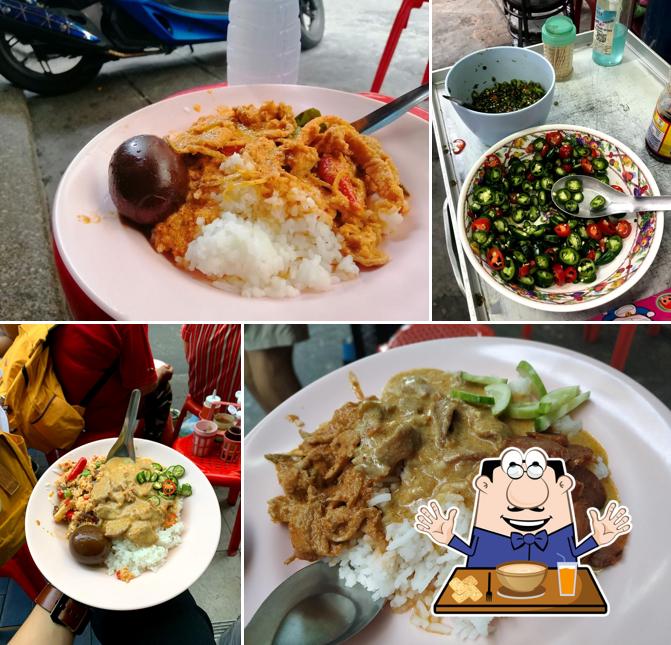
When it comes to legendary rice-and-curry in Yaowarat, the name that locals give almost unanimously is Khao Gaeng Jek Pui (Jeh Chia). A small shop in the lane beside Wat Leng Noei Yi on Mangkon Road that has been serving rice with curry across three generations, close to 70–80 years. What makes the place memorable is that there's no proper seating — customers grab a red plastic chair wherever they find one free, earning the restaurant its affectionate nickname: the musical-chairs shop. A good fit for people who want genuinely good food without caring about setting, and for Chinatown walkers looking for something to fill up on in the mid-to-late afternoon.
The dishes most ordered and most mentioned in reviews are the rice with curry — both chicken curry and pork curry — followed by green curry ladled over rice one plate after another. The distinctive thing is that you can get multiple things ladled onto one plate, often with roasted pork or Chinese sausage topped with fresh chilli added on. Real reviews are consistent: the flavour leans Chinese, not aggressively spicy, the curry is thick and aromatic, and one reviewer described it as "the best rice-and-curry I've ever eaten." Many others praise the braised pork as tender and yielding, the braised eggs as rounded, and the flavour as consistent across visits. Other recommended dishes include braised eggs, stir-fried crab with fresh chilli, green curry with fish balls, and pork panang.
The prices are very friendly. Most reviewers report around 45–60 THB per plate — roughly 50 THB — and you can eat full for under 100 THB. Location at no. 25 Mangkon Road, about 200 metres on foot from MRT Wat Mangkon. Open approximately 14:00–19:30 daily (some reviews note takeaway from around 13:30; proper sit-down from around 15:00 onward). Things sell out fast because it's very popular.
Part of the reason this shop became known internationally is that it appeared in Netflix's Street Food: Asia, bringing a wave of international visitors. Worth knowing before you go: coming early is better because things sell out, and the seating really is as limited as the nickname suggests. During peak hours you may need to wait or stand holding your plate. Anyone who can handle the street-food seating setup will find the old-neighbourhood curry flavour genuinely worth it.
Mont Nom Sod (Dinso Branch)
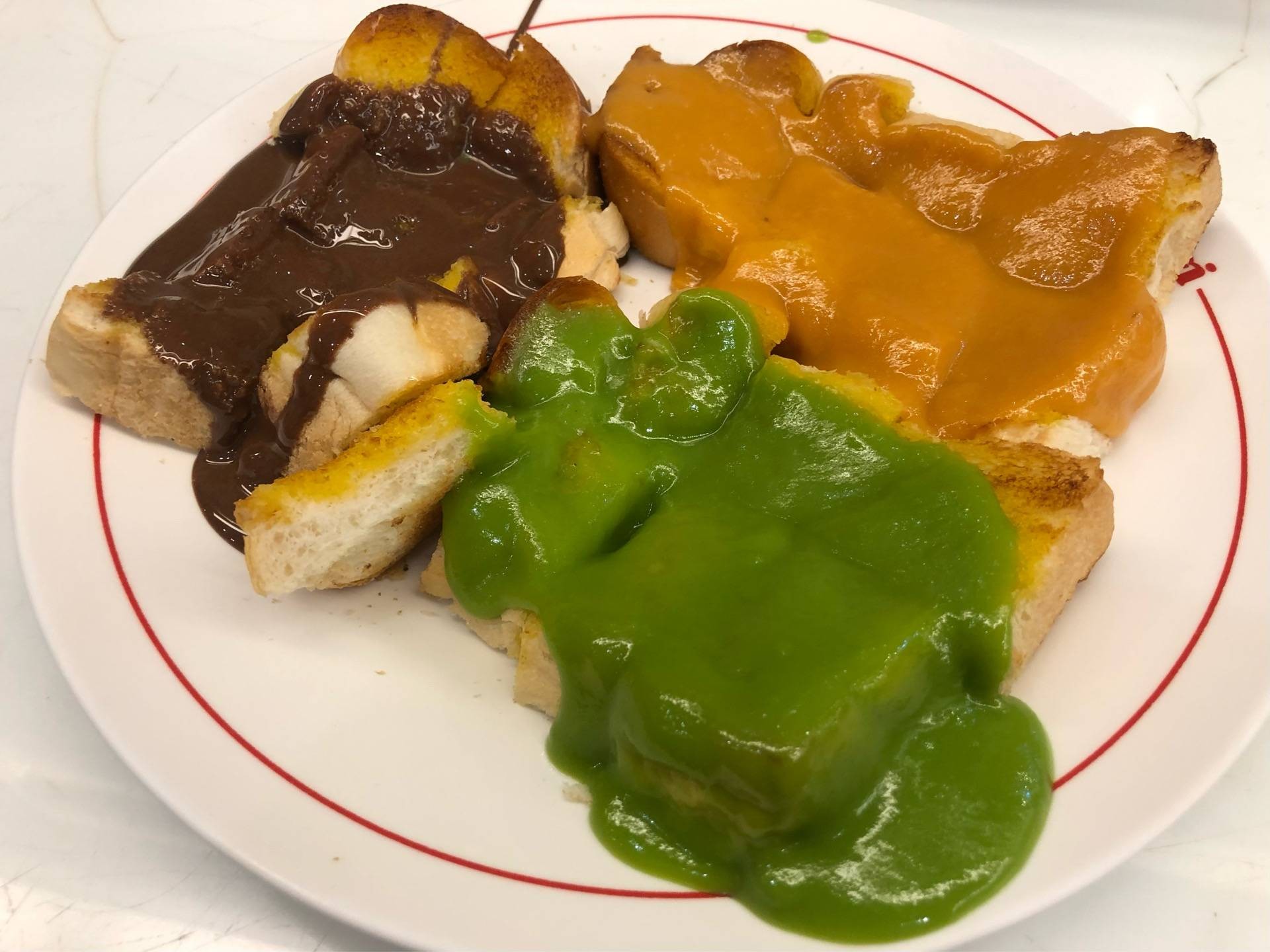
If you ask about the legendary toast-and-fresh-milk shop of Bangkok, Mont Nom Sod is the first name most people give — and the Dinso Road branch, across from Bangkok City Hall in the Sao Ching Cha area, is the original location that's been open since 1964, over 60 years now. A great fit for anyone who wants a light sweet snack in the evening, people who love soft toast topped with pandan custard, and anyone who's been walking around Wat Suthat and Sao Ching Cha and wants somewhere cool to sit and sip milk. Generations of Bangkok residents grew up with this shop, and it's become a spot that both Thai visitors and international tourists check into constantly.
The items reviews mention most are toast with pandan custard and buttered milk bread — the classic dishes that look simple but have a loyal following. Toppings available include pandan custard, chocolate, and corn soup. The pairing drink is the cold fresh milk served in the restaurant's distinctive pink-branded glass, plus the strawberry milk (pink milk) that's a regular order for many people. For something more filling, there's steamed milk bread dipped in pandan custard as well.
Real reviews are fairly unified: the bread is soft and fragrant with butter, not cloying in its sweetness, the fresh milk has a clean, creamy quality, and the texture is right. Some reviewers say the flavour is classic and nostalgic rather than exciting, and that quality can vary slightly between branches — this is a place that's pleasant because of memory as much as sensation.
Prices are comfortable: toast starting in the double digits per item, fresh milk around 60 THB, average per person roughly 100–250 THB including drinks. Location on Dinso Road, across from Bangkok City Hall. Open approximately 13:00–22:00 daily. Worth knowing: evenings get busy and seating is limited — if you want to sit in, a queue may be needed. Parking nearby is difficult; the best experience is eating it fresh at the shop rather than taking it to go.
Siang Ki Fish Rice Soup
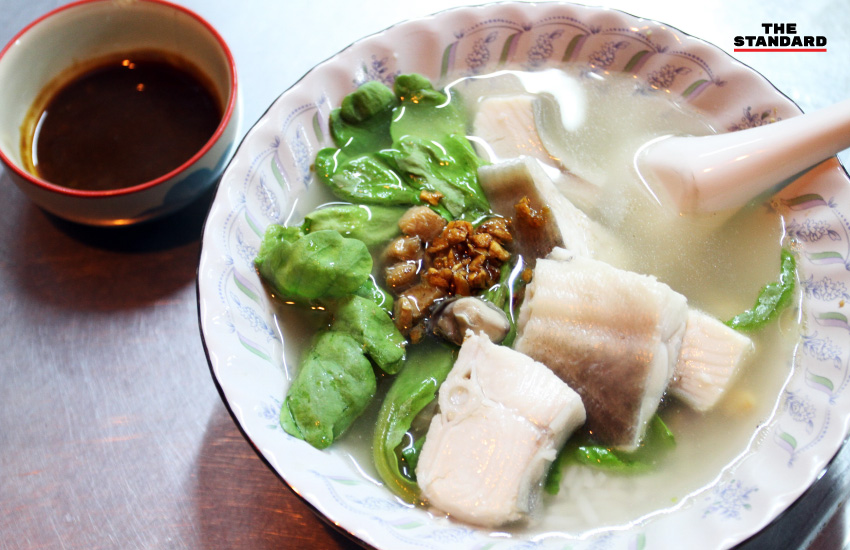
Siang Ki Fish Rice Soup is the legendary charcoal-stove fish rice soup shop that has been part of Chinatown for over 90 years — a Teochew recipe from Swatow, passed down through multiple generations. The shop is a single small unit tucked into Soi Charoen Krung 12 (Soi Bamrung Rat), near the Am Kaeng Chinese shrine alley, about 400 metres on foot from MRT Wat Mangkon. If you're looking for genuinely old-school fish rice soup — not a polished-up venue, but a place where the flavour comes from decades of Teochew Chinese hands — this is the shop Yaowarat people point to as the real institution.
The dish reviewers elevate to star status is the sea bass fish rice soup — large pieces of fish with the skin on — and the pomfret fish rice soup, which is the original house recipe. For seafood lovers, there's also oyster rice soup with plump oysters. And the item you can't skip is ba-teng — pork belly stir-fried with sweet-salty soy sauce — topped into the bowl. What multiple reviews agree on is that the fish is very fresh, firm, with no fishy smell at all. Wongnai reviews call it "fresh fish, firm flesh, delicious, not a hint of fishiness." The clear broth is cooked over charcoal until fragrant and smooth — easy to drink. There's a bed of morning glory greens, fragrant stir-fried oil, and fried garlic to add fragrance, plus a bold fermented-bean dipping sauce to cut through the richness.
The price needs to be stated honestly: this is not a few-dozen-baht rice soup. Bowls start around 300 THB, scaling to 400–500 THB depending on size and toppings. Some international reviews question whether the fame justifies the price — so if budget is tight, factor that in. Most regulars view the price as paying for freshness, heritage, and premium ingredients rather than a cheap fill.
The setting is simple roadside, no air conditioning, just a few tables outside the shop. The image of the silver-haired elderly owner and family standing at the always-burning charcoal stove is the photograph people come to take. Hours: approximately 16:00–22:00 (occasionally later), usually closed on the last Sunday of the month. Worth knowing before you go: parking is difficult in the narrow lane; some items like fish roe need to be ordered in advance; and this is strictly an evening restaurant. A natural choice for a warming bowl after an afternoon walking Yaowarat.
Guay Jub Mr. Joe
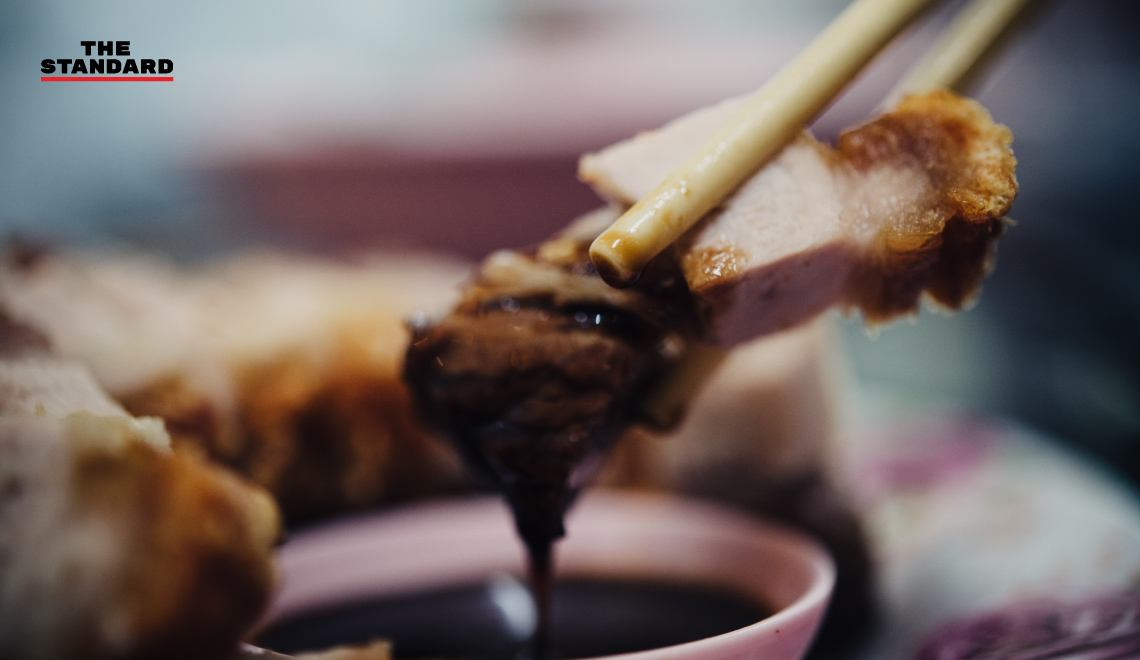
Guay Jub Mr. Joe is the legendary clear-broth guay jub shop in the Chan Road area of Bang Kho Laem — a place people cross the city for from early morning. The shop has been going for over thirty years, now in the second generation, and has earned Michelin Bib Gourmand recognition consecutively for several years. A great fit for anyone who loves Thai-style guay jub — the clear kind with a rolling white pepper hit — and for crispy pork lovers who want a skin that genuinely cracks when you bite it. This is not the Singapore dark-soy thick-broth style: it's pork-bone broth simmered until the pork is concentrated, seasoned with salt and white pepper to a fragrant, sharp warmth.
The must-order is guay jub with innards — the smooth, slippery rolled noodles with liver, heart, stomach, and tongue, all cut into generous pieces and cleaned until there's not a trace of off smell — and crispy pork, the real star of the place. The pork belly is marinated and air-dried before deep-frying; the skin puffs up and crackles loudly when you chew it, the meat inside still tender. Real reviews consistently say the pork skin is crispy enough to eat on its own, and that it needs the restaurant's thick sweet soy sauce to complete the flavour. Anyone who doesn't want noodles can order kao lao (broth without noodles) instead, and there are prawn wontons as a light side.
Pricing is reasonable in line with the Bib Gourmand style: guay jub and kao lao around 95 THB per bowl. Crispy pork available to order separately, and by the kilo to take home. Per-head cost stays well under 200 THB. The setting is a single shophouse unit that looks like a roadside stall but seats a decent number inside. Almost always packed, especially around midday. People who've been recommend avoiding rush hour if you want a comfortable seat.
Worth knowing before you go: open morning through afternoon — approximately 07:30–16:30 daily. Not an evening restaurant. Anyone planning to go for dinner needs to rethink the schedule. Location is on Chan Road between Soi 42–44; no BTS or MRT nearby — driving is easier, but roadside parking follows odd/even day restrictions (check the signs carefully). One important note: the restaurant is in Bang Kho Laem, not Yaowarat or the Texas soi in Chinatown. If you find a popular white-pepper guay jub shop in Yaowarat, that's a different place — don't confuse them.
🍢 Want to taste multiple restaurants in one trip? Try a food tour or cooking class
If you have limited time but want to cover several spots, a guided food tour is a much easier option than hunting each one down yourself — especially an evening walking tour of Yaowarat–Chinatown, where a guide takes you to multiple well-known stops and explains the story behind each dish. No guesswork about which place is worth your time. For anyone who wants to cook it themselves, a Thai cooking class is genuinely fun — you learn pad thai, tom yum, or Thai curry with a chef, then eat what you made. Book in advance through Klook or GetYourGuide. Half-day and full-day options available — compare reviews and prices before booking.
💡 What to know before you eat in Bangkok
Many of the popular restaurants are in the old town and Yaowarat, where BTS and MRT don't go directly. Grab is the most convenient option and shows you the price before you confirm. MRT Blue Line to Sam Yot or Wat Mangkon gets you into Yaowarat on foot. Within the same district, walking is recommended because restaurants are close together and traffic is often stuck.
Most street food shops and old-school restaurants are cash only — Nai Mong Hoy Thod, Khao Gaeng Jek Pui, and others. Always carry small notes. Some places accept PromptPay QR, but don't count on card payments everywhere. Larger sit-down restaurants are more likely to take cards.
Popular restaurants like Jeh O and Raan Jay Fai have very long queues during peak hours. Arriving just before opening or near closing is usually shorter. Late-night spots like Siang Ki Fish Rice Soup open mid-afternoon through midnight — good for avoiding the dinner crowd. Always check closing days before heading out; several restaurants close one or two days a week.
Street food and rice-and-curry shops in Thailand don't have a tipping culture — pay the listed price. Leaving small change or rounding up is a kind gesture if you want. Some sit-down restaurants include a service charge in the bill — check the receipt before you add more.
Well-known spots that draw international visitors — Raan Jay Fai, Thipsamai, Jeh O Chula — tend to have English menus or photo menus. Rice-and-curry and local neighbourhood shops may be Thai only; pointing at the tray of dishes or opening photos on your phone works fine. The phrases mai phet (not spicy) and phet nit noi (a little spicy) help if heat is a concern.
Most Bangkok street food is very affordable, but certain restaurant signatures are expensive. Raan Jay Fai's crab omelette runs over 1,000 THB because of the volume of crab used. Always check the price before ordering to avoid surprises. At the other end, Khao Gaeng Jek Pui plates run under 100 THB — it's possible to eat well for very little if you know where to look.
💡 Planning Bangkok eating into one day
If you have one day, grouping restaurants by district beats crossing the city. · Old Town–Sao Ching Cha zone puts Raan Jay Fai, Thipsamai Pad Thai, Krua Apsorn, and Mont Nom Sod (Dinso Branch) all within walking distance of each other — a full day of eating in one neighbourhood. · Yaowarat–Chinatown zone puts Nai Mong Hoy Thod, Khao Gaeng Jek Pui, and Siang Ki Fish Rice Soup all together — best started in the evening when the shops open and Yaowarat comes alive. · Jeh O Chula opens in the evening and runs late — allow time for the queue; arriving just before opening or late in the evening is shorter. · Legendary spots like Raan Jay Fai close on some days and the queue is very long — always check opening days in advance.
Eating your way around Bangkok over several days is much easier when your stay is well-placed. Choose a hotel close to the district you want to explore — good access to both the old town and Yaowarat makes the difference.
See stays in Bangkok →