🔄 Last checked 25 Jun 2026 · details and hours can change — check the venue before you go
📍 All restaurants on the map
Tap a pin for the spot + nearby stays
If you had to pick one neighborhood in Bangkok that covers every mood of eating, Silom-Sathorn is the answer a lot of people reach for first. By day it's an office district where workers pour out to fill every soi at lunch. Come evening, as the lights flick on, Convent Road, Surawong and Sala Daeng turn into such a dizzying mix of restaurants that a single soi might take you past an Indian place, an Isaan som tam stall, a bowl of thick guay jub, crispy-skin roasted duck — then one more turn and you hit a cocktail bar next to a smart dining room. The charm of this area is that it never forces you to pick a side: a hundred-baht street plate works, and so does a special meal in the thousands, and everything is within a walk or one BTS stop.
What makes it even better is that many of these places have real stories behind them. Prachak has been selling its original-recipe duck in Bang Rak for over a century and has become a pilgrimage spot for duck lovers. Le Du, by chef Ton, once topped Asia's 50 Best Restaurants and has held a Michelin star for years. Somtum Der and Baan Phadthai both carry a Bib Gourmand from the Michelin Guide. Among the old guard, Eat Me has been a Silom fixture since 1998, while Khao Tom Niyom and Hai Somtum Convent have served this neighborhood for decades without missing a beat. So we want to take you walking through it the way the people who actually eat here do — starting with these 10 places. We promise good food and an atmosphere you won't forget.
Eat Me Restaurant
We open the Silom-Sathorn list with a true institution: Eat Me, a modern international restaurant tucked into Soi Phiphat 2 (just off Convent Road) that has been part of Bangkok's dining scene since 1998 and has stayed on the Michelin list throughout. The space feels like an art gallery crossed with a dining room — high ceilings, exposed steel beams, low lighting, and a rotating display of work by Thai artists. If you're after a good date-night table, a celebration meal, or dinner for a serious food lover, this is the place a lot of people think of first.
American chef Tim Butler (who trained with Marcus Samuelsson and Daniel Boulud) runs an international-leaning menu that plays world ingredients off Thai flavors in fun ways. The dishes reviewers mention most are the Aussie beef — A5 Wagyu tataki and grilled Wagyu tenderloin served medium-rare with a smoky barbecue sauce, so tender that plenty of diners rave about it. Other standouts are Manila clams stir-fried with naem (fermented pork sausage), maitake mushrooms bourguignon, and the sashimi. Finish with the chocolate dessert and homemade ice cream, which reviewers say really is made in-house and worth it.
Another draw is the ground-floor cocktail bar with a leafy outdoor courtyard. The cocktails here like to play with Thai ingredients such as wild betel leaf — an easy spot for a drink before heading upstairs for dinner. Service has a reputation for being attentive without being overbearing. Prices lean premium, with many mains running from the high hundreds into the low thousands of baht, and a full meal per person usually landing around 1,200–2,500 THB. It suits a special occasion more than a quick bite.
Good to know: Eat Me is open evenings into the night, 17:00–01:00 daily (Sundays add brunch from 11:00), with the kitchen and bar taking last orders around 1am. Weekends get busy, so book ahead. The English menu is complete and staff handle international guests well. Parking in the soi is limited — a motorbike taxi or a regular taxi from BTS Sala Daeng / MRT Silom is easier.
Le Du
Le Du is the modern-Thai restaurant many people name as Bangkok's fine-dining benchmark. Chef Ton-Thitid, who worked at Eleven Madison Park in New York, retells seasonal Thai ingredients through Western technique — the name "Le Du" (a play on the Thai word for season) comes from exactly that, since the menu changes several times a year. The restaurant has held one Michelin star continuously since 2019 and topped Asia's 50 Best Restaurants in 2023. If you love a special meal that shows you Thai flavors from an angle you've never seen, this is a great fit — especially for a celebration or an important dinner.
The menu is a tasting set with a choice of 4 or 6 courses. The dish almost everyone talks about is the signature river prawn — grilled river prawn glazed in a tom yum sauce with prawn fat, served alongside a shrimp-paste rice cooked risotto-style using shrimp paste from Mae Hong Son. Thai-food bloggers rate this dish the highest of the meal and say they order it every single visit. Another summer standout is the restaurant's take on khao chae, which plays with jasmine ice cream, pork-and-shrimp balls, and the proper khao chae side dishes. Even the mango sticky rice that closes the meal draws praise from Western reviewers as better than expected.
Reviews land fairly consistently: the food is thoughtfully composed, beautifully plated, and still tastes Thai. Staff look after you well and the sommelier makes interesting wine suggestions. The notes that come up often are that prices run high relative to the portions, and that at certain evening seatings tables get rushed to make room for a second turn. If you don't like being hurried, book a later seating for a more relaxed time. The 4-course menu runs around 3,900 THB and the 6-course around 4,500 THB, before a wine pairing of roughly 2,500 THB — a meal you'll want to budget for.
It sits on Silom Soi 7 in Bang Rak, about a 4-minute walk from BTS Chong Nonsi, easy to find. It runs mainly as a dinner restaurant, around 18:00–23:00, with lunch service on some days. You'll always want to book ahead because tables fill nearly every day despite the premium price. If you want to try Michelin-level Thai food that's bold enough to play with our own ingredients, Le Du is one of the first names worth having on the list — and worth leaving plenty of time for a long, unhurried meal.
Prachak Roasted Duck, Bang Rak (Prachak Pet Yang / Ped Prachak)
Prachak Roasted Duck in Bang Rak is an old Thai-Chinese roast duck shop that has stood on Charoen Krung Road for over a century — open since 1909, with the recipe passed down through the family to the current generation. It occupies an old shophouse across from Robinson Bang Rak, just a short walk from BTS Saphan Taksin Exit 3. It's perfect if you want legendary roasted duck with zero need to dress up — a first meal as you arrive in the Silom-Bang Rak area, or a satisfying, good-value bite after wandering and taking photos around Charoen Krung.
The dishes almost every table orders are duck over rice and duck egg noodles. The highlight is the crispy duck skin and tender meat that pulls away easily, ladled with a fragrant, deep-colored gravy and eaten with pickled ginger and soy-sauce chilies to cut the richness. Groups often order the roasted duck as a plate to share, or the mixed "cheh po" plate with duck, red pork and crispy pork all on one dish. Other favorites are the shrimp wontons and duck wonton noodles, while the red pork and crispy pork have their own regulars — some reviews even say the pork is as good as the duck, or better.
Most reviews line up the same way: tender duck, a deep, well-spiced gravy, and easy prices for the portion. Duck over rice and noodles run around 79–105 THB, while shrimp wontons and mixed plates move up a little, and you can order a whole duck to take home. The setting is a simple old shop with tables packed close together. Lunch and dinner draw crowds of both locals and tourists, and there's soup you can ladle yourself.
Good to know before you go: the duck tends to sell out fast — plenty of people report it running low by late afternoon to early evening, so for the full spread go before noon or in the early afternoon. The shop is open daily, roughly 08:30–20:30, but the best items may be gone before closing. Cash is easier, and there's almost no parking — coming by BTS is by far the simplest. Staff speak some English, and the menu has photos and English labels, so ordering isn't hard for visitors.
Somtum Der, Sala Daeng branch
When it comes to som tam shops in Bangkok where foreigners and Thais happily queue side by side, "Somtum Der" at Sala Daeng is one of the first names that comes up. This is the original branch, open since 2012 in a small soi at the mouth of Silom Road, just a few minutes' walk from BTS Sala Daeng / MRT Silom. From a tiny shophouse, it has grown into an Isaan restaurant with branches as far as New York, Tokyo and Taipei, and it's been in the Bangkok Michelin Guide for several years running. It's ideal if you want fiery Isaan food in comfortable, air-conditioned surroundings — no sitting at a hot roadside stall — while still getting that proper, punchy flavor.
The dish reviewers mention most is the "Som Tum Der fried chicken thigh" — crispy skin, tender, juicy meat — and plenty say they reorder it every time. Then there's the "crying tiger" beef and the beef nam tok, with tender meat and a fragrant grilled aroma. The star, of course, is the som tam, with more than a dozen versions to choose from — from Thai-style, to a savory crab-and-pla-ra, to Luang Prabang-style. If you like something different, try the "fried catfish" som tam, with crispy fluffed fish under a sour-spicy dressing, eaten with a side of hot sticky rice. The Isaan stir-fried noodles are a snack many tables order too. On flavor, most reviews praise it as full-bodied and properly seasoned, with the pla-ra savory rather than overpowering — though anyone who doesn't do heavy spice is warned to order it milder up front.
On price, it runs notably higher than roadside som tam — roughly 250–500 THB per person. Som tam starts in the low hundreds, and meaty dishes like the crying tiger beef climb toward the high 200s. But for a Michelin-listed, air-conditioned spot in the heart of Silom, many reviews see it as worth the flavor and the setting. The room is bright and cheerful in a "metro Isaan" style, with mor lam music mixed with international tracks playing easily in the background.
Good to know: the place isn't large and it gets very busy, especially weekday lunches and weekend dinners — at peak times you may have to wait for a table. It's open daily 11:00–23:00, with delivery available, accepts credit cards, and has an English menu for visitors. If you're in Silom-Sathorn and want to try Isaan food with a Michelin stamp, this is a spot you shouldn't miss.
"Hai" Somtum Convent
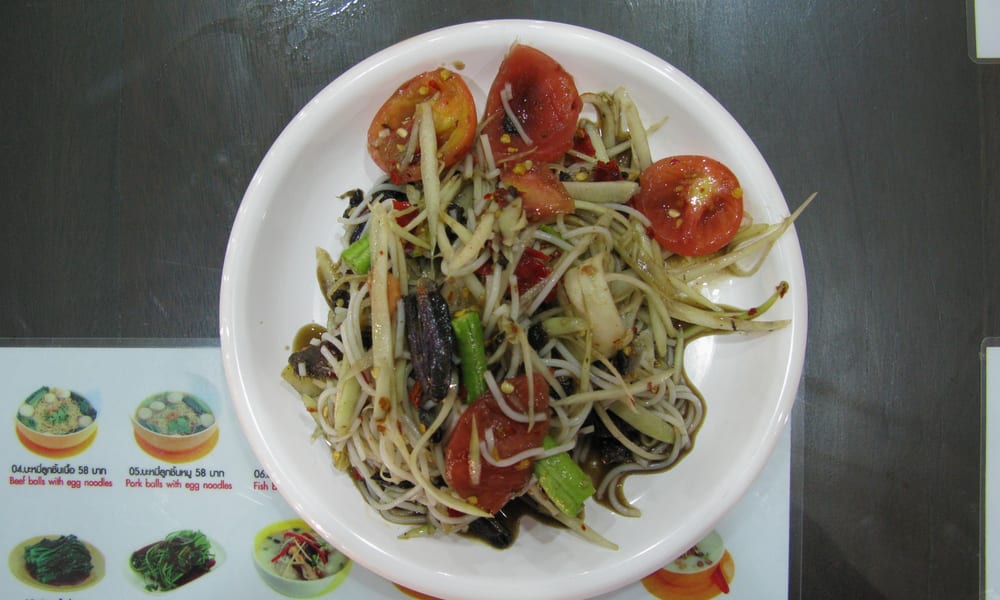
If you work around Silom-Sathorn and want fiery som tam and fragrant grilled chicken without traveling far, "Hai Somtum Convent" is a name locals have talked about for nearly 30 years. The shop sits in Soi Convent, across from Park Silom, just a short way into the soi from BTS Sala Daeng Exit 2. It's an open-fronted shophouse right on the street — the ground floor has oscillating fans in classic som tam style, while the upper floor is air-conditioned for the hot days. The selling point is speed: offices around here pack it out at lunch every day, and the food comes fast, with almost no waiting.
The regulars' orders are blue swimmer crab som tam (lots of crab meat, nicely sour-forward), salted-egg som tam where the rich yolk plays off the dressing, grilled pork neck, charcoal-grilled chicken, pork larb, grilled/roasted catfish, and a tom saap pork-rib soup that's sour-and-spicy and easy to slurp down. For something a little unusual there's sweet liver, fried chicken tendon and naem to try too. What reviews agree on is fresh ingredients — you can see the basins of som tam prep laid out fresh at the front — and grilled chicken that's juicy and moist.
To be honest and give you the real picture, not every plate here is equally consistent. Some reviews note the grilled pork neck was a touch dry on the day, the overall flavor leans sweeter than truly upcountry Isaan som tam, and the som tam prices run higher than a typical roadside shop because it's in the heart of Silom. If you're not great with heat, just tell the team to dial down the chili when you order — the house standard really is properly spicy.
Plates run about 40–120 THB, with a meal averaging around 150–250 THB per person — good value for this central a location. It's open Monday–Friday roughly 10:30–21:00, while Saturday–Sunday it closes early, around late afternoon to 5pm. Weekday lunch is the busiest; if you can avoid it, try mid-afternoon for a more relaxed seat. It suits Silom office workers who want a one-plate som tam meal, or groups coming to share Isaan dishes and get properly fiery in the middle of the city.
🛏️ Stay in Silom-Sathorn and eat the whole neighborhood on foot
The charm of staying in Silom-Sathorn is that nearly every spot on this list is within a walk or one stop away. Wake up and stroll over to Prachak for duck over rice, hit Somtum Der near Sala Daeng at lunch, settle in for a long evening at Eat Me, then walk back to your hotel with no trouble. The area has stays for every budget, from boutique hotels on quiet sois to five-stars on Sathorn Road right by the BTS and MRT. Pick a spot near a station and you're set for both eating and sightseeing.
The Indian Hut
When it comes to Indian food in the Silom-Surawong area, "The Indian Hut" is one of the first names that comes up — the restaurant has been open since 1995 and is a pioneer of North Indian and Indian-Chinese fusion cooking in Bangkok. It sits on Surawong Road, diagonally across from the Manohra Hotel, near the Silom Hindu temple, a short walk from BTS Chong Nonsi or Sala Daeng. It's ideal if you want serious Indian food in a comfortable sit-down setting rather than a roadside stall, and it works especially well for larger groups or functions, since the restaurant has two floors and caters buffets.
The dishes ordered most often and praised across reviews are the butter chicken (Murgh Makhani), with a rich, fragrant, well-rounded sauce; dal tadka, a punchy seasoned lentil dish many say is good enough to slurp on its own; soft charcoal-oven naan with fragrant char marks (try the garlic naan or rumali roti); biryani, both chicken and mutton, with plenty of rice and substantial meat; and on the vegetarian side, paneer (Pasanda / Lababdar / Tikka) and a dahi puri that reviews call fresh and well-seasoned. If you like grilled dishes, there's Murg Malai Kebab and Kalmi Kabab to try.
On flavor, many Indian guests themselves say the same thing — "the best I've had outside India." Service is quick, the cooking is properly seasoned, and the staff are Indian and take good care of you. Another thing many praise is how well the kitchen controls the spice aromas, so it doesn't feel as heavy as a typical Indian restaurant — which makes it a good place for people not yet bold enough to try Indian food. The decor is classic and a bit grand — high ceilings, mirrors and frescoes — and feels slightly formal. Some find it a touch dated, but in exchange for food this well made, it's a fair trade.
Prices are mid-range, around 251–500 THB per person. Naan starts at about 90 THB, and paneer/main dishes run roughly 300–400 THB; two people ordering several dishes lands around 1,000–2,000 THB including tax and service charge. Good to know: VAT and service are added separately. It's open daily 11:00–23:00, has parking, takes credit cards, serves alcohol/cocktails, and offers vegetarian options and a Jain menu. With 4.3 on Google and 4.3 on Tripadvisor from over 300 reviews, it's an established Indian restaurant that has kept its standards up.
Baan Phadthai
If you think pad thai is just a roadside dish for a few baht a plate, Baan Phadthai on Charoen Krung 44 will change your mind. It's the work of the same team behind Issaya Siamese Club, taking the familiar plate of pad thai and refining it, served in an old blue-painted wooden shophouse with a retro feel. The real selling point is the house pad thai sauce, made with as many as 18 ingredients — it uses Chanthaburi rice noodles, hand-pounded dried shrimp, duck egg and crab fat, plus a crab stock instead of shrimp, so the flavor is deeper and more fragrant than you're used to. It suits anyone who wants pad thai made with real care, or who's bringing international guests to try Thai food without any embarrassment.
The dishes reviews agree on are the grilled river prawn pad thai, with big, glistening prawns, and the crab pad thai loaded with ingredients. If you come in a group, try the giant sea-crab pad thai, served large enough to share around the whole table. Another not-to-miss is the charcoal-grilled pork pad thai, with pork fragrant from the grill. For a snack, the miang kana (Chinese kale wraps) is recommended, and finish with mango sticky rice. Most reviews praise noodles cooked beautifully — soft but not mushy, carrying that wok aroma that ordinary pad thai shops rarely manage — with a sauce that balances sour, sweet and salty just right.
On price, it's straightforwardly more expensive than roadside vendors. Pad thai starts around 160 THB and climbs to 250–280 THB for the river prawn and crab versions. Some reviews feel the flavor has been tuned a little toward tourists, and that the portion-to-price ratio may not match a street stall. But for the quality of the ingredients and the care taken, most people say they don't regret paying. The setting is another win — decorated like a bright, freshly painted old Thai house, very photogenic.
It sits in Soi Charoen Krung 44, Bang Rak, walkable from BTS Saphan Taksin. It carries a Bib Gourmand from the Michelin Guide for several consecutive years since 2018, so it's no surprise it ranks among the most talked-about pad thai shops in Bangkok. Open daily 11:00–22:00. Good to know: there's no parking — better to park at Robinson Bang Rak and walk into the soi. Weekend lunch and dinner get crowded, so allow a little time to wait.
Guay Jub Silom, Soi Convent
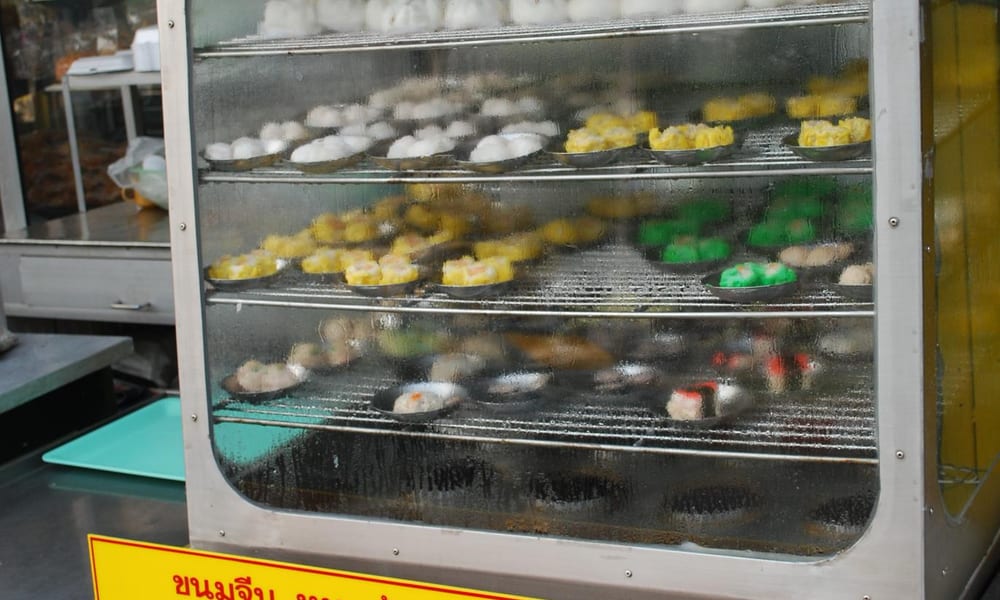
Guay Jub Silom is an old thick-broth guay jub shop in Soi Convent, open for more than 30 years — from a roadside pushcart to a shophouse across from the Park Silom building. If you work around Silom-Sathorn, or you're out walking and want something hot and Chinese to slurp, this is the spot locals think of first. The must-order is the thick-broth guay jub loaded with toppings — a full bowl with crispy pork, liver-and-tripe offal, fried tofu and a whole boiled egg. If you like the traditional noodles, you'll get blanched guay jub rolls, chewy and just right, curling up to catch the broth in every bite.
Real reviews say the same thing: the broth is the star, simmered with spices and five-spice powder until deeply fragrant, rich and Chinese in flavor, loaded with white pepper, warming you right up. The crispy pork is fried crisp without being greasy, and the offal is clean and well prepared, not gamey. Another dish many quietly say is just as good is the sea bass rice soup, with a clear broth and fresh fish — some even say the fish rice soup here outshines the guay jub itself. For anyone who isn't keen on offal or doesn't like it too rich, you can order it with a clear broth, or as a noodle-free soup.
Prices are friendly: thick-broth guay jub starts around 60 THB, and a loaded bowl is about 95 THB — under a hundred per head. Seafood/fish/shrimp rice soup runs around 125 THB a plate, and you can order crispy pork as a plate too. The shop is a two-unit shophouse with seating downstairs and up, in the atmosphere of an old street-food joint, tables close together, busy at lunch with Silom office workers.
Location: at the start of Soi Convent, about a 5-minute walk from BTS Sala Daeng or MRT Silom, easy to find since it's across from Park Silom. Hours: roughly 11:00–22:00, closed Saturdays. Good to know: opening hours can shift slightly day to day, so if you're coming late or on a holiday, check their page first — and if you'd rather not fight office workers for a table, avoiding noon makes it more comfortable.
Khao Tom Niyom, Silom Plaza (Niyom / 時興飯店)
When it comes to old-school "khao tom kui" (Chinese rice soup) in Silom, the name "Khao Tom Niyom" (時興飯店) on the 1st floor of Silom Plaza always comes up first. The shop has been open for decades — it was originally near Surawong Road in the father's generation, before a fire forced a move to Silom Plaza, same team, same hands. It's Teochew-style rice soup where you order Chinese dishes to eat with the hot soup. It's perfect for an evening or late-night Chinese meal after work in Silom-Sathorn — come as a table, order several dishes to share, or as a night owl looking for something good when everywhere else has closed.
The dish almost every table orders is the stir-fried clams in chili paste (around 220 THB) — big, fresh clams in a punchy sauce that soaks into the meat and keeps you coming back. Then there's the squid with salted egg, fragrant and just rich enough, the pork with lime, fresh and tart to cut the richness, and the fluffy salted-radish omelet that's a classic partner to Chinese rice soup. Another favorite is the minced pork soup with preserved plum — many places make it too sharply sour, but here the sour-and-salty balance is just right. If you like things bold, add minced pork stir-fried with salted black olive, or fire-stir-fried morning glory. For something unusual, there's a tasty pickled crab to try.
Most reviews land the same way: consistently good, quality ingredients, and the same flavor no matter how many times you visit. What to know before you go is that prices run notably higher than a typical khao tom kui shop — averaging around 250–500 THB per person if you order several dishes — and some reviews grumble about the service, a quirk of old-school shops you have to make a little peace with in exchange for flavor that has stood here for so long.
It's easy to find — the shop is in Silom Plaza right on the main Silom Road, walkable from BTS Sala Daeng or MRT Silom. It opens in the late afternoon and runs late, usually about 2pm to 1am, with Friday-Saturday nights often going longer. It's a late-night landmark of Silom that has been around long enough to become one of Bangkok's khao tom kui legends.
Ros'niyom, Silom Complex branch
If you're walking around Silom at lunchtime and you're hungry but don't want to bake in the sun hunting for a roadside shop, Ros'niyom at Silom Complex is the safest answer. It's a one-plate Thai street-food restaurant in the iberry group, on B1 right in front of Tops, just a minute's walk from BTS Sala Daeng Exit 4. It suits workers around here who want familiar Thai food in a cool, comfortable air-conditioned room without the crush — solo, with the office team, or with family, it all works, because the menu is big and covers noodles, rice and desserts.
The dishes ordered often and mentioned a lot in reviews are the flame-torched yen ta fo, which many say is so good you don't need to season it — a well-rounded broth loaded with toppings. For rice, there's tender stewed pork leg over rice, red pork and crispy pork over rice, and a loaded pork tom yum noodle that's packed with ingredients and properly fiery. If you like trying something different, there's bouncy boiled pork balls with seafood dip, and shrimp-paste fried rice. Finish with desserts like mango sticky rice and bingsu, perfect for Bangkok's hot weather. Most dishes land around 100–130 THB a plate, and a proper full meal runs about 150–250 THB per person — reasonable for a mall restaurant in central Silom.
What international visitors like is the picture menu with English descriptions — easy to order, no guessing. Service is quick too, with plenty of staff who are easy to flag down, and it takes both cash and QR payment. Most reviews say it's "good for the price" — worth the quality you get in a location like this. Some reviews note a few dishes aren't as bold as expected, or that some lean sweet, but overall the shop has held its spot in Silom Complex for a long time while neighbors change hands often, which tells you the regulars really are plenty.
Good to know: weekday lunch break (roughly 11:30–13:00) gets packed as the Silom offices come down to eat — if you can, come before or after for a more relaxed seat. It's open long hours, 10:30–22:00 daily, making it a good pick for lunch, dinner and a late meal after wandering around Silom.
Want to taste several places in one trip? Try a food tour or cooking class
If you're short on time but want to taste it all, going with a guided food tour helps a lot — the guide takes you weaving through the standout shops in old neighborhoods like Bang Rak-Charoen Krung, orders the signature dishes for you so there's no guessing the menu, and tells you the story behind each plate as you walk. If you'd rather get hands-on, there are Thai cooking classes that start with a market walk to choose ingredients and end with you stir-frying your own dishes. Book ahead through Klook or GetYourGuide — pick a slot that fits your itinerary, then keep eating the places on this list on the other days.
💡 Know before you eat in Silom-Sathorn, Bangkok
Most places on this list sit around Silom, Convent, Surawong and Sala Daeng. Get off at BTS Sala Daeng or MRT Silom and walk from there. For the slightly farther spots like Charoen Krung, a short Grab is more convenient and not expensive.
Fine-dining and mall restaurants take cards and QR payment, but roadside and old shops like Guay Jub Silom or Hai Somtum Convent are mostly cash. Keep small bills and coins on you and you'll move faster.
Silom-Sathorn is an office district — from 12:00–13:30 on weekdays it's packed with long lines at almost every shop. For a relaxed seat, go before noon or after 2pm. For popular dinner spots, book or arrive early evening.
The Isaan food and som tam around here are genuinely fiery. If you're not great with heat, just tell the staff 'mild' or 'no spicy' — most places will adjust — and order sticky rice and cold water to help cut the heat.
Eat Me, Le Du, The Indian Hut, Somtum Der and the mall restaurants have English menus and staff who speak English. Old roadside shops may only have a Thai menu — point at a photo or show the dish name from a review, and the vendors are friendly and always happy to suggest something.
No need to tip at street shops. Many sit-down restaurants already add a 10% service charge to the bill. If there's none and the service was good, rounding up or leaving the loose coins is fine — there's no hard rule.
Plan a full day of eating in Silom-Sathorn
You can eat here all day if you order things in the right sequence. For lunch, go for fast bites like Guay Jub Silom on Soi Convent, duck over rice at Prachak, or pad thai at Baan Phadthai — these serve quickly and aren't too heavy to walk off afterward. If you'd rather sit a while in air-conditioning, pick The Indian Hut or Somtum Der's Sala Daeng branch, both close to the BTS.
Save the upgrade for dinner. For a special occasion, book Le Du or Eat Me ahead, since tables fill fast, especially Friday-Saturday. If you're a night owl or coming out after a party, Khao Tom Niyom at Silom Plaza runs late until 3am — order the stir-fried clams in chili paste with hot rice soup to close out the night. Two or three places a day is about right; don't cram them all into one, because the portions here are serious.
Eaten your way through the day and want to walk back to your stay nearby? Silom-Sathorn has hotels from cute, affordable boutiques to five-stars on Sathorn Road. Stay near BTS Sala Daeng or MRT Silom and you can walk to almost everything on this list.
See well-located stays in Silom-Sathorn