🔄 Updated 21 Jun 2026
Trat sits at the far end of eastern Thailand, about a 4–5 hour drive from Bangkok. Most people think of the sea and Koh Chang first, but if you come in the hot season rolling into the rains, this province is fruit country you shouldn't skip. The hillsides around Khao Saming district grow durian, rambutan, mangosteen, longkong, and salak, while the lowlands are known province-wide for Trat Si Thong pineapple and sweet salak. Trat's fruit season is fairly short — it starts around April and runs through July, with the best and ripest stretch being April to June. We've split this into the fruit you have to try, the orchards that welcome visitors, and where to buy a haul to take home, so you can pick what fits your plan.
Trat Fruit You Have to Try — What's Best, and When
Trat's fruit is similar to Chanthaburi's because the two provinces border each other, but Trat has signatures of its own — Trat Si Thong pineapple and sweet salak — that are harder to find as good anywhere else. Durian, rambutan, and mangosteen are the headliners every orchard grows. Here are the standouts worth trying and when each one tastes its best.
Trat Durian (Monthong, Chanee, Kan Yao)
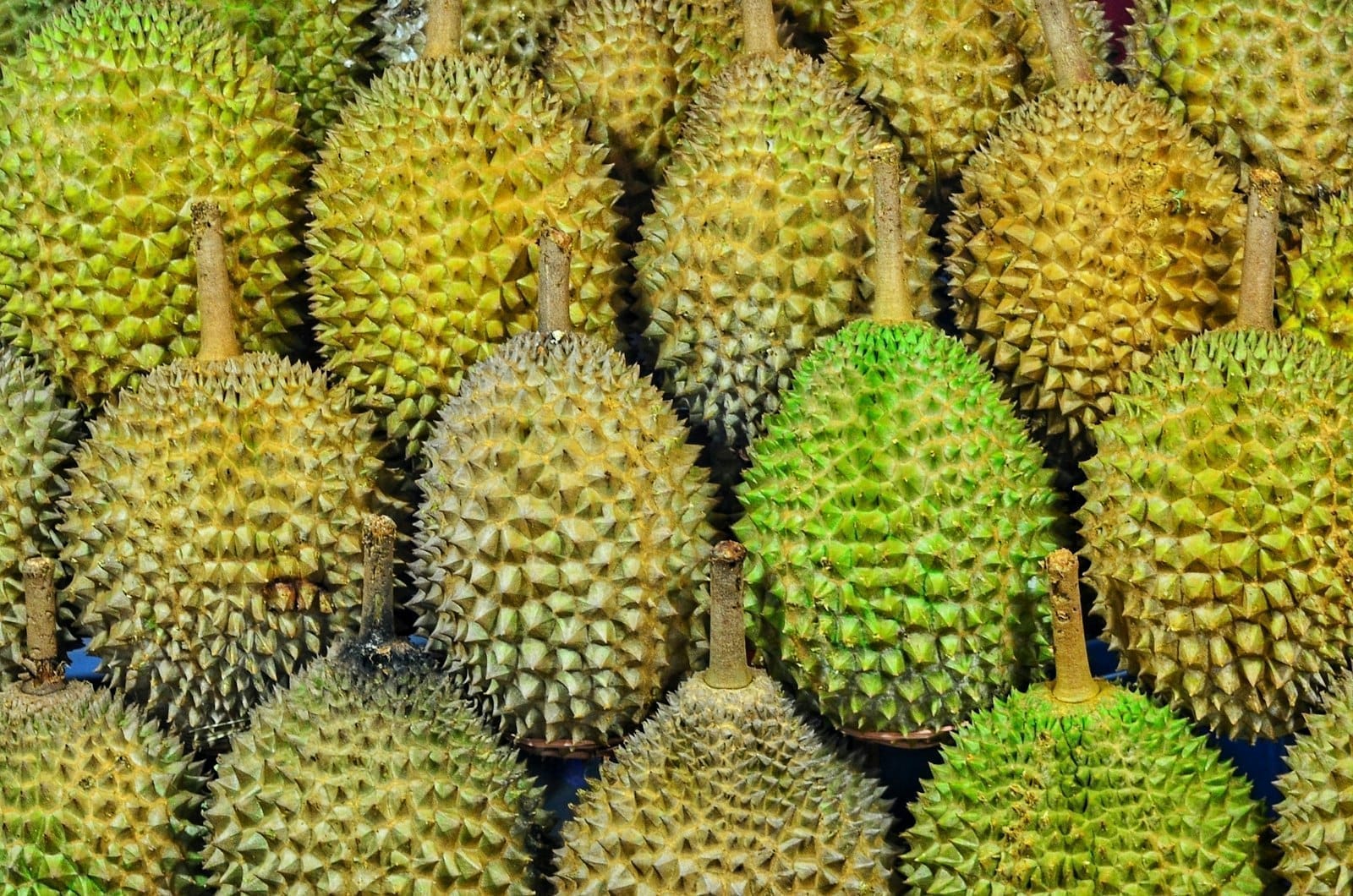
The star of the season. Trat mostly grows Monthong — thick, dry flesh that's sweet and creamy — followed by Chanee with its deep-yellow flesh and stronger smell, and the harder-to-find Kan Yao. On Koh Chang there's Koh Chang Chanee, which carries GI status. Trat durian tends to ripen a touch earlier than other regions. Buy from an orchard that cuts the fruit good and mature and you'll get flesh ripened just right.
Trat Mangosteen
The queen of fruit, always paired with durian. Trat mangosteen has a thin rind and white flesh that's sweet with a hint of tart — perfect for cooling down after durian. Prices run higher early in the season, then drop once supply picks up. Pick fruit with a rind soft enough to give slightly when pressed and the flesh will be tender, not hard.
Trat Rambutan (Rongrien variety)
Rongrien rambutan has crisp flesh that comes clean off the seed, sweet and juicy. It's the easiest to eat and the cheapest of the bunch, and it ripens right alongside durian. Buy it by the bunch or by the kilo. Look for bunches with bright red spines tipped in green for the freshest fruit.
Trat Si Thong Pineapple
The province's signature fruit, the one people think of first. Golden-yellow flesh, sweet and juicy, with shallow eyes that make it easy to peel, and it doesn't sting your tongue like ordinary pineapple. It's around for most of the year but tastes best in fruit season. Eat it fresh on the spot or carry a few home whole.
Khao Saming Sweet Salak
Trat salak is known for hitting that sweet-and-tart balance just right, without the astringency you get elsewhere. It's famous enough that the province throws an annual Sweet Salak Festival in late May. The flesh is orange-pink with a fragrant smell — eat it fresh or carry some home.
Longkong & Salacca
Two supporting players you'll usually find in the same orchards as durian. Longkong has clear, sweet, fragrant flesh, while the Sumalee variety of salacca is firm with a sweet-tart bite — both good for switching up the flavor after heavier fruit. They're worth taking home too, since they keep longer than durian.
How to Pick Good Fruit
Trat durian is usually sold "cut mature" so it ripens on the way home. If you want to eat it today, ask the seller to pick a fruit with a stem starting to dry out and a faint smell when you sniff it. For mangosteen, choose ones with a soft rind that gives a little when pressed so the flesh isn't hard-cored. Early-season fruit (just hitting the market) usually costs more than mid-season — if you want better prices, wait for May to June when supply is high.
Want to taste deeper? Try a Trat food tour or cooking class
Half a day with a local who knows the lanes — or cooking a dish yourself — teaches you more than just eating. Book ahead on Klook or GetYourGuide.
Visiting Khao Saming Orchards — Tours, On-Site Tasting & Buffets
The hub of Trat's orchards is Khao Saming district, especially the Saen Tung and Thung Nonsi subdistricts. Many orchards open for visitors to walk among the durian trees, taste fruit straight off the tree, and join all-you-can-eat fruit buffets during the season. The Trat tourism office has put together agritourism routes in the past, and some years there are deals where self-drive visitors get a discount on entry. Most orchards open around 7:00–17:00, and it's worth calling at least a day ahead to book, since what's available changes with each ripening cycle. Here are the real orchards that welcome visitors.
Suan Phon Amphai
A popular orchard in Thung Nonsi subdistrict with rambutan, durian, mangosteen, longkong, and Trat Si Thong pineapple. They sell at the orchard gate, take online orders, and run a fruit buffet during the season. Many people choose it for the variety and the fact that the buffet is a proper, well-organized affair.
Suan Nai Amphoe
An orchard in Saen Tung subdistrict with durian, mangosteen, longkong, rambutan, salacca, and Trat Si Thong pineapple — the full lineup in one place. They sell at the gate and take online orders, and open for visitors to stroll among the trees and pick fresh. Good for anyone who wants several kinds of fruit from a single stop.
Suan Phaithun
A Khao Saming orchard with Monthong durian, mangosteen, longkong, and rambutan. Its draw is the fruit buffet, which usually only runs in May. Orchard entry runs about 100–150 baht per person. It's worth calling a day ahead to reserve, since each day's harvest varies.
Suan Durian Mueang Trat
An orchard in Saen Tung subdistrict focused mainly on durian, with mangosteen and rambutan too. They run a fruit buffet during the season. Good for anyone whose main goal is eating durian fresh off the tree. Call ahead to check the harvest cycle and what's in the orchard before you go.
Suan Salacca Sompoch
An orchard in Wang Krachae subdistrict near the town center, known for firm, sweet-tart Sumalee salacca. They also have mangosteen, longkong, and pesticide-free vegetables. They sell at the gate and online. Salacca keeps well, so it's a good one to carry home as a gift.
Koh Chang Durian Orchards (Koh Chang Chanee GI)
If you're visiting Koh Chang during fruit season, there are durian orchards on the island growing Koh Chang Chanee, which holds GI status and has a distinctive flavor from the volcanic soil. Some orchards open for visits and fresh sales. The harvest comes around April–May. Ask your resort or locals which orchards are open during your trip.
Tips for Visiting Orchards
Trat's fruit season is short — the window when orchards are open with fruit ready is roughly April to July. Always call at least a day ahead to book, since what's in the orchard changes with each ripening cycle and some days fill up. The fruit buffet is usually eaten on-site, not packed to go, but you can buy a haul to carry home separately. Wear shoes you can walk an orchard in, and bring cash, since many orchards don't take cards.
Where to Buy Trat Fruit — Roadside Stalls, Markets & the Durian Road
You don't have to go into an orchard to buy Trat fruit fresh. Along the way there are roadside stalls and markets that bring fruit straight from the orchards to sell. Prices are about the same as at the gate, and it's easier to shop around since there are several vendors to compare. Here's where locals and travelers stop to buy.
- The Trat Durian Road (Khao Saming) — a route through the Saen Tung–Thung Nonsi subdistricts lined with fruit stalls and orchard gates one after another. It buzzes during fruit season, and you can compare prices across several vendors on a single stretch.
- Roadside stalls along Sukhumvit Road into town — stalls selling durian, rambutan, mangosteen, and Si Thong pineapple as you drive past. Handy for anyone without time to visit an orchard.
- Fresh markets in Trat town — a full range of seasonal fruit at easy prices. Convenient for snacking while you're staying in town or before catching a boat to the islands.
- Trat Sweet Salak & Local Produce Festival — held around late May each year, it gathers fruit from across the province in one place, with sweet salak, durian, rambutan, mangosteen, and local goods. A great time to be in town if your trip lines up.
Tips for Buying to Take Home
Cut-mature durian ripens in 2–4 days. If you're driving back to Bangkok or flying home, tell the seller which day you'll eat it and they'll pick fruit to match. Mangosteen and rambutan only keep a few days, so eat them soon, while salacca, longkong, and Si Thong pineapple keep longer and make good gifts. If you want to fly with durian, check with the airline first — many won't allow it on board because of the strong smell.
Planning a Trat Orchard Trip — When to Go and How to Get There
- Timing — the main fruit season is April–July, best and ripest around April–June. Sweet salak peaks in late May, and Si Thong pineapple is around for most of the year.
- Orchard zone — Khao Saming (Saen Tung–Thung Nonsi) is the hub, about 20–30 minutes from Trat town. The salacca orchards are near town in Wang Krachae, and there are durian orchards on Koh Chang if you're visiting the island in April–May.
- Getting there — your own vehicle is by far the easiest, since the orchards are spread across the hillsides and there's no public transport that reaches them directly. If you don't have a car, try renting one or asking about hired drivers in town.
- Before you go — call orchards a day ahead to ask what fruit is ready and which buffet sessions are running. Bring cash, and leave time to stop at roadside stalls for a haul to take home.
Want a full eat-and-explore plan for Trat? Check out the guide to the whole province.
See the Trat travel guide →