🔄 Updated 21 Jun 2026
Ubon's sights fall into two main zones. The first is the eastern side around the districts of Khong Chiam, Si Mueang Mai and Pho Sai, hugging the Mekong, which holds almost all the headline nature spots — Pha Taem, Pha Chana Dai, Sam Phan Bok, the waterfalls and the two-coloured river. The other zone is Ubon city itself, with its old temples, museum and the Thung Si Mueang park. It's roughly 80–100 km from the city out to Khong Chiam, a bit over an hour's drive, so the smoothest way to do it is to stay one night on the Khong Chiam side — that way you can catch sunrise at Pha Chana Dai and don't have to drive back to the city every day.
Top things to do in Ubon (ordered by how often people mention them)
The ranking below isn't us saying one place is better than another — it's ordered by how often first-time Ubon visitors put each spot on their list. Pick whatever suits your own pace. Most of the nature spots on the Khong Chiam side sit close enough together to bundle several into a single day.
Pha Taem National Park
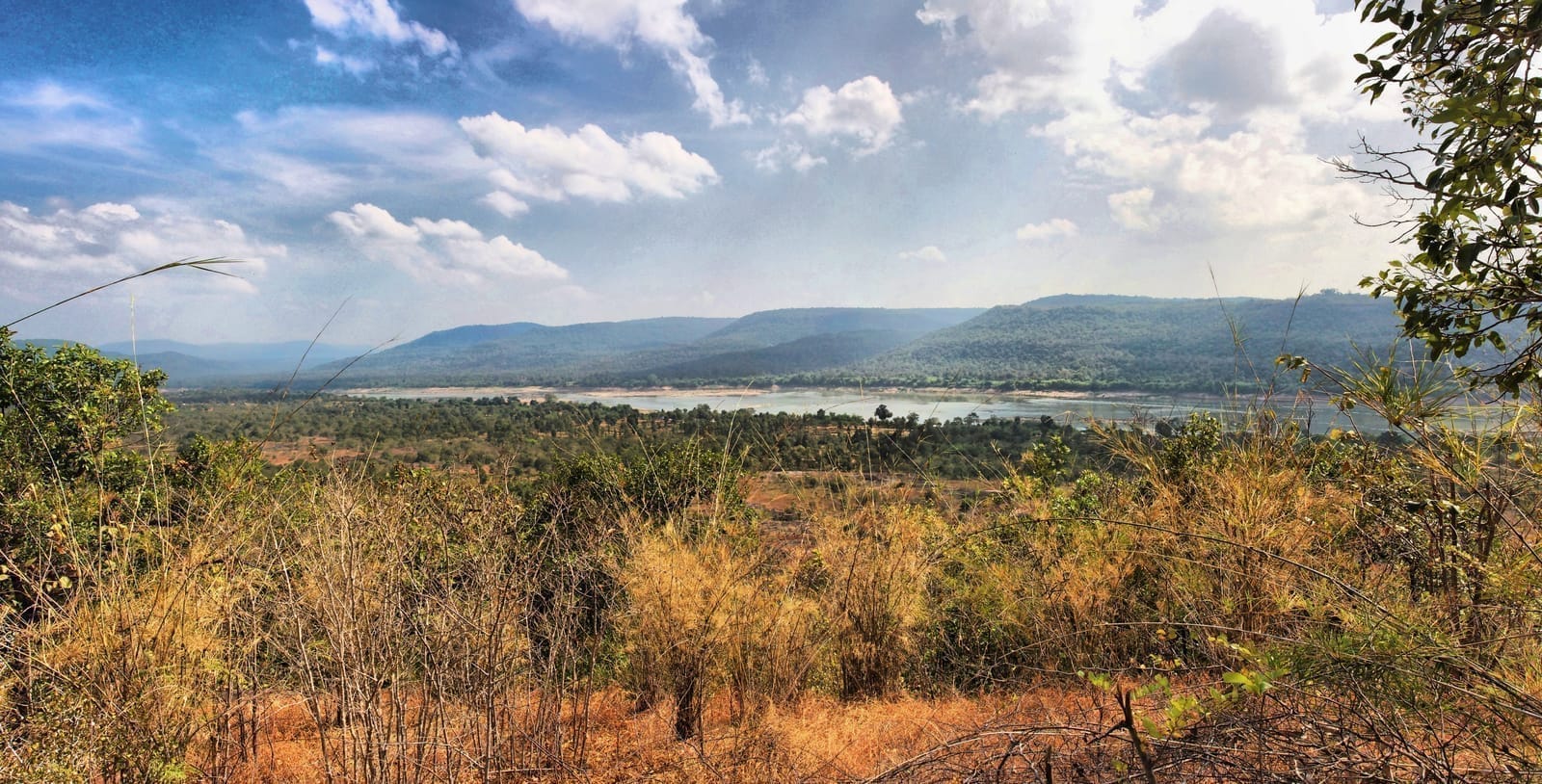
A tall cliff above the Mekong with a panoramic view across to the Laos side. The highlight is the prehistoric rock paintings — over 3,000 years old — on the cliff face, and it's one of the most popular sunrise spots in southern Isan. There's a short trail along the cliff edge that walks you past the paintings.
Sam Phan Bok
Rapids in the middle of the Mekong where the water has eroded the rock into thousands of basins and potholes — locals call it Thailand's Grand Canyon. You can wander and shoot photos across a wide rock terrace, but it only surfaces in the dry season, roughly January to May; the rest of the year it's underwater.
Wat Sirindhorn Wararam Phu Prao (the glowing temple)
A hilltop temple where the wall behind the ordination hall is painted with a kalpa tree in glow-in-the-dark paint. After dark the design lights up green-blue in the night, and that image has become one of Ubon's signatures. By day it's a viewpoint with a wide look across the mountains on the Laos side.
Two-coloured river (Khong Chiam)
The point where the indigo Mun River meets the muddy, limestone-grey Mekong (locals say 'Mekong like limestone, Mun like indigo'). The two colours show up clearly when the water's high. You can take a boat out for a close look or watch from the bank in front of Wat Khong Chiam — it pairs well with a meal by the river.
Pha Chana Dai
A cliff in the Dong Na Tham forest within Pha Taem National Park that the Meteorological Department cites as the first point in Thailand to catch the morning sun. In the early hours there's often a sea of mist drifting over the Mekong. It opens for sunrise viewing only in certain windows, and you have to switch to a local vehicle from the car park.
Saeng Chan Waterfall (the hole-in-the-rock falls)
A small waterfall where the stream pours down through a hole in the rock ceiling of a cave, falling in a thin column like moonlight (saeng chan means moonlight). It's inside Pha Taem National Park and looks best in late rainy season when the water is still strong. It's a short walk down from the car park, easy to fold into a Pha Taem trip.
Sao Chaliang
Mushroom-shaped rock pillars formed by wind and water erosion over millions of years, sitting just before Pha Taem. It's a quick photo stop along the way — you can walk around them, and there are several scattered through the area.
Wat Thung Si Mueang
An old temple in the centre of Ubon city. The standout is the wooden scripture library built over a pond — entirely timber — blending Thai, Burmese and Lao styles, plus the Buddha's footprint hall with old murals. It's a quiet wander right in town, near the Thung Si Mueang park.
Thung Si Mueang
A public park in the middle of town opposite the old provincial hall — a wide-open space where locals come to exercise and stroll in the evening. In early July it becomes the main stage for the Candle Festival, with elaborately carved candle floats put on display.
Ubon Ratchathani National Museum
The former provincial hall, now a museum telling the story of southern Isan — from archaeology and carved boundary stones to woven textiles and local culture. It's a good stop to get your bearings on the region before you head out, and it sits right next to Thung Si Mueang.
Kaeng Sapue
Rapids in the Mun River within the town of Phibun Mangsahan, where the water swirls prettily through the boulders in the dry season. There's a market and riverside restaurants where you can sit and eat river fish — a handy stop on the way to Khong Chiam.
Sirindhorn Dam
A hydroelectric dam with a wide reservoir and open views, with a viewpoint, restaurants and floating rafts to sit and relax on. It makes a good afternoon break on the way to the glowing temple or Chong Mek on the Laos border.
Planning tip
Ubon's best nature spots are tightly tied to the seasons. Sam Phan Bok and Kaeng Sapue only look good — and are only walkable — in the dry season (roughly January to May); the rest of the year they're underwater. Saeng Chan Waterfall is at its best in late rainy season when the water's still strong. If you want Pha Chana Dai at sunrise, you have to set out before dawn and check the opening windows with the park first, since it only opens at certain times.
Want more out of Ubon Ratchathani? Book tours & activities
Booking online ahead on Klook or GetYourGuide is usually cheaper than the gate and skips the queue. Pick only the experiences you actually want — prices and availability are shown live on each site.
For Mekong nature lovers
The heart of an Ubon trip is the eastern side along the Mekong. This cluster sits within the Khong Chiam, Si Mueang Mai and Pho Sai districts, and with a car you can string several spots together into one full day of nature.
Pha Taem + Sao Chaliang
Cliffs above the Mekong, prehistoric rock paintings, and mushroom-shaped rock pillars all on the same route — easy to do together in half a day.
Sam Phan Bok
Thousands of rock basins in the middle of the Mekong; walk and shoot photos across the wide rock terrace. Surfaces only in the dry season.
Pha Chana Dai
The first point in Thailand to catch the sun, with a sea of mist over the Mekong in the early morning. You have to arrive before dawn.
Saeng Chan Waterfall
Water falls through a hole in the rock in a thin column like moonlight — best in late rainy season, and easy to combine with Pha Taem.
For temple and culture lovers
Ubon has deep southern-Isan roots, with old temples and fine craftsmanship to see both in the city and out in the surrounding districts. Dress modestly — cover your shoulders and knees in the temple grounds — and take your shoes off before going inside the buildings.
- Wat Sirindhorn Wararam Phu Prao (the glowing temple) — the glow-in-the-dark kalpa tree behind the ordination hall; go in the evening to see it in full.
- Wat Thung Si Mueang — an all-timber scripture library over a pond, in Thai–Burmese–Lao style, in the centre of the city.
- Wat Phra That Nong Bua — a large white Bodh Gaya-style chedi in town that photographs well.
- Ubon Ratchathani National Museum — tells the story of southern Isan, from archaeology to woven textiles.
If you come during the Buddhist Lent
Ubon is famous for its Candle Festival, held around early July each year over Asalha Puja and the start of Buddhist Lent, with a procession of intricately carved candle floats around Thung Si Mueang. Come at this time and you'll see the candle-carving craft the city is known for — but accommodation fills up fast, so book ahead.
For city, markets and food
The other side of Ubon is easy city life — newer cafés, an evening market you can graze your way down, and punchy southern-Isan food like Vietnamese kuay jab, mu yo (pork sausage) and Vietnamese dishes you'll find all over town. It's a good fit for a day you want to rest your legs from driving out along the Mekong.
- Thung Si Mueang night market / walking street — southern-Isan food and souvenirs in town, easy to graze.
- Vietnamese kuay jab + mu yo — Ubon's signature pairing, with several long-running shops in town.
- Cafés in Ubon city — newer coffee shops scattered across town, good for an afternoon break.
- Ubon souvenirs — mu yo, Chinese sausage, pla som (fermented fish) and kab bua woven fabric, found at markets and souvenir shops.
Try a relaxed day-by-day plan
Here's a sample three-day plan with one night on the Khong Chiam side — that way you can catch sunrise at Pha Chana Dai and don't have to drive back to the city every day. Adjust the times to suit. Having your own car or a rental makes it far smoother, since the nature spots are far from the city and public transport isn't convenient.
Sights in town + heading out to Khong Chiam
A full day of Mekong nature
Sam Phan Bok + back to the city
Getting around the province
In Ubon city you can grab a Grab or a tuk-tuk easily, and you can walk the temples and markets yourself. But the nature spots on the Khong Chiam side — Sam Phan Bok and Pha Chana Dai — are 80–100 km or more out of town, and public transport isn't convenient. It's worth renting a car, hiring a car with a driver, or joining a day tour, especially for Pha Chana Dai, where you have to switch to a local vehicle to reach the viewpoint.
Want a full day-by-day Ubon itinerary?
See the Ubon travel guide →