🔄 Updated 21 Jun 2026
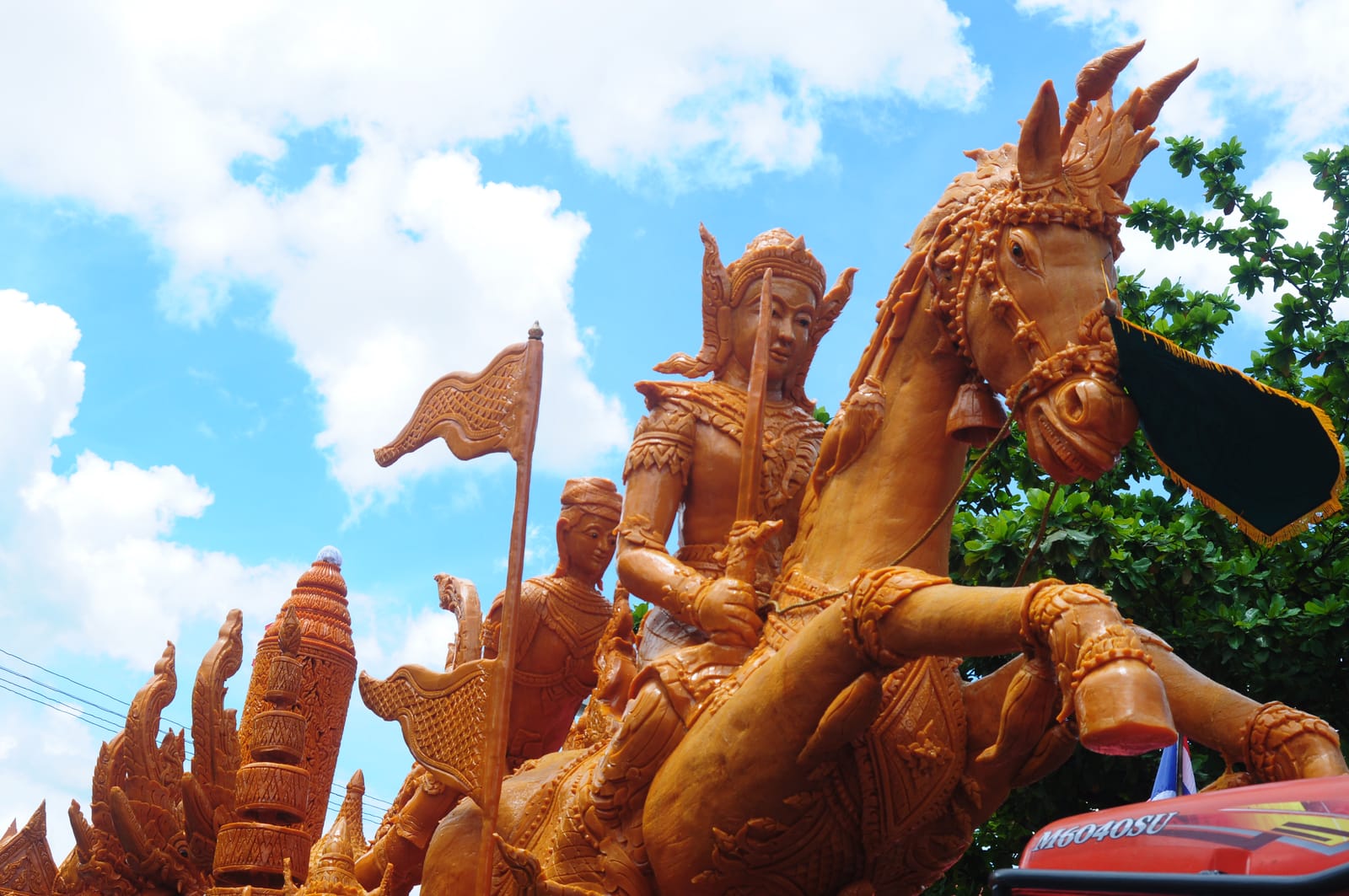
When Thai people talk about merit-making festivals they all know, the Ubon Candle Festival is on the list. What pulls people in from far away are the carved wax candles: craftsmen spend months cutting deep relief over the entire float, telling stories from the Buddha's life, characters from classical literature, and layer upon layer of Thai pattern. Once the floats roll out onto the street alongside dance troupes and folk music, the atmosphere really is different from an ordinary temple fair. There's no entry fee, and you can wander and watch all day.
When does it happen, and what dates this year?
The festival follows Khao Phansa (the start of Buddhist Lent), which falls around mid-July each year. For 2026, the province has set the candle-gathering day for 28 July and the main candle parade for 29–30 July. In 2025, the festival ran 7–13 July with the big parade on 10–11 July. The exact dates shift every year with the lunar calendar, but the window is always mid- to late July.
Check before you travel
The province announces the exact dates months ahead, since they move with Khao Phansa. Before you book a bus ticket or a room, confirm the dates from the Ubon city municipality page or the TAT Ubon office — the big parade day and the candle-gathering day are not the same day.
Want more out of Ubon Ratchathani? Book tours & activities
Booking online ahead on Klook or GetYourGuide is usually cheaper than the gate and skips the queue. Pick only the experiences you actually want — prices and availability are shown live on each site.
Over a century of history — how did it start?
Originally, Buddhists offered candles to temples during Lent because, before electricity, monks needed candlelight to read and to perform their daily rites across the three months. Casting a large candle to offer a temple was a long-standing way to make merit. What turned Ubon into the candle-festival capital happened under Krom Luang Sanphasit Prasong, a younger brother of King Rama V, who pushed the candle parade to become the city's annual festival in place of the older Bun Bang Fai rocket festival, roughly between 1901 and 1936. From plain candles, it gradually grew into the intricate carving work you see today.
The festival kept rising in stature until it became known worldwide, with an international wax-carving competition added to the mix. Several floats are kept on display afterwards so people who arrive later can see them up close, without having to jostle for a view during the parade.
How many types of candle floats, and how to enjoy them
The candle floats entered into the competition fall into several categories, and knowing the differences before you go makes it a lot more fun, because each type takes a different kind of skill.
- Carved type — the pattern is cut directly into the wax across the whole float, in deep three-dimensional relief. These are the stars of the show that most people wait to see, and the big ones can stand several metres tall.
- Moulded-appliqué type — small wax pieces are cast and then assembled into the design. The finish is smooth and detailed, a different feel from the carved type.
- Traditional type (folk candles) — made in the old, simple style that reflects the roots of the festival before it became as elaborate as it is now.
- International candles — works by overseas carvers who join the competition, so you get a range of artistic perspectives in one festival.
Tip for viewing the floats
If you want to see the carving detail up close, go when the floats are parked on display at Thung Si Mueang, either before or after parade day — you can walk all the way around each one and take photos without the crowd. On parade day itself, it's more about the atmosphere of the floats moving and the dance troupes.
Where to watch the parade — spots around Thung Si Mueang
The heart of the festival is around Thung Si Mueang, the public park in central Ubon. The parade moves along Upparat Road into Chayangkun Road, with main display points where the floats stop to perform in stages. Pick a convenient spot, plant yourself, and wait — you don't need to follow the parade on foot.
In front of Wat Si Ubon Rattanaram
One of the main display points beside Thung Si Mueang, with the beautiful temple as a backdrop — great for photographing a float against temple architecture. Grab a spot early, since it's a popular one.
Lan Khwan Mueang (old city hall forecourt)
A wide plaza in front of the old city hall with plenty of standing room. This is where floats often stop to put on their performance, and you can see a whole float at full height.
Along Chayangkun Road
The route the parade passes, with several viewing stretches such as the bank area and the kilometre-zero junction. Pick a shadier spot and the wait is more comfortable when the sun is strong.
Inside Thung Si Mueang
The zone for the float displays and night activities — walk right up to the floats, with Isan food and stalls throughout the festival. Best in the early evening.
Beating the heat and the crowds
The daytime parade starts around 08:30 and the sun gets strong by mid-morning. If you plan to watch for a while, bring an umbrella, a hat, and water. Popular spots like the front of Wat Si Ubon fill up fast — get there at least half an hour ahead.
Night festival, candle-gathering, and the lights
The other half of the festival's charm comes after dark. On the candle-gathering night, the floats are brought together around Thung Si Mueang and lit up, so the carved detail stands out far more than in daylight. There are light-and-sound performances and night dance processions to enjoy without fighting the sun — and anyone who missed the big parade can still see the floats in full here.
Around Thung Si Mueang in the evening, there's Isan food, snacks, and souvenirs throughout the festival, so you can graze and take in the lights at your own pace. It feels like a big temple fair where the whole city has come out together.
A plan for the Candle Festival
If you're coming specifically for this festival, 2 days and 1 night is about right — you get both the daytime parade and the night atmosphere. Here's a sample plan that actually flows on foot around Thung Si Mueang.
See the floats up close and the night festival
Watch the candle parade
Getting to Ubon and where to stay during the festival
- By plane — there are direct daily flights from Bangkok on several airlines, about an hour and change in the air. From Ubon airport, it's under 10 minutes into town.
- By train / bus — northeastern-line trains and coaches from Mo Chit run to Ubon every day, good for budget travellers or anyone who'd rather sleep on the way.
- Where to stay — rooms sell out fast during the festival, especially hotels around Thung Si Mueang, so book several weeks ahead. See your options in our Ubon hotel guide.
- Getting around the festival — on parade day, several roads around Thung Si Mueang are closed, so park a bit further out and walk in, or stay near the festival for the easiest access.
Want a full Ubon trip plan with where to eat and what to see
See the Ubon Ratchathani travel guide →