🔄 Updated 21 Jun 2026
Mu yo is a finely ground pork sausage wrapped in banana leaf and steamed. It looks plain, a pale pink color, but the charm is in the texture: the meat has to be dense and springy, not mushy, not heavy on starch. Slice it into rounds and you'll see a smooth, uniform paste. Gunchiang, on the other hand, is a sweet-savory cured pork sausage in the Chinese-Vietnamese style, deep red in color. Together these two are the classic Ubon souvenir set, and people buy them home by the armful.
Why Ubon's mu yo has a Vietnamese accent
This goes back further than you'd think. Vietnamese people (whom Isan locals call "Kaeo") migrated into Ubon as far back as World War I and II, some fleeing political and religious persecution, some forcibly relocated. The first groups settled around the Sai Klang area before spreading throughout the municipality. The Vietnamese were hardworking and serious about trade, food shops especially, so they turned the dishes from home into a living, until mu yo and Vietnamese kuay jab became local specialties of the province.
That's the reason Ubon's mu yo tastes closer to the original than it does elsewhere. Today the city has dozens of mu yo makers spread along the main roads and markets, many of them passed down through several generations, each with its own recipe. That's exactly what makes the shopping fun, because every maker has its own strengths.
Worth knowing
Traces of the Vietnamese community in Ubon aren't only about food. Look closely at several old sim (ordination halls) and churches and you'll spot Vietnamese craftsmanship, thick walls, flaring staircases, dragon and phoenix details, a legacy of the same community that handed us the mu yo flavor.
Want to taste deeper? Try a Ubon Ratchathani food tour or cooking class
Half a day with a local who knows the lanes — or cooking a dish yourself — teaches you more than just eating. Book ahead on Klook or GetYourGuide.
How to pick a good mu yo, what to look for
Good mu yo isn't judged by price or pretty packaging alone. Try these criteria when you choose and you'll end up with something that's worth it and genuinely tasty.
- The meat should be dense and springy — it has a bite when you chew, doesn't fall apart, doesn't taste like starch. Makers who add too much filler turn out something too soft and bland.
- Sliced, the meat is smooth and uniform — not full of air pockets, an even pale pink throughout.
- Wrapped in fresh banana leaf — makers who use real banana leaf usually steam a fresh batch every day, and it smells better than the all-plastic wrap.
- Not overly salty — good mu yo is well balanced and tasty plain, without leaning on dipping sauce every time.
- Check the made-on date — fresh mu yo is made daily and only keeps a few days, so if you're traveling far, ask for vacuum-sealed or chilled.
Ubon mu yo and gunchiang shops that are actually open
These are picked from the makers that Ubon locals and travelers mention most. Each has its own character, some stand out for dense meat, some for black pepper, some for jumbo logs. Read the highlights before you decide. Prices are rough ranges and shift up or down with size and season.
Mu Yo Tong Nueng
One of the city's most famous names. The meat is smooth and springy with a real bite, well balanced and not too salty, and the modern packaging makes it easy to grab as a gift. Another standout is their fried pork that people stop to snack on along the way. It's many things in one shop, including naem nueang, gunchiang, and pork floss.
Mu Yo Mae Hai
Stands out for variety, with both skin-studded mu yo for a crunchy chew and black-pepper mu yo that's fragrant with a full mouthful of pepper. The meat is dense and chewy, and it's easy to find with sales points at gas stations around the city.
Mu Yo Dao Thong
Known for big jumbo-size logs wrapped tight in thick banana leaf that smells great the moment you unwrap it. The meat is soft with a light sweet-savory flavor, easy to buy, and friendly on the wallet, good for anyone who wants generous value.
Mu Yo Mae Thuan
An old-timer that makes the full range, mu yo, sausage, gunchiang, mam, and fried banana, ideal for buying several things in one stop. They also offer souvenir delivery, handy if you want to order ahead.
Mu Yo Phong Sri
Stands out for skin-studded mu yo and a bold pepper flavor, with dense meat that's easy to keep eating. Several branches in the city make it convenient to find, and it's another maker locals buy regularly.
Mu Yo Sri Narong
A traditional recipe that leans on the aroma of pork and fragrant cardamom leaf, a classic-leaning flavor, nothing flashy but smooth and steady, good for anyone who likes old-style mu yo.
Mu Yo Chok Mongkol
Another maker that does big logs, fragrant with cardamom leaf and meat that's dense just right, at standard prices. A solid option that's easy to find in the Chayangkun Road area.
Na Ubon Souvenir Shop
Not a mu yo maker as such, but a big souvenir shop that gathers mu yo, gunchiang, naem rib, kuay jab noodles, and local goods from across the country in one place. Good for anyone who wants to finish their shopping in a single stop before heading home. It sits next to Nakhonchai Air Ubon, behind Big C.
Ubon gunchiang, the pair you can't forget
If mu yo is the lead, gunchiang is the sidekick you can't go without. Ubon gunchiang is a cured pork sausage with a balanced sweet-savory flavor and a nice red color. Fry or grill it until the fat just glistens and the whole kitchen fills with the aroma. Slice it thin on the diagonal and eat it with hot sticky rice or steamed rice and the plate disappears. Almost every big mu yo maker sells gunchiang alongside, so you can grab both in one go.
Beyond gunchiang, many shops carry others from the same family, including mam, Isan sausage, pork floss, and naem nueang. If you want a fully loaded souvenir set, make mu yo and gunchiang the core and add the rest to taste.
How to eat it for the best flavor
Mu yo can be eaten plenty of ways, but here's how Ubon locals do it often and deliciously without overthinking.
- Sliced into rounds with sticky rice — the most classic way. Dip it in jaew sauce or a little soy and chili and the whole plate is a pleasure.
- Fried until the edges crisp — slice it a bit thicker and fry until the edges turn golden while the inside stays soft, great with morning rice porridge.
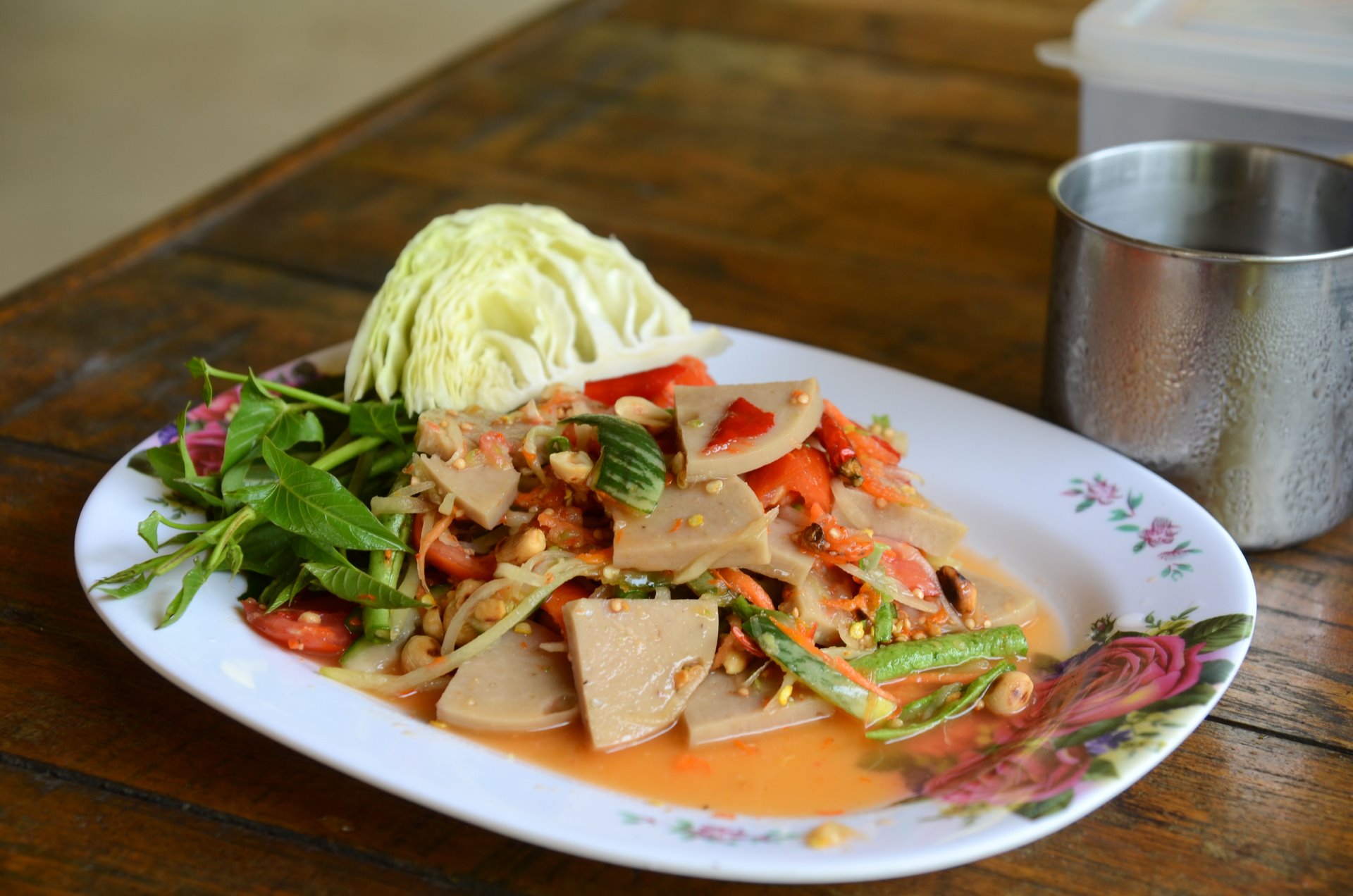
- Made into mu yo yam (spicy salad) — cube it and toss with chili, shallot, lime, and fresh herbs for a quick side dish.
- Fried gunchiang topped with egg — fry the gunchiang until fragrant, then make fried rice or a gunchiang omelet, an easy one-dish meal.
Where to buy easily before you head home
If you have time, stop by the famous shops in the city directly for fresh batches and a choice of sizes. But if you're short on time or rushing to the airport, there are shortcuts.
Famous shops in the city
Somdet Road and the main roads around the city have well-known mu yo shops lined up. You get it fresh, pick your own size, and can ask for vacuum-sealing if you're traveling far.
All-in-one souvenir shops
Like Na Ubon behind Big C, next to Nakhonchai Air, where you can grab mu yo, gunchiang, and other local goods in one place. Good for anyone in a hurry.
Ubon Ratchathani Airport
Some brands like Tong Nueng have sales points at the airport, so if you forget to buy beforehand there's still time. But the choices and sizes will be fewer than in the city.
Straight talk
Fresh mu yo is made daily and doesn't keep long. If you buy it but aren't heading back right away, leave it with the shop to chill first, or go with the vacuum-sealed version for peace of mind. And don't judge a maker by the packaging. Taste it first if the shop offers samples, because the flavors really do differ from one to the next.
Plan a full eat-your-way trip through Ubon, from souvenirs to food to attractions
See the Ubon travel guide →