🔄 Updated 21 Jun 2026
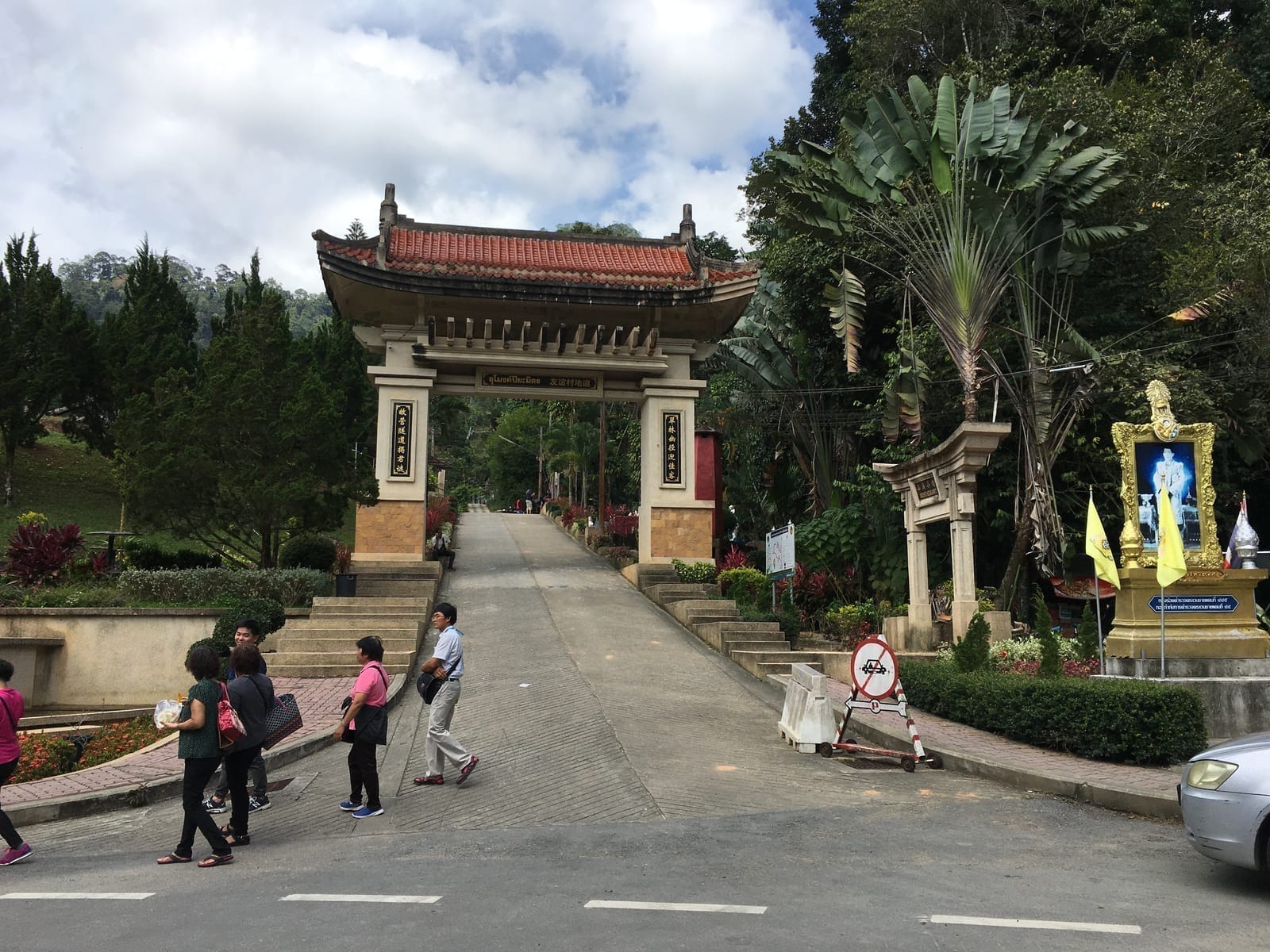
Piyamit Tunnel sits at Ban Piyamit 1, Tanao Mae Rao subdistrict, Betong district, Yala province. It is an earthen tunnel bored into a mountain in the middle of the jungle, built around 1976 by former members of the Malayan Communist Party, who used it as an operations base, a shelter from air raids, and a supply store during the political conflict of that era. Later, after they laid down their arms and rejoined the development of Thailand, the area was opened as a historical learning site for the public to visit.
What amazes many people is how it was built. Around 40–50 people dug it by hand into the mountain, and it took only about 3 months to finish. The tunnel runs nearly 1 kilometre in total and is wide enough for people to pass each other. It originally had 9 entrances all connected together; today about 6 are open for walking. Inside, it could once hold nearly 200 people, with living quarters, an armoury, and a command room.
What walking through the tunnel is like
As soon as you step inside, the air turns cool and fairly damp. The path winds up and down along the mountain — in some sections the ceiling is low and you have to duck, and in others it narrows so you can only walk single file. There are lights all the way through, but it still keeps a genuinely dim, shadowy feel. Along the way, signs explain which spots were used as living quarters and which for storing supplies, so you can picture how the people who lived here got by during the days they had to hide underground.
- Winding, up-and-down path — the tunnel isn't a straight line; it turns along the contour of the hill. It's an easy walk, but watch your head and the uneven floor.
- Cool, damp air — it's noticeably cooler inside than out, and the floor is slippery in places from the moisture, so shoes with good grip help a lot.
- Storytelling signs at each point — there are signs explaining what each zone was used for; reading as you walk makes the visit far richer.
Before you head into the tunnel
The tunnel is dimly lit with uneven flooring, so wear comfortable shoes with good grip and mind your head where the ceiling is low. If you bring small children or older relatives, hold hands and walk slowly. Anyone who's uncomfortable with tight or very dark spaces can walk a short stretch and exit at a nearby opening.
Want more out of Yala? Book tours & activities
Booking online ahead on Klook or GetYourGuide is usually cheaper than the gate and skips the queue. Pick only the experiences you actually want — prices and availability are shown live on each site.
The museum and the ancient tree
Before or after walking the tunnel, there's a small exhibition building out front displaying photographs, everyday objects, and the story of the people who once lived here — it helps you understand the historical context before heading underground. A little further into the jungle past the tunnel mouth is another highlight that many people come specifically to see.
History exhibition building
Displays old photos, weapons, and objects from that era, telling the story behind the tunnel before you head inside.
Ancient tree (giant banyan)
A huge banyan in the jungle with sprawling buttress roots, about a 15-minute walk on from the tunnel — a popular photo spot.
Short jungle trail
A shaded path under the trees between the tunnel and the ancient tree — cool, comfortable, and quiet.
Souvenir shop at the entrance
There are souvenir and drink stalls near the car park, handy for a break before moving on.
Opening hours and entry fee
Piyamit Tunnel is open daily, roughly 8:00 a.m. to 4:30 p.m. Entry is about 40 THB per person — this is an approximate price and may change, so it's best to bring cash and check again on site. Allow around 1 to 1.5 hours to see both the tunnel and the ancient tree.
- Opening hours — daily, roughly 8:00 a.m.–4:30 p.m.; come before late afternoon so you have time to walk to the ancient tree as well.
- Entry fee — about 40 THB per person; better to bring cash.
- Best time to visit — late morning to afternoon, after coming down from the morning sea of fog, when the jungle air is still cool and pleasant.
How to get there — the route from Betong town
Piyamit Tunnel is about 15–18 kilometres from Betong town, roughly a 25–30 minute drive. The final stretch is a village road with a slight climb into the hills, with some curving, narrow sections, so drive carefully — especially on rainy or foggy days. The road is paved almost the whole way. You can just drop a pin for "Piyamit Tunnel" on Google Maps.
- Drive yourself / rent a car in Betong — the most convenient option; you can pair it with the Aiyerweng Skywalk and the hot springs in a single day.
- Rent a motorbike — good for independent travellers, but the road has hill curves, so be familiar with it and ride in daylight.
- Van / local tour — many places to stay in Betong offer packages looping the area's top sights, with Piyamit Tunnel included — handy if you'd rather not drive yourself.
Plan a Betong route that makes the most of your time
Piyamit Tunnel pairs nicely with a half-day in Betong. Head up the Aiyerweng Skywalk before dawn to catch the sea of fog, come down in the late morning to stop at Piyamit Tunnel, then continue to the Betong hot springs or into town for Betong chicken and grass jelly. Planning it as a loop saves a lot of time on the mountain roads.
Safety and respecting the site
Betong is a tourist town that draws plenty of visitors year-round, and the general atmosphere is friendly and lively. But because it sits in Thailand's southern border region, before you travel we recommend checking the latest news and safety advisories from the authorities, and planning to sightsee mainly during the day for peace of mind throughout your trip.
Piyamit Tunnel holds the history of many different communities — the Chinese community that once lived here, and the local people of the southern border, both Malay Muslims and Hokkien Chinese. Walk through with respect, don't be loud or damage the original structure, and read the storytelling signs with an open mind, and you'll come away understanding the history of this place far better.
Plan a full Yala–Betong trip
See the Yala travel guide →