📝 Written 3 Jul 2026 · ✅ Fact-checked 3 Jul 2026 · prices and schedules can change — check with the operator before booking
Before deciding where to go first, think through three things: how many days you have, whether you have your own car, and whether you want an easy riverside-town stroll or a proper hike through nature — because Uthai Thani's attractions are spread out quite widely. The old town's Trok Rong Ya lane by the Sakae Krang River and Khao Sakae Krang with Wat Sangkat Rattana Khiri are all in town, walkable or a short drive apart. Wat Tha Sung sits outside town to the north, about 20 kilometers away. Hup Pa Tat is in Lan Sak district to the west, and the Huai Kha Khaeng Wildlife Sanctuary together with Ban Rai district lie deep in the western part of the province, tens of kilometers up to around a hundred kilometers from town, requiring you to drive yourself.
Overall, if you have little time or no car, start with the old town's Trok Rong Ya lane by the Sakae Krang River and climb Khao Sakae Krang, which is right in town — you can walk around and enjoy the view in half a day. If you have a full day and want something visually striking, Hup Pa Tat, where you hike down into a valley to find an ancient forest, is worth the trip out of town. For those who love beautiful temples and Buddhist art, Wat Tha Sung and its Crystal Vihara fit well and aren't too far away. And for nature lovers and slow-life types who want to enter the World Heritage forest and stay at a farmstead in Ban Rai, set aside a full day or an overnight stay, since it's far and requires driving yourself. The table below summarizes the travel style, zone and distance from town, best time to go, and who each spot suits — then we'll go into detail on each one.
| Attraction | Travel style | Zone/distance from town | Best time | Who it suits |
|---|---|---|---|---|
| Hup Pa Tat (prehistoric forest in a limestone valley) | Nature hike, passing through a cave into the valley | Lan Sak district, west of the province (~40–50 km, ~50 min–1 hr drive) | Rainy season through early cold season, Jul–Dec (lush greenery) · Morning | Nature lovers, hikers, those wanting unusual photos |
| Wat Tha Sung + Khao Sakae Krang (temple-viewpoint) | Temple visit, viewing the Crystal Vihara's Buddhist art, climbing the hill for a city view | Mueang district-north of town (Wat Tha Sung ~20 km · Khao Sakae Krang is in town) | Early morning-soft evening light · Good year-round | Temple-goers, fans of beautiful temples and viewpoints, those short on time |
| Sakae Krang River + old town Trok Rong Ya (riverside life) | Walking the old town, boat rides, viewing houseboats, riverside life | In town, along the Sakae Krang River (city center) | Soft evening light-sunset · Good year-round | Photographers, old-town lovers, those short on time or without a car |
| Huai Kha Khaeng + Ban Rai (World Heritage forest-slow life) | Entering the World Heritage forest, nature viewing, staying at a farmstead, rural life | Ban Rai-Lan Sak district, far west (~60–90 km, ~1.5–2.5 hr drive) | Late rainy season-cold season, Nov–Feb (cool weather, beautiful forest) | Adventurous types who love forests and slow life, with their own car |
Hup Pa Tat (prehistoric forest in a limestone valley)

If you want a Uthai Thani destination that's more unusual than the usual sights, the one people talk about most is Hup Pa Tat in Lan Sak district — a limestone valley enclosed on all sides by high hills. The only way in is to pass through a short cave opening, dark for a stretch, and once you emerge on the other side you'll find a prehistoric forest hidden inside the valley. Giant screw pine trees, ferns, and ancient plants grow in the damp, shaded ground where light streams down in shafts — the atmosphere feels like stepping into another world. Nature photographers who want images unlike anywhere else tend to be especially taken with Hup Pa Tat, because the light, shadow, and tall trees in the valley create rare, beautiful angles.
The walking trail inside Hup Pa Tat is well laid out and comfortable, not too long or steep — you can walk the full loop in about one to two hours. Along the way, signs explain the plant species and how the limestone valley formed, making it suitable for casual visitors and families wanting to show kids real nature up close. The site is looked after by a non-hunting area authority, so it stays fairly calm and orderly. Morning, before the sun gets strong, is the most comfortable time to walk, and visiting during the rainy season through early cold season means the forest will be lush and the trees inside the valley more beautiful than in the dry season.
One thing worth knowing honestly: Hup Pa Tat is quite far out of town and public transport barely reaches it, so it's most convenient with your own car or a rental. The stretch passing through the cave into the valley is narrow and dark for a moment — watch your footing, as the ground can be slippery, especially in the rainy season, so comfortable, non-slip shoes are safer. The valley is humid with some mosquitoes, so bring repellent. And since this is a conservation area, stick to the trail, don't pick plants or disturb nature, dispose of trash properly, and keep noise down out of respect for the wildlife and other visitors. Hup Pa Tat pairs neatly with other spots in Lan Sak or as a stop on the way to Ban Rai.
- A genuinely unusual atmosphere hard to find elsewhere — pass through a cave into a prehistoric forest with giant screw pines inside a limestone valley
- The walking trail is short and not steep, taking about 1–2 hours, suitable for families and general visitors alike
- It's a non-hunting wildlife area, so it stays fairly calm, orderly, and free to enter
- Light-and-shadow photo angles in the valley are beautiful and unlike typical nature spots
- It's about 40–50 km out of town with little public transport access — more convenient with your own car
- The cave passage into the valley is narrow and dark for a moment, and the ground can be slippery, especially in the rainy season — wear non-slip shoes
- The valley is humid with mosquitoes, so bring repellent; the forest isn't as lush in the dry season as in the rainy season
Wat Tha Sung (Crystal Vihara) + Khao Sakae Krang

If you want to pay respects at a temple and see Buddhist art in Uthai Thani, the spot most people visit is Wat Tha Sung, officially named Wat Chantaram, located about twenty kilometers north of town. What makes this temple so talked-about is its Crystal Vihara — a large hall decorated entirely in glass, making the whole room shimmer. Inside sits a Buddha image and the preserved remains of Luang Phor Ruesi Ling Dam, drawing devotees who travel here to pay their respects. Besides the Crystal Vihara, the Wat Tha Sung grounds hold several other buildings, an ordination hall, and finely detailed Thai decorative work. The temple grounds are spacious and shaded, pleasant to wander around — this is a temple where people come to genuinely worship, so it carries a calm, orderly atmosphere.
Another spot many people pair with their temple trip is Khao Sakae Krang, right in town. Atop the hill sits Wat Sangkat Rattana Khiri and a mondop enshrining a replica Buddha footprint. The way up is a long naga staircase for those who want the exercise, or you can drive up instead. Once at the summit, you get a sweeping view of Uthai Thani town, the Sakae Krang River, and the surrounding rice fields. It's a favorite viewpoint among locals for watching the sunset, with a long row of bells to ring for good fortune. Going in the early morning or in the soft evening light gives you both a calm temple visit and a city view bathed in gentle light.
Worth knowing: Wat Tha Sung is outside town, so if you don't have a car, rent one or join a tour. The Crystal Vihara and some of the buildings have set opening hours in rounds, so check the schedule beforehand so you don't miss it. Since this is a temple where people genuinely worship, dress modestly, cover shoulders and knees, remove your shoes before entering the buildings, and keep your voice down. As for Khao Sakae Krang, choosing to walk the naga staircase is fairly tiring and the midday sun is strong, so it's best to go in the morning or evening and bring water. Visitors with elderly companions may find driving up more comfortable. Weekends and Buddhist holy days draw bigger crowds, so allow extra time to find parking.
- The Crystal Vihara at Wat Tha Sung, fully decorated in glass, is strikingly beautiful and a spot people deliberately come to see and pay respects at
- The Buddhist art and Thai decorative work across the spacious, shaded temple grounds make for a pleasant, calm stroll
- Khao Sakae Krang, right in town, offers a view of the city, river, and surrounding rice fields from above — reachable by foot or by car
- Pairing Wat Tha Sung with Khao Sakae Krang makes a well-rounded half-day temple-and-view trip
- Wat Tha Sung is outside town — without a car you'll need to rent one or join a tour, and some buildings open only in set hours
- As a temple where people genuinely worship, modest dress and quiet behavior are required; weekends and holy days bring crowds and limited parking
- The naga staircase up Khao Sakae Krang is long and the midday sun is strong — those unaccustomed to it may find it tiring if they don't choose to drive up instead
Sakae Krang River + Old Town Trok Rong Ya
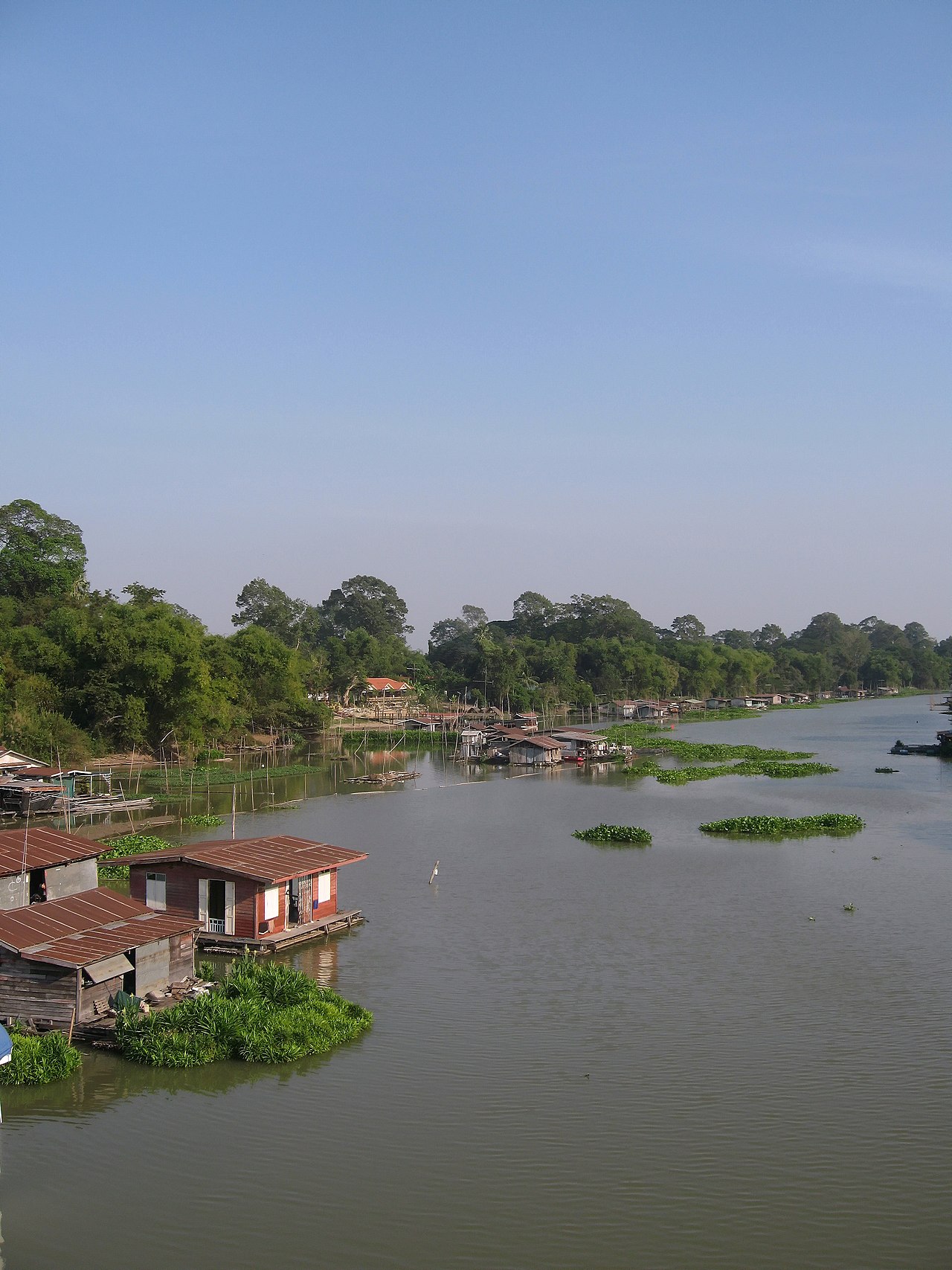
What gives Uthai Thani its charm, setting it apart from an ordinary pass-through town, is the Sakae Krang River running through the center and the riverside life that's still very much alive. Along this river, houseboats still stand where people actually live and raise fish in cages — a slice of riverside life that's getting harder to find. Many people come here to take a boat ride past the houseboats, riverside temples, and the scenery on both banks, especially in the soft evening light as the sun sets, when the water turns gold and the row of houseboats makes a scene photographers love to capture. It's a slow, unhurried way to soak up a full riverside-town atmosphere.
Not far from the riverfront is the old town's Trok Rong Ya lane — a small street in town still lined with wooden buildings and shophouses nearly a century old. Many walls carry street-art murals depicting local life, making for an enjoyable photo walk. Along this lane are cafés, food stalls, and old-fashioned sweet shops tucked between the historic buildings. At certain times there's a walking market or pedestrian street where you can stroll, sample food, and buy souvenirs. Nearby is a riverside temple, Wat Ubosatharam, with mural paintings and an old chedi to visit and pay respects at as well. Everything here is within town, walkable between spots, making it ideal for those without a car and those short on time.
Honestly worth mentioning: the Trok Rong Ya area and riverside market are lively only at certain times, particularly evenings, weekends, or when the pedestrian street is running. If you're planning to walk the market and eat, check the days and times carefully, since some shops don't open every day. For boat rides on the Sakae Krang River, ask local operators about departure points, prices, and routes beforehand, and choose the soft evening light for the most beautiful atmosphere — midday sun is fairly strong, so bring water and a hat. This is a community where people genuinely live and work, so when viewing the houseboats or photographing people's homes, be respectful of the residents and don't intrude on their privacy.
- The Sakae Krang River still has genuinely lived-in houseboats and riverside life — a boat ride delivers a full riverside-town atmosphere
- The old town's Trok Rong Ya lane has old wooden buildings, street art, and old-fashioned cafés and sweet shops, making for an enjoyable photo walk
- Riverside Wat Ubosatharam, with its mural paintings and old chedi, is nearby to visit and pay respects at as well
- Everything is within town and walkable, ideal for those short on time and without their own car
- The old town and riverside market are lively only at certain times, and some shops don't open every day — check the schedule before you go
- Midday sun is strong and the riverside area is open and exposed — best to go in the evening and bring water and a hat
- The houseboats are genuinely lived-in homes — be respectful and avoid intruding on residents' privacy when taking photos
Huai Kha Khaeng Wildlife Sanctuary + Ban Rai

If you want to get away from the city and live among forest and rural life for a day or two, the western side of Uthai Thani, home to the Huai Kha Khaeng Wildlife Sanctuary and Ban Rai district, is the answer for forest lovers and slow-life types. Huai Kha Khaeng is a stretch of western forest registered as a Natural World Heritage Site alongside Thung Yai Naresuan, home to numerous rare wildlife species — from tigers and wild elephants to countless birds and small animals. This site prioritizes conservation over general tourism, with a learning center and designated routes open under staff supervision; some routes require advance permission. It suits those genuinely interested in nature and learning about forests and wildlife, more than those simply looking for a photo-op check-in spot.
Ban Rai district, meanwhile, is a small town nestled among mountains and farmland, with cool, comfortable air in the cold season. It has accommodations and mountain-view resorts for a peaceful, quiet stay — waking up to light mist and views of fields and hills. Around Ban Rai are various attractions, including cave temples, waterfalls, viewpoints, and community villages such as Karen hill-tribe communities that still preserve their culture and traditional weaving. It's a slow-paced way to travel — eating local food, buying handcrafted souvenirs, and experiencing rural life completely different from the city. Many people plan to stay overnight in Ban Rai to fully catch the misty, cool morning atmosphere.
Something to accept before heading out: this zone is quite far from town, about one and a half to two and a half hours' drive on roads that wind through hills in places, so use a car in good condition with a driver familiar with the route, and those prone to motion sickness should bring medication. Entering the Huai Kha Khaeng Wildlife Sanctuary involves stricter rules than typical attractions — some routes require advance permission from the relevant authority, so check with the sanctuary or responsible agency before planning. The cold season draws crowds and Ban Rai accommodations fill up fast, so book ahead; in the rainy season, some road stretches can be slippery or prone to flash floods, so check road and weather conditions before setting out. Wherever you go in this forest zone, respect the rules — don't feed wildlife, don't litter, and help preserve this World Heritage forest.
- Experience a stretch of western forest that's a Natural World Heritage Site, learning about conservation and rare wildlife
- Ban Rai has cool, comfortable air in the cold season, with mountain-view accommodations for a misty morning and peaceful rural life
- Around Ban Rai are various attractions — cave temples, waterfalls, viewpoints, and community villages with traditional weaving
- An atmosphere completely different from in-town attractions, suited to those who want to travel slowly and immerse in nature
- It's far from town, about 60–90 km, 1.5–2.5 hr drive, with some winding mountain roads — tough for those prone to motion sickness or without a car
- Huai Kha Khaeng has strict rules, and some routes require advance permission — it's not a walk-in attraction
- Ban Rai accommodations fill up fast in the cold season, so book ahead; some road stretches can be slippery or prone to flash floods in the rainy season
Book Activities & Tickets in Advance
Riverside-town trips, temple trips, and forest-and-farmstead trips fill up fast in the cold season and long weekends — booking ahead is more convenient
Where to Stay in Uthai Thani?
Choose accommodation in town along the Sakae Krang River or near Trok Rong Ya for easy access to the old town and Khao Sakae Krang, and a convenient base for trips to Hup Pa Tat, Wat Tha Sung, and Ban Rai. Compare prices across 3 sites before booking
Search Hotels on AgodaQuick Summary: Where to Go in Uthai Thani
Short on time, no car, want a riverside-town walk — choose the old town's Trok Rong Ya lane along the Sakae Krang River, stroll past old buildings, street art, and houseboats, then climb Khao Sakae Krang for the city view. Everything is in town, walkable or drivable in a single half-day.
Love beautiful temples and Buddhist art — choose Wat Tha Sung to see the Crystal Vihara, fully decorated in glass, paired with Khao Sakae Krang in town for a half-day temple-and-view trip. It's not far and good year-round.
Want unusual nature that's not too far away — choose Hup Pa Tat in Lan Sak, passing through a cave into a prehistoric forest in a valley. Go in the morning, and visit during the rainy season through early cold season for the lushest forest.
Forest lovers and slow-life types — head into the Huai Kha Khaeng and Ban Rai zone. It's worth the long drive, but you'll need a car and should allow a full day or an overnight stay. Some routes in the forest zone require permission beforehand.
How to Plan a Trip Covering the Town, Temples, and Forest
If you have 2 days, spend the first day in and near town — climb Khao Sakae Krang in the morning to pay respects and enjoy the city view before the sun gets strong, then stop by Wat Tha Sung to see the Crystal Vihara. In the afternoon, walk the old town's Trok Rong Ya lane and grab something to eat, and in the evening take a boat ride or view the houseboats along the Sakae Krang River to catch the sunset. On the second day, head west and choose between Hup Pa Tat, a somewhat closer hike through the prehistoric forest, or the Huai Kha Khaeng-Ban Rai zone, which focuses on the World Heritage forest and slow life but requires a longer drive and is best done as an overnight stay — pick based on your energy and time. If you have a third day, cover whichever route remains, giving you the full set: riverside town, beautiful temples, valley forest, and World Heritage forest, all in one trip.
Once you've picked the right Uthai Thani spots, don't forget to book a well-located hotel in town along the Sakae Krang River or near Trok Rong Ya as your trip base. See hotels with prices already compared here
See well-located Uthai Thani hotels →