🔄 Updated 21 Jun 2026
Wat Ahong Silawat sits in Ban Ahong, Khai Si subdistrict, Mueang Bueng Kan district, about 21 kilometres from the town centre, right on the bank of the Mekong at the river bend locals call the navel of the Mekong — the spot believed to be where the Mekong runs deepest, said to reach around 200 metres. During the flood season the current here swirls into a funnel, and any driftwood or leaves that float in get spun around for a while before they break free. It's that phenomenon that led earlier generations to believe this is where the Naga dwells.
The temple was originally named Wat Pa Lelai — it was founded by Luang Por Lun, and after he passed away it fell into disrepair for a time before being restored and renamed Wat Ahong Silawat around 1974. Today it's both a temple for locals and a stop for travellers passing along the riverside road. Most people come to pay their respects, ask the Naga for blessings, then sit and watch the water with the Lao bank across the way.
What is the navel of the Mekong, and why does everyone talk about it?
The navel of the Mekong is what locals call the spot in front of Wat Ahong, because the river narrows and runs unusually deep here, making the water circle in a ring. When the flood season arrives, roughly June to September, the current visibly swirls into a funnel midstream, and anything that drifts into the whirlpool gets spun around for ten minutes or more before slipping away. Earlier generations explained the phenomenon through the Naga legend, while later researchers have floated the theory that natural gas beneath the riverbed might be involved — but to this day no one has been able to say for certain. And it's that lingering mystery that keeps the place interesting.
To be honest, the whirlpool you'll see isn't some huge, scary vortex like in the movies. Most of the time it's a slow-turning ring of water you have to look closely to spot. Anyone expecting a maelstrom that sucks everything under might come away unimpressed. The real draw here is the quiet riverside atmosphere and the stories tied to the water, more than the spectacle.
Want more out of Bueng Kan? Book tours & activities
Booking online ahead on Klook or GetYourGuide is usually cheaper than the gate and skips the queue. Pick only the experiences you actually want — prices and availability are shown live on each site.
The Naga shrine and asking for blessings
Because this is believed to be where the Naga dwells, Wat Ahong has a Naga shrine and Naga statues to pay respects to — a spot that draws the faithful who come specifically to ask for blessings. Many ask about luck and work, and some come to make vows, traditionally offering flowers, incense and candles, and votive gifts according to their beliefs. The way people worship here isn't strict at all — do whatever feels right to you. Just dress modestly, since it's temple grounds.
The busiest time at Wat Ahong is the end of Buddhist Lent, on the full moon of the eleventh lunar month, because it's believed to be the night the Naga gather and the Naga fireballs rise from the river. People come from all over to wait and watch the phenomenon along the Mekong. If you're set on coming during that time, be ready for big crowds and a full car park.
An honest word about the Naga fireballs
The Naga fireballs are a natural phenomenon no one can guarantee — how many you'll see, or whether you'll see any at all, depends on the night and where you stand. If you're coming during the end of Lent specifically for this, think of it as a riverside merit-making festival first, with the fireballs as a bonus. Catch them and you're lucky; miss them and you've still had a good trip.
The Ahong rapids and the rock garden — the part many people don't know about
In the dry season the river in front of the temple reveals another side that many visitors never realise is there: the Ahong rapids, a cluster of midstream Mekong rocks that emerge as the water level drops. Each rock has a name based on its shape — Naga Tongue Rock, Snakehead Fish Rock, and Striped Catfish Cave among them. You can walk out and explore, and it makes a riverside photo spot with a completely different feel from when the water is high.
Within the temple grounds there's also a rock garden, with large, oddly shaped boulders scattered among the trees — an easy place to wander and take photos. It's a corner that proves Wat Ahong isn't just about paying respects; you get a riverside nature walk thrown in too.
Navel of the Mekong viewpoint
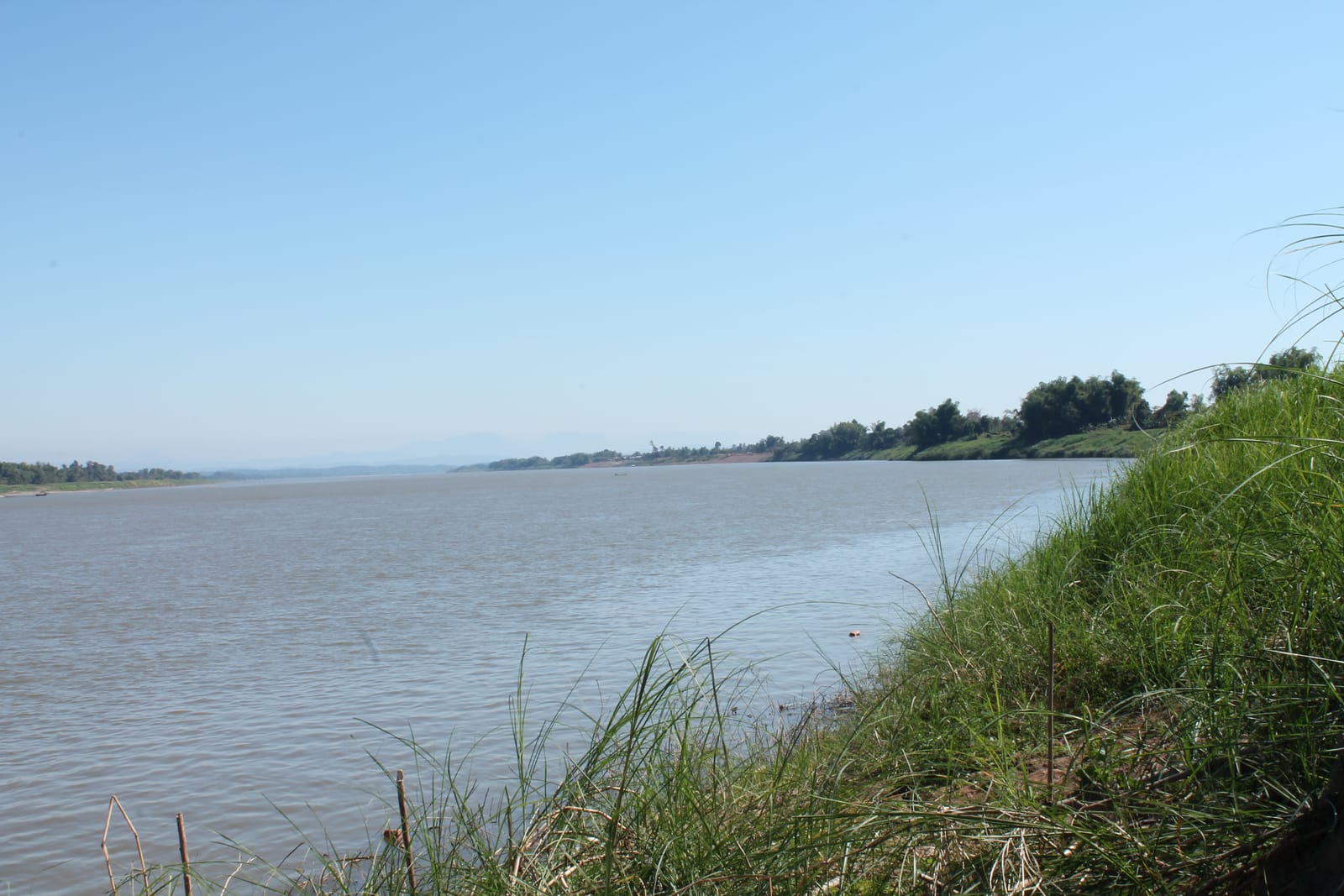
The riverside terrace in front of the temple looks out over the deep river bend and the Lao bank — the spot where people stand to watch the water and photograph the wide Mekong views.
Naga shrine
A shrine and Naga statues for paying respects and asking for blessings — the main draw for the faithful who come here on purpose.
Ahong rapids
A cluster of midstream Mekong rocks that emerge in the dry season, with Naga Tongue Rock, Snakehead Fish Rock and Striped Catfish Cave to walk out and see.
Rock garden
Large, oddly shaped boulders within the temple grounds — an easy walk and photo spot among shady trees.
Riverside ordination hall
The temple building set right on the riverbank — pay your respects, then step out and sit watching the water.
Which season is best to go?
You can visit year-round, and each season has its own feel. If you want to see the whirlpool clearly, come during the flood season, roughly June to September, when the river is full and the strong current shows the swirling best. But if you'd rather walk the rocky rapids like the Ahong rapids, come in the dry season, around March to May, when the water drops enough for the rocks to surface.
- Cool season (November–February) — pleasantly cool weather; you can spend the whole day paying respects and sitting by the Mekong. This is when the most travellers come to Bueng Kan.
- Dry season (March–May) — low water reveals the Ahong rapids and the midstream rocks, ideal if you want to walk the rocky rapids, though the days are hot.
- Flood season (June–September) — high water shows the whirlpool at its clearest, but the rocks stay hidden and there may be rain.
- End of Buddhist Lent (around October) — the Naga fireball festival; very crowded, so allow extra time and plan for parking.
Getting there and opening hours
Wat Ahong Silawat is about 21 kilometres from the centre of Bueng Kan, a 25–30 minute drive along the riverside road. The temple entrance is clearly signposted and there's a car park on site, so it's easy to reach by private car or rental. If you don't have a car, the town of Bueng Kan has hired transport and rental services to choose from, but we'd recommend having your own vehicle, since there's no convenient public transport around the area.
- Opening hours — roughly 06:00–18:00. Free entry; it's a temple, so there's no admission fee.
- Distance — about 21 kilometres from the centre of Bueng Kan, a 25–30 minute drive.
- Getting there — easiest by private car or rental, with a car park on site.
- Time needed — about 1–1.5 hours, enough to pay respects, sit by the Mekong, and walk the rock garden.
The prettiest time of day
Try coming in the late afternoon near sunset, when the light turns soft and the riverside is quiet — perfect for sitting and watching the water and the Lao bank without rushing. Early morning through mid-morning is pleasantly cool too. Both beat midday, when the sun is harsh and the rocks turn hot.
Where to go after Wat Ahong
Wat Ahong only takes a little over an hour, so it pairs easily with another stop on the same trip. Many people combine it with the riverside route and Bueng Kan's natural highlights — whether you're into the spiritual side, nature, or just relaxing by the water.
- Naka Cave — rock formations that look like Naga scales, famous among the faithful; a natural follow-on from the Naga story at Wat Ahong. You have to register and book a slot in advance.
- Three Whale Rock — giant boulders shaped like a whale family on Phu Sing, a sunrise viewpoint the people of Bueng Kan are proud of.
- Phu Thok — a rocky mountain with wooden walkways spiralling up seven levels; one for the adventurous and the devout alike.
- Riverside promenade in town — come down off the riverside route to sip a coffee or have dinner by the Mekong in central Bueng Kan.
Plan a full Bueng Kan trip — things to do, where to eat, and where to stay
See the Bueng Kan travel guide →