🔄 Updated 21 Jun 2026
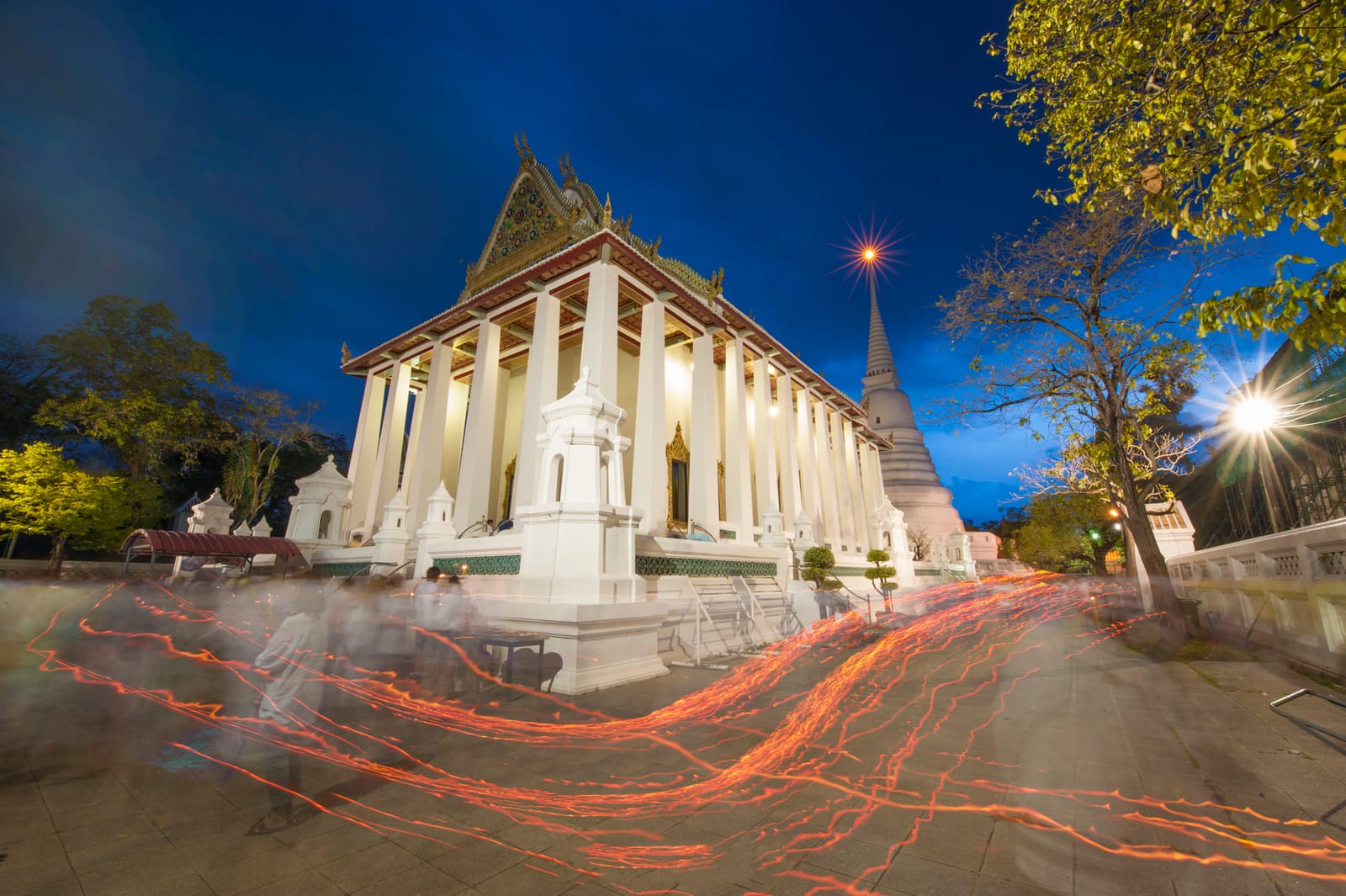
Wat Chaloem Phra Kiat sits in Bang Si Mueang sub-district, Mueang Nonthaburi, on the west bank of the Chao Phraya River, directly across from the town of Nonthaburi itself. It's a second-class royal temple of the worawihan grade, which King Nangklao (Rama III) ordered built around 1847 on land that had once been the residence of his maternal grandfather, grandmother, and royal mother. It was created to honour all three of them — which is where the temple's name comes from.
The charm of this temple is how seamlessly it blends Thai and Chinese forms, the look that was popular during Rama III's reign when trade with China was booming. If you like photographing architecture, or you want a quiet temple to sit by the river and clear your head, this is a solid pick — and it's not far out of Bangkok.
History: one of Rama III's last temples of devotion
The site where the temple stands was once an old riverside fortification, before Rama III ordered the temple built late in his reign. It's often described as one of his 'last temples of devotion,' because the construction was still unfinished when he passed away.
King Mongkut (Rama IV) later took on the work of completing it, so the temple passed through the hands of two reigns. Many of its details reflect the taste of both periods. Today it still holds the status of a royal temple, with monks in residence as usual.
Want more out of Nonthaburi? Book tours & activities
Booking online ahead on Klook or GetYourGuide is usually cheaper than the gate and skips the queue. Pick only the experiences you actually want — prices and availability are shown live on each site.
Thai-Chinese architecture worth a closer look
What sets this temple apart from the typical wat is the ordination hall and the vihara, both built in the royal style of Rama III's reign. Watch for these details as you walk around.
- Chinese-style roof — laid with corrugated terracotta tiles in the Chinese manner, with none of the chofa or bai raka finials of a typical Thai temple, giving the roofline a clean, unfamiliar shape.
- Gables set with glazed ceramics — decorated with bright glazed tiles imported from China, in floral patterns and auspicious motifs that really stand out when the sun hits them.
- The vihara — sits to the south of the ordination hall, similar in look but smaller, using the same Thai-Chinese style.
- Fortress-style outer wall — the wall around the temple grounds is built like a line of ramparts, a feature you rarely find at a Thai temple, and the reason several period-drama crews have used it as a filming location.
Inside the ordination hall is a principal Buddha image cast in bronze early in Rama III's reign, while the large chedi behind the hall was completed under Rama IV. If you're into art history, take your time walking through — each detail does a good job of telling the story of when Thailand was taking in Chinese influence.
Photo tip
Morning light before 10am and the late afternoon before dusk hit the glazed-tile gables and Chinese roofline best. The river view in front of the temple is ideal once the sun softens toward evening.
The mood by the Chao Phraya River
The front of the temple meets the Chao Phraya River, with a pier and a riverside pavilion to sit and rest. It's a spot where you can watch the boats go by and look across to the town of Nonthaburi on the far bank. There's also a monument to Rama III standing near the pier. It's a nice place to catch a cool breeze after you've finished looking around the temple.
Because it's on the opposite side from the town, it doesn't get as busy as the temples in the city centre, so the mood stays fairly quiet. It suits anyone who wants a temple to pray and make merit without feeling rushed.
How to get to Wat Chaloem Phra Kiat
Bang Si Mueang cross-river ferry
The most classic way — cross from Nonthaburi Pier over to the Bang Si Mueang side, then catch a ride or walk in to the temple. You get the full riverside feel.
MRT Purple Line
Get off at Sapan Phra Nang Klao, the nearest station, then take a taxi or motorbike the rest of the way. Convenient if you're coming from Bangkok.
Private car
You can drive yourself; there's parking at the temple. Navigate to Bang Si Mueang sub-district, Mueang Nonthaburi, on the west bank of the river.
If you want the riverside feel in full, take the ferry route — cross from Nonthaburi Pier to the Bang Si Mueang side and walk in. If you're more after convenience or coming with family, driving or taking the MRT Purple Line to Sapan Phra Nang Klao and continuing by car is easier.
Before you go
The temple is open for visits and prayer during normal daytime hours like any royal temple, with no entry fee, but dress respectfully since it's a sacred area. If you're taking the ferry, check the time of the last crossing — the evening runs may stop early.
Where to go next in Nonthaburi
You can see Wat Chaloem Phra Kiat in a fairly short visit, so it pairs well with other spots in Nonthaburi to make the trip worthwhile. Here's where to plan next.
- Koh Kret — a Mon community known for pottery and riverside food, in the same province and doable on the same day.
- Nonthaburi Pier — an old riverside district with markets and waterfront restaurants for a lunch stop.
- Bang Si Mueang markets and riverside eateries — grab some local food near the temple before heading back.
Want to see all of Nonthaburi — temples, floating markets, and riverside food?
See the Nonthaburi travel guide →