🔄 Updated 21 Jun 2026
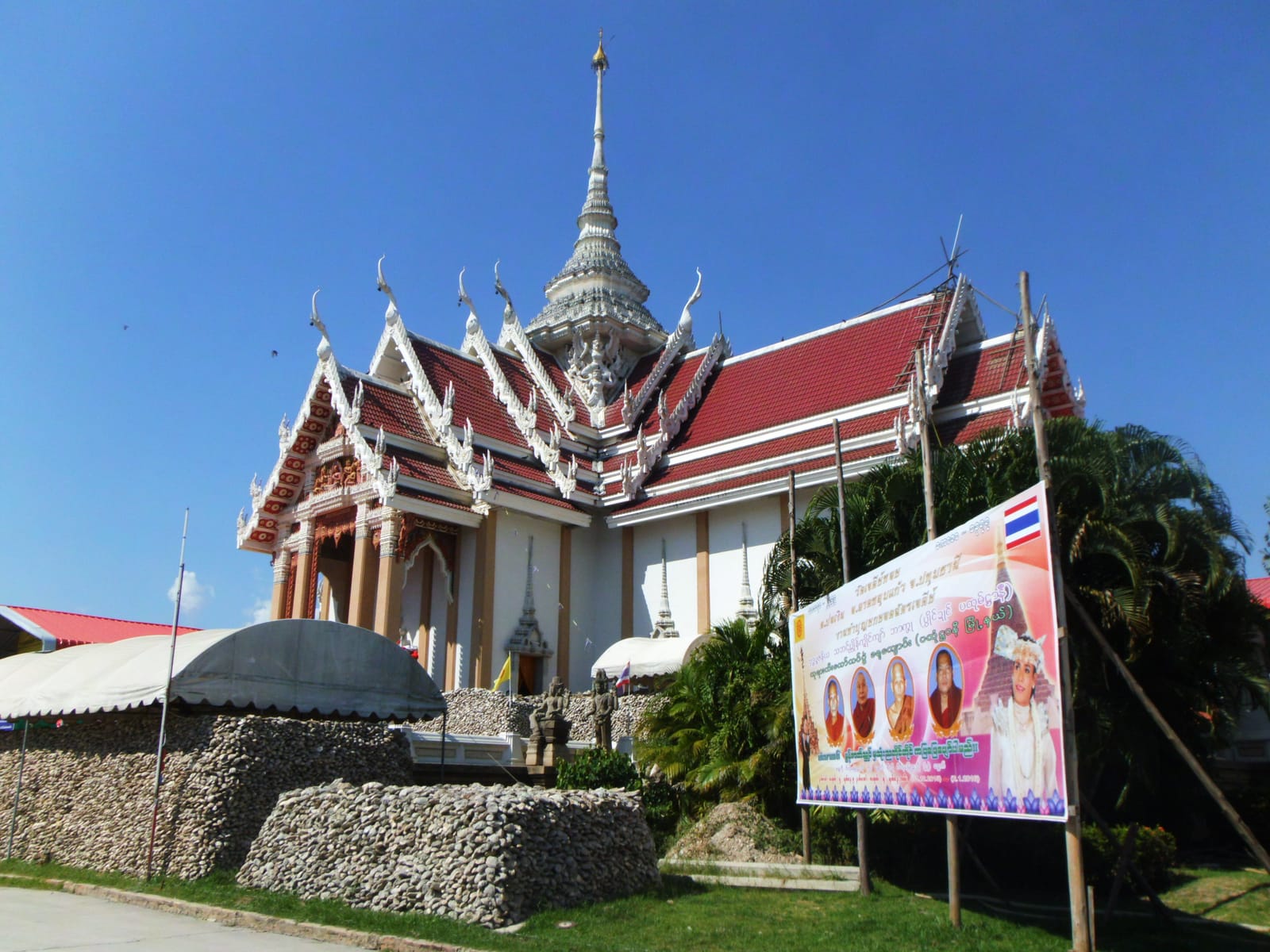
Wat Chedi Hoi sits in Bo Ngoen subdistrict, Lat Lum Kaeo district, Pathum Thani province. The temple's name comes from its one-of-a-kind highlight: a pagoda built entirely from giant oyster shells. The temple was founded in 1995 (B.E. 2538) by Luang Pho Thong Klueng Sunthoro (Phra Khru Sunthon Khunthada), a monk who loved collecting antiques and fossil shells — which is how both the pagoda and the temple's museum came to be. The grounds run to more than 100 rai, ringed by rice fields, so it's easy to wander around without feeling crowded.
The shell pagoda — you have to see it in person
There are two pagodas at the temple: one near the entrance and another deeper inside the grounds. Both are built from giant oyster shells dug up on site, so the pagoda walls are genuinely a dense surface of stacked shells — not just a decorative outer skin. The pagoda stands around 8 metres tall, and up close you can clearly make out the individual shells. This is the spot most people come to photograph.
- Real shells, all the way through — get up close and you'll see it's stacked oyster shells, not patterned cement
- Two photo spots — the pagoda at the front and the one inside have a different feel; the inner one is quieter
- Join the merit-making — the temple still invites visitors to help build the shell pagoda and restore the roof, a form of merit-making here
Want more out of Pathum Thani? Book tours & activities
Booking online ahead on Klook or GetYourGuide is usually cheaper than the gate and skips the queue. Pick only the experiences you actually want — prices and availability are shown live on each site.
The shell-fossil and antiques museum
Inside the grounds is a museum building where Luang Pho has gathered his collection since around 1983 (B.E. 2526). The standout pieces are fossilized giant oyster shells dug up on the temple land, and a giant clam shell roughly a metre wide. Beyond the shells, there are earthenware bowls, the three-mounded water jars (tum sam khok) that Pathum Thani is known for, old household tools, and amulets he collected.
- Fossilized giant oyster shells — dug up on the temple grounds, many times larger than ordinary shells
- Giant clam shell — about a metre across; the piece that makes people stop and stare
- Wishing gong — it used to need a mallet, but now you can rub it with your hand and it rings; people like to rub it and make a wish
- Antiques — earthenware bowls, tum sam khok water jars, household tools, and amulets
Check before you go
The museum building has reportedly been closed for renovation on and off lately. If you're coming specifically for the museum, call the temple first on 08 9025 8031 or 08 1643 1492 to be sure. The shell pagoda and the temple grounds themselves are open to walk around anytime.
Rice-field views, fish feeding, and the temple vibe
The thing many people don't expect is the atmosphere around the temple. The grounds are wide and ringed by rice fields, with a cool breeze — easy, relaxed walking for the whole family. There's a fish pond where you can buy feed (kids love it), and a herbal-steam corner for anyone who wants to sit and rest a while. All in all it's a temple you can take slow: make merit, take photos, browse the museum, and half a day slips by comfortably.
Feed the fish
There's a fish pond on site and you can buy feed there. Kids enjoy it, and it only costs a few baht.
Rice-field views
The wide, open temple grounds look out over green rice fields — nice for a walk and photos in the morning or evening.
Merit-making & herbal steam
Join in building the pagoda and restoring the roof, and there's a herbal-steam corner for your health.
Opening hours, entry fee, and food nearby
- Opening hours — open daily; most people come around 8:00 AM–5:00 PM. Come in the morning before the sun is harsh and it's a more comfortable walk
- Entry fee — no admission charge; it's a temple, so you make merit as you wish (there are spots to buy flowers, incense and candles, and to donate toward restoration)
- Food — there are shops and food stalls in the usual temple-market style, like noodles, snacks and drinks, fine for a quick bite — but it's not a big dining area. If you want a proper meal, look for restaurants in Pathum Thani town or around Lat Lum Kaeo
- Time needed — allow around 1–2 hours to walk the pagodas, see the museum, and feed the fish
How to get to Wat Chedi Hoi
The temple is in Lat Lum Kaeo district, fairly deep along the rice-field roads. Driving yourself is by far the easiest way. From Bangkok it's about 50 minutes to an hour depending on where you start.
- Private car — take the Pathum Thani–Lat Lum Kaeo route, then just type "Wat Chedi Hoi" into Google Maps and follow it. There's parking at the temple. This is the easiest and most flexible option
- Public transport — there's no train or public bus that goes right to the temple. You'd have to get to Pathum Thani town or Lat Lum Kaeo and then take a hired motorbike/taxi in. It's quite a hassle without a car
- Hired car / private taxi — if you don't have a car, hiring one or booking a ride app from Bangkok/Pathum Thani and having it wait to take you back will save time and effort, because catching a ride back from out there is hard
Tip
If you use a ride app, arrange for the driver to wait, or save their number — the area around the temple is all rice fields and hailing a new ride for the trip back is very difficult.
Want to turn Pathum Thani into a full day? See where to stay and what else to do.
See the Pathum Thani travel guide →