🔄 Updated 21 Jun 2026
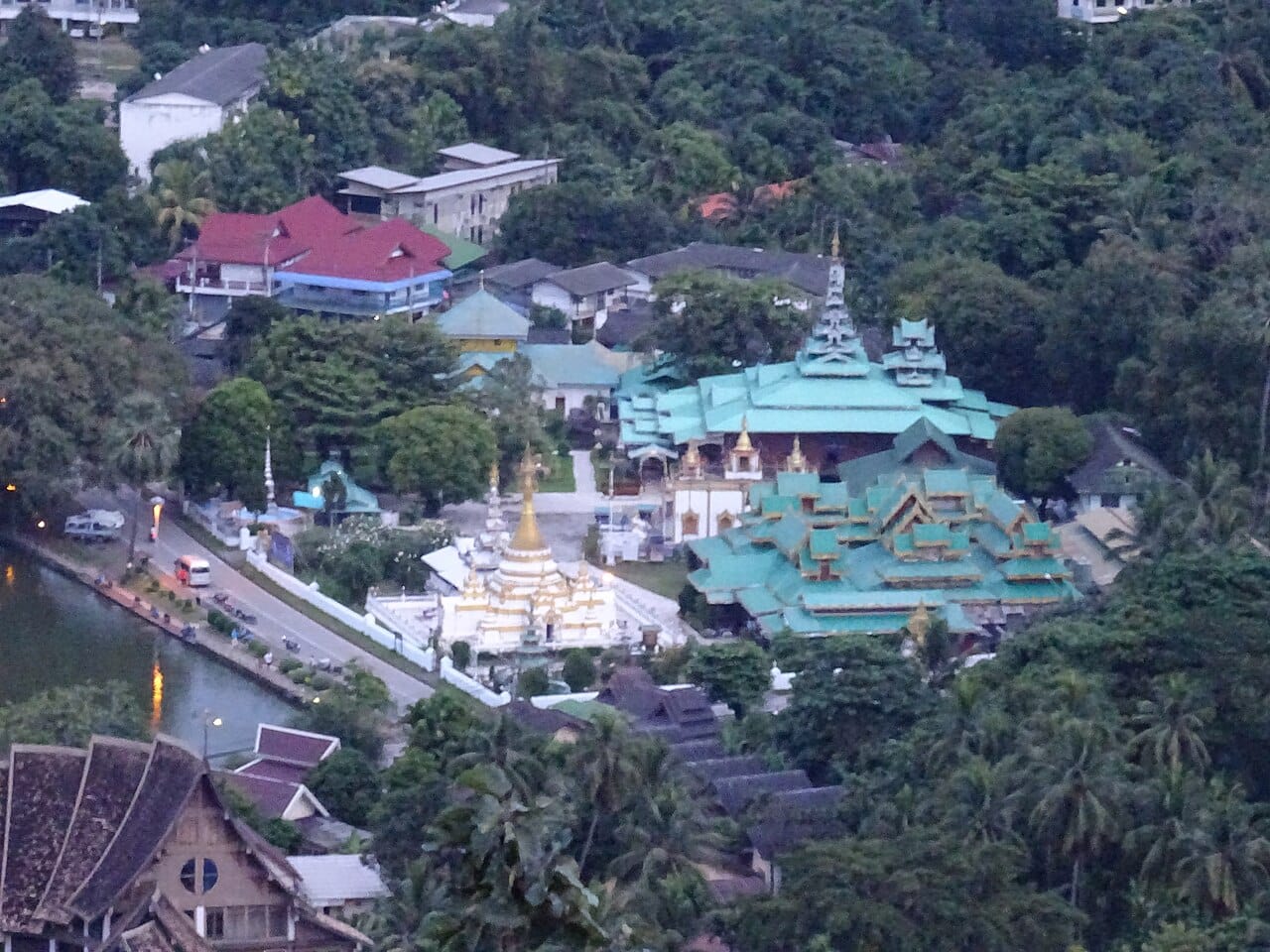
Wat Chong Kham and Wat Chong Klang sit side by side on the edge of Nong Chong Kham, the lake at the heart of Mae Hong Son. They are an easy walk from the walking street and the evening market. By day, people usually stop to pay respects and look at the Shan architecture. The evening is the real draw, though — the temple lights up the chedi, and its reflection falls across the water as a mirror image. If you like taking photos, this angle will win you over.
Twin temples that aren't quite identical
A lot of people assume it's one temple, because the layered castle-style roofs of the two run on into each other. They are actually two separate temples, both built in the Shan (Tai Yai) style that drew on Burmese influence from the early Rattanakosin period. The easy way to tell them apart: Wat Chong Kham is the older one, with a large Buddha image inside that locals call Luang Pho To, while Wat Chong Klang sits right next to it, known for its white-and-gold chedi and for the objects inside that tell the Shan story in more detail.
- Wat Chong Kham — the town's first temple, built around 1827, with a large Buddha image and a calm atmosphere that's good for paying respects
- Wat Chong Klang — known for its white-and-gold chedi, glass paintings of the Jataka tales, a Buddha image woven from bamboo, and a small wooden-doll museum inside
- Shan castle-style roofs — tiered in layers and topped with fretworked zinc, an identity you rarely see in temples elsewhere in Thailand
Want more out of Mae Hong Son? Book tours & activities
Booking online ahead on Klook or GetYourGuide is usually cheaper than the gate and skips the queue. Pick only the experiences you actually want — prices and availability are shown live on each site.
Highlights inside Wat Chong Klang
If you only have time to walk through one temple, Wat Chong Klang has more to see inside. The most talked-about pieces are the set of glass paintings telling the Jataka tales and the life of the Buddha — the work of Shan artisans, brought over from Mandalay around the mid-19th century, with the colours still intact. Another unusual piece is the Buddha image woven from bamboo, a reflection of local craft, plus a small museum corner displaying carved wooden dolls, the Vessantara picture series, and old belongings of the Shan people.
Glass Jataka paintings
Paintings on glass by Shan artisans from Mandalay, telling the Jataka tales and the Buddha's life, lined up around the viharn of Wat Chong Klang.
Woven-bamboo Buddha
A Buddha image made from woven bamboo — rarely seen, and a piece of the local craft tradition around here.
Wooden dolls + antiques
A small museum corner displaying carved wooden dolls, the Vessantara picture series, and old Shan everyday objects.
The evening chedi reflection shot
This is the main reason people come in the evening. The best angle is across from the temple — walk along Nong Chong Kham to the far side of the lake, then turn back toward the temple. Once the sky starts to darken and the temple lights up the chedi, the chedi and the tiered roofs cast an upside-down reflection on the water. The stiller the air and the flatter the water, the sharper the shot. The prettiest window is after sunset, from roughly 6 pm onward (the deep blue sky against the temple's golden light is just right), and the temple lights stay on until before dawn.
Photo tip
Get there about 20–30 minutes before sunset and claim your spot across from the temple, because blue hour is very short — the light is only good for around 15–20 minutes. If you bring a small tripod, you'll get a sharper reflection in the dark than shooting handheld.
Hours, dress code and entry fee
- Hours — you can generally go inside to pay respects from around 7:30 am to 6 pm, while viewing the lights and the water reflection works from dusk until before dawn, since you can see it from the lakeside outside at any time
- Entry fee — free, with a donation box if you wish to give
- Dress code — it's a temple, so dress modestly with shoulders and knees covered, take your shoes off before entering the viharn, keep your voice down, and don't point your feet toward the Buddha images
- Location — beside Nong Chong Kham, in the centre of Mae Hong Son; an easy walk from the walking street and the evening market, no car needed
More to do nearby
The nice thing about this pair of temples is that they're right in the centre of town, so you can keep walking to several spots. In the evening, the area in front of the temple and around Nong Chong Kham has the evening market and the Mae Hong Son walking street, with Shan food like khao soi, nam ngiao and ala wa snacks to graze on. And if you want a city view from up high, you can drive up to Phra That Doi Kong Mu on the hill behind town. Both pair well with Wat Chong Kham–Chong Klang on a single evening trip.
Walking street + evening market
Right in front of the temple and around Nong Chong Kham, with Shan food and souvenirs to graze on in the evening — just carry on from the temple.
Phra That Doi Kong Mu
A temple on the hilltop behind town, the high viewpoint over Mae Hong Son, lovely both by day and at sunset.
Plan your whole Mae Hong Son trip — town, temples and food
See the Mae Hong Son guide →