🔄 Updated 21 Jun 2026
Wat Khuha Phimuk is in Na Tham sub-district, Mueang Yala district, about 7 kilometres from the centre of Yala along Route 409 (Yala–Ban Niang) — only a ten-minute drive. The temple was originally called Wat Na Tham; it was renamed Khuha Phimuk during the era of Field Marshal Plaek Phibunsongkhram. The real draw isn't the temple buildings themselves but the large limestone cave bored into the mountain behind them.
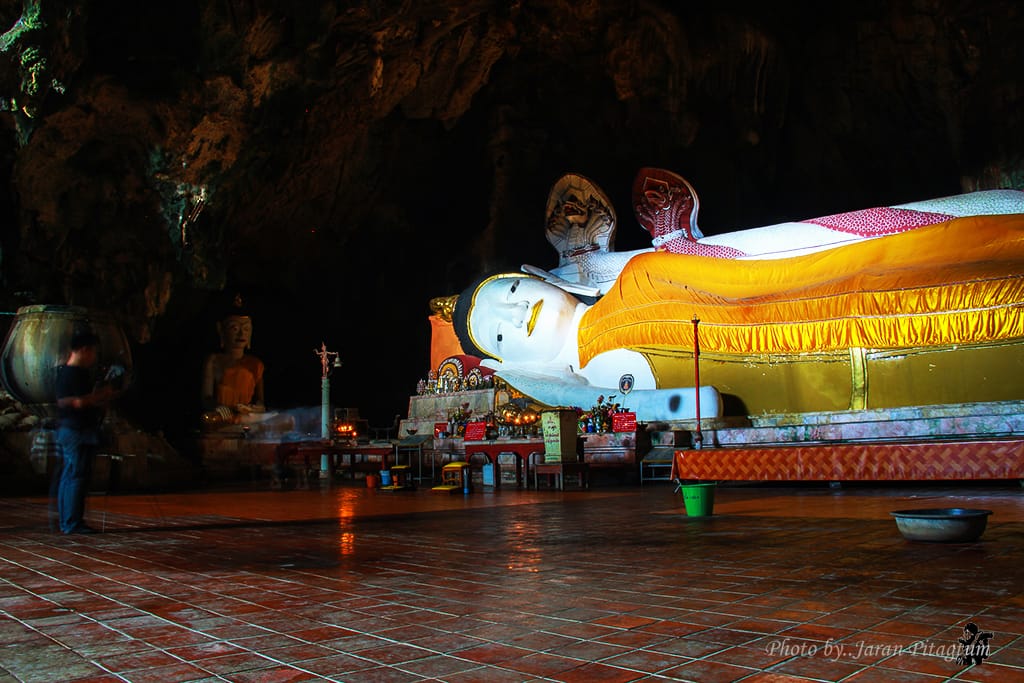
Inside the cave sits a giant reclining Buddha, moulded from clay during the Srivijaya period around the 13th century CE (roughly the 8th century AD, according to the archaeological evidence). The figure measures about 81 feet, or around 24–25 metres, stretched out in the cool of the cave. It's one of the oldest reclining Buddhas in southern Thailand, and the main reason people make their way out to Na Tham.
What you'll find inside the cave
Khuha Phimuk is a fairly wide limestone cave that's easy to walk through, with lights guiding the way in to the reclining Buddha. Inside it's cool and quiet — a clear contrast to the heat outside. Stalactites and stalagmites that took thousands of years to form surround the figure, and in places you'll see clear water trickling and seeping from the rock.
Reclining Buddha in the cave
A Srivijaya-era clay reclining Buddha around 24 metres long, stretched out in the middle of the cave — the highlight people come to pay their respects to.
Stalactites & stalagmites
Stone columns and curtains formed by dripping water over thousands of years, scattered around the cave walls, with clear water seeping through in spots.
Ancient rock paintings
Around the rock shelter there are traces of prehistoric rock paintings and carvings — a sign of just how old the community here really is.
Po Than Chao Khao (the guardian giant)
A standing giant sculpture watching over the temple entrance, a sacred figure that locals revere and come to ask for blessings.
Want more out of Yala? Book tours & activities
Booking online ahead on Klook or GetYourGuide is usually cheaper than the gate and skips the queue. Pick only the experiences you actually want — prices and availability are shown live on each site.
The Srivijaya museum at the temple
On the temple grounds there's a Srivijaya museum holding artefacts unearthed from the caves and hills around Na Tham — votive clay tablets, model stupas, bricks from the bases of Buddha images, and prehistoric stone axes. Na Tham has been a settlement on and off since prehistoric times, so if you have time, a quick walk through the museum gives you a much better sense of where the reclining Buddha came from and just how old this area is.
Dressing for the temple
The cave is a place of worship for the reclining Buddha, so dress modestly with shoulders and knees covered, take your shoes off at the marked spots, and keep your voice down inside — both out of respect and so you don't disturb others who've come to pray.
Opening hours and entry fee
The temple is open for visits and worship every day, generally during daylight hours from morning to late afternoon, and there's no official entry fee — just a donation box for the temple's upkeep if you wish. The best window is morning to mid-morning, around 8:00–10:00 a.m., when it's not yet hot, the light in the cave is good, and you might catch the temple's prayer hours too.
- Opening hours — open daily during daylight hours into the late afternoon (times may vary by temple, so it's worth asking on site or checking the latest information before you go).
- Entry fee — no official charge; you can give a donation toward the temple's upkeep as you see fit.
- Best time — morning to mid-morning is the coolest and most comfortable; avoid the midday heat.
How to get there — just ten minutes from Yala town
The nice thing about Wat Khuha Phimuk is how close it is to Yala town — unlike the sights around Betong that mean a long mountain drive. From the centre of Yala, head along Route 409 (Yala–Ban Niang) for about 7 kilometres and you'll reach Na Tham. Just drop a pin on "Wat Khuha Phimuk" or "Wat Na Tham" in Google Maps.
- Self-drive or motorbike — the most convenient option; from Yala town it's about a 10–15 minute drive, and there's a car park at the temple.
- Local taxi in town — you can hire a ride from Yala town and back; it's a short trip, so the fare isn't high, but agree on the price before you get in.
- Carry on in town — on the way back, swing by the centre of Yala to see its famous town plan, with a three-tier roundabout and streets laid out like a spider's web.
Making a Yala–Betong trip worthwhile
Wat Khuha Phimuk works well as the first stop of the day in Yala town, either before or after driving down to Betong (about 140 kilometres from Yala town), where the Aiyerweng Skywalk, the Piyamit Tunnel, and local specialities like Betong chicken and Betong grass jelly are waiting. Plan your route to fit the temple in early in the morning before the long drive — that tends to work out best.
On safety and getting around
Yala is a province in Thailand's deep south. The general atmosphere in town and around Wat Khuha Phimuk is normal, with locals coming to pray and a steady trickle of visitors stopping by. Still, for peace of mind we'd recommend checking the latest news and official safety advisories before you actually travel, planning to get around mainly during daylight hours, and allowing a little extra time to pass through checkpoints along the way.
Yala is a place where people of several cultures live side by side — Malay Muslims and Thai Buddhists alike. Travel with respect, dress modestly when visiting places of worship, and greet locals with a smile, and you'll come away having felt the warm hospitality of the south.
Plan a full Yala–Betong trip
See the Yala travel guide →