🔄 Updated 21 Jun 2026
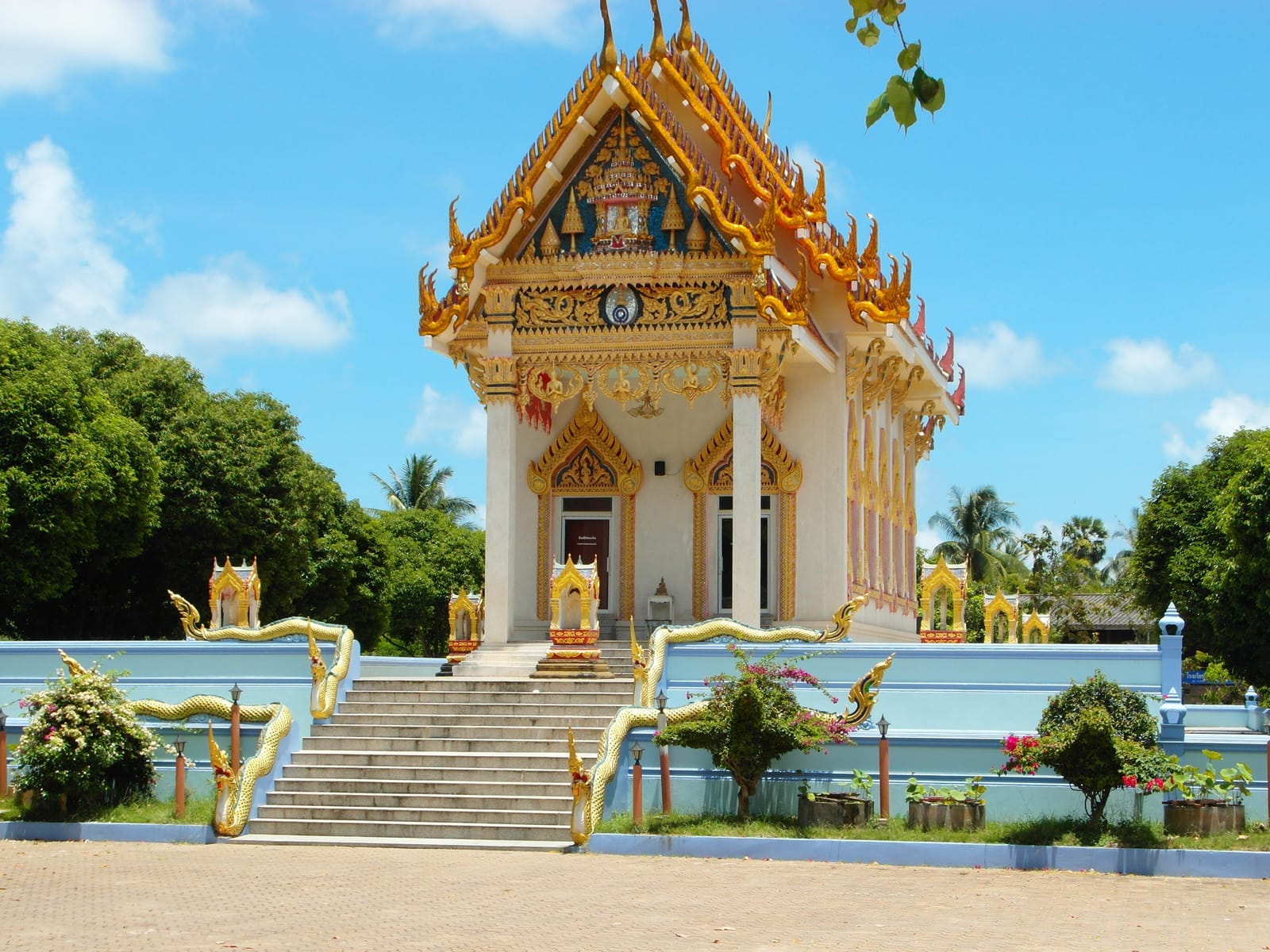
Koh Samui is known for its beaches and sea, but if you want to see a quieter, deeper side of the island, Wat Khunaram is the place a lot of people will point you to. What everyone talks about is the body of Luang Pho Daeng, a monk who passed away back in 1973 but whose body never decayed. He still sits cross-legged in a glass case to this day — a sight many describe as both astonishing and strangely peaceful at the same time.
Who was Luang Pho Daeng?
Luang Pho Daeng, formally titled Phra Khru Samathakittikhun, was a revered monk deeply respected by the people of Samui. He was ordained as a young man, left the monkhood to live as a layman for a while, then returned to ordain again in his fifties. He took meditation practice seriously, spent time practising in caves, and eventually became the abbot of Wat Khunaram.
The story passed down is that before he died, he told his disciples in advance that he would pass away while sitting in meditation — and that if his body didn't decay, they should keep it as a reminder of impermanence. He passed away in 1973 (around the age of 79) while meditating, and his body has remained intact ever since.
Want more out of Koh Samui? Book tours & activities
Booking online ahead on Klook or GetYourGuide is usually cheaper than the gate and skips the queue. Pick only the experiences you actually want — prices and availability are shown live on each site.
The body in the glass case, and the sunglasses
Luang Pho Daeng's body is kept in a clear glass case, still in the cross-legged meditation pose he was in when he passed. Around it you'll find flowers, incense, candles, and offerings left by visitors. The hall is fairly quiet — most people come in softly, raise their hands in a wai, and sit calmly for a moment before heading out.
The thing a lot of people wonder about is why the body wears sunglasses. The plain answer is that over the years the eyes naturally dried out, and the sunglasses keep the image calmer and more dignified. There's nothing mysterious behind it — it's simply caring for the body with respect.
Before you take photos
Plenty of people want a photo to remember the visit, and that's fine — but skip the flash, don't climb or lean too close to the case, and if someone is paying their respects, wait a moment. This is a place locals hold sacred, not your average check-in spot.
What you can do at Wat Khunaram
- Pay respects to Luang Pho Daeng — the main draw of the temple, set up inside a hall. Take off your shoes before entering.
- Shake a fortune stick — there's a siamsi cylinder you shake for a fortune reading; a favourite stop for those who come for luck.
- Make a donation — there's no entry fee, but a donation box is there if you'd like to support the temple.
- Pick up amulets — sacred amulets and keepsakes connected to Luang Pho Daeng are available.
- Wander the grounds — the temple grounds are shaded and green, a nice short pause for the mind between beach stops.
You won't need long here — most people are done in about 20–40 minutes. It's a small temple, better as one stop on a loop around the island than somewhere to spend the whole day.
Opening hours, dress code, and entry
- Opening hours — open daily through the daytime, roughly 06:00–18:00 (hours can shift on Buddhist holy days or when the temple has ceremonies).
- Entry fee — none; donations welcome.
- Dress code — dress modestly, cover your shoulders and knees, no spaghetti straps or very short shorts, and take off your shoes before entering the hall.
- Etiquette — be composed, keep your voice down, and don't touch the amulets without asking first.
Bring a cover-up
If you're coming straight from the beach in light clothes, keep a shawl or sarong in your bag so you can cover up and walk straight in — no need to head back and change. Some days there are wraps to borrow at the hall entrance, but they're limited.
How to get to Wat Khunaram
Wat Khunaram sits on the southern side of the island, along the ring road numbered 4169, on the western edge of Hua Thanon village, not far from Lamai Beach. It's an easy drive from the Lamai or Chaweng areas since it's already on the route people take to loop around the island.
- Rental car / motorbike — the easiest option, with parking out front. The 4169 ring road is well signposted, so just follow the signs.
- Songthaew — you can charter one or ride a shared songthaew from the beach areas; always agree on the price before getting in, and note that they thin out in the evening.
- Taxi / Grab — convenient, but fares on the island run high, so it works best split between a few people.
- As part of an island tour — many half-day and full-day tours already include Wat Khunaram as one of their stops.
Riding a motorbike on the island
Koh Samui's ring road has some sharp bends and steep climbs, especially around the hills. If you're not used to riding a motorbike, go slow, always wear a helmet, and avoid riding in the rain when the road gets slippery. If you're not confident, a songthaew or a four-wheel rental is the safer call.
Pair it with these nearby spots
The nice thing about Wat Khunaram is that it sits in the southern–eastern zone of the island, where several attractions line up close together — easy to plan into a single day.
Hin Ta and Hin Yai
Oddly shaped rocks by the sea near Lamai Beach — a popular photo spot with ocean views, not far from the temple.
NatureNa Muang Waterfall
A waterfall nearby on the same route — cool water for a dip and shaded spots to sit and rest.
BeachLamai Beach
A long beach with a more laid-back feel than Chaweng, with restaurants and cafes to drop into.
FoodHua Thanon Market
A fishing-community market near the temple, with fresh seafood and bold, punchy southern Thai food.
How to take in the mood at Wat Khunaram
A lot of people come here out of curiosity about the undecayed body, but once inside they find something different — a calm that makes you sit and think about how impermanent life is, which is exactly what Luang Pho Daeng wanted his body to remind people of from the start. Come with a respectful heart and you'll leave with more than just a photo.
The best times to visit are early morning or late afternoon, when the sun is gentler and it's less crowded than midday when the tour groups arrive. It's quieter then, and the photos come out nicer too.
Plan your whole Koh Samui trip — temples, beaches, and food
See the Koh Samui travel guide →