🔄 Updated 21 Jun 2026
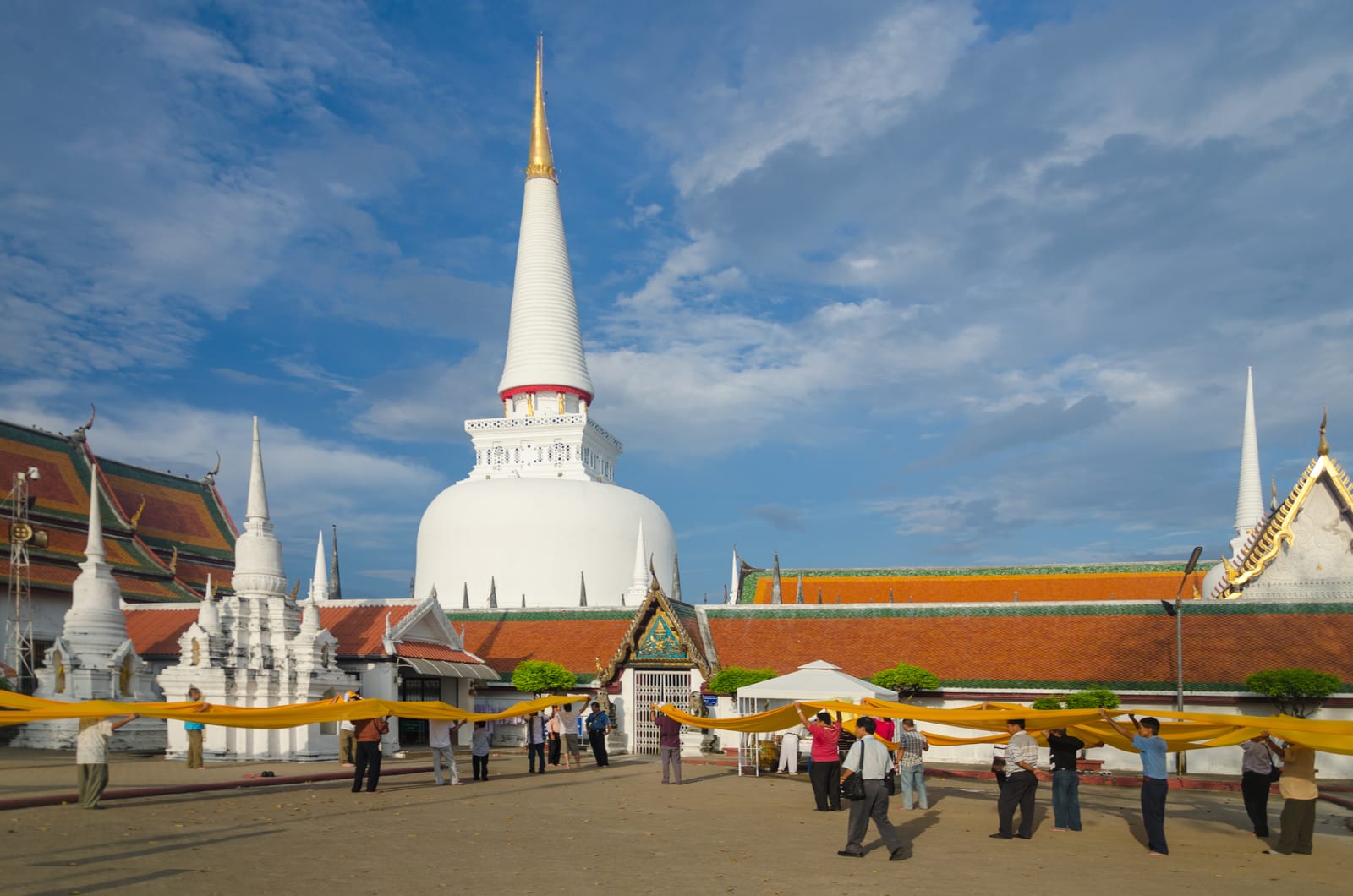
Wat Phra Mahathat Woramahawihan sits right on Ratchadamnoen Road in the center of Nakhon Si Thammarat, so it's very easy to reach. The image everyone pictures is the white, inverted-bell chedi topped with a spire of solid gold, visible from far away. Southerners regard it as the guardian stupa of the city, and almost anyone who comes to Nakhon stops in to pay their respects at least once.
A short history — why this temple matters
Local legend holds that the chedi was built to enshrine a relic of the Buddha (said to be a tooth relic) brought from Sri Lanka, by King Sri Dharmasokaraja, the founder of Nakhon Si Thammarat. The original chedi was a different shape; later, when Sinhalese monks arrived to spread Buddhism, it was rebuilt and encased as the Sri Lankan bell-shaped chedi you see today. It stands as evidence of the ties between Nakhon and Sri Lanka going back many centuries.
Today the Fine Arts Department has registered the temple as a historic site, and the province is pushing for the chedi to enter the Tentative List for World Heritage, on the strength of both its architecture and its role as a Buddhist center of southern Thailand. If it earns the listing, it will be Nakhon's newest World Heritage site.
Want more out of Nakhon Si Thammarat? Book tours & activities
Booking online ahead on Klook or GetYourGuide is usually cheaper than the gate and skips the queue. Pick only the experiences you actually want — prices and availability are shown live on each site.
The chedi — 55 metres tall with a gold-clad spire
The chedi stands about 55 metres tall, a white inverted bell. The part people love to study is the gold spire at the very top, clad in solid gold and catching the light against the sky. Smaller satellite chedis and niches with Buddha images ring the base, and you can walk clockwise (pradakshina) around it. The atmosphere is calm and almost reverent, especially in the early morning before the sun gets harsh.
The legend of the shadowless stupa
A story locals take pride in: at certain times of day the chedi seems to cast no shadow on the ground, no matter where the sun is. People call it the shadowless stupa, a puzzle with no clear explanation — which is exactly why visitors want to see it with their own eyes. Try watching around midday when the sun is at its strongest.
How to pay your respects, the local way
Most people come to make wishes about work, study, health, and success in life — especially those born in the Year of the Dragon, since the chedi is considered their birth-year stupa. For many, paying respects here carries a special meaning.
- Start at Wihan Phra Song Ma — the staircase up to the circumambulation terrace around the chedi is inside this hall. Light incense and candles, then climb up to pay respects to the Buddha relic above.
- Walk a circuit around the chedi — go clockwise (pradakshina) around the stupa, making your wishes as you walk.
- Apply gold leaf and offer flowers, incense and candles — there are offering points inside the temple, with offerings starting at just a few tens of THB.
- Pay respects in the main wihan — the main hall at the front houses a large principal Buddha image, in a cool, shaded setting.
Another name you may hear is Jatukham Rammathep, the guardian deities tied to Nakhon's legends and the chedi. For a while the Jatukham amulets were famous across the country. If you're curious, you can ask at the temple — but the heart of a visit here is still paying respects to the chedi itself.
Artifacts and the halls around the chedi
Wat Phra Mahathat is more than just the chedi. Several old halls around it hold artworks and objects of historical value, and they're a pleasure to wander through. If you love history, you could easily spend a while here.
Wihan Phra Song Ma
The way up to the chedi terrace. Inside is a stucco relief of Prince Siddhartha's Great Departure to become a monk (Mahabhinishkramana), riding his horse Kanthaka — Ayutthaya-era craftsmanship, beautiful and not to be skipped.
Wihan Khian (temple museum)
Once a place where the Tripitaka scriptures were copied, now a museum of artifacts donated by locals — Buddha images, nielloware, silverware, and rare antiques.
Phra Wihan Luang
The large hall at the front of the temple, in Ayutthaya-era style, with a fine principal Buddha image and beautifully carved pillars and gables — a spot for paying respects and for architecture photos.
Take time for the Wihan Khian
Plenty of visitors pay respects to the chedi and leave, even though the Wihan Khian holds a lot of rare antiques — Nakhon nielloware, silverware, and old Buddha images. If you have time, walk through it once; you'll understand why this place is in line for World Heritage status.
The Pha Khuen That tradition — a sight you won't find elsewhere
If you visit during Makha Bucha or Visakha Bucha, you'll see the Pha Khuen That procession. Locals sew long strips of cloth (called pha phra bot) end to end into a line hundreds of metres long, then carry it up together to drape around the chedi as an offering. White, yellow, and red cloth are favored, making a display of devotion you can only see here in Nakhon. If you can time your trip for this, it's well worth it.
Opening hours, admission, and dress code
- Opening hours — open daily, roughly 08:30–16:30. Early morning or late afternoon is best, with gentler sun and fewer people.
- Admission — free; donate as you wish. Offerings are sold on site starting at just a few tens of THB.
- Location — Ratchadamnoen Road, Nai Mueang, Mueang district, Nakhon Si Thammarat, in the old town near the city pillar shrine and the National Museum.
- Dress code — this is an important temple, so dress modestly: no spaghetti straps or shorts above the knee, and remove your shoes before going up to the chedi terrace or into the halls.
- Parking — there's parking around the temple and along Ratchadamnoen Road. Easy on weekdays; on weekends and Buddhist holy days it gets busy, so allow extra time.
In front of the temple and nearby you'll find souvenir markets and shops selling offerings, Nakhon nielloware, silverware, and local sweets — easy to pick up gifts right after you've finished paying respects.
Best times and photo spots
Early morning, before 09:00
Soft, low light and few people — you can capture the white chedi and its gold spire against a clear sky, calm and uncluttered. Ideal if you want clean, open shots.
Looking up at the gold spire
Stand near the base and angle your camera up toward the gold spire for that gold-against-sky shot that's signature to Nakhon.
The circumambulation terrace
Walk around the base and you'll find the satellite chedis and Buddha niches lined up as leading lines — a great architectural angle from every side.
Before you go
The chedi terrace is open-air and you have to take your shoes off, so the ground gets hot midday. Bring socks or go when the sun is gentler for happier feet. Pack a hat and water, and expect bigger crowds on Buddhist holy days.
Where to go next nearby
- Nakhon City Pillar Shrine — not far away, with handsome architecture and another sacred spot in town worth a stop.
- Nakhon Si Thammarat National Museum — holds Srivijaya-era and Nakhon artifacts, great for history lovers.
- Ratchadamnoen Road old town — stroll among old buildings, cafes, and local eats to wrap up the trip at an easy pace.
Want a full day of Nakhon, including where to stay and what to eat
See the Nakhon Si Thammarat travel guide →