🔄 Updated 21 Jun 2026
Wat Phra Non Chaksi is a third-class royal temple of the worawihan grade, in Chaksi sub-district, Mueang Sing Buri district, about 4 kilometres from the town centre along the Sing Buri–Suphan Buri road (Highway 3032). It's an old temple thought to predate the Ayutthaya period. Many people come to Sing Buri specifically to bow before this reclining Buddha, then carry on to the Bang Rachan Heroes Memorial Park or sit down for a bowl of boat noodles by the river.
The Reclining Buddha — what everyone comes to bow before
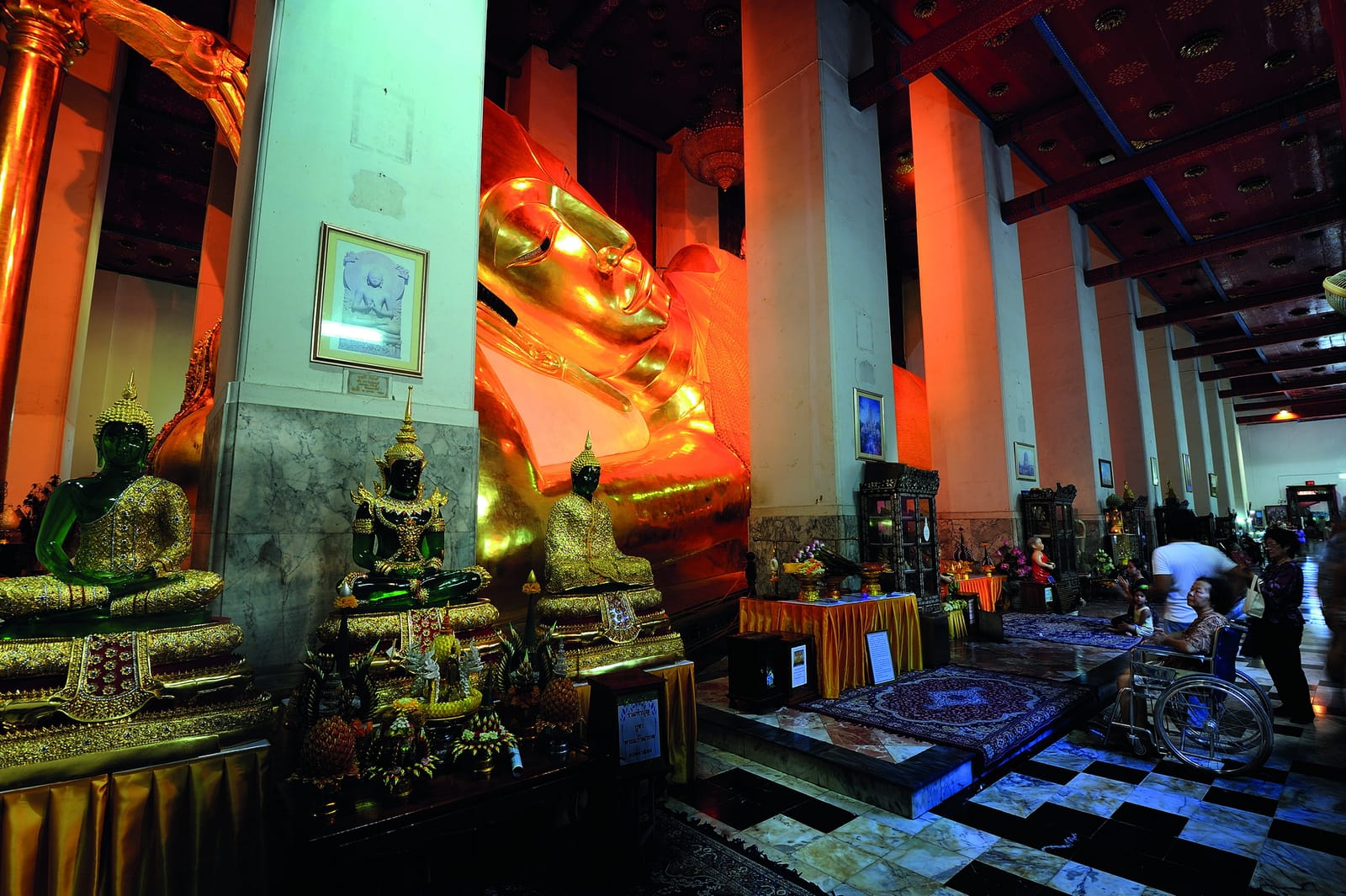
The main image here is a reclining Buddha (Phra Phuttha Saiyat) roughly 47 metres and 42 centimetres long, a Sukhothai-era figure with very graceful, flowing lines. It rests inside a large hall, with the face turned to the north and the head to the east. As you walk into the hall the image stretches the entire length of the space, so you have to walk all the way to the far end before you reach the feet. It ranks among the longest reclining Buddhas in Thailand.
The temple's age shows in its history of royal visits over the centuries, from King Borommakot of Ayutthaya through to King Rama V, who restored the image and built a new hall, ordination hall, and monastic quarters. King Rama IX also came to pay his respects here in 1976. That history makes the temple both a sacred site and a place of real historical value for the province.
Before you enter the hall
Take off your shoes every time before stepping up into the hall, and dress modestly with shoulders and knees covered — this is a royal temple. Mornings are easier to walk before the sun gets harsh. You can take photos of the image as usual, but don't point your feet toward it or turn your back on it.
Want more out of Sing Buri? Book tours & activities
Booking online ahead on Klook or GetYourGuide is usually cheaper than the gate and skips the queue. Pick only the experiences you actually want — prices and availability are shown live on each site.
Other sacred images in the hall and around the temple
Besides the reclining Buddha, the hall holds several other important images that people like to pray to. Take a moment to work through each one before you leave.
- Phra Kan — a stone Buddha image lacquered and gilded, enshrined inside the hall. This old image is revered by locals, who come to pray for protection and safe passage.
- Phra Kaeo — a cast image seated in the diamond-throne (full-lotus) posture, made in the reign of King Rama V, with beautiful features. It sits alongside Phra Kan in the same hall.
- Sal trees around the temple — the grounds are shady, with plenty of large trees, so it's an easy place to take a stroll after you've finished praying.
- The market in front of the temple — local food and souvenirs are sold here during the day, worth grabbing for the road ahead.
How to pray — a simple guide
There's no complicated ritual. Most people pick up flowers, incense, and candles sold near the temple, then go to bow before the reclining Buddha first, settling their mind on whatever they want to ask for. After that they move on to Phra Kan and Phra Kaeo. Many come to pray about health, work, and a safe journey.
Gold-leaf and bad-luck rites
There are spots inside the hall for applying gold leaf and making a donation. Give as much as your faith moves you to — it's never required.
Topping up the oil lamps
At times there are points to add oil to the lamps and offer alms to the monks, a merit-making act people like to add after bowing to the Buddha.
Opening hours, entry, and getting there
- Opening hours — open daily for worship, roughly 08:00–16:00 (it gets busy on major religious days, so go early).
- Entry — no entry fee; donate as your faith moves you.
- Location — Chaksi sub-district, Mueang Sing Buri district, about 4 km from the town centre along Highway 3032 (Sing Buri–Suphan Buri).
- Driving yourself — from Bangkok, take Highway 32 (the Asia Highway), about 2 hours. There's a car park at the temple.
- No car — take a coach or van to Sing Buri town, then a hired motorbike or songthaew on to the temple.
Make the trip worth it
The temple isn't far from the town centre, so you can visit here in the morning and then carry on to the Bang Rachan Heroes Memorial Park, or head down for boat noodles and river fish along the Noi River — all in a single day.
See all the things to do, eat, and stay across Sing Buri in one place
See the Sing Buri travel guide →