🔄 Updated 21 Jun 2026
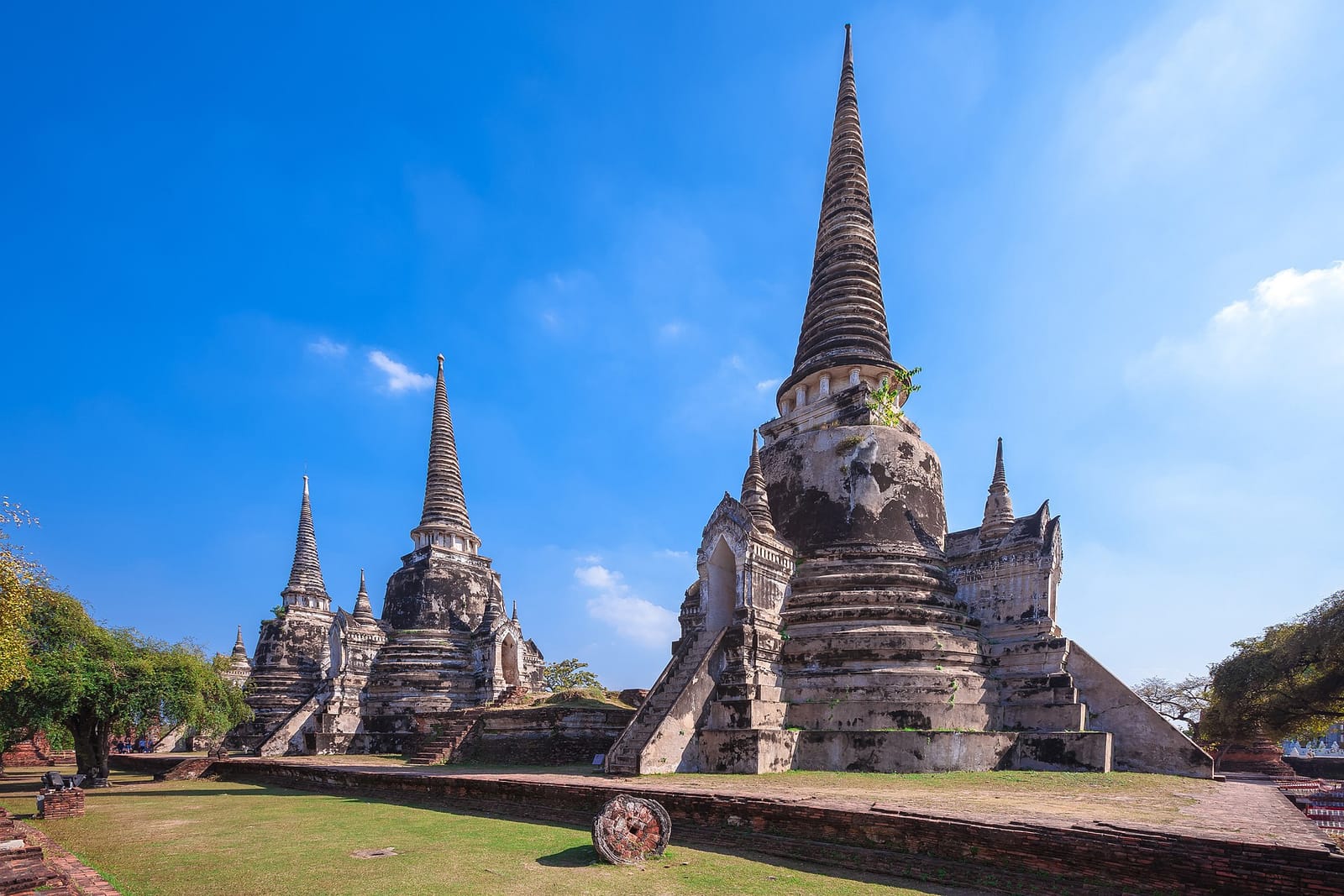
Wat Phra Si Sanphet sits inside Ayutthaya Historical Park, right next to the old royal palace. The view you see in every photo is three bell-shaped (Sri Lankan-style) chedis standing in a row on a raised platform, their red brick set against the sky — one of the defining images of this World Heritage city. Almost everyone visiting Ayutthaya for the first time stops here.
Why this temple is special
Wat Phra Si Sanphet was built in the early Ayutthaya period, on what had originally been royal palace land. Later, under King Borommatrailokkanat, the palace was moved elsewhere and this plot was given over to become a temple within the palace precinct. The key point is that this temple had no resident monks — it was used only for royal court ceremonies. That's why people often compare it to Bangkok's Temple of the Emerald Buddha (Wat Phra Kaew), which also stands inside the Grand Palace grounds.
The three Sri Lankan-style chedis you see today were built to hold the ashes of three kings. King Ramathibodi II built the first two to enshrine the ashes of his father and his elder brother, and the third was added later to hold his own. The three lined up in a row became a symbol of the dynasty's continuity.
Want more out of Ayutthaya? Book tours & activities
Booking online ahead on Klook or GetYourGuide is usually cheaper than the gate and skips the queue. Pick only the experiences you actually want — prices and availability are shown live on each site.
Phra Si Sanphet Daya, the lost golden Buddha
Something a lot of people don't realise is that this temple once held an enormous standing Buddha called Phra Si Sanphet Daya — around 16 metres tall and covered in hundreds of kilograms of gold, enshrined in the royal viharn. When Ayutthaya fell for the second time in 1767, the Burmese stripped off the gold and burned the image. Later, in the Rattanakosin period, the surviving core was carried to Bangkok and enshrined in a chedi at Wat Pho. So all that remains in Ayutthaya today are the viharn base and the chedis.
How to read the ruins
Before you walk in, picture the long viharn base — now just rows of pillars — once holding a golden Buddha as tall as a five-storey building. Once you see the actual foundation, the sheer scale of the old capital really lands.
Hours, entry fee, and getting in
- Hours — Open daily, roughly 08:00–18:00. The open-air ruins are walkable around 08:30–16:30, and on some evenings the chedis are lit up after dark.
- Entry fee — Around 10 THB for Thai visitors and about 50 THB for foreigners (there may be a combined pass covering several temples in the park if you plan to see a lot).
- Location — Pratu Chai sub-district, Phra Nakhon Si Ayutthaya. Inside the historical park, next to the old royal palace and Wihan Phra Mongkhon Bophit.
- Parking — There's parking around Phra Mongkhon Bophit; it's a short walk into the temple from there. Taxis, tuk-tuks, and rental bikes all reach it easily.
Hours and fees can shift with the season and with announcements from the Fine Arts Department. If you're planning a festival visit or going late in the day, it's worth checking the historical park's page once more before you set off.
Best times and photo spots
Early morning before 09:00
The sun isn't harsh yet and there are few people, so it's easy to get a clean shot of the three chedis — ideal if you've come in traditional Thai dress.
Late afternoon near sunset
Warm golden light hits the red brick beautifully, and on some evenings the chedis are lit, giving the place a completely different mood.
From in front of the viharn base
Step back from the line of chedis so all three frame up together — the classic angle you see on Ayutthaya postcards.
Dress for it
These are open-air ruins with little shade, so bring a hat, sunglasses, water, and sunscreen. Traditional Thai outfits are available to rent at shops around the old city island — pose with the chedis and everyone gets a great photo.
What to see right nearby
- Wihan Phra Mongkhon Bophit — Right next door, an easy walk, with a huge bronze Buddha to pay respects to.
- Wat Mahathat — The famous Buddha head wrapped in tree roots, just a few minutes' drive away.
- Wat Phra Ram & Bueng Phra Ram — A shady public park, easy to stroll through and keep shooting photos.
Want a full-day Ayutthaya plan with hotels and food included?
See the Ayutthaya travel guide →