🔄 Updated 21 Jun 2026
Wake up early in Yala town and walk over toward the fresh market, and you'll see a scene that says everything about this southern border town — tea shops glowing under soft lights, people sipping and chatting before the day starts, roti griddles hissing, and old rice shops scooping nasi dagae onto plates for their regulars. Breakfast here isn't just about filling up; it's the rhythm of the whole town.
We've split this guide into two zones — Yala town, where nasi dagae, khao yam and roti dipped in curry rule the old market, and Betong, the mountain town where mornings belong entirely to Chinese dim sum that opens at four or five a.m. If you're planning a few days around Yala and Betong, line up your breakfasts to try both styles and you'll taste the full range of this place.
Nasi Dagae — the Malay breakfast at the heart of Yala
Nasi dagae (Nasi Dagang) comes from Malay and roughly means "trader's rice." It's sticky rice (or rice cooked with a touch of coconut milk) served with a deep, rich fish curry — usually tuna or bonito — ladled over with a reddish-brown, spice-scented sauce, plus a boiled egg, chili paste and fresh vegetables on the side. One plate is filling and boldly flavored, the way southerners love it. It's the everyday breakfast of Muslim-Malay communities across the three southern provinces, and Yala is one of the easiest towns to find it.
Thai-Islam Pochana
Yala's legendary halal breakfast shop, part of the town for over 60 years and now run by the third generation. The signature is nasi dagae topped with a rich, house-recipe fish curry, alongside khao yam, chicken biryani and roti to order. Prices start very low, and this is usually the first place Yala locals point newcomers to.
Nasi dagae & rice stalls, fresh-market area
Around Yala's fresh market, several small stalls and shops sell nasi dagae and chicken curry rice. They open before dawn to feed market-goers and people heading to work, scooping it into banana-leaf wraps or boxes for takeaway. Honest home-style flavors at gentle prices — a good place to eat the way locals actually do.
Anna's Breakfast
A local breakfast spot that gathers several morning dishes in one place — nasi dagae, khao yam, roti and tea-and-coffee drinks. The seating is comfortable, making it a good pick if you want to try a few Yala breakfast dishes without shop-hopping.
How nasi dagae differs from chicken curry rice
Plenty of people call nasi dagae "Malay-style chicken curry rice," which is close but not quite right. True nasi dagae is paired with fish curry more often than chicken, and the rice is cooked with just a little coconut milk for fragrance — not as rich as typical Hainanese-style oily rice. Order it with fish curry and a boiled egg first to taste the original version.
Want to taste deeper? Try a Yala food tour or cooking class
Half a day with a local who knows the lanes — or cooking a dish yourself — teaches you more than just eating. Book ahead on Klook or GetYourGuide.
Khao Yam with Budu — a light southern-border breakfast
On days you want something lighter, southern khao yam is the answer. Steamed rice tossed with a plateful of finely sliced herbs — lemongrass, kaffir lime leaf, long beans, sour mango, toasted coconut, ground dried shrimp — then dressed with cooked budu sauce, balancing sour, sweet and salty in a single bite. Yala and Pattani are the most famous places for making budu, and here it's fermented locally and well-rounded, which genuinely gives this town's khao yam a flavor you won't find elsewhere.
- Best eaten in the morning — khao yam is a light, easy-to-digest meal, and southerners like it for breakfast before heading out to work or explore.
- The budu sauce is the dealbreaker — the good shops make their own budu: fragrant, well-balanced, not overly salty. Taste the budu before tossing the rice and you'll know straight away whether the shop uses good ingredients.
- Very cheap — many shops sell khao yam from around ฿25–40 a plate, good value and just filling enough for breakfast.
- Found in both breakfast shops and markets — places like Thai-Islam Pochana and khao yam shops in the old market sell it from morning to noon.
Roti and pulled tea at Yala's old-market tea shops
Tea shops are the heart of a Muslim-Malay morning. People sit down to order roti — crisp outside, soft inside — to dip in curry, alongside hot teh tarik (pulled tea) made by stretching the tea back and forth until it froths. The Yala old market (the old-town community in the city center) is where the locals actually go for roti and kopitiam shops, set among handsome old buildings where you can taste your way through several spots within easy walking distance.
Ayahlif Roti (Old Market)
A roti-and-curry shop in Yala's old market that roti lovers keep recommending. The roti is fried fresh, crisp outside and soft inside, dipped in rich beef or chicken curry — good for breakfast or a mid-morning snack.
Roti de Forest (Old Market)
Another roti shop in Yala's old-market area, with a leafy, relaxed feel. It serves both roti with curry and sweet roti drizzled with condensed milk — a nice spot to sip tea and eat roti at an easy morning pace.
Nan Yang Kopitiam
An old-school kopitiam in the old market serving traditional kopi and strong southern tea, paired with toast and kaya. The old-building setting makes it a good place to soak up the town in the morning.
Teh tarik vs. kopi — what's the difference
Teh tarik is tea with condensed milk, frothed up by "pulling" it back and forth between containers. Kopi is dark-roasted traditional coffee brewed through a cloth filter. Both are morning drink traditions of the southern border. For the original taste, order them hot — and you can ask for less sweet if you don't like it too sugary.
Betong Dim Sum — pre-dawn on a town in the mist
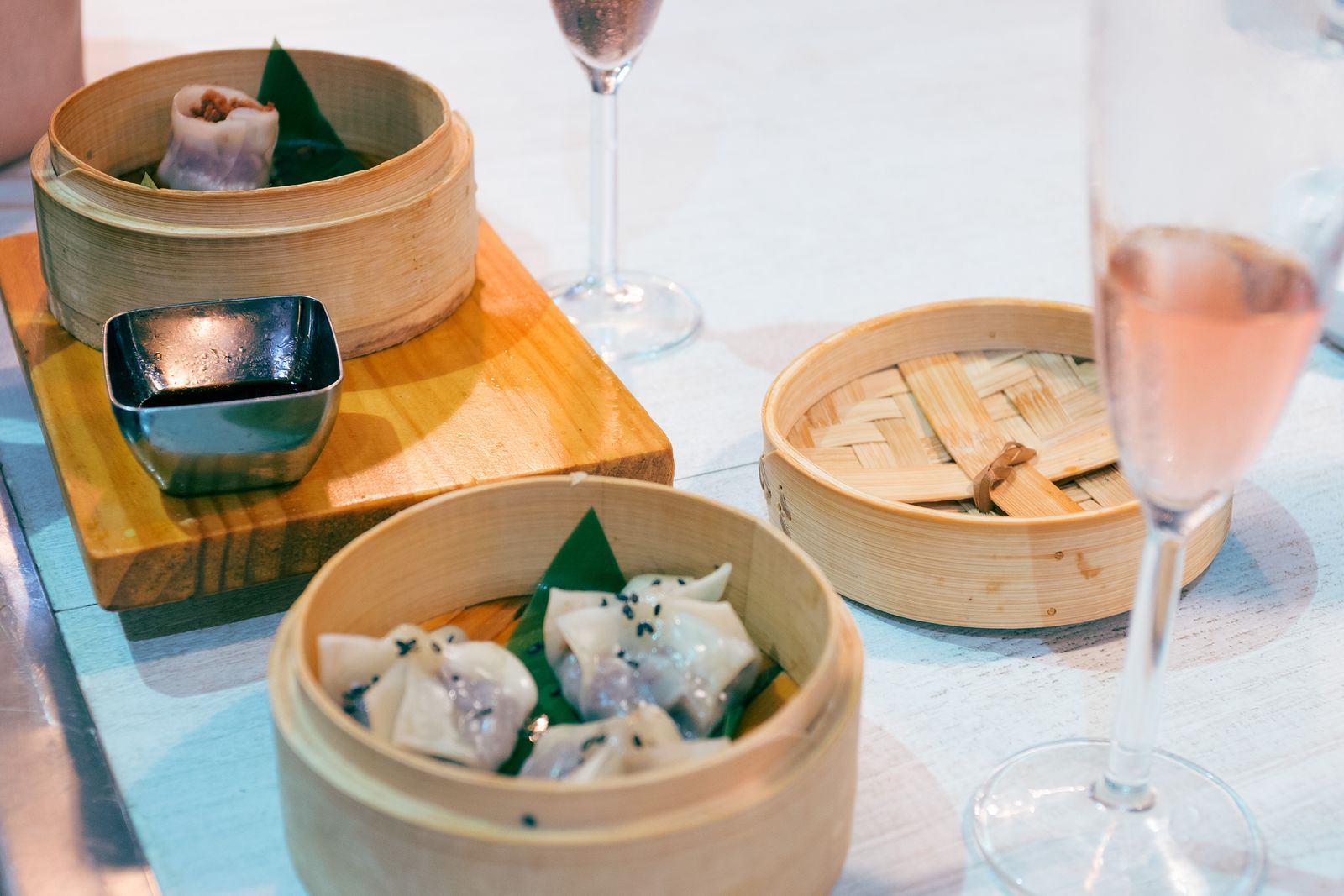
Drive about 140 kilometers up into the mountains from Yala town and you reach Betong, Thailand's southernmost border town, with deep Hokkien-Chinese roots. Here, mornings belong entirely to dim sum. Several old shops open from four or five a.m., and waking up for dim sum and tea before the day begins is a way of life passed down through generations. The classics are har gow, siu mai, steamed buns, rice noodle rolls (chee cheong fun) and endless pots of hot Chinese tea.
Tai Xee Hi
A legendary dim sum shop that's been part of Betong for over 80 years, near the clock tower roundabout. It opens pre-dawn and there's a packed queue almost every day. Standouts are the rice noodle rolls (chee cheong fun) drizzled with sesame oil, har gow, and steamed buns — old-hand flavors that are hard to find. Aim to arrive around 06:30, because Betong's morning shops get very busy.
Ming Dimsum
A dim sum shop with over 60 years of history that used to be near the clock tower and has since moved to a new spot in front of Mandarin 25 Suites hotel. It serves hot dim sum and noodle soup daily, and remains a regular haunt for older Betong locals.
Seng Dim Sum
A popular Betong dim sum shop that's well known to travelers and ranks high in reviews. It has a wide variety of dim sum plus bak kut teh (fresh-brewed herbal pork-rib soup) that many people order alongside. The atmosphere gets lively during festivals and the Betong run event.
Ta Tu Halal Dim Sum
The pick for halal eaters who want to try Betong dim sum. The shop serves dim sum, roast duck rice, Betong noodles and steamed buns at friendly prices, opening early at 06:30. A comfortable choice for Muslim travelers who want to experience Betong's morning dim sum culture.
Make the most of Betong dim sum — go early
Betong's old dim sum shops open very early and draw big queues, especially on weekends and during festivals. To get everything without gambling on it selling out, aim to arrive around 06:30–07:30, order a pot of hot Chinese tea to sip while you wait, then order dim sum one basket at a time so every plate arrives hot.
Traditional Coffee — end breakfast with a strong kopi
Whether you have nasi dagae in Yala town or dim sum in Betong, don't skip a closing kopi — dark-roasted coffee brewed through a cloth filter, with sweetened condensed milk or taken black, with a heavy, bold body that genuinely wakes you up. In Yala town you'll find it at kopitiams in the old market, while Betong has traditional coffee as a famous local product, roasted in the area with a distinctively strong flavor.
- Kopi in Yala's old market — kopitiams like Nan Yang serve traditional coffee with kaya toast, in inviting old-building settings.
- Betong traditional coffee — a signature local product, dark-roasted and great to buy as a souvenir, sold at gift shops around Betong town.
- Order it like a local — "kopi" = black coffee with milk · "kopi-o" = black coffee without milk · and you can ask for less sweet if you don't like it too sugary.
A 3-day Yala–Betong breakfast plan for the full range
If you have a few days, plan your breakfasts to try both the Malay style in Yala town and the Chinese style in Betong. Here's a rough plan you can adjust to your hotel and route.
A Malay breakfast in Yala town
A light morning before heading up to Betong
Pre-dawn dim sum, Betong style
Check the latest situation before visiting Yala and Betong
Yala sits in Thailand's southern border region. For the most part people live, eat and travel as normal, but before you go it's wise to follow the news and the latest official safety advisories, plan your route, travel during daylight, and leave extra time. The road up to Betong is all mountain curves and tends to be misty in the early morning, so drive slowly and use your fog lights — it's safer and you'll get the best views too. And when you enter Muslim communities or halal shops, dress modestly and respect local customs.
Tips for eating breakfast like a Yala local — and getting your money's worth
- Get up early — the best breakfast shops, both nasi dagae in Yala and dim sum in Betong, open very early and close when they sell out. Go between 06:00–08:00 to get everything fresh.
- Carry cash — many old shops and market stalls mainly take cash, so keep small bills handy.
- Order several things to share — get dim sum a basket at a time in different kinds, and for a Malay breakfast pair nasi dagae with khao yam and roti to cover the full range of flavors.
- You can adjust the spice and sweetness — nasi dagae fish curry and budu are bold; ask for less spicy if it's not your thing, and ask for tea or coffee less sweet if you don't like it too sugary.
- Ask the locals — Yala and Betong people are happy to recommend their favorites, so ask your hotel or a vendor — you'll often find great breakfast spots that aren't on any tourist list.
Plan a full Yala–Betong eating-and-exploring trip
See the Yala travel guide →