🔄 Updated 12 Jun 2026
Ask anyone in Yasothon what they eat in the rains and nearly every household says the same thing: mushrooms. A few days of rain, hot humid air broken up by spells of sun, and wild mushrooms push up through the deciduous dipterocarp forest, the mixed forest and the dry evergreen scrub around town. It's a seasonal thing — you only get a few months of it a year — so people here know to move fast, because fresh forest mushrooms sell out quickly.
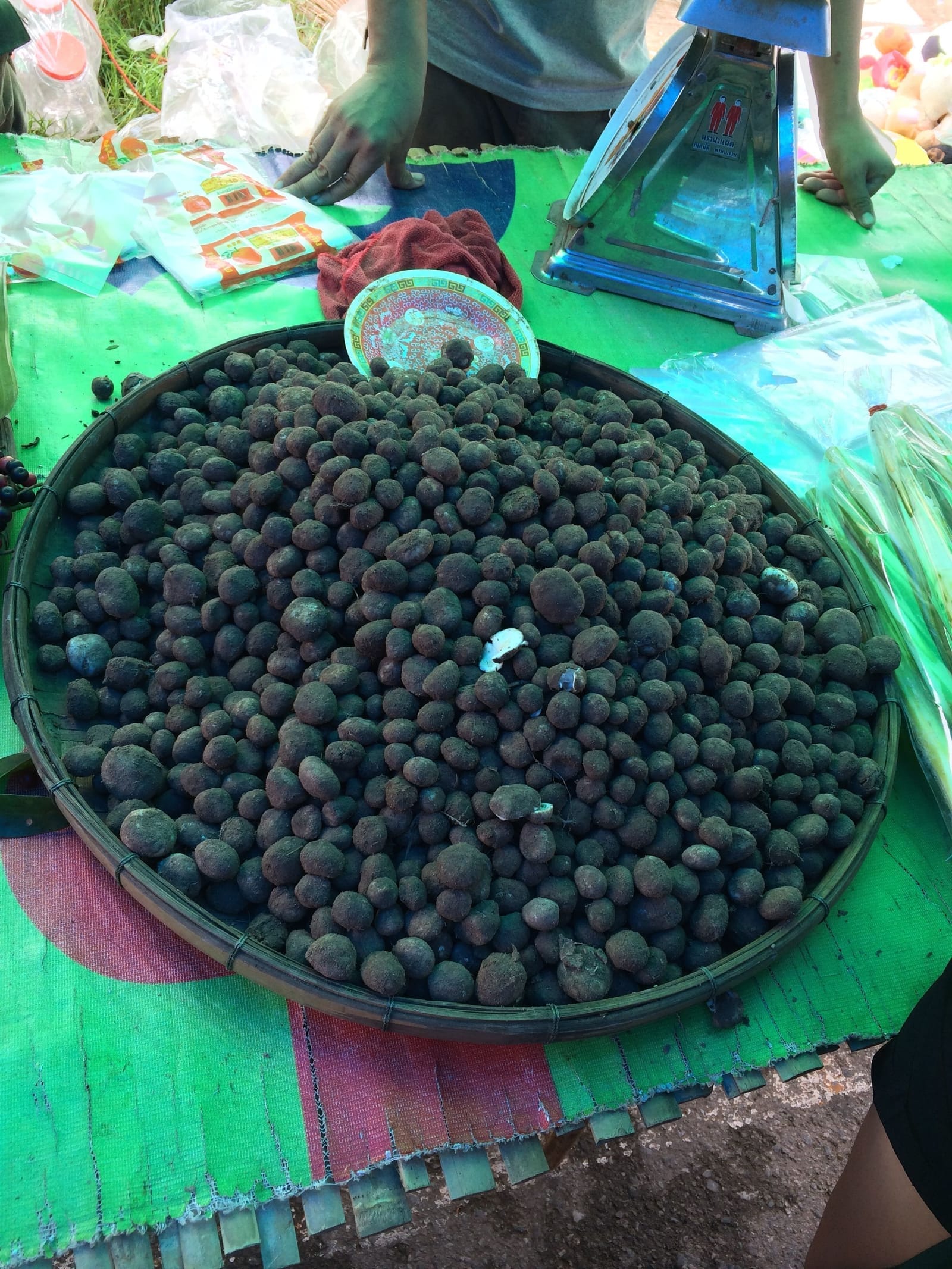
What matters is that these aren't farmed mushrooms — they come from genuine public forest. The patch Yasothon folks mention most is the Dong Mafai forest in Thung Tae subdistrict, Mueang district, more than 7,000 rai of woodland. Early in the rains, villagers head in to gather earthballs, ground mushrooms and egg mushrooms, then sell them along the road that cuts through the forest. There's a steady stream of buyers pulling over, and some foragers clear over a thousand baht in a single morning.
Which wild mushrooms show up in the Yasothon rains
The different wild mushrooms don't all come out together — they arrive in waves with the rain, and prices rise and fall with whatever's in the market that day. We've ordered them the way locals rank them, with rough early-season market prices. Prices are ranges: early on supply is thin and prices run high, then mid-rains the produce floods in and prices come down.
Hed Phaw (earthball)
Round buds about the size of a fingertip, buried under the soil and leaf litter — you dig them out with a hand spade. While young the inside is white and crunchy, with a springy bite. Yasothon locals call it the tastiest and hardest-to-find mushroom of the lot, so early in the rains when it's scarce the price jumps.
Hed Rakok (egg mushroom)
Comes in white and in orange-red, with tight buds shaped like eggs. Before it opens the flesh is soft and sweet — lovely in an aom curry or a clear soup. It comes up in the dipterocarp forest two or three days after rain, and it's easier to find than earthballs.
Hed Phueng (bolete)
Small caps in a yellowish-brown, usually out alongside earthballs early in the rains. Mild and mellow on its own, it works well curried in with other mushrooms and soaks up the broth nicely — people like to add it to a mixed-mushroom curry.
Hed Khon (termite mushroom)
Grows on termite mounds, firm and sweet with a stringy texture. It's prized and hard to come by — it only fruits a few times a year and you have to know the spot — so the price runs about as high as earthballs. In a clear soup or curry it turns sweet on its own.
Hed Takhai (ground mushroom)
The everyday forest mushroom that comes up on the ground in the Dong Mafai forest. Dark caps, chewy flesh, good curried or dry-fried. Cheaper than the rest, and it's around all through the rains.
Hed Khon Mai (log mushroom)
Grows on rotting logs — thin caps, slightly rubbery flesh, with a woody scent. Isan people like it curried with hairy basil or dry-fried. You'll find it at the morning markets after rain.
Watch out for poisonous mushrooms
Rainy-season wild mushrooms include both the edible kinds and poisonous ones that look almost identical — especially the egg mushroom, which resembles the toxic death-cap egg mushroom. Unless you really know your mushrooms, don't forage your own; buy from local village sellers who've already sorted through them, and always wash and cook everything thoroughly. Never eat any of it raw.
Want to taste deeper? Try a Yasothon food tour or cooking class
Half a day with a local who knows the lanes — or cooking a dish yourself — teaches you more than just eating. Book ahead on Klook or GetYourGuide.
The forest greens that come out alongside
The rains bring more than mushrooms — the wild greens from the paddy edges and the streamsides put out tender new shoots at exactly the same time. Isan people gather them to eat with the mushrooms, both raw as a side with chili dip and dropped into the curry pot. You'll find them at the same morning markets as the mushrooms, just a few baht a bunch.
- Pak khayaeng (rice paddy herb) — a pungent, distinctive scent and the star of aom curry and bamboo-shoot soup. You can't make a proper Isan mushroom curry without it.
- Pak tiw — reddish young shoots with a sweet-sour tang. Eaten raw alongside larb and koi, or added to a mushroom curry for a natural hit of sourness.
- Bamboo shoots — small, pale, sweet shoots from the upland groves. Curried with yanang leaf, boiled, or steamed in banana leaf — a rainy-season staple.
- Krachiao flowers — soft pink-white flower buds, blanched and dipped in pla ra chili paste or fish pon. Faintly rich, and they come out right on cue with the rains.
- Wild pak wan & assorted forest shoots — various young shoots from the home fence and the upland scrub, blanched or thrown into a mixed curry. Best early in the rains.
How to shop for forest greens
The little bundles of forest greens often don't carry a price tag, so just ask the seller straight — most run 10–20 baht a bunch. Buy a few different ones and you can ask for a little extra thrown in; the village sellers are usually generous. And go ahead and ask which green to cook with which mushroom — they'll tell you everything.
Where to buy wild mushrooms in Yasothon
Wild mushrooms aren't sold in supermarkets — you go to the fresh morning markets or buy roadside on the routes through the forest. The produce arrives early and sells out fast, so go late and you risk missing out. These are the spots locals actually use.
Roadside through the Dong Mafai forest, Thung Tae
Early in the rains, villagers set up stalls of just-picked fresh mushrooms straight out of the 7,000-rai forest, along the road in Thung Tae subdistrict, Mueang district. It's the freshest you'll find and usually cheaper than the markets — but you have to pass through in the morning.
Yasothon Municipal Fresh Market
The in-town fresh market, with a seasonal forest-greens and wild-mushroom section. Get there early and you'll find egg mushrooms and boletes alongside pak khayaeng and pak tiw, all in one place. Handy if you're staying in town.
Pa Tiw Municipal Fresh Market
The market in Pa Tiw district runs every day from before dawn until evening, and it's a hub for forest and village produce from the surrounding villages. In the rains there are mushrooms and forest greens to choose from.
Yasothon Green Market
Yasothon's organic-farming and food-safety market, focused on chemical-free local greens and seasonal forest produce. Good if you want clean produce with a clear source — check the opening days before you go.
How to cook wild mushrooms so they actually taste good
The charm of wild mushrooms is their natural umami — cook them simply and they're already good. Isan people mostly make these few dishes, and they're easy enough to do at home.
- Mixed-mushroom curry with hairy basil — simmer water with nam pla ra, add several kinds of mushroom plus bamboo shoots and pak khayaeng, and scatter hairy basil right as you turn off the heat. The broth stays clear and turns sweet from the mushrooms themselves — the dish that goes with a basket of sticky rice in the rains.
- Boiled earthballs with jaew dip — wash young earthballs clean, boil them in plain water until done, and dip in pla ra jaew or tamarind jaew. You get the full springy crunch of the mushroom — the way Yasothon people say is the best.
- Wild-mushroom tom yum — egg mushrooms and boletes simmered with lemongrass, kaffir lime leaf and chili, finished with a squeeze of lime or a handful of pak tiw for extra sourness. Hot, fragrant and easy to slurp down.
- Mok mushroom / aom mushroom — mushrooms tossed with Isan curry paste, ground toasted rice and pak khayaeng, wrapped in banana leaf and grilled, or made into a thick aom. The curry paste and the mushrooms go together beautifully.
Cleaning wild mushrooms properly
Wild mushrooms come with a lot of dirt and grit, the earthballs especially since they're dug from underground. Soak them in salted water and rinse through several changes until there's no sand crunching when you bite. Then always cook them through completely — every kind of wild mushroom has to be eaten cooked, never raw.
When in the rains are the mushrooms at their best
Wild mushrooms follow the rain, not the calendar exactly — but you can read the rhythm. The heaviest supply runs from early to mid rainy season, roughly May to August, especially after the first rains land and then break for a couple of hot, humid sunny days; two or three days later the mushrooms push up all at once. If it rains hard every single day without let-up, the mushrooms actually thin out.
- Early rains (May–Jun) — earthballs and boletes come first; supply is thin and prices are highest, but they're fresh and sought-after.
- Mid rains (Jul–Aug) — egg mushrooms, termite mushrooms and ground mushrooms come in thick, prices drop, and there's plenty of choice. The best-value stretch.
- Late rains (Sep) — the produce starts thinning out, but there are still ground mushrooms and forest greens to gather before the season ends.
Want to eat your way through Yasothon in the rainy season?
See the Yasothon travel guide →