🔄 Updated 21 Jun 2026
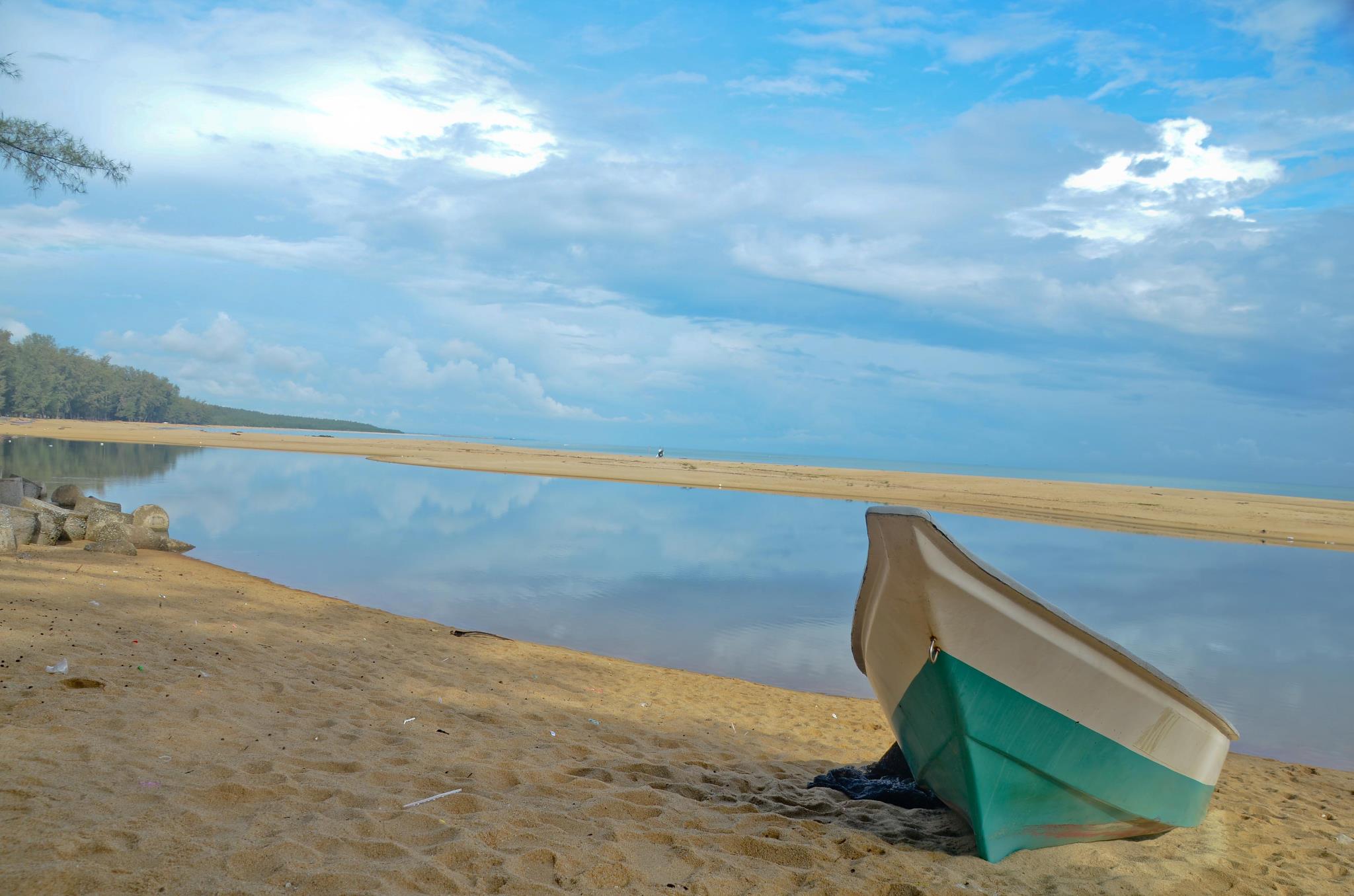
Ao Manao–Khao Tanyong is a small coastal national park in Tambon Kaluwo Nuea, Mueang Narathiwat district. It's so close to town that a short drive gets you there. The draw is a white-sand beach stretching about 4 kilometres, broken up here and there by big granite boulders that split it into little coves. Behind the sand runs a line of casuarina pines and beach forest that throws cool shade, with sea breeze all day. What sets it apart from Thailand's main beach destinations is simple: it's genuinely quiet, and there really are few people.
Read this before you go
Narathiwat sits in Thailand's southern border region. Before your trip, check the latest news and official safety advisories, and plan to travel during daylight hours. This is a mainly Malay Muslim area, so dressing modestly and respecting local customs will keep things relaxed for you and show respect to the people whose home this is.
Ao Manao Beach — white sand, pines, gentle surf
The heart of the park is Ao Manao Beach: fine, soft white sand, fairly clear water, and surf that stays gentle during the travel season — better for wading or just sitting by the shore than for deep swimming. The line of casuarina pines planted behind the beach gives shade all day, and plenty of people bring a mat or string up a hammock between the trunks to nap in the breeze. The boulders scattered along the sand make for nice photo spots in the early morning and late afternoon.
- Casuarina pines — the row of pines behind the beach stays shady all day; string up a hammock or lay out a mat and relax
- Granite boulders — large rocks dot the sand and split it into little coves, great for photos in low, angled light
- Swimming — surf is gentle in the travel season, fine for wading; always check the park's warning signs and flags
- The quiet — on weekdays there's barely anyone, perfect for reading, listening to the waves, and clearing your head
Want more out of Narathiwat? Book tours & activities
Booking online ahead on Klook or GetYourGuide is usually cheaper than the gate and skips the queue. Pick only the experiences you actually want — prices and availability are shown live on each site.
Beachfront camping + park lodging
What a lot of people come for is the camping ground right by the sea under the pines. You wake up, open the tent flap, and the Gulf of Thailand is right in front of you — an experience that's hard to find around here. The park has a camping ground, toilets, and basic facilities. If you don't have a tent of your own, you can usually rent a tent with bedding from the park, and there are park bungalows too if you'd rather sleep in more comfort.
- Bring your own tent — pay a small per-person, per-night ground fee; if you have your own tent, just bring it along
- Rent a tent/bedding — the park rents tents, sleeping bags, and bedding as a set, handy if you'd rather not haul gear
- Park bungalows — bookable bungalows, ideal for families or groups who want to sleep comfortably
- Book ahead — for bungalows and long-weekend dates, book in advance through the national park system (nps.dnp.go.th)
Check the open/closed season before planning an overnight
Coastal parks around here usually close for overnight stays during the late-year monsoon (roughly 15 October–30 November), then reopen for camping and overnight stays from around mid-December onward. Before planning to stay the night, call the park at 073 542 344 or 088 752 4747 to check whether overnight stays are open for your dates.
Khao Tanyong — hike up for a Gulf view
The other half of the park is Khao Tanyong, a low hill rising about 293 metres above sea level. The slope isn't steep, and a nature trail leads through beach and evergreen forest up to a viewpoint, where you look down over the sweep of Ao Manao Beach and the Gulf of Thailand opening out as far as you can see. Along the way you'll pass coastal plants like nipa palm, manao phi, and pandanus, plus birds and small wildlife by the trail. It's an easy walk that pays off in both the view and the air.
- Trail length — the nature trail is an easy walk, not too steep, fine for most people and families
- Best time — morning or late afternoon, when the sun is softer, the air cooler, and the light nicer than at midday
- What to bring — comfortable walking shoes, drinking water, mosquito repellent, and a sun hat
- Coastal plants — look out for nipa palm, manao phi, and pandanus along the way
Taksin Ratchaniwet Palace — easy to pair with
On the seaward side of Khao Tanyong, near Ao Manao, stands Taksin Ratchaniwet Palace, built back in 1973 on around 300 rai of seaside grounds, with a shady southern-Thai botanical garden to stroll through. It's generally open daily for visits, roughly 8:30 a.m.–4:30 p.m., only when the royal family is not in residence. It sits very close to Ao Manao Beach, so it's easy to do both in one day — but it's a royal residence, so dress modestly and fully covered (no sleeveless tops or short trousers), and it's worth calling ahead to confirm it's open to visitors that day.
Pair it with the palace to make the day count
Since Ao Manao Beach, Khao Tanyong, and Taksin Ratchaniwet Palace are all in the same area, visit the palace in the morning (it closes at 4:30 p.m.), then come down to relax on the beach and camp in the afternoon and evening — timed just right to catch the sunset over the sand.
Entry fee, hours, getting there
The park is about 8 kilometres from Narathiwat town along Highway 4084 (Narathiwat–Tak Bai), then a short turn-off onto the park road brings you to the beach. Your own car or a rental is the most convenient way, as public transport doesn't reach it easily.
- Park entry fee — charged at standard national park rates: roughly 40 THB for Thai adults, 20 THB for children; foreigners pay more (rates may change, check on site)
- Hours — open for day visits roughly 8:30 a.m.–4:30 p.m.; overnight stays open seasonally (avoid the late-year monsoon)
- Getting there — from Narathiwat town take Highway 4084 for about 8 km; your own vehicle is most convenient
- Park contact — call 073 542 344 or 088 752 4747 to ask about lodging, fees, and the overnight-stay season
When to go + how to prepare
The Gulf of Thailand around Narathiwat gets a strong monsoon late in the year (October–December), with rough wind, big surf, and heavy rain, and the beach may close for overnight stays during this stretch. The easy-going season with clear water runs roughly February to September. If you want to camp overnight, go after the park announces it has reopened for overnight stays (usually from around mid-December onward), and call to confirm every time before you go.
- Personal supplies — hat, sunscreen, mosquito repellent, drinking water, since there are few shops nearby
- Food supplies — if you're camping, bring enough food and water of your own; there are shops in town before you reach the beach
- Pack out your trash — this is park land, so take your rubbish back out and don't leave it on the sand or under the pines
- Dress code — even though it's a beach, this is a Muslim area, so dress modestly to suit the local context
Want a full Narathiwat itinerary covering beaches, the palace, mosques, and Malay food
See the Narathiwat travel guide →