🔄 Updated 21 Jun 2026
Mention Sing Buri and most people think of the Bang Rachan camp and boat noodles first. Far fewer know this small province also hides a Dvaravati-era ancient town. Ban Khu Mueang sits in Huai Chan subdistrict, In Buri district — a large earthen mound that archaeologists have been surveying since 1968, when they found evidence that people really did live here from around the 6th to 9th centuries CE, more than 1,200 years ago. It suits travellers who like a place with a story: somewhere you can walk quietly through the trees and picture the early people who once lived right here.
Where is Ban Khu Mueang ancient town?
Ban Khu Mueang is a rounded-rectangle ancient town measuring roughly 650 x 750 metres, sitting about 1 metre above the surrounding land — so it reads as a broad earthen mound out in the fields. What tells you it was a real town is the earthen moat dug to encircle it, a classic Dvaravati city plan. Towns like this are scattered across the Chao Phraya–Lopburi river basin, and Ban Khu Mueang is one of them. Today the area is set aside as Khu Mueang Forest Park, so it comes with shade and a calm atmosphere built in.
- Location — Village 6, Huai Chan subdistrict, In Buri district, Sing Buri province, within Khu Mueang Forest Park
- Age — A Dvaravati-era town, roughly 6th to 9th centuries CE, or over 1,200 years old; believed to have been abandoned after the 11th century CE
- Highlights — The earthen moat around the town, ancient ruin mounds, and a small museum holding some of the excavated finds
- Good for — History lovers, families bringing kids to learn, and anyone who wants a quiet walk in the shade
Want more out of Sing Buri? Book tours & activities
Booking online ahead on Klook or GetYourGuide is usually cheaper than the gate and skips the queue. Pick only the experiences you actually want — prices and availability are shown live on each site.
The early people who lived here
What makes Ban Khu Mueang more interesting than your average old town is that it can tell you about people. In later surveys, archaeologists uncovered human skeletons — including a child's skeleton — buried with bead ornaments, evidence that the people here held burial rites and believed in an afterlife. They also found animal bones, pottery fragments, and traces of habitation reaching down to around the late 5th to 7th centuries CE. That means people lived here even before Dvaravati culture arrived, and only gradually took on Dvaravati religion and art later on.
Why it's called Ban Khu Mueang
The name Khu Mueang comes from the moat (khu) dug around the town (mueang). When villagers settled over the old site in later eras, they simply named the village after the trace they could still see in front of them. Walk along the earthen banks and you can still make out the line of the old moat.
The artifacts that were dug up
The finds at Ban Khu Mueang are varied, from everyday objects to pieces that point to belief and trade. The one archaeologists value most is a silver coin bearing the ancient inscription "Sri Dvaravati Svarapunya" — clear evidence that this town really belonged to Dvaravati culture.
- Pottery — pots, jars, kettles, bowls, and plenty of fragments, reflecting the daily life of the town's people
- Coloured stone beads — beads in many colours plus earrings, pointing to the trade and jewellery of the era
- Inscribed silver coin — the coin reading "Sri Dvaravati Svarapunya," a standout piece of Dvaravati culture
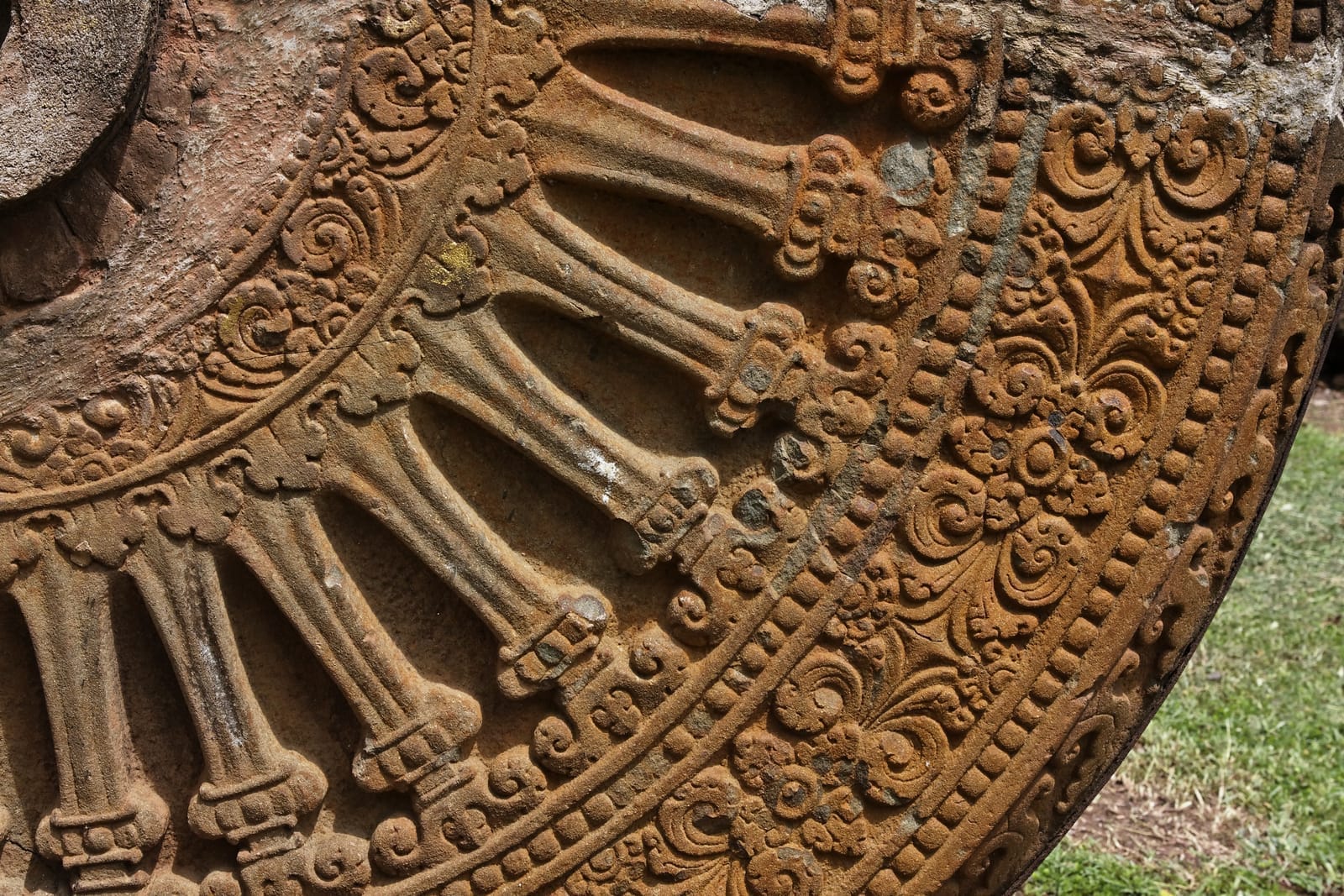
- Stone dharmachakra and clay lamps — signs of early Buddhism reaching the community
- Skeletons and burial beads — telling the story of the early people's rituals and beliefs
One thing worth knowing: several of the most important finds were taken for safekeeping and display at the In Buri National Museum, in the same district. The museum at the ancient town itself is a small local museum that focuses on the story of Khu Mueang specifically. If you want to see the full range of real artifacts, it's worth stopping at both.
The small museum in the forest park
Within the ancient-town grounds stands the Ban Khu Mueang Museum, founded in 2018 and run by the Huai Chan Subdistrict Administrative Organisation. It's a small archaeology museum telling the story of this roughly 1,200-year-old Dvaravati town, with pottery, coloured stone beads, and information about the excavations on display. It's an easy, unhurried walk that doesn't take long — a good place to learn for families bringing children along.
- Opening hours — Wednesday to Sunday, 08:30–16:30 (closed Monday and Tuesday). It's a local museum, so call ahead to check — hours can change
- Entry fee — around 20 THB
- Contact — call 08 9392 4636 (Huai Chan SAO)
- Time needed — about 20–30 minutes for the museum; allow roughly an hour including a stroll through the forest park
What past visitors say
Many reviewers agree the place is quiet with few people — good for anyone who likes travelling without the crowds. But because it's a local museum keeping government office hours, it may be closed on some days. If you're set on seeing the inside, calling ahead is the safer bet.
The atmosphere and what you'll see
The charm of Ban Khu Mueang lies in the forest park that sits over the old town. Walk in and you'll find big, shady trees, earthen mounds, and traces of the moat that you can still read as the old town line. In some spots there are ancient ruin mounds with only the brick foundations left — nothing grand like the major historical parks, but you get calm and an atmosphere that leaves room for your own imagination. It suits people who like slow travel more than those chasing the perfect photo spot.
The moat around the town
The earthen banks and old moat that ringed the town — walk the full loop and see a real Dvaravati city plan.
Khu Mueang Forest Park
Shady woodland sitting over the old town — a place to walk, rest, and enjoy the cool air.
Ban Khu Mueang Museum
A small building telling the Dvaravati town's story, with excavated pottery and beads on display.
Getting there and the best time to go
Ban Khu Mueang ancient town is in In Buri district, about 16 kilometres north of central Sing Buri. Driving yourself is by far the easiest option, since it's in Huai Chan subdistrict where public transport is hard to come by. Set your navigation straight for "Khu Mueang Forest Park" or "Ban Khu Mueang Museum."
- From central Sing Buri — drive toward In Buri for about 20–30 minutes, following the signs for Huai Chan subdistrict
- From Bangkok — take Highway 32 (Asia Highway) toward Sing Buri–Chai Nat, about 150 kilometres in total
- Best time — morning or late afternoon, when it's not too hot and it lines up with the museum's hours (Wed–Sun)
- Combine the trip — it's on the same route as the In Buri National Museum, making for a neat half-day history loop
Trip-planning tip
Since the Ban Khu Mueang Museum and the In Buri National Museum both open Wednesday to Sunday, planning your visit for a Saturday or Sunday lets you do both in one day. Both are closed Monday and Tuesday, so it's best to avoid those days.
Want to explore Sing Buri in depth — the temples, markets, and riverside food
See the Sing Buri travel guide →