🔄 Updated 21 Jun 2026
If you're headed to Koh Samet, you have to pass through Ban Phe one way or another, because every boat leaves from here. The thing a lot of people get tripped up by is arriving and not knowing which pier to use, because Ban Phe has several piers lined up next to each other: the municipal pier, Nuan Thip pier, and Sri Ban Phe pier. Prices and departure schedules differ a little between them. We'll walk you through each thing so you can pick the right option for your budget and timing.
Which pier to Koh Samet, and how much?
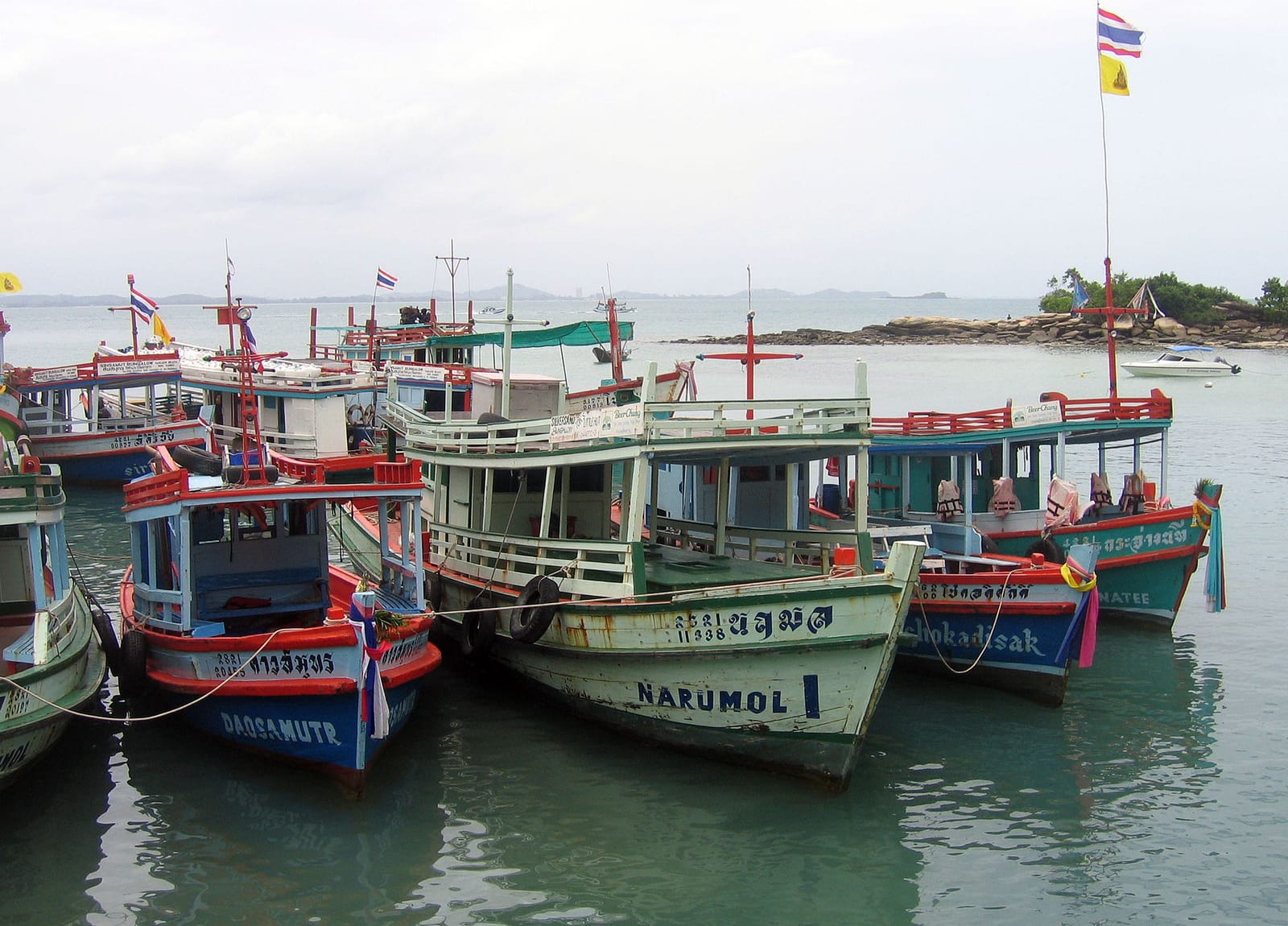
There are two main ways to cross to Koh Samet: the slow wooden ferry and the speedboat. The price gap is big, so choose based on whether you're in a hurry or watching your budget. The ferry suits anyone with time to spare heading to Sai Kaew Beach, which is the first beach by the entrance. The speedboat is better if you're going to a beach further out or travelling as a group.
- Wooden ferry — to Sai Kaew Beach, around 50–70 THB per person each way, takes ~40 min, running roughly 08:00–17:00. Departures are frequent in high season and on weekends.
- Speedboat — around 150–300 THB per person depending on the destination beach, takes ~10–15 min. Good if you're going to a far beach or chartering a whole boat as a group.
- National park fee — Koh Samet is inside Khao Laem Ya–Mu Ko Samet National Park, and there's a separate entry fee collected when you land on the island. Bring cash.
- Weekdays / low season — some ferries wait until they're full before leaving, so you could be waiting close to an hour. If you're in a rush, ask for a confirmed departure time or just pay for the speedboat.
Check before you board
During the monsoon, roughly May to October, the sea gets rough on some days and boats can be delayed or temporarily suspended. Call the pier or check the weather before you leave home so you don't waste the trip.
Want more out of Rayong? Book tours & activities
Booking online ahead on Klook or GetYourGuide is usually cheaper than the gate and skips the queue. Pick only the experiences you actually want — prices and availability are shown live on each site.
Parking at Ban Phe — where and how much?
If you drive yourself, you can leave the car and stay overnight on the island. There are both municipal and private lots, with fairly different prices. On long weekends the lots fill up fast, so arriving a bit earlier makes it easier to find a spot.
- Ban Phe municipal lot — around 60 THB/day, the cheapest but fills up quickly.
- Private lots (across from the pier) — around 100–120 THB/day, more space, open around the clock with staff on duty.
- Multi-day overnight — many lots charge per night, averaging around 80 THB/night. Always ask for the total price before you hand over the keys.
Ban Phe market — what's worth buying?
Once you've parked, Ban Phe market is right across from the pier. Locals call it Talat 100 Sao (the 100-Pillar Market), and it's the biggest souvenir market in the area. The standouts are dried seafood and fried durian, and one loop around gets you everything to bring home. We'd suggest checking prices at a few stalls before you commit, because the goods are similar but prices can move around.
Dried squid / seasoned squid
The star of the market. There's whole dried squid for grilling and ready-to-eat seasoned squid in packets. Pick pieces that are fully dry rather than sticky or oily, and that smell fresh without any musty odour.
Dried shrimp
Go for a natural reddish-orange colour, not too bright red, since that can mean dye. Look for firm, well-dried pieces. The big ones cost more but are worth it for chilli dips or yum salads.
Fried durian
A Rayong specialty. Many shops fry it fresh right beside the stall so you can watch. It's crisp and fragrant, and tastes best bought straight out of the fryer.
Salted fish / dried fish
Plenty of types, from salted king mackerel to small fish fried crisp. Tell the vendor whether you'll fry or boil it and they'll point you to the right kind.
Shrimp paste (kapi)
Rayong shrimp paste is fine-textured with a purplish tint and a fragrant, not-too-pungent smell. Use it for chilli dip or shrimp-paste fried rice. Ask for a sniff before buying.
Pure fish sauce / abalone fish sauce
A local product that Rayong folks take home. The abalone fish sauce is fragrant and nicely salty, good as a dipping sauce or for cooking, and it keeps for a long time.
Je Taen souvenir shop
A big-name souvenir shop known all over Rayong, with dried goods, seasoned squid, salted fish, shrimp paste, and fish sauce all under one roof. Handy if you want to grab everything in one stop.
Seasonal fruit (durian, mangosteen, rambutan)
During fruit season, roughly May to July, the market has fresh Rayong-orchard fruit at good prices. Come at this time and you can eat Mon Thong durian noticeably cheaper than in Bangkok.
How to haggle politely
Most market prices have a bit of give. If you're buying several things or buying a lot, just ask whether they can knock something off; plenty of vendors will come down from the tag anyway. You can taste before buying at almost every stall too, so don't be shy.
What to eat near Ban Phe pier
Before or after your boat, the area around the pier has several waterfront seafood restaurants. The seafood is fresh because it's right by the sea, and prices are noticeably gentler than on Koh Samet. If you want a proper meal, we'd suggest eating in Ban Phe before crossing, then heading over to enjoy the water with a clear conscience.
Waterfront seafood restaurants
Shrimp, shellfish, crab and fish straight off the boat, cheaper than on the island. Good for a main meal before you cross.
Market snacks
Grilled squid, grilled meatballs and fried bites to nibble on while you browse the souvenirs.
Cafes & drinks
There are small cafes near the pier to rest at before your boat, handy for getting out of the sun while you wait for a departure.
How to do Ban Phe right
- Come early — parking and boat schedules are easier, and the market has fresher goods than in the afternoon.
- Buy souvenirs on the way back — if you're staying overnight on the island, buy the dried goods on your return so you don't have to lug them across.
- Bring cash — boat fares, parking, park fees and most market stalls take cash. There are ATMs near the pier but not many.
- Leave buffer for the monsoon — in the rainy season check the boat schedule first and brace for possible delays.
Plan the rest of your Rayong trip
See the Rayong travel guide →