🔄 Updated 21 Jun 2026
If you've already done the in-town stuff in Uthai Thani — Wat Tha Sung, Trok Rong Ya, a boat trip on the Sakae Krang — and the next day you fancy some fresh mountain air, head for the western side of the province along the Lan Sak–Ban Rai route. The landscape changes completely out here: flat paddy fields give way to oddly shaped limestone hills poking up one after another. Many of them have caves inside, and a few can be climbed for the view. We've picked out only the ones you can actually visit and that are worth the effort.
Khao Khong Chai Cave — a stone tunnel in the Lan Sak fields
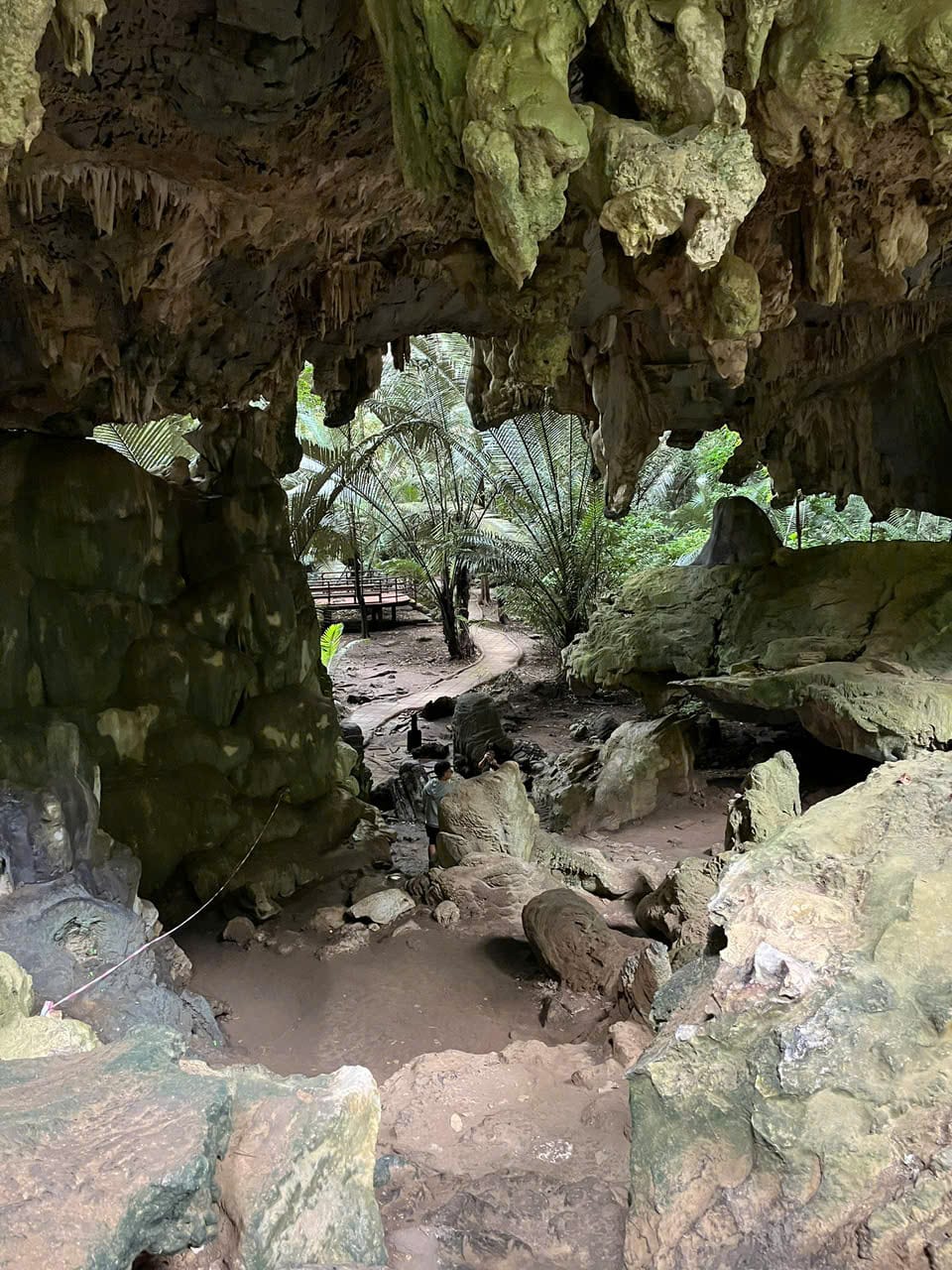
Khao Khong Chai sits in Lan Sak district, a limestone range rising to about 353 metres. The draw is the cave mouth at the front, which is wide and shallow like a giant tunnel — you can walk straight in, no crawling or ducking required. Archaeologists believe prehistoric people once lived here, since stone tools and shards of pottery have been found in the area, so the cave gives you both a nature angle and a slice of history in one spot.
Around dusk you'll see bats streaming out of the cave in a long ribbon — a sight plenty of people come specifically to wait for. The hill isn't far off the main road; you can drive right up to the base and it's only a short walk to the cave mouth. It makes an easy stop on the way into Ban Rai.
Timing it right
If you want to catch the bats coming out, get there near dusk, around 5 to 6 pm, when the colony starts streaming off. During the day the cave is quieter and cooler, better for photographing the rock formations.
Want more out of Uthai Thani? Book tours & activities
Booking online ahead on Klook or GetYourGuide is usually cheaper than the gate and skips the queue. Pick only the experiences you actually want — prices and availability are shown live on each site.
Khao Pha Raet — a small, quiet stalactite cave
Khao Pha Raet is a modest hill, about 376 metres high, sitting roughly 8 kilometres from Khao Phraya Phai Ruea. Inside is a cave full of oddly shaped stalactites and stalagmites, and bats live here too. It's a compact cave that few people visit, so it stays peaceful and you get a genuine sense of exploring rather than the crowds of a famous cave.
Because it hasn't been fully set up for tourists, parts of the path are fairly dark and slippery. Bring your own torch or headlamp — don't rely on your phone light alone — and don't go in solo if you don't know the way.
Phu Wai Cave — the largest limestone cave in the province
If you want to pick the standout cave in this group, locals will point you to Phu Wai Cave, inside Khao Wong Forest Park in Ban Rai district. It's a big, deep, complex limestone cave with stalactites and stalagmites in all sorts of shapes — pagoda forms, limestone pools, and the highlight, a flowstone curtain that looks like a frozen waterfall. Some corners have even been used as film-shoot locations.
- Opening hours — open daily, roughly 8 am to 4 pm. Aim for morning to early afternoon so you have plenty of time to walk.
- Guides — you can arrange a ranger or guide at the cave mouth, because it's dark inside with lots of forks; going alone, it's easy to get lost.
- Walking time — a loop around the cave takes about an hour, with wet, slippery patches throughout, so wear shoes with decent grip.
- Bats — it's home to a large bat colony, with flocks streaming out in the evening. The smell inside is fairly strong, so brace yourself if you're sensitive to it.
Straight talk
Phu Wai Cave isn't lit the whole way and the path isn't paved end to end. If you're with small kids or older travellers who find walking hard, size it up on the spot and don't force it — just sticking to the wide, bright section near the entrance still gets you some lovely rock formations.
Khao Pla Ra — climb up to prehistoric cave paintings
For anyone who likes trading a climb for views and a bit of history, Khao Pla Ra (Khao Phu Pla Ra) is a must on the list. On the cave walls are ancient paintings around 3,000 to 5,000 years old — figures leading cattle, processions, and farm animals — reflecting the prehistoric farming communities of this area. It's an archaeological site registered by the Fine Arts Department.
Getting up to the paintings involves a fair bit of climbing and ducking into the cave — it's not a casual stroll — so go with a local guide and wear shoes you can scramble in. But once you're up there, the view over the Uthai Thani flatlands and the stories left by ancient people on the rock are well worth the sweat.
Wat Tham Khao Wong — a cave beneath a teakwood house in the valley
If you want a cave that's easy to walk and a pretty setting all in one, Wat Tham Khao Wong in Ban Rai sub-district is a neat fit. The temple is tucked into a valley, and the part everyone talks about is the four-storey Thai-style wooden house, built from teak and makha wood, with a long wooden bridge crossing a pond. The cave itself is on the temple grounds and easy enough to explore — good for bringing older relatives along.
Ban Kaen Makrut
A village in a valley inside the conservation zone, at 300–700 metres, cool almost year-round. In winter there's a flower festival and Karen-run homestays.
Pang Sawan Weir
A community weir in Ban Rai. When the water's high it spills over the crest in a wide curtain — a nice spot for a late-afternoon photo stop along the way.
Khao Wong Forest Park
A limestone-hill forest area covering Phu Wai Cave and the hiking trails — a good base to start a nature day on the Ban Rai side.
A Ban Rai–Lan Sak nature trip, half a day to full day
These limestone hills are spread out, so driving yourself is by far the easiest option — public transport barely reaches the nature spots. We've laid out a route you can follow as either a half-day or a full day.
Easy caves + viewpoints
Big caves + a climb
What to know before tackling the caves and hills
- Bring a torch or headlamp — many caves aren't lit the whole way, and phone light alone isn't enough.
- Shoes with good grip — limestone cave floors are wet and slippery almost everywhere; flip-flops won't cut it.
- A local guide — Phu Wai Cave and Khao Pla Ra are best done with a guide; there are lots of forks and some sections need climbing.
- Avoid heavy rain — the climbs get slippery and parts of the caves flood; late rainy season into early winter is the best weather.
- Respect the bats and the cave — don't shine bright lights and disturb the colony, and don't touch the stalactites or stalagmites, as it stops their growth permanently.
Plan a full Uthai Thani trip covering both town and nature
See the Uthai Thani travel guide →