🔄 Updated 21 Jun 2026
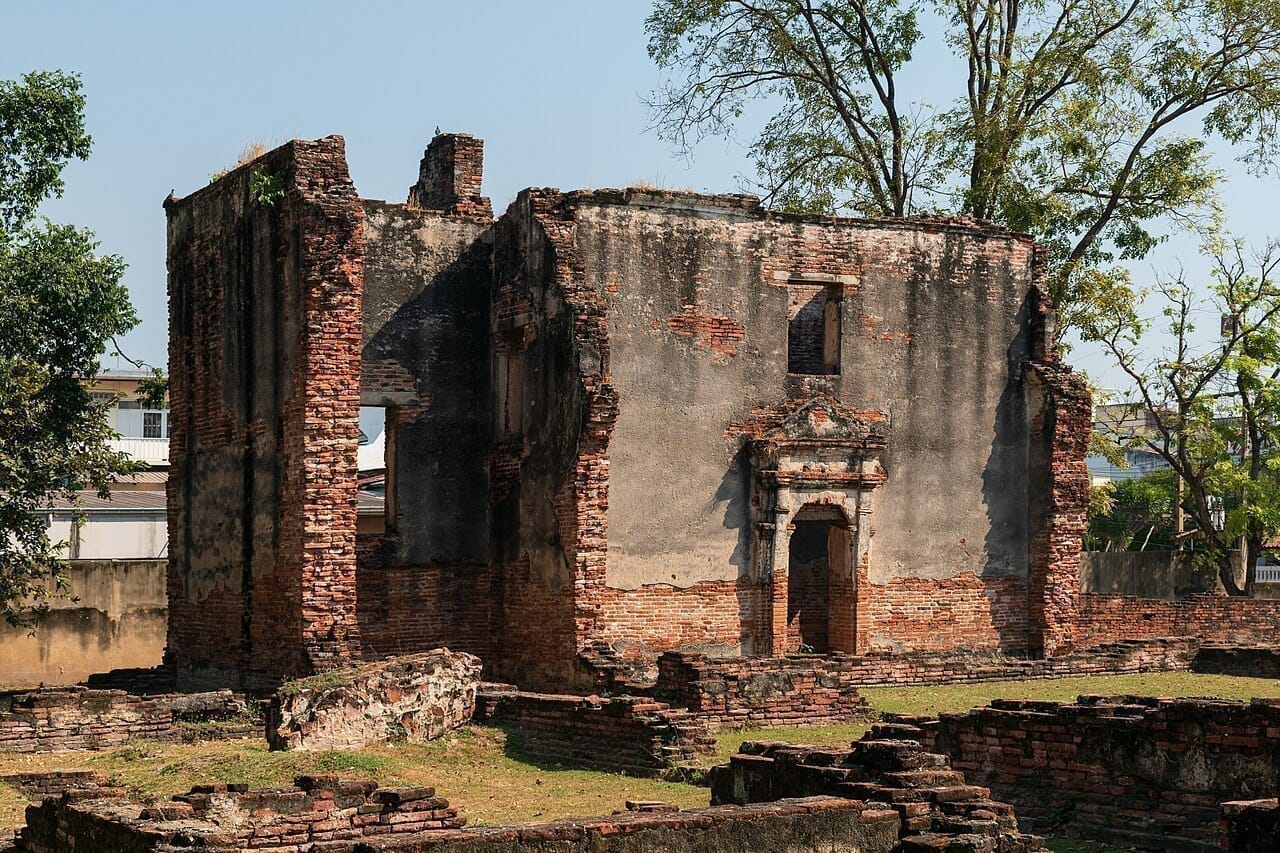
Lopburi is an old town with several historic sites within walking distance of each other, but Ban Vichayen tells the story of Ayutthaya's 'opening up to the West' more clearly than anywhere else, because the buildings look nothing like a typical Thai temple or prang. Walk in and you'll see red-brick walls, tall window openings, and semicircular arched doorways familiar from European buildings. It's one of the few places in Thailand where Western architecture from that era still survives.
The story behind it — who was Vichayen?
The name 'Vichayen' comes from the noble title 'Chao Phraya Vichayen' given to Constantine Phaulkon, a Greek man born on the island of Cephalonia who entered royal service in Ayutthaya under King Narai the Great. He had a gift for languages and diplomacy, climbing the ranks to become a powerful courtier and a key go-between in relations between Siam and France.
This group of buildings was built around 1685 to host the French royal embassy that came to establish friendly relations, which is why it's also called 'Baan Luang Rap Rachathut' (the royal envoys' guesthouse). Part of it later became Phaulkon's own residence. The story doesn't end well: after King Narai died in 1688, Phaulkon was arrested and executed during the change of reign. The buildings were abandoned and fell into the ruins you see today.
Read up first and it's more fun
The buildings are now just ruined walls and foundations, with no detailed signage at every spot. If you read a bit about Phaulkon and the Narai era beforehand, you'll picture much more of what each part used to be as you walk around.
Want more out of Lopburi? Book tours & activities
Booking online ahead on Klook or GetYourGuide is usually cheaper than the gate and skips the queue. Pick only the experiences you actually want — prices and availability are shown live on each site.
What to see at Ban Vichayen
The grounds split roughly into three sections, and you can walk the loop in about 30–45 minutes. The spots people photograph most are the brick arches and the church ruins, which are the signature images of the place.
Ambassadors' guesthouse (east wing)
A two-story brick building with windows and Renaissance-style arches, with thick walls in the European manner. This is the part where the Western architectural form is still clearest.
Church ruins
A church within the complex that merges a European church plan with Thai craftsmanship, such as columns shaped like lotus buds. A great spot to see the two cultures blended together.
Phaulkon's residence (west wing)
The section believed to be Chao Phraya Vichayen's home, now just brick foundations and walls. You can walk through and read the room layout and central courtyard.
The construction worth a look — brick, arches, and the European blend
What sets Ban Vichayen apart from other historic sites in Lopburi is the construction technique. Watch for these details as you walk.
- Semicircular arches — the doorways and openings are built as rounded arches, a European load-bearing technique, different from the pointed arches or straight lintels of Thai work.
- Thick plastered brick walls — heavy red brickwork like a Western building, with traces of the original plaster still visible in places.
- Tall window openings — long vertical Renaissance-style windows that let in plenty of light and air.
- Lotus-bud columns in the church — Thai craftsmanship slipped into a European church plan, a good example of two styles combined in one building.
The overall picture is hybrid architecture: the structure and technique came from Europe, but the people who actually built it were local craftsmen, so Thai details crept in. If you like photographing brick ruins and the shadows of arches, the low light of early morning or late afternoon gives the nicest depth.
Hours, entry fees, and things to know before you go
- Hours — 08:00–18:00, closed Monday and Tuesday.
- Entry fee — Thais 10 THB, foreigners 30 THB.
- Time needed — about 30–45 minutes.
- Location — Vichayen Road, Tha Hin subdistrict, Mueang Lopburi district, in the old town.
- What to bring — a hat or umbrella, since the grounds are open with little shade, and shoes you can walk on uneven ground in.
Easy to reach from town
Ban Vichayen sits in the old town, close to King Narai's Palace and Prang Sam Yot. You can easily walk or hop on a motorcycle taxi between them. Coming from Bangkok, take the train to Lopburi station and continue within town from there.
More to see nearby
The good thing about Lopburi is that the old-town sights are close together, so half a day is enough to cover several. Here are the spots people most often pair with Ban Vichayen.
King Narai's Palace
King Narai's royal residence, with a museum and the ruins of throne halls. It's close to Ban Vichayen, walkable, and tells the story of the same era.
Prang Sam Yot
The three-towered Khmer prang that's the symbol of Lopburi, and home to the city's troops of monkeys. Great for photos, but watch your belongings.
San Phra Kan Shrine
An old shrine paired with the city of Lopburi, right by the train station, with plenty of monkeys too. A stop where locals come to pay respects and ask for blessings.
Plan a full tour of Lopburi's old town
See the Lopburi travel guide →