🔄 Updated 21 Jun 2026
Bo Kluea is a small district in the northeast of Nan province, sitting in a valley ringed by green mountains. The name is literal — it means 'salt wells', because brine bubbles up from underground in the middle of the valley, and locals have been scooping it out to boil into salt for cooking and selling for hundreds of years. The strange part is how far this place is from the sea, yet underground there's an ancient layer of salt left from a time when this whole area used to be ocean. Water seeping through that salt layer comes up intensely salty.
What makes Bo Kluea worth the trip isn't just the wells themselves — it's a way of life that's still going. Villagers really do climb down to draw the brine, light the fire, and boil it in big pans, seasonally, and it isn't a scene staged for photos. If you like travel where you actually get to see how local people live, this place gives you that in full.
What are the Bo Kluea wells, and why are they special?
This area once had so many brine wells it was nicknamed 'Mueang Bo' (the town of wells). Today the two main wells still in active use are Bo Nuea (the north well) and Bo Tai (the south well) at Ban Bo Luang, a short, walkable distance apart. The water in them is salty enough to boil straight into salt with nothing added. Geologists say the underground salt layer here is extremely old, built up back when northern Thailand was a shallow sea hundreds of millions of years ago.
In the old days, salt from Bo Kluea was valuable. It was traded as far as Sukhothai, Chiang Mai, Luang Prabang, and southern China, because salt was essential and hard to come by anywhere far from the coast. That trade is exactly why Bo Kluea carries a deeper history than most people expect.
Want more out of Nan? Book tours & activities
Booking online ahead on Klook or GetYourGuide is usually cheaper than the gate and skips the queue. Pick only the experiences you actually want — prices and availability are shown live on each site.
How the salt is boiled, step by step
If you come during the season when villagers are boiling, you'll see the whole process in the middle of a boiling shed with wood smoke drifting all day. Roughly, it goes like this:
- Draw brine from the well — villagers lower a container into the well, scoop up the salty water into buckets, and carry it to the boiling shed.
- Boil in a big pan — the brine goes into a large iron pan over a wood-fired stove and boils steadily for about 4–5 hours so the water slowly evaporates.
- Lift out the salt crystals to drain — once crystals start forming, villagers scoop the salt into baskets hung over the pan to drip dry, then add more brine and keep boiling, repeating until the pan runs dry.
- Dry and pack — the salt is laid out to dry completely before being packed for sale, both coarse cooking salt and fine fleur de sel.
Want to see the boiling for real? Come in this window
Villagers usually stop boiling during Buddhist Lent and the rainy season, because the high humidity makes salt hard to produce, then start again after Lent ends. If you're set on seeing the boiling, aim for late rainy season into early cool season, through the cool months — and keep in mind that on some days there may be no boiling if it rains. Calling your accommodation or a local ahead of time is the surest way to check.
Visiting the wells and boiling sheds is mostly free — there's no official ticket — but there's usually a donation box to help maintain the site, and you can give whatever you feel helps the community. If you'd like to support them, the salt here sells by the bag at gentle prices and makes an easy, affordable souvenir.
Getting to Bo Kluea
Bo Kluea is about 80 km from Nan town, but it's a winding mountain road, so the real drive is around 2–2.5 hours. The popular route leaves town on Highway 1080 toward Pua district, roughly 60 km, then turns onto Highway 1256 (Pua–Doi Phu Kha–Bo Kluea) for about another 45 km. Route 1256 is the highlight — it climbs over Doi Phu Kha with gorgeous views, but plenty of bends and steep grades.
- Drive yourself — the most convenient way to do Bo Kluea and Sapan. A regular car can make it, but you need confidence on your brakes and the steep slopes. Fill up on fuel back in Pua, because stations up top are scarce.
- Rent a vehicle in Nan town — both cars and motorbikes are available. If you ride a motorbike, you really need to be comfortable on mountain roads, because Route 1256 is no place for beginners.
- Songthaew / van plus a transfer — take a ride from Nan town to Pua first, then catch a local Pua–Bo Kluea service. They don't run often and aren't flexible, so this suits travellers with time to spare.
- Hire a car with a driver — comfortable and safe if you'd rather not drive the mountains yourself. Charter rates start around 2,000 THB per day for a small group, depending on the route and how you negotiate.
Driving Nan's mountain roads? Read this first
Route 1256 has hairpin bends and long descents — use a low gear going downhill rather than riding the brakes. Setting off in the morning gets you good light and avoids the thick evening fog. In the rainy season the road can be slippery with landslides in spots, so check the weather before you head out.
What else to stop for around Bo Kluea
The charm of Bo Kluea is that one trip lets you hit several spots along the same road — valley villages, terraced rice fields, and mountainside cafes. Plan the day well and you'll get real value out of how far you drove to get there.
Sapan Village
A small village in the valley near Bo Kluea, with a stream, terraced rice fields, and a morning sea of fog. It's a favourite overnight stop for nature lovers.
Doi Phu Kha National Park
Right on Route 1256, so it's on the way. There are viewpoints over the sea of fog and lush green forest — stop for photos or camp overnight.
Mountain & rice-field cafes
Around Bo Kluea and Sapan there are several cafes with rice-field and mountain views. Drinks run about 90–200 THB, perfect for sipping a coffee with the view.
Where to stay around Bo Kluea & Sapan
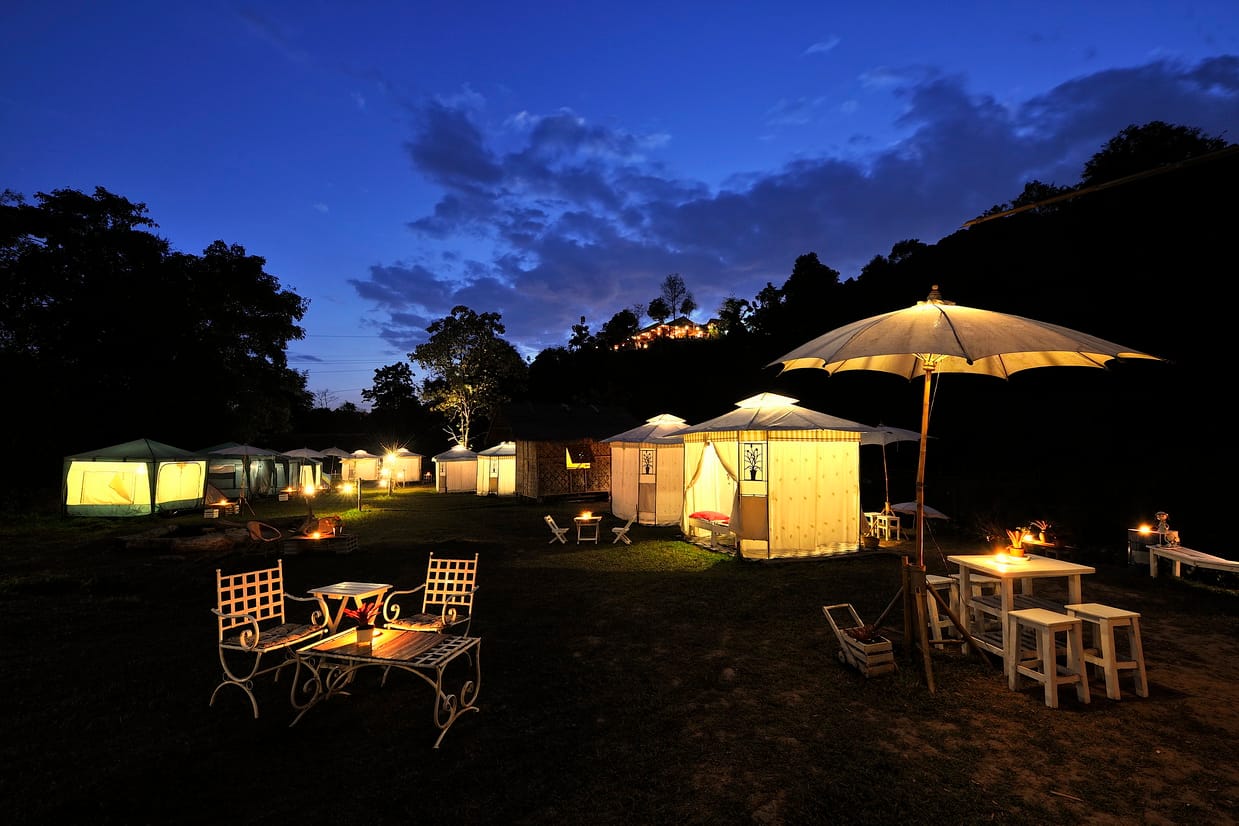
Bo Kluea has no big hotels — mostly homestays and small guesthouses along the Mang River or out in the rice fields. It's quiet, and ideal for an overnight stay to catch the morning fog. In the cool season rooms fill up fast, so book ahead. Prices generally start around 1,000–2,000 THB a night depending on the place and the season.
- Homestays in Sapan village — close to the stream and terraced fields, so you can wake up to the fog. Many include a home-cooked local breakfast.
- Stays along the Mang River in Bo Kluea — quiet and right by the water, good for travellers who really want to unwind, and close to the wells so you can drive over for the early-morning boiling.
- Rice-terrace-view stays — some sit up on a rise with a panoramic look over the fields, great for photographers.
Souvenirs from Bo Kluea
Beyond coarse salt and fleur de sel for cooking, you'll also find salt-based products here, like exfoliating spa salt and foot-soak salt. They make good souvenirs to take home, and buying them directly supports the salt-boiling community.
Plan your whole Nan trip — Bo Kluea, Sapan, and the old town
See the Nan travel guide →