🔄 Updated 21 Jun 2026
Most people treat Chachoengsao as a one-day trip — pay respects at the temples and head home. But if you've got two days, stretch it a little further and cross north into neighbouring Nakhon Nayok. From downtown Chachoengsao to downtown Nakhon Nayok is about 60–70 km, roughly an hour's drive. You get the temple-and-culture side on day one, then waterfalls and green hills on day two. It's far better value than sticking to one spot.
Why pair these two provinces
Chachoengsao is known for its temples and old riverside markets along the Bang Pakong River, while Nakhon Nayok is known for waterfalls and the green hills on the southern edge of Khao Yai. They're two very different moods, but the drive between them is easy, so they balance each other out nicely. Day one you stroll slowly through town; day two you work up a sweat splashing around in the forest. You head home with both merit and a fresh dose of nature.
- Short distance — Chachoengsao to Nakhon Nayok is about 60–70 km, roughly a 1-hour drive via the Ongkharak route
- Different themes — day one is temples and markets, day two is waterfalls and a dam, so nothing feels repetitive
- Close to Bangkok — both provinces are within 100–130 km of Bangkok, comfortable to self-drive
- Good year-round — waterfalls run best in the rainy season (Jun–Oct), while the temples and markets are fine in any season
Best done with your own car
This trip really calls for a private or rental car, because the waterfalls on the Nakhon Nayok side are well outside town and public transport doesn't reach them easily. Without a car, you can charter a songthaew or a taxi from downtown Nakhon Nayok, but it'll cost more.
Book the activities in your Chachoengsao trip ahead
Booking online ahead on Klook or GetYourGuide is usually cheaper than the gate and skips the queue. Pick only the experiences you actually want — prices and availability are shown live on each site.
Day 1 — Paet Riu temples and old markets
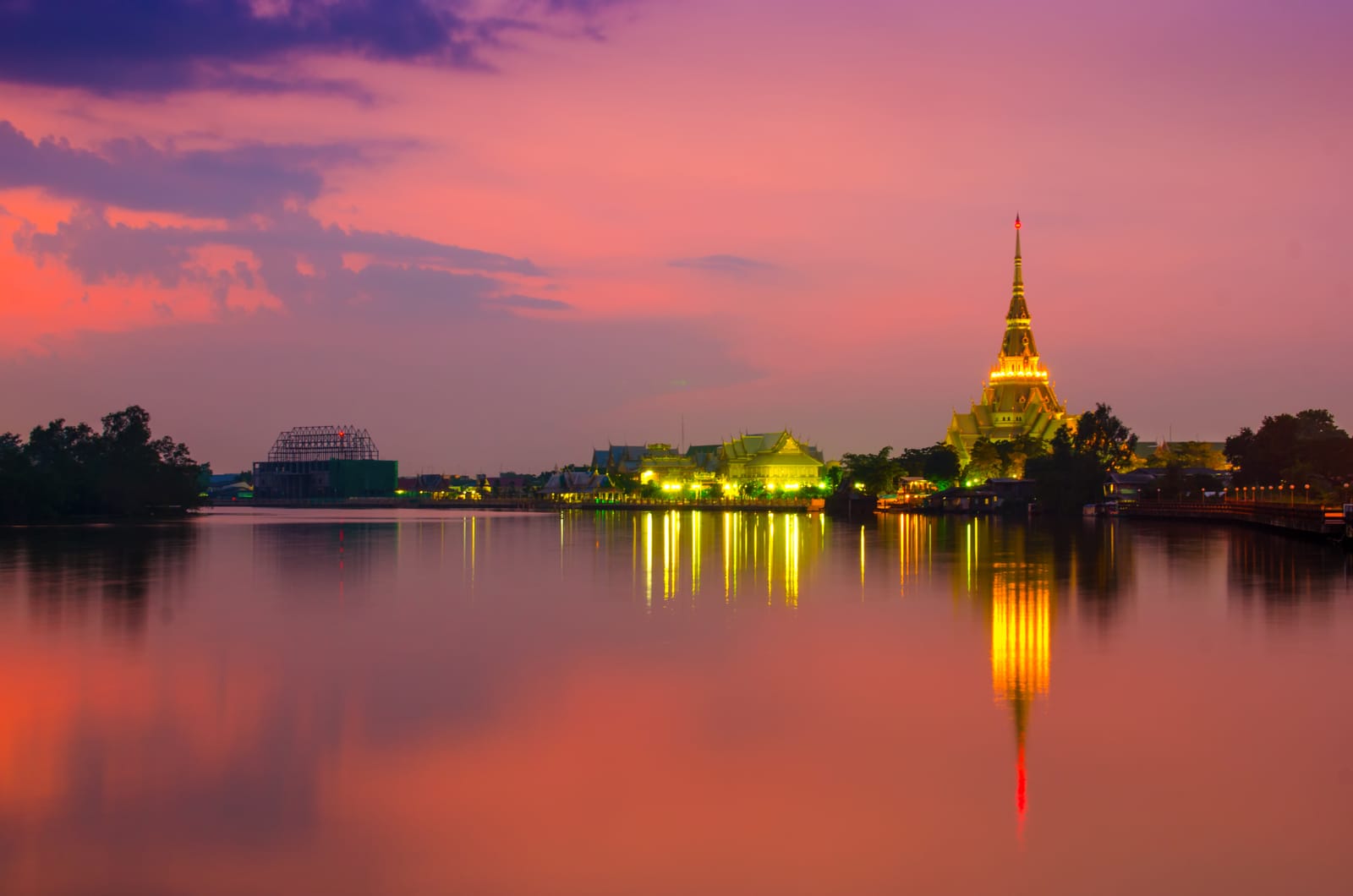
Chachoengsao — temples and riverside markets on the Bang Pakong
Ban Mai Market only opens on weekends
The 100-year-old Ban Mai Market only opens on Saturdays, Sundays and public holidays. If your trip lands on a weekday, the market will be quiet with many stalls closed. Plan day one to fall on a weekend to get the full atmosphere.
Day 2 — Cross to Nakhon Nayok for waterfalls and a dam
Nakhon Nayok — Sarika Waterfall, Wang Takhrai, Khun Dan Prakan Chon Dam
When the waterfalls run best
The Nakhon Nayok waterfalls depend mainly on rainfall, so they're fullest and flow strongest in the rainy season, roughly June to October. Come in the dry season (February–April) and some tiers may be low or dry. If you want a proper swim, aim for the rainy months — but be ready for rain and slippery trails too.
- Jun–Oct — waterfalls are full and flowing strong; this is also the white-water rafting season on the Nakhon Nayok River
- Nov–Jan — cool, pleasant weather with enough water around; good for hiking and nature walks
- Feb–May — hot season, some waterfalls run low; better for sitting in the shade than swimming
Where to stay — which side to overnight on
You can overnight on either side depending on your pacing. If you want to finish Paet Riu first, stay in downtown Chachoengsao on night one and drive across to Nakhon Nayok in the morning. But if you'd rather wake up and hit the waterfalls early, drive over and stay at a resort around Sarika–Nang Rong in Nakhon Nayok for that hills-and-forest feel.
Stay in downtown Chachoengsao
A hotel in town by the Bang Pakong, handy for the morning market and temples. Wallet-friendly, good if you're focused on day one.
Stay at a Sarika–Nang Rong resort
A foothill resort on the Nakhon Nayok side, so you reach the waterfalls fast. Cool air, good if nature on day two is your priority.
Leave a little extra time for the waterfalls
Don't cram so many waterfalls into one day that you're rushing. Pick just 1–2 to really enjoy, since climbing up the tiers takes time and energy. If you're bringing kids or older travellers, budget even more time.
Want a full Chachoengsao itinerary? Check out the Paet Riu city guide
See the Chachoengsao guide →