🔄 Updated 21 Jun 2026
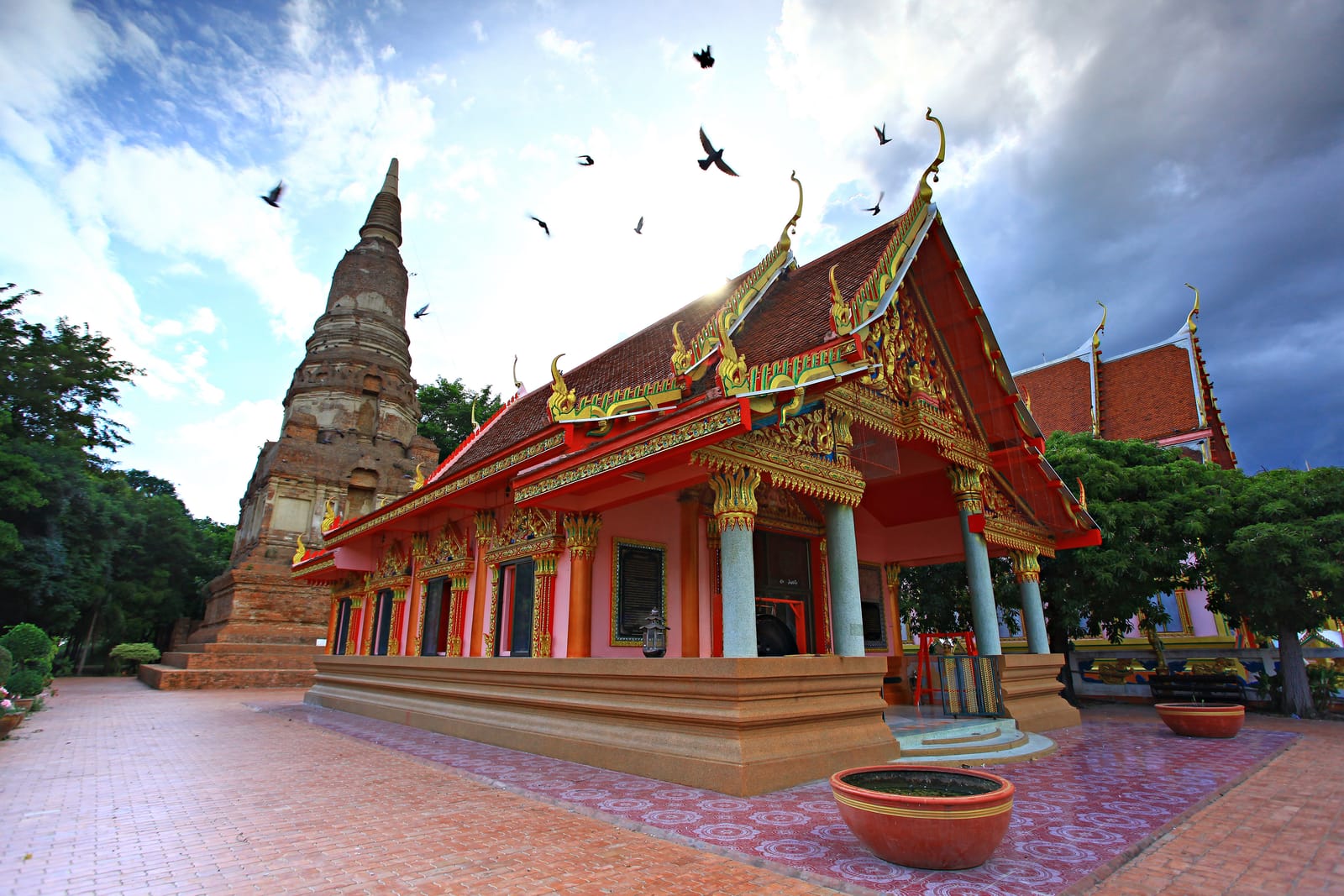
Chai Nat sits in the middle of the Chao Phraya basin, about a 3-hour drive from Bangkok up the Asia Highway. It's the kind of place people heading north pass through without stopping, but it's actually an old cultural crossroads with traces going all the way back to the Dvaravati era, and later the town of Phraek Si Racha in Ayutthaya times. That's why most of the province's important temples are genuinely old rather than newly built. If you're into temple merit-making or history, Chai Nat is worth a day on foot.
Luang Pu Suk and Wat Pak Khlong Makham Thao
Mention Chai Nat to anyone into sacred amulets and the first name that comes up is Luang Pu Suk (Phra Khru Wimon Khunakon). He was born at Ban Pak Khlong, Makham Thao subdistrict, Wat Sing district, in 1847, and became a revered teacher whose students included royalty — among them Prince Chumphon Khet Udomsak, who came to study sacred knowledge with him. Luang Pu Suk's amulets are still highly respected to this day.
Wat Pak Khlong Makham Thao stands on the bank of the Chao Phraya, right where the Makham Thao canal meets the river. The temple is named after an old tamarind tree out front. Inside there's a viharn dedicated to Luang Pu Suk where you can pay respects, and the ordination hall holds murals that locals believe Prince Chumphon helped paint. Most visitors come to pray for protection, charm and good fortune in trade.
Before you go
Wat Pak Khlong Makham Thao is over in Wat Sing district, on the opposite side of the river from the main town. If you want to visit both Luang Pu Suk and the in-town temples in one day, start here in the morning and then loop back into the town.
Want more out of Chai Nat? Book tours & activities
Booking online ahead on Klook or GetYourGuide is usually cheaper than the gate and skips the queue. Pick only the experiences you actually want — prices and availability are shown live on each site.
Wat Thammamun, a royal temple on the hill by the river
Wat Thammamun Worawihan is a royal temple built on the slope of Thammamun hill, right beside the Chao Phraya, about 8 km from town toward Nakhon Sawan. It's an early-Ayutthaya temple, and the highlight is Luang Pho Thammachak, a much-loved Buddha image blending Chiang Saen, Sukhothai and Ayutthaya styles, enshrined in a viharn up on the rise. You'll climb a short flight of steps, but the river-and-rice-field view is your reward.
The temple matters for another reason too: it's one of the province's sacred-water sources, paired with Wat Phra Borommathat, which is why locals have a deep connection to it. Come in the morning when the air is pleasant — you can walk up, pay your respects, and take easy riverside photos.
Wat Phra Borommathat, the spiritual heart of town
Wat Phra Borommathat Worawihan is another temple as old as the town itself, sitting across the river from the main town. It has a bell-shaped chedi enshrining relics of the Buddha, revered across the whole province, and it's another of Chai Nat's sacred-water sites. The temple is easy to reach, making it a good first or last stop on a day of temple visits.
Sankhaburi old town, a cluster of centuries-old stupas
Chai Nat's history highlight is over in Sankhaburi district — Phraek Si Racha in the old chronicles — a large ancient town that's been settled since the Dvaravati period. Within the old-town boundary, several ruined and old temples line up together: Wat Mahathat, Wat Phra Kaew, Wat Song Phi Nong, Wat Tha Sao, Wat Phraya Phraek. Each one has stupas and ancient remains to wander among, like an open-air museum that not many people know about yet.
Wat Phra Kaew, Sankhaburi
The highlight of the old town. The main chedi has a square base topped with a lotus-bud spire, with high-relief stucco Buddha images on all four sides. It's thought to date to roughly the 13th–14th centuries CE, around 600–700 years old — one of the most beautiful and well-preserved early-Ayutthaya stupas around.
Wat Mahathat, Sankhaburi
An old temple paired with the town of Phraek, with an ancient prang and chedi and a Phra Si Ariya Mettrai image that locals revere. The grounds are shaded by big trees, making it a good place to start before exploring the other temples in the old town.
Wat Song Phi Nong
An early-Ayutthaya site, around the 14th–15th centuries CE, with the ruins of a chedi and viharn to walk through. It's in the same old-town area, so it pairs well right after Wat Mahathat and Wat Phra Kaew.
Make the old-town walk easy
The temples in the Sankhaburi area aren't far apart, so you can drive a loop in a single morning. The sun gets harsh by mid-morning, so come early or late, bring water, wear comfortable walking shoes, and respect the sites — many are registered ancient monuments.
Culture nearby you can add on
Once you're done with the temples, Chai Nat still has cultural and natural spots to add on — no need to rush back. Several are within a half-hour drive of town.
Chai Nat Bird Park
A huge aviary covering the park where you can walk among the birds up close. Good for kids and families, and close to town.
Chao Phraya Dam
A large diversion dam on the Chao Phraya — a spot for photos and river views, with riverside restaurants nearby.
Riverside market / community
Find local food and Chai Nat souvenirs like pomelo and river fish — a nice way to wrap up the day.
A half-day to full-day temple route in Chai Nat
If you want to see everything without wearing yourself out, split it into two parts like this and adjust up or down depending on your time.
Sacred sites and famous riverside temples
History buffs: Sankhaburi old town
Getting around
Chai Nat is easiest by your own car, since the temples are spread across different districts. If you don't have a car, there are rentals and motorbike taxis in town, but arrange a driver ahead of time — public transport between districts isn't frequent.
Plan a full day in Chai Nat — temples, food and where to stay
See the Chai Nat travel guide →