🔄 Updated 21 Jun 2026
Before you book a car or a room, the first question you have to answer is which month you're going to Chanthaburi, because the two highlights people come for — the fruit orchards and Khao Khitchakut — open in completely different windows that barely overlap. Plan the wrong month and you could miss both. Let's go through what each season actually gets you.
Fruit Season: April–June
This is when Chanthaburi is at its liveliest. The local fruits — durian, mangosteen, rambutan, longkong, salak — all ripen around the same time, and many tourist orchards open their gates for all-you-can-eat in the garden. Some orchards start from early May to mid-June, a few stretch into early July, depending on that year's weather.
- April — the first durians appear (Monthong, Kan Yao varieties) but not in full swing yet; mangosteen and rambutan start trickling in, and prices are still higher than at peak.
- May — peak of the fruit buffets, with durian, mangosteen and rambutan all out at once. Most orchards are fully open, and this is the best value.
- June — still plenty to eat, prices drop, and crowds are thinner than over Songkran. Good if you'd rather avoid the crush.
A typical buffet orchard runs around 350–500 THB per person for unlimited fruit in the garden within a set time (durian is usually eaten on-site; anything you pack home is weighed by the kilo on top). Always call or message the orchard's page before you go, because opening dates and which fruits are ready shift with the real season.
Don't get caught out
Don't trust an old post's photos as proof an orchard is open. Fruit is a natural crop — a year with early rain means a late harvest. Call to confirm the actual opening date before you drive out, so you don't waste the trip, and going on a weekday means far fewer people than Saturday or Sunday.
Khao Khitchakut: Cool Season Only, Jan–Mar
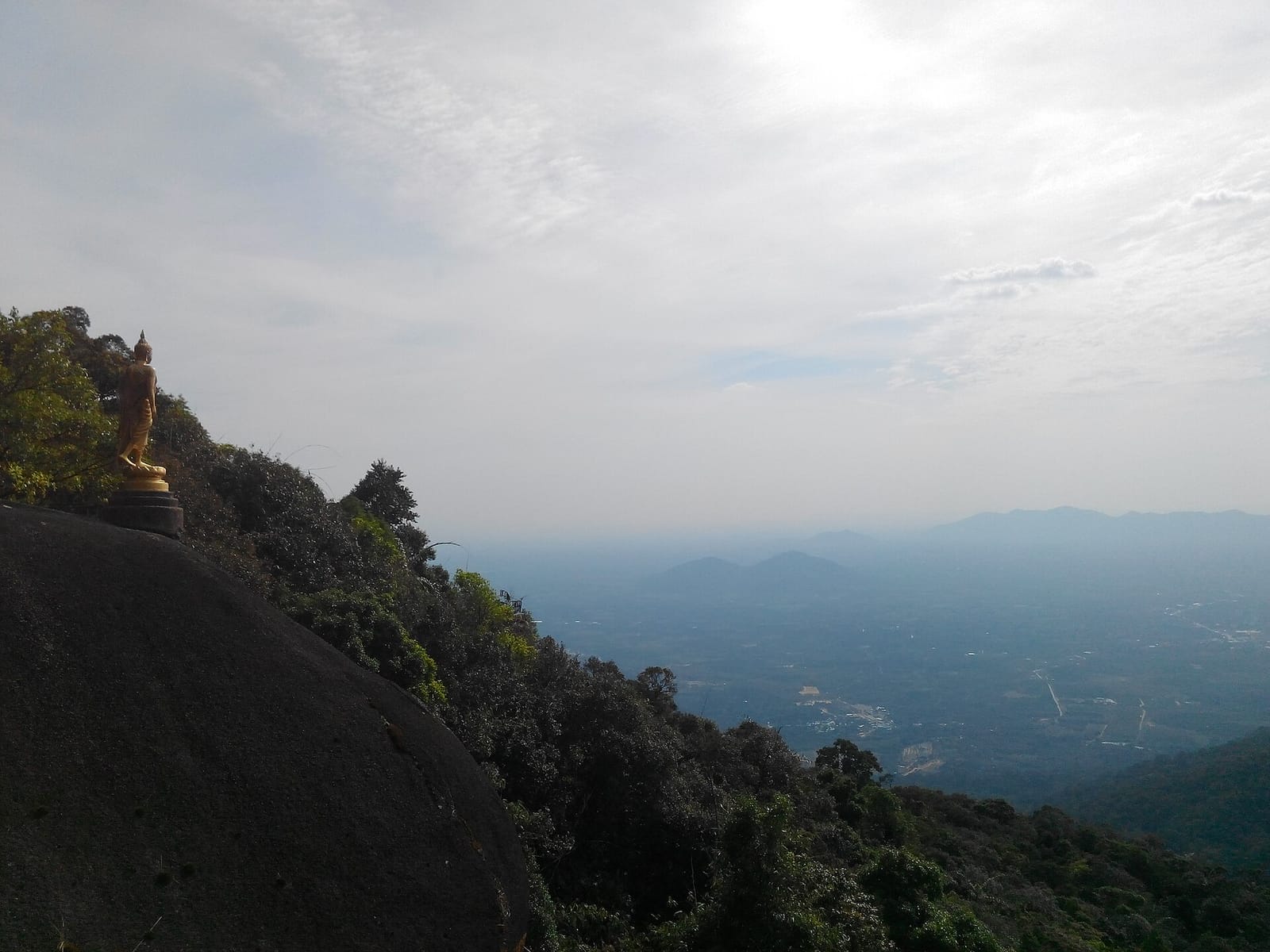
If you're set on climbing Khao Khitchakut to pay respects at the Phra Phutthabat Phluang (the Buddha's footprint), watch the calendar carefully, because it opens just once a year, in the cool season only. For 2026 it's open 19 January – 19 March, running 24 hours a day during that window. Outside those dates the mountain is closed and you can't go up.
- Songthaew fare up the mountain is around 200 THB per person (round trip); the pickup point is near the queue at Wat Phluang or Wat Krathing.
- Park entry fee is 40 THB for Thai adults, 20 THB for children, free for those aged 60 and over; foreign adults 200 THB.
- The truck takes you part of the way and then you walk another 1–2 km, with steep stretches here and there. Wear sneakers or hiking shoes, and bring water and any personal medication.
- It gets very crowded on long weekends — Saturdays, Sundays and Buddhist holy days mean long truck queues. If you can, go on a weekday or head up late at night or before dawn for an easier time.
Match your month to your goal
The most important thing: fruit season (Apr–Jun) and Khao Khitchakut season (Jan–Mar) barely overlap. Getting both in a single trip is tough, so decide what this trip is really for first, then lock in the month.
Which Month to Go, by Goal
Here for the fruit
Aim for May–June, when orchard buffets are in full swing and durian, mangosteen and rambutan are all ready at once. June is quieter and cheaper.
Here for the mountain pilgrimage
It has to be January–March. Khao Khitchakut opens once a year and closes for a long stretch after March.
Here for the old town and the sea
Doable year-round — the Chanthaboon riverside community, the cathedral, Chao Lao and Laem Sing beaches. Avoid the heavy rains around Sep–Oct.
Getting There: From Bangkok
Chanthaburi sits about 245 km from Bangkok — roughly a 4-hour drive, taking the motorway out toward Chonburi–Rayong, then Route 36 or Route 3 (Sukhumvit) into town. If you're not driving, vans and coaches leave Ekkamai and Mo Chit bus stations several times a day, a ride of around 4–5 hours.
- Driving yourself — easiest, since the orchards and beaches are outside town with no public buses reaching them. Fuel plus tolls round trip runs about 1,200–1,800 THB per car.
- Van/coach — tickets are about 200–280 THB each way; you arrive in town, then rent a vehicle or use taxis and motorbikes around the city.
- Renting in Chanthaburi — if you came by bus, renting a car or motorbike is worth it, because the sights are spread out and Khao Khitchakut and the coast are in opposite directions.
Book Ahead, Especially in High Season
Fruit season and Khao Khitchakut season are Chanthaburi's high seasons, and the good-value places fill up fast, especially on weekends and long holidays. Book at least 2–4 weeks ahead, and if you're going over Songkran or a long weekend, book a month out.
- In-town zone — walkable to the riverside community, the cathedral and the markets. Places range from hostels to hotels, starting around 500–1,200 THB/night.
- Coastal zone (Chao Lao–Laem Sing) — sea-view resorts, many with seafood buffets, around 1,000–2,500 THB/night. Good for a relaxed stay.
- Near Khao Khitchakut (Khao Rai Ya–Phluang) — small homestays and resorts, handy if you plan an early-morning climb and don't want a long pre-dawn drive.
See Chanthaburi hotels people have actually reviewed, with prices compared across platforms
See Top 10 Chanthaburi Hotels →How Much to Budget
Your budget depends on whether you drive or take the bus, and which zone you stay in. The figures below are rough per-person costs for a 2-day, 1-night trip, splitting things between two people.
- Budget ~1,500–2,000 THB/person — hostel or homestay, eating at local spots, visiting free sights (the riverside community, the cathedral, the beaches).
- Mid-range ~2,500–3,500 THB/person — a coastal resort with seafood, one fruit-buffet orchard, plus fuel or transport.
- Comfortable 4,000 THB and up/person — a good-view resort, plenty of seafood, a fruit buffet, and a few more souvenirs.
How to save
Going on a weekday makes lodging clearly cheaper than weekends · do the fruit buffet at peak (May–Jun) for better value than buying your own · and a group of four sharing fuel and a room brings the cost down a lot.
Souvenirs Worth Carrying Home
Chanthaburi is a genuine souvenir town. Big shops like Ton Tamrap (Sukhumvit Rd, Phlapphla subdistrict) and Mae Wanna stock thousands of the local specialties, so one stop covers nearly everything.
- Fried/sun-dried durian and durian paste — the town's number-one souvenir, crispy chips or chewy paste, keeps a long time and is fine to carry on a plane.
- Chanthaburi peppercorns — handsome white and black peppercorns with a strong aroma, a provincial specialty; buy them whole or ground.
- Sen Chan rice noodles — dried noodles to keep at home for making Pad Poo or Pad Sen Chan yourself; light and easy to gift.
- Processed seafood — crab-roe chili dip, real fermented shrimp paste, dried squid, and dried seafood from around Laem Sing.
- Chanthaboon mats — handsome locally woven reed mats, a distinctive cultural souvenir from Chanthaburi.
About fresh durian
If you want to carry fresh durian home, most airlines won't allow it onboard because of the strong smell — driving yourself is the only easy way to bring it. Otherwise buy it pre-peeled and vacuum-packed for the fridge, or go with fried or paste durian, which is simpler.
Pre-Departure Checklist
- Pick the month to match your goal — fruit (Apr–Jun) or Khao Khitchakut (Jan–Mar).
- Call the orchard to confirm it's actually open on your dates (if you're coming for fruit season).
- Check that year's Khao Khitchakut opening calendar and pack hiking shoes (if you're climbing the mountain).
- Book your stay 2–4 weeks ahead — the longer the holiday, the earlier you book.
- Sort out your car or book bus tickets, and plan onward transport in Chanthaburi, since the sights are spread out.
- Set aside part of the budget for souvenirs — fried durian, peppercorns, Sen Chan noodles.
Ready to go? See where to eat and what to do in the full Chanthaburi guide
Open the Chanthaburi Travel Guide →