🔄 Updated 21 Jun 2026
When people think of Phayao, Kwan Phayao lake usually comes to mind first. But drive about another hour and a half east and you reach Chiang Kham district, the heart of the province's Tai Lue community. The Tai Lue here trace their roots back to Sipsongpanna in southern China, having settled the area more than a century ago, and they've held onto their language, dress, food, and weaving remarkably well. Walking around here feels different from the typical northern Thai town.
The Tai Lue cultural-tourism community in Chiang Kham brings together several villages in Yuan sub-district — Ban That Sop Waen, Ban Yuan, and Ban Mang. Each village is known for something different: one for its weaving, another for its food, and you can wander between them easily. It's a place suited to slow travel, with no need to rush.
The Tai Lue Temples Worth a Stop
Chiang Kham's first highlight is its temples, because Tai Lue temples have a look all their own — low, multi-tiered roofs stacked in layers, quite different from the Lanna viharns most of us are used to. The two you shouldn't miss sit very close together, within walking distance of each other.
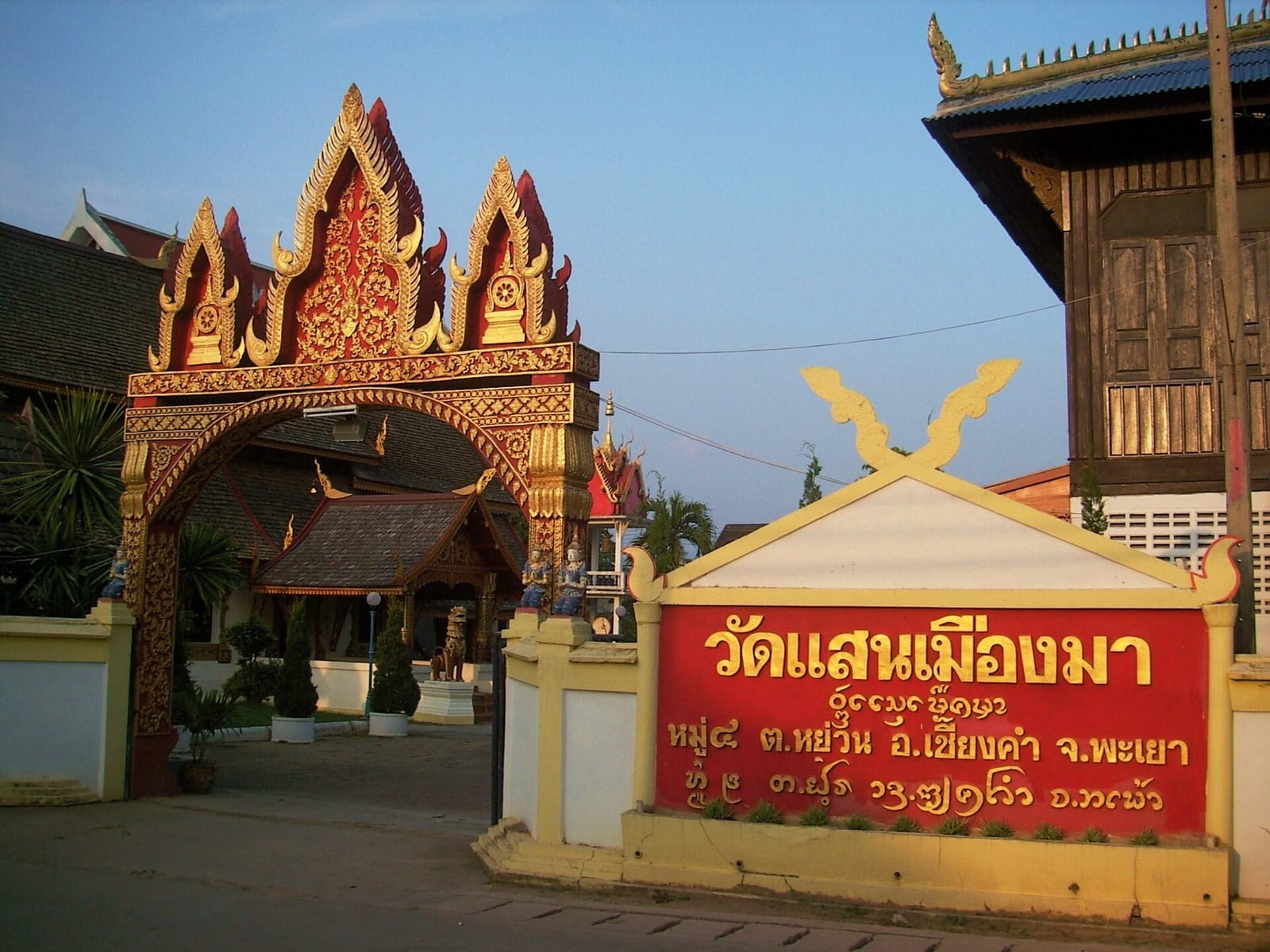
Wat Saen Mueang Ma
A viharn blending Tai Lue and Lanna styles, built around 1857. The interior walls are painted with the story of the Tai Lue people who migrated from Sipsongpanna, and there's a small museum of antiques inside the temple too. It's near the Chiang Kham bus terminal in Yuan sub-district.
Wat Phra That Sop Waen
An old chedi thought to be around 800 years old, revered by Tai Lue people across the area. Beside the viharn is a Tai Lue history pavilion to walk through, and a century-old rain tree to rest under.
A Local Tip
These are temples the community still actively uses, so dress modestly, take your shoes off before entering the viharn, and if you cross paths with one of the elders at the temple, a small greeting often earns you old stories you won't find written down anywhere.
Want more out of Phayao? Book tours & activities
Booking online ahead on Klook or GetYourGuide is usually cheaper than the gate and skips the queue. Pick only the experiences you actually want — prices and availability are shown live on each site.
Tai Lue Textiles, Straight From the Loom
Weaving is at the heart of Tai Lue culture. Traditional patterns like the flowing-water motif and the turtle-shell motif are woven entirely by hand, bright in color yet balanced. Chiang Kham has several weaving groups that welcome you in to watch the work and buy pieces to take home — prices range from a few hundred baht for a small piece up to the low thousands for the more intricate patterns, depending on the detail.
- Ban Thung Mok Tai Lue Weaving Group — a group of village women who came together to weave for extra income back around 2000. They have sarongs, scarves, and souvenirs to choose from, and you can watch the weaving happen live.
- Tai Lue Cultural Center at Wat Yuan — weaving demonstrations and displays of old Tai Lue textiles, along with everyday Tai Lue household items. A good spot to understand the background before you go shopping for cloth.
- Natural-dye houses — some homes in the community still dye with indigo and natural colors themselves. Stop by to see the dye pots and ask how it's done — if you're lucky, you'll catch them mid-dye.
The upside of buying cloth straight from the weaving groups is that you get to talk with the weaver, learn how many days a piece took and what the pattern is called, and the money goes fully to the community with no middleman. If you want the real thing rather than factory-printed cloth, this is where to come.
Tai Lue Food You Can't Easily Find Outside Chiang Kham
Tai Lue food is another reason to come to Chiang Kham. A lot of it is nearly impossible to find elsewhere, because it's made at home and only sold at the villages' morning markets.
Khao Kaep
Thin sheets of sticky-rice batter studded with sesame, dried in the sun and then grilled or fried until crisp — a classic Tai Lue snack. Ban Yuan is known for this one, and it makes an easy souvenir to take home.
Traditional Lanna Kalamae
A chewy, sticky stirred sweet from Ban That Sop Waen, stirred in a big pan the old-fashioned way. It's rich and sweet from coconut milk and sugar, and keeps well as a souvenir.
Ban Mang Sticky Rice
Fragrant steamed sticky rice that Ban Mang is known for, eaten with nam phrik and Tai Lue–style steamed vegetables. Simple, but genuinely good.
Tai Lue Nam Phrik Set
A nam phrik set served with steamed and fresh seasonal vegetables — a homestyle lunch that some households in the community cook for groups who book ahead.
If You Want a Proper Tai Lue Meal
A full Tai Lue spread is usually cooked to order through the community-tourism group rather than a regular restaurant, so if you want one, arrange it in advance through the Tai Lue cultural-tourism community. Snacks like khao kaep and kalamae, on the other hand, are easy to find at the morning markets and souvenir shops in town.
Village Atmosphere and Wandering Around
Chiang Kham's charm lies in the quiet and the realness of the villages. Old wooden houses, looms set up under the houses, elders in Tai Lue sarongs walking to the temple — it's all still the way people genuinely live here, not staged for tourists. A slow morning stroll through Ban Yuan and Ban Mang gives you the best of it, when the air is cool and people are out going about their daily routines.
- Come early — the village morning market is liveliest around 6–8am, with fresh food and a genuine local feel.
- A private vehicle is easiest — the various stops are spread across several villages, and public transport within the district is limited.
- Leave time for the temples — the Tai Lue viharns are full of detail, from wall paintings to woodwork, so taking it slow pays off.
- Contact the community ahead — if you want a local guide, a weaving demonstration, or a Tai Lue meal, reaching out to the community-tourism group before you go makes things go more smoothly.
How to Plan Chiang Kham Well
Chiang Kham works as a day trip from Phayao town, or you can stay one night to soak up the atmosphere fully. Here's a sample plan that's easy to organize and not too tiring.
Tai Lue Temples + Weaving
Village Life in the Morning
Want to see all of Phayao — the lake, the temples, and the food?
See the Phayao travel guide →